Pursuing the Ultimate Music Experiences

Audio Federation High-Fidelity Audio Blog

Differentiating Worthwhile Reviews from Clueless Reviews

OK, I threatened to do this… so let’s try to do it without getting us all in too much trouble.

Worthwhile Review

Sound of the piece under review is actually described – in terms of what it does well and what it does not so well.

Clueless Review

Sound is not actually described and instead there is a lot of meaningless hyperbole like: Wonderful vocals, awesome bass, band XYZ sounded extremely good, etc.

Worthwhile Review

Sound is compared to competition [note that some summary of the characteristic sound of the various competition is required otherwise the comparison is worthless / clueless] and to other components from the same company – both above and below the component under review

Clueless Review

It is so common for the phrase “best I’ve heard” to slip into reviews where the reviewer has heard nothing from the competition in this price range or above – i..e this is also the most expensive component the reviewer has ever heard. This type of Clueless Review is also commonly highlighted when the reviewer insists that his modestly priced system, with the less modestly price component under review, sounds better [better is sometimes qualified as ‘highest resolution’ or ‘best dynamics’ or etc.] than any system they have ever heard in their life.

—————————

Let’s see. These two characteristics of Clueless Reviews certainly apply to 90-95% of all reviews in both print and online. Some sites only publish Clueless Reviews like this and nothing else.

Some Clueless Reviews DO have some redeeming value in that they might include historical information about – or an interview with – the manufacturer. Or cool info about the CD they are using to test with. Or whatever, something else unrelated to the supposed actual review of the relative quality of the component under review [like pricing… or photos]

Announcement: 2nd Annual Capital Audiofest

“The 1st CAF went so well that we are having a second! We had approximately 500 people in attendance not including the vendors and manufacturers and plan to have many more for this event.

We are now looking to fill the rooms for the 2011 CAF and have lots of interest for the 2nd event. The 2010 CAF went as planned being a casual fun-filled event for audiophiles, music lovers, music media and vintage audio gear collectors, dealers and manufacturers. Families and many couples came to the event which you don’t see that often. Yes the WAF was felt by all. Great food and beverage (Adult beverages too!) were enjoyed by many. The event included high quality vacuum tube and transistor audio equipment, analog and digital playback sources, buying and selling of vinyl LP records and CDs, and retailers and manufacturers of quality audio gear from the Baltimore – Washington DC Metropolitan Area and beyond. Saturday night we had a live Jazz show with DC native master drummer Nasar Abadey and Supernova and even the host joined in for two numbers (They humored me)! The Sunday Audio Swapmeet went off well with many early morning risers prowling the tables for gear. ”

CES 2011 – Finale

OK.

Done with the photos and I hope people can see that:

1) There just were not a lot of contenders for best of show
2) Of those, many were using laptops as sources, which almost always severely compromises the sound quality of a system at this show
3) Of the remaining, many were just trying to attract attention and did not focus on the creating the best sound that they could.

So…. better than RMAF, sound wise, as usual, but not as good as previous CES’s…

I think I detected a more relaxed attitude about the defacto train-wreck that is high-end audio and the doom and gloom dire predictions of the future are now almost as quaint and boring as playing Diana Krall all day long.

All the people using laptops to demonstrate the sound of their equipment (as opposed to just demonstrating that it, in fact, works) are like car dealerships sending a sales associate with bad breath and B.O. along with every person taking a test drive. It ain’t helping your case, people.

Let’s see, what else….

Clueless show reports by 2nd and 3rd tier magazines are still all the rage [I’ll let them decide if they are 2nd or 3rd tier :-)]. Jeez I wish these people would get a different job – perhaps even a job they are actually good at? Hmmmm… maybe the next post should be about how to detect a clueless review?

One of these days we have to stop buying crazy audio gear for just a darn minute and get me a decent camera [Yeah right :-)].

I like Las Vegas a lot better when it is warm, say 70 degrees during the day. Maybe next year…?

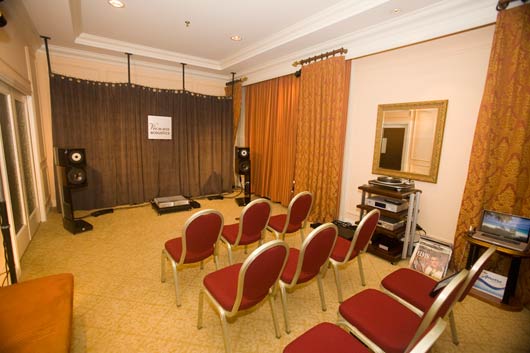
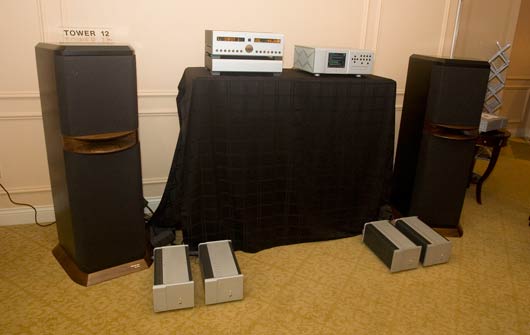
CES 2011 – Venetian Floor 34


Surprised we did not see the Joachim Gerhard speakers here in this room with the Spiral Groove turntable – they are certainly the equal of Vienna Acoustics and usually appear in the same room as the Spiral Groove turntable [Silly me, this is a room Vienna Acoustics was sharing with Immedia and of course they would prefer to show their own speakers. Duh. Thanks for the comment Patrick].


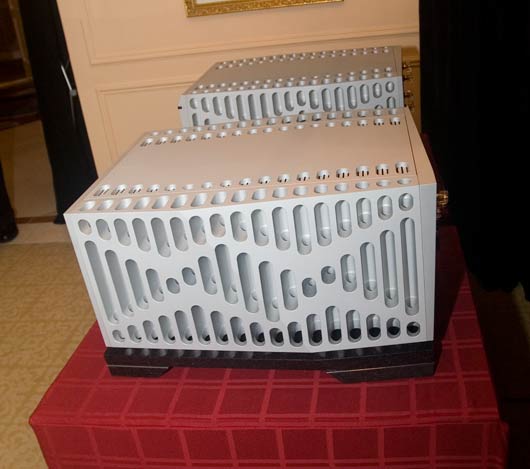
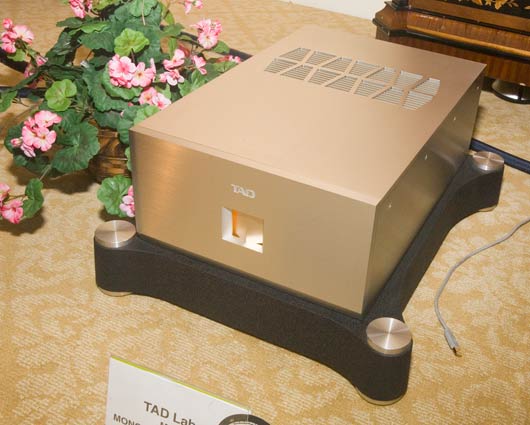
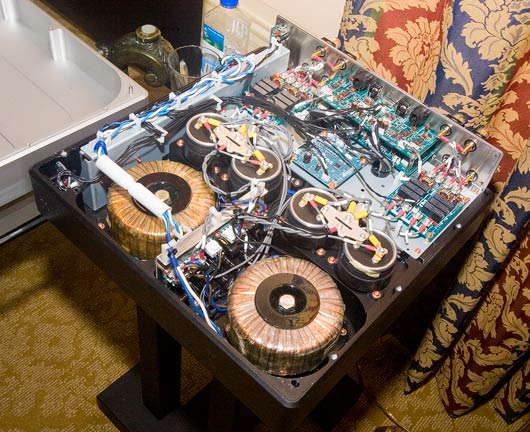
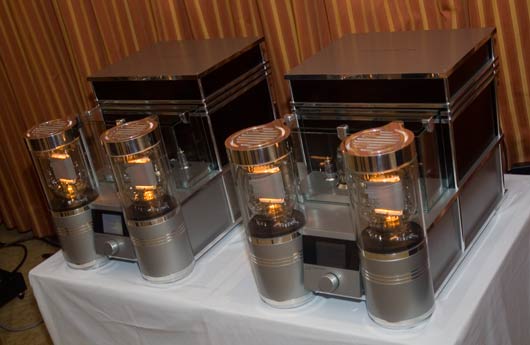
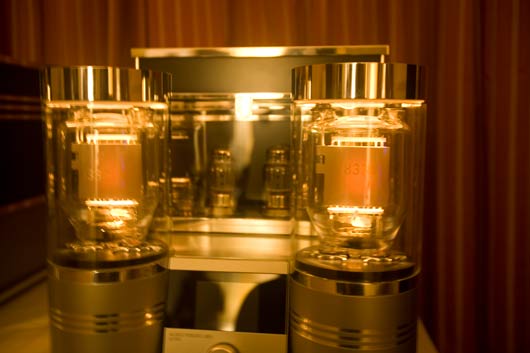
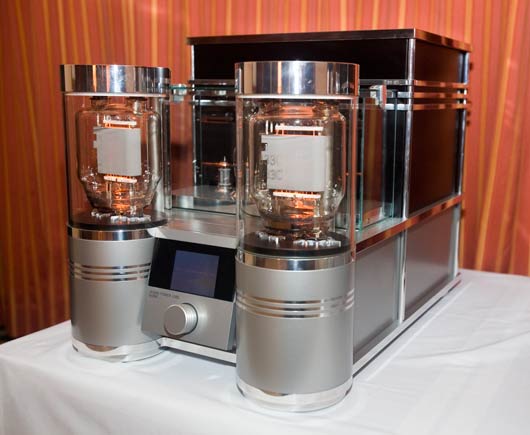
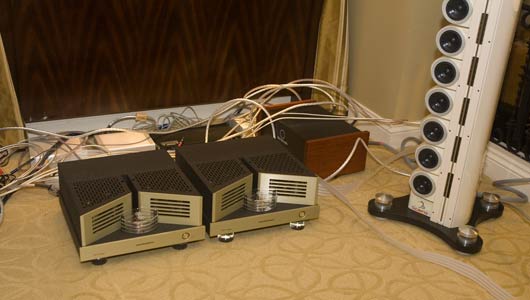
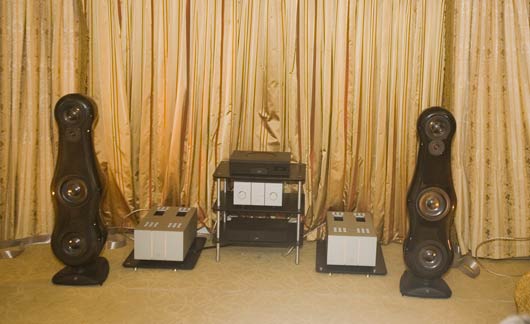
These amps are big. Expect to see a ‘Biggest… Amps… EVER’ cover story…

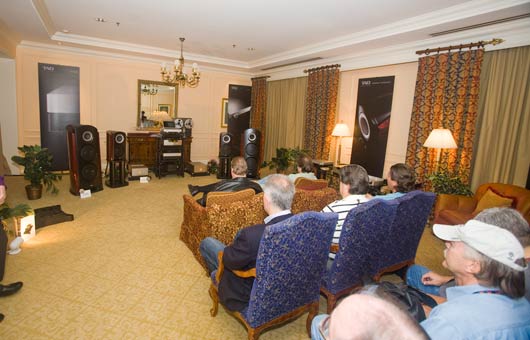
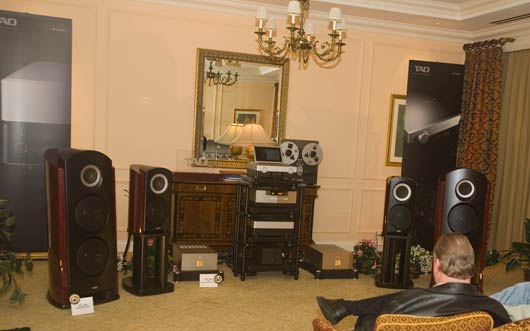
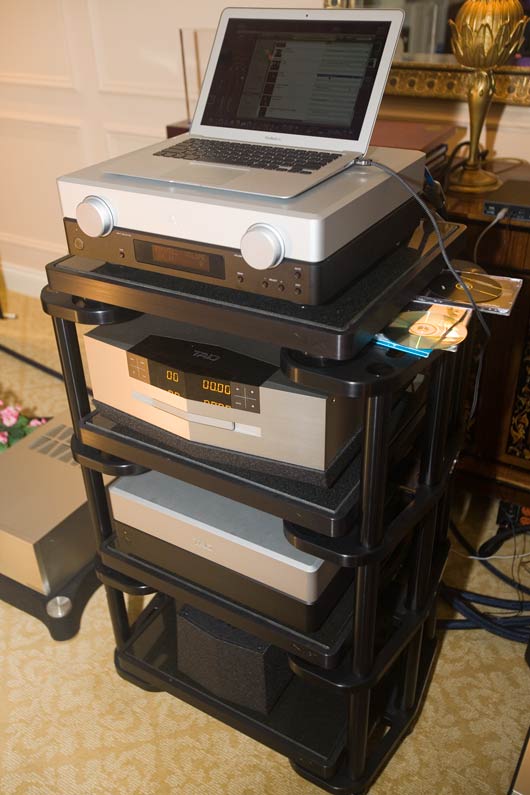
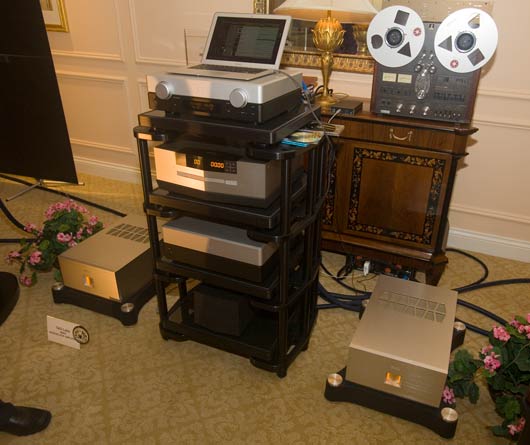
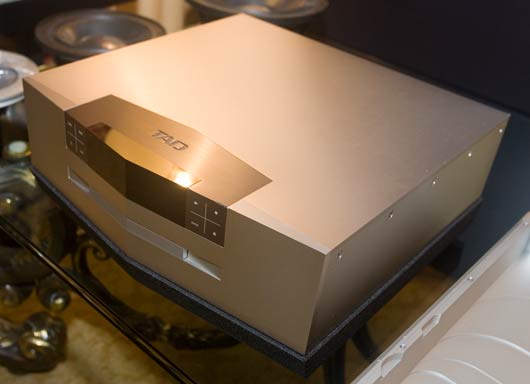
TAD had their own electronics here this year. After a quick listen I thought they would do quite well on our list of amps vis-a-vis micro-dynamics. All in all I liked them – although the sound here was lifeless – which could have been due to cables, the stupid laptop, setup, whatever – it had not the purposeful soullessness that typifies so much of the Boy Toy systems elsewhere.


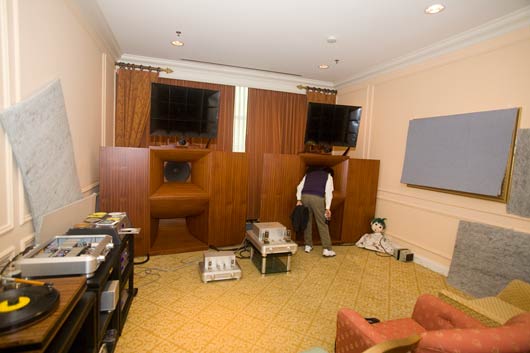
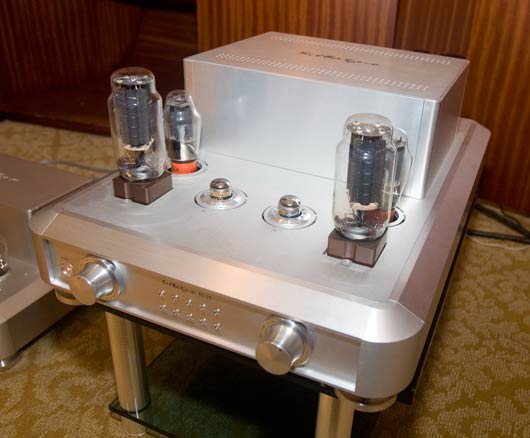
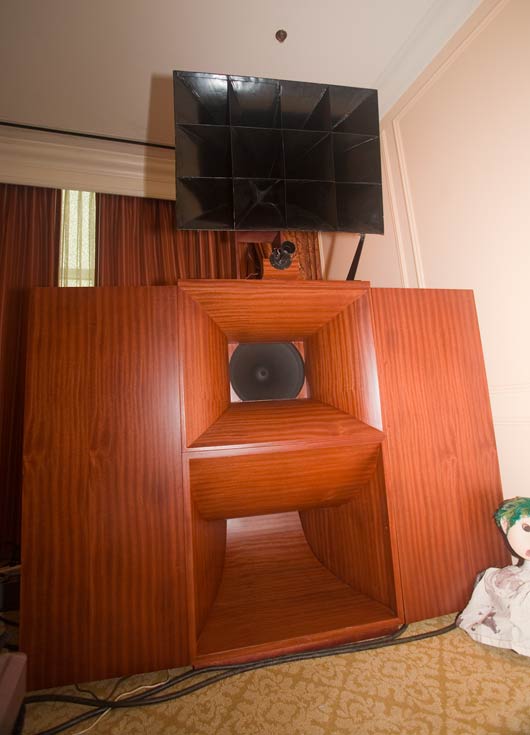
Silbatone always tries to do something interesting, and it is always fun to talk to Joe Roberts.


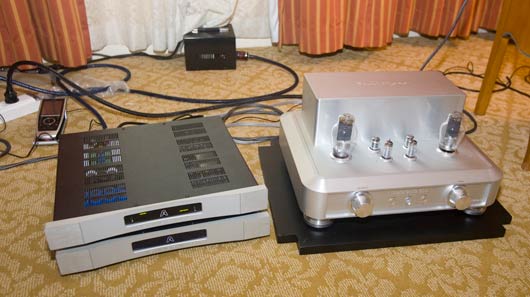
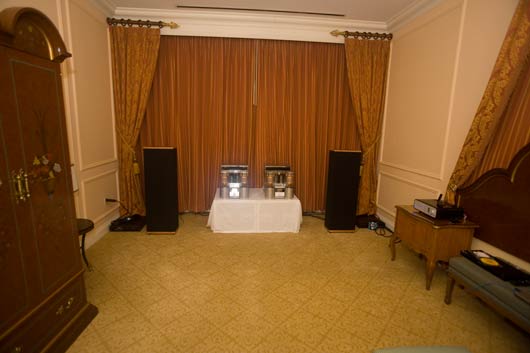
Audio Power Labs put their unpriced $100K – $200K amps on the Vandersteen 3A speakers and driven by a cheap front end. It was interestingly good enough that I came back here with my own CDs. With my own CDs the flaws in the Vandy and source were obvious and significant, but, albeit though these filters, I did not hear and problems with the amps.


A few people [Jim and Wes] sent me down to hear this room on Level 2 – something about out-of-this-world dynamics. I went down with Jim. These people do the sound for Avatar and stuff for Radiohead – they were name-dropping left and right – but the sound in this room had a lot of [untight] bass and was totally confused everywhere else. Not sure what went wrong or what was even supposed to go right.
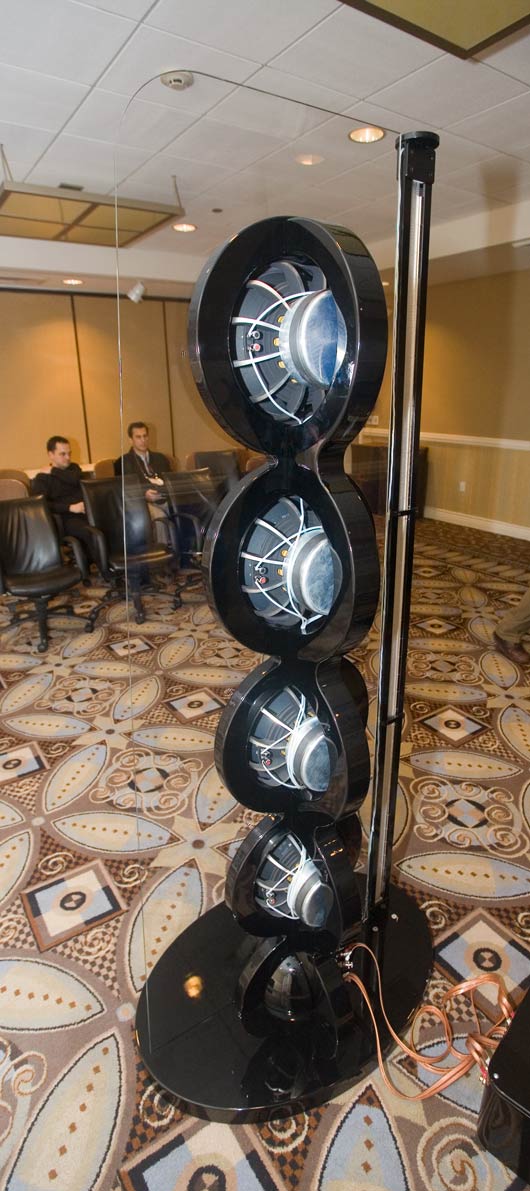
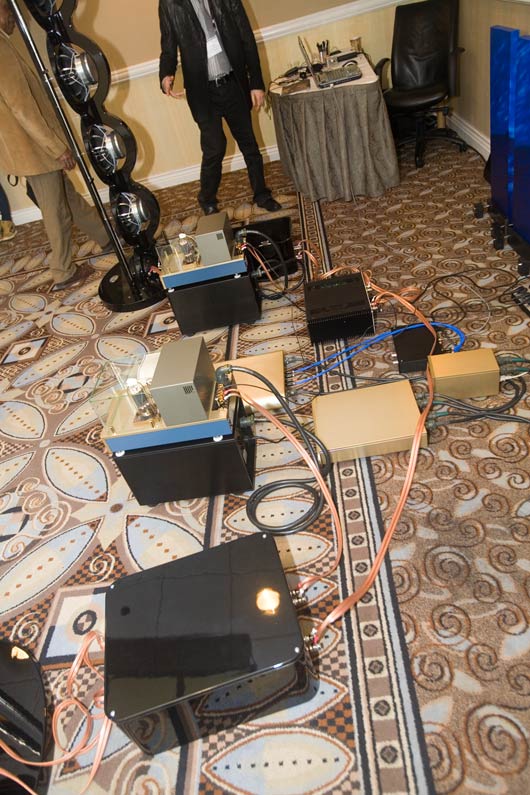


The sound here was relatively pleasant and music – not in a surprising way but in a way that made me think that a lot of rooms at the show this year had quite a few more things wrong than this room [which DOES surprise me, given the laptop source etc.]
Audio Note Factory Tour

A nice overview of the Audio Note factory by a local dealer in the U.K. [thanks, Florian!]

DecoAudio: Audio Note Factory Visit December 2010

We have also had occasion to see inside the Fifth Element [we (me) somehow put it upside down in the car on the way back from CES and wanted to make sure the tubes had not jiggled loose. The tubes were just as solid as if I had put the DAC in the car right-side up]. Very impressive. Yes, I took photos and we’ll post them sometime in the near future.

Another way to visualize the sonic signature of a system

We have guests here for ‘multi-day auditions’ every so often where we listen to a ton of stuff over the course of a few days – kind of like a sequence of shootouts but with a goal in mind – the goal usually being to get the best sound possible for a particular guest.

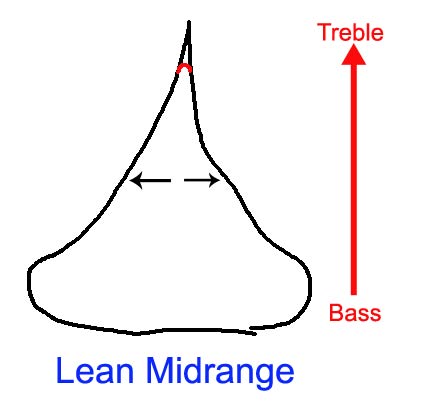
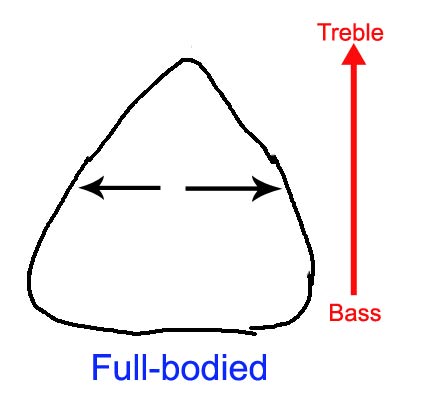
Last week we had a great time at one of these auditions, and our guest came up with a very nice intuitive way to quickly draw the overall balance of a particular system. I am not all that sure this particular guest wants to accept the blame for these drawings 🙂 – and his hand drawn ones were certainly nicer than my mouse-drawn ones – but I liked them enough to think it worthwhile to share here on the blog.


The width of the “Hershey’s Kiss'” is the characteristic energy/information of the system at a given frequency. The system diagrammed here has a lot of bass energy but little midrange energy and almost no treble energy.

This is typically [over the course of many discussions with people we meet] what people Do Not want.

The red part of the curve would be an alternative sound that did not have a ‘bite’.(?)


This is a nice, full sounding system. This is what people in general DO want.

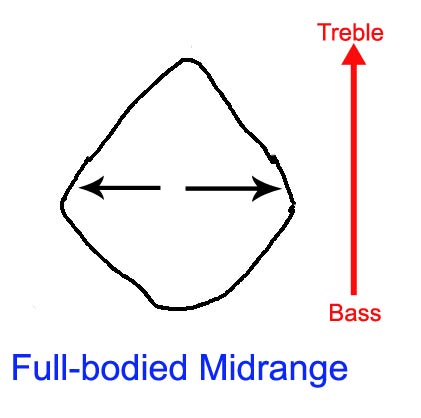
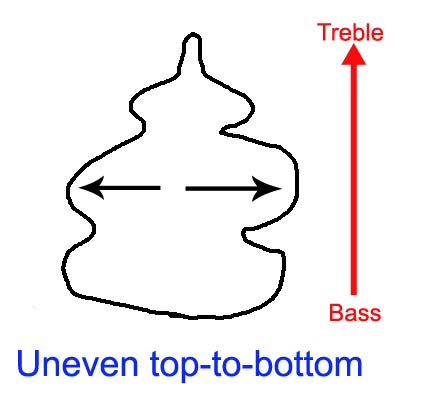
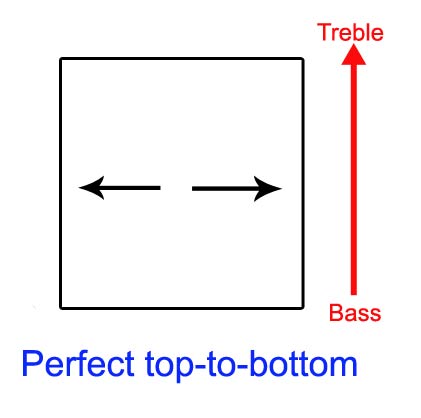
These next drawings are originally drawn by me, expanding on the idea of the 2 above.


The system diagrammed here might represent your typical inexpensive tube amp: nice midrange but weak on bass and a little rolled off on top.


The system diagrammed here might represent your typical inexpensive speaker system that has problems in the crossover frequencies.


This might be the perfect system(?) – we can certainly define it to be so, since we are the ones making all this up :-). It represents perfect top-to-bottom quantities of energy/information.

We should really have several of these drawings for a single system, one drawing each for:

1) harmonic information/energy
2) micro dynamics
3) midi-dynamics
4) separation (ability to handle complexity)

Sorry about the long, slow-loading CES posts

Had a choice between this way and the 1-post-per-room way and, well, decided to do it this way for this show.

Because this blog currently shows 10 posts on the front page, I am going to try and add 9 small posts before I add the next humongous photo post (for floor 30 at the Venetian) [after that post, we will only have a little more of the Flamingo to do]. The idea is that this way everybody won’t have to sit through the loading of TWO of these long posts on the same page.

Exhibiting at a Show: What Associated Equipment To Choose?

The typical question is that you have a great component you want to impress people with at a show. How do you do that? The answers to this question will help explain why we see some rooms setup the way we do, and conversely why some great products do not get the show accolades they deserve.

The answers are different depending on the type of component if the component is a:

AMP: you want speakers and sources that do not detract from the fact that the amp is the most important piece in the system [i.e. not too hyped or visibly impressive]. You want well known components, that people already know the sound of so that they can attribute all of the above and beyond extraordinary goodness of the system to your amp [i.e. the other components are plain jane well known components that everyone knows the sound of]. DON’T put your amp on speakers that the amp can’t drive [please please please. But so many do anyway]. DON’T use amp stands that rob your amp of much of its goodness.

CD PLAYER: You want a state-of-the-art, GREAT sounding system and to play the CD player all the time. People then attribute the fact that the system sound does not suck to the fact that the CD player must really be pretty darn decent. Putting your CD Player in a mediocre or bad sounding system is only a slight negative – unless the turntable ‘fixes’ many of the problems with the system due to its warmth or whatever sonic characteristics – then they will think that digital sucks, especially your CD Player.

CABLES: Well, you can either do the Nordost thing, with wonderfully explanatory presentations that let you hear the sound of the cables, or you can have a static display like Kimber Kable, or you can have a mixed static display and demo system like Gutwire. DON’T put your cables into a bad sounding system with great components – especially not with signs all over the place indicating that the cables responsible for this sound are yours.

SPEAKERS: You want as good a sounding system as you can get with components that are as generic as possible [but even with famous or hyped components – they speakers will still get most of the credit for the sound].