Pursuing the Ultimate Music Experiences

Audio Federation High-Fidelity Audio Blog

Vintage Voltage Expo – Denver

[We are not showing at the Expo, but we may go down and visit and check all this stuff out…:-)]

Vintage Voltage Expo Sunday, March 27, 2011 Ramada Plaza Convention Center

Dear friends and fans of vintage audio,

Tomorrow is going to be a great day at the 5th Annual Vintage Voltage Expo!
– We’ve expanded the show floor and widened the aisles!
– We have sold over 100 tables, and we are SOLD OUT of vendor spaces!

Scroll down for easy directions, admission info and more!

We got a nice article in this week’s Westword … and a nice blurb in today’s Denver Post!

“MADE IN JAPAN” Benefit!
Buyers – bring your “made in Japan” purchases to Registration, and we’ll donate $1 to the Red Cross Japan relief fund for every “made in Japan” item we log. Buyers and sellers are welcome to match the donations for their items. At the end of the show, everyone can gather round while we tally up and make our online donation!

New: Special appearance by
Miss Modernism
Jaime Askvig! 10am – 1pm

LIKE US ON FACEBOOK! Be part of the year-round community.

General show info follows. See you TOMORROW!
– Dana

Sunday March 27, 2011

Ramada Plaza Convention Center
I-25 at 120th Ave, Northglenn/Denver
(Scroll down for directions!)

10 am – 3 pm
(Early Bird admission: 9 am)

Winner:
BEST VINTAGE ELECTRONICS

Loads of Vendors from Around the Region Selling:

vintage electronics – old school audio gear – tube amps – antique radios – transistor radios – speakers – turntables – vintage LPs & 45s – hi-fi – synthesizers – stereos – 8-tracks – electric guitars – amps – vintage TVs – ham radio – commercial equipment – video games – parts – and MORE!

— All kinds of cool old electronics and music stuff! —

It’s like a:

– Antique Radio Swap Meet

– Vintage Audio Convention

– Record Collector’s Show

– Used Electronics Flea Market

– and a Vintage Guitar Show

ALL IN ONE!

Bring a FRIEND and come on down! It’s Guys’ Day Out!

COLORADO RADIO CLUB:
The Colorado Radio Collectors Club (CRC) will be hosting their big annual show within our show! Don’t miss this chance to see LOADS of the best radios in the STATE! Big Radios, Little Radios, Old Radios and Even OLDER Radios! This is a REALLY GREAT bunch of guys! For more info on the club, visit www.radioace.com

VINTAGE VOLTAGE EXPO
Admission: $5.
Kids under 12 Free.
CRC members FREE.

Early birds ( 9-10am) $10.
(if you want first crack at this stuff!)

DIRECTIONS:

From Denver: Head north on I-25. Exit at 120th Ave. (exit 223) – go east to first street where you can make a right. est. time – 10 minutes

From northern Colo/Wyoming: Head south on I-25 to 120th Ave. (exit 223). Go east under highway, turn right at first street.

From Boulder: Head east on US 36. Take CO-121 exit toward US-287. Jig left onto Wadsworth, following signs for CO-121/CO-128E. Turn slight left to take US-287 ramp & merge onto CO 128-E. CO 128 is the same as 120th Ave. Continue east, go under I-25 and turn right at first street. est. time: 20 minutes

Vendors:
For those who are selling:
– Set-up is 7 – 10 am. Load through East Doors. BYO Dollies.
– Some of the best “Early Bird” buyers get in at 9am. Try to be mostly set up by then.
– Bring Extension cords if you need them.
– TELL ME NOW if you need electricity, so I can get you on or near a wall.
– We will provide your tables, chairs and table coverings.
– You’ll get name badges, etc. for you and your helpers at load-in.
– Load out is 3pm. No early packing!
– Please help us spread the word to your email lists and Facebook contacts!

More info: www.danacain.com/vintage-voltage-expo

Please Forward to Interested Friends, Groups and Lists!

Dana Cain | 5061 S. Stuart Ct | Denver, CO 80123

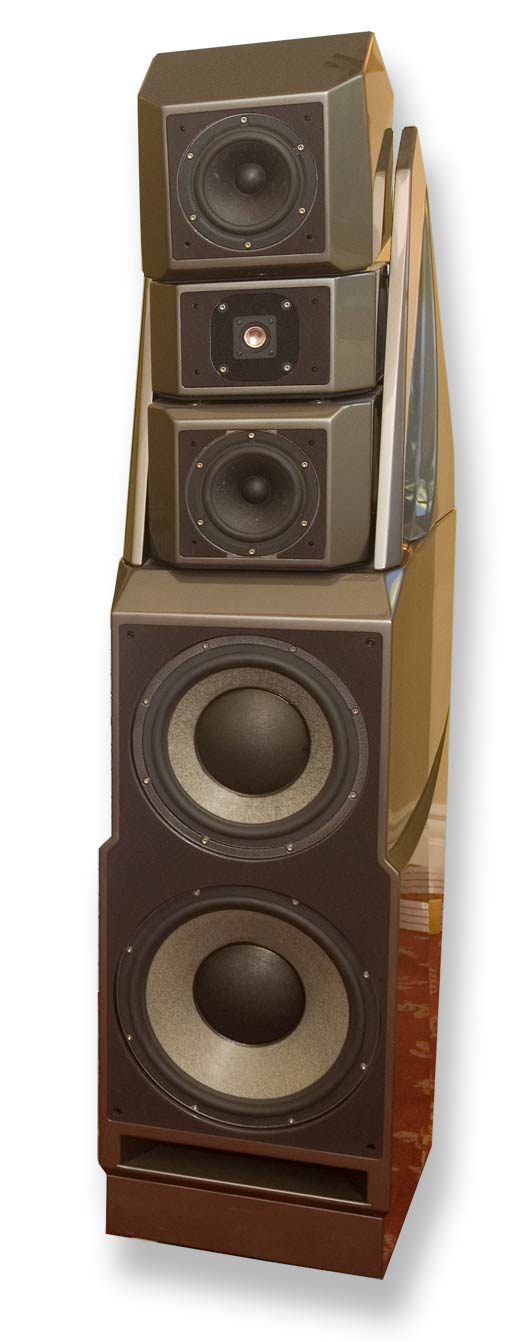
Wilson Alexandria X-2 speakers

[Now for something a wee bit different]

Not sure whether I should post these observations or not. Usually when we experience a product that we do not carry, we learn a great deal about how it performs unsatisfactorily in several areas. Useful information, no doubt, but it has always been unclear how we might present the information in a non-partisan light. However, in this case, we gained a good deal of experience about a product that we do not carry that indicated that the product performed quite well and that the detailed information about how it performed might be presented here for the benefit of both Wilson Alexandria II owners as well as casual audiophile blog readers..

I guess it is just that we have such a fount of information about how the big Wilsons sound, on VERY high-end, VERY well setup gear [an unfortunately quite rare circumstance in the Wilson owner community], that it seemed a shame to not share it here. Because there is so much misinformation about this speaker line [understandable when the systems recommended by Wilson dealers by and large are just vehicles for making a quick buck, not for producing an enjoyable musical experience for their customers], I will try and go into some detail about what we have learned [hopefully, Neli will remind me of things that I may have forgotten already :-)].

* Speaker Setup

Wilson apparently positions the speakers quite wide apart and significantly toed in, expecting the listener to sit by themselves in the sweet spot at the focus of the more or less equilateral triangle so created.

This may actually work for some people in some rooms, and it is nice and formulaic, not requiring the setup people from Wilson to do much time-consuming [and potentially panic-inducing] experimenting in front of the customer. But if you want your friends and significants to listen with you once in a while, or you want a more solid, real presence of musicians in the soundstage, or a deeper soundstage, etc. then this default setup is not going to serve you well.

Wilsons are front ported, which allows for greater mobility than rear ported speakers, and one just has to experiment a little with positioning until one is satisfied. One option is to toe them in so they point behind the sweet spot and position them close together, and then, slowly, move them apart until the presence [solidity] of the center images starts weakening. The speakers have optional casters, and at 700 lbs, this is somewhat easier than walking them on their spikes ๐Ÿ˜‰

Neli says: Let’s not encourage ANYONE to walk these things on their spikes [OK. I am a guy. I like to pick up heavy things. Really, I am not crazy enough to walk 700 lb speakers, but I do think she is talking to me here :-)]. Caster->spike (even if you have to go Caster->spike->caster->spike a few times) is fairly straightforward, the tools supplied by Wilson are quite robust and well engineered. Unclear to me when crossover changes should be made, and what their actual effect may be — given the effects of the spiking and positioning exercise.

* Stereotypes

The stereotypical sound of Wilson is that they are bright with excessive bass. These observations are, evidently, by people who have heard Wilsons with amps that are bright and have excessive bass [and inferior cables and source equipment, there is no doubt]. I have some degree [large] of frustration [anger] at how bad these associated components are / must be and how audiophiles are duped into buying them and living with them(!) for year after year.

We tried several system configurations with the Alexandrias, the most revealing of which is the Emm Labs XDS1 player either directly into the Audio Note Ongaku integrated or through the Emm Labs PRE2 into the Edge NL Reference solid-state amps. The cabling was either 100% Nordost ODIN or a mix with Jorma Design PRIME speaker cables – all of which are, as far as we have heard in shootouts and at shows [a necessarily limited test] the most revealing cables available. All components were on a HRS MXR equipment rack, M3 or M3X platforms, and Nimbus couplers .

I.E. We *HEARD* these speakers.

This system has significantly more resolution and presence and separation and musicality than the Lamm ML3 / Alexandria X-2 room at CES 2011. Not because the Lamm ML3 is not highly resolving [oh boy, is it!] but because some of the associated equipment of that system at CES has the tendency to make the music soft and dull sounding [it just takes one problem component / cable / rack to seriously muck up the sound. One. And if there is more than one, well, there you go.]. We hope to setup a ML3-based system in the near future – for all the problems with the CES 2011 system it was very, very promising overall.

* Unspiked versus Spiked

We were surprised at the effect spiking the speakers had. We both expected that the bass and lower midrange would tighten and the lower bass would be more authoritative. Instead, the

1) bass tightened and diminished a little bit, merging much more into the whole of the music

2) the entire midrange rightened [ah, a misspelling that makes sense :-)] and revealed noticeably more resolution. The sound flowed better. The notes were less round, but much less woolly as well. Enough resolution was added at the top end that the very, very occasional aggressive peaks now blended into the rest of the music.

* Overall character of the speakers

[using the $350K Marten Coltrane Supreme speakers as a reference standard for these $165K speakers]

Funny, but to me they sounded like were not as inert as 700 lbs of speaker might lead one to believe. This tends to lend a lack of ease to the music, and various notes / frequencies will pull to the speaker boxes. They are very slightly rolled off at the very top. They have good, high resolution but not excessive, down through the midrange. There is a definite resolution gap in the lower midrange to bass area [crossover area?]. And we did not play enough kinds of music with bass for me to say much about the bass resolution but I can say that the bass was not excessive and was decently controlled. Tonally they were ever so very slightly dark. Dynamically they were fairly well-balanced top to bottom and commensurate with other high-efficiency box speakers.

[I know, I know, I review things by pointing out their flaws…]

We did not play with adjusting the crossover nor tweeter cabinet angles, etc. [the latter is silly, we move around too much :-)]

To me, what I get out of all this is that the top selling [last I heard] high-end audio speaker manufacturer is actually building decent speakers. One can NOT say that about the top amp manufacturers or top cable manufacturers. Of course, these ‘top’ manufacturers ARE dropping like flies….

This is seriously commendable – they could just make junk and still make a good living, especially in our marketing-driven hobby/world.

Although the observations in this post only concern the Alexandria X-2, one has to wonder how much of the rest of the line is also incorrectly stereotyped.

* A final word

At the Alexandria II price point there are a couple of worthy competitors – and there are reasons why someone might prefer the commensurately priced Marten or Kharma [or even somewhat more expensive (2011) Audio Note Sogon speakers].

In NO particular order….

One would prefer Marten Momento speakers if one [and I do] wants to hear DEEP, DEEP into the music, EVERYTHING in the music, every last nuance – every tiny dynamic fluctuation, every last harmonic taste, everything that makes music music.

One would prefer Kharma Grande Exquisite Midi speakers if one [and I do (I am so screwed)] want to hear a very detailed, VERY musical, very enthusiastic presentation of their music

One would prefer Audio Note Sogon speakers if one [and I really, really do] want a big, dynamic, engrossing, involving, who-cares-about-anything-but-the-music drug-like-at-the-press-of-a-button presentation.

One would prefer the Wilson Alexandria II speakers if one wants a reasonable, all-round performer with excellent brand recognition and which has many large dealers in most cities in the U.S.

There are not many other large scale speakers out there that have the ability to perform at a high level. The Acapella Triolons. Perhaps the big Focals [Grand Utopia EM, which I have only heard with inferior equipment, which generated an inferior sound]. Most of the players I can think of in this market have just built an expensive speaker to get a [miniscule!] share of this [minuscule!] market. Or the speakers are [essentially] too difficult to drive with existing top-notch amplifier technology.

The point here is that, contrary to public opinion in the audiophile community at large, the Alexandria X-2 do not suck like much, much of the rest of the junk out there that we have to deal with, junk that creates legions of audiophiles who need a multi-step recovery program just to make it back into the world of enjoying the playing of music again.

So, yes, you can indeed avoid expensive audiophile therapy sessions if you have these speakers … just put some decent equipment on them.

Follow us on High End Audio Mattters

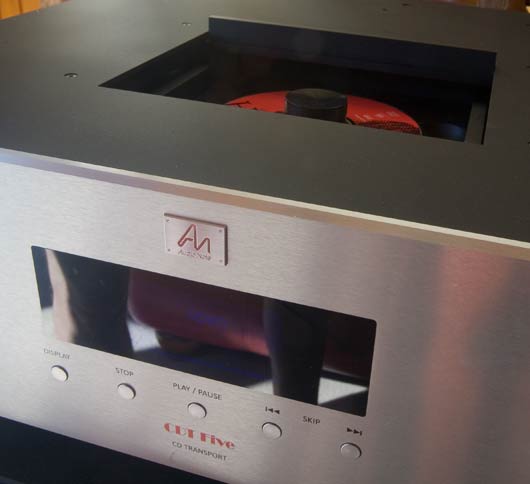
Audio Note CDT-5 transport and Fifth Element DAC observations

This $185K (2011 pricing), 3-box (CDT-Five Transport, Fifth Element DAC and its Fifth Force power supply) digital front end is somewhat difficult to describe and put into context except to say that it is so clearly better in so many. many ways than what has been previously available – it is hard to imagine even those audiophiles with preferences out there on the very fringe not easily, EASILY preferring this player over other players and most turntables.
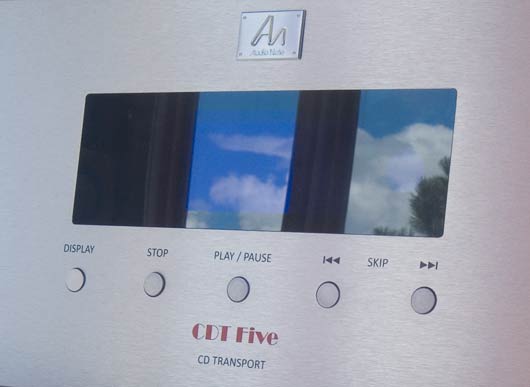
But, OK. Some details…

It is expensive. OK. Got that out of the way. ๐Ÿ™‚

It is also unquestionably significantly better than other playback, and by so a large a margin, that it is easy for one to fall into this “Why would I ever want to play anything else?” attitude and just stop thinking about what it is doing. You stop thinking in terms of “Oh, I wish we had an LP version of this CD” and start focusing on the music [and finding out where it has hidden itself in your collection if your collection is as unorganized as ours is :-)]

This playback is better in all the areas, if we are going to slice and dice it, that audiophiles might feel are important: if you are a detail head, this playback has so much more resolution that it restores your faith in science [more on this later]. If you are a harmonics-head, … oh boy. If you are a sound-stage head, or imaging-head, or dynamics head [later, later]… everybody who focuses on their must-have attributes – they will be ecstatic because they are all there to the max, glorious in all their splendiferousness.

[later] This may be hard to explain to people who are not familiar with what LPs do so well compared to CDs… but let’s try. CDs are supposed to have a larger dynamic range than LPs, but this seemed true only when one compared the softest possible note that these media can manage with their loudest possible note. But with ordinary notes, CDs have always sounded compressed. Dull. Not as lively as an LP. I have always thought ‘more dynamic range’ was essentially marketing BS. But… with the CDT-5/Fifth Element, the difference in dynamics between CD and good LP playback is so small, I do not know now which has more dynamics [it is close enough, I am not sure I care all that much to see which ‘wins by a nose’ here].
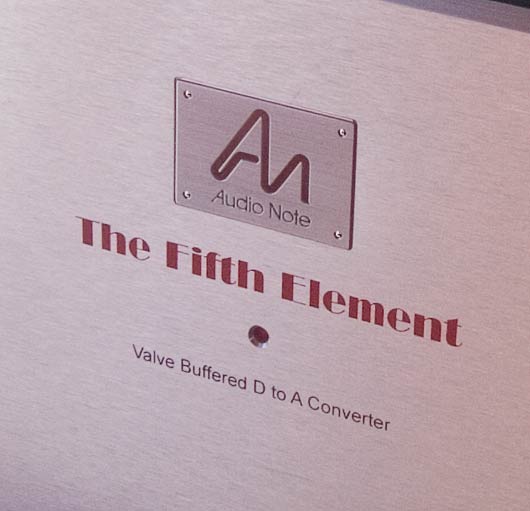

(the Fifth Element DAC. The metal appears slightly red because the nearby sunlight is reflecting off our bright red leather couch)

Let’s compare this stack to the Emm Labs XDS1. No we are not eating our young here, we love love love the XDS1, but I think it might help to compare the Audio Note to this very different sounding player that we have so much respect for here at Audio Federation. Although the XDS1 is only $25K (i.e. one EIGHTH the price) it is significantly better than all other solid-state players no matter their price and no matter your sonic preferences [Of course, the same can be said for their little $11,500 CDSA player as well, but let’s not go there…].

It might be instructive to revisit the ways in which the XDS1 excels as a CD/SACD player. First, it has an amazing ability to render the various threads in a musical score without jumbling them all up – not just great separation of notes, but of separation of sequences of notes, various harmonics and of the instruments themselves.

Second it has an extremely black black background. When a note decays you can hear it… hear it… still hearing it… until it ends or the recording engineer turns the volume down to zero. This also allow us to hear very very fine subtle notes and note characteristics. This might be considered another side to ‘high resolution’ – allowing us to actually hear the resolution that is there as opposed to artificially shining a light on the note attacks in various regions of the midrange as is so common amongst the competition.

Finally [skipping to the end here…] the XDS1 just sounds less digital and more like music. I always find this amazing, when comparing this player in shootouts. The other players do not ‘sound digital’ until one hears the XDS1… and then it is “OMG, how did I not hear this problem before?”

OK.

Back to Audio Note’s Fifth Element DAC and CDT-5 Transport.

This is a tube-based solution and therefore you might think it has its natural advantages and disadvantages.

BZZZZZZZZZZzzzzzzzzzt! Wrong.

Well. You are right but…

…just not as right as you think you are ๐Ÿ˜‰

The Audio Note digital source really excels in the areas where solid-state usually reigns supreme [love that word], it has higher resolution, better separation and Alllllmost as black a background in our shootouts [and, uh, maybe even a blacker background than the XDS1 – note-to-self we really have to move around some power cords to make this a little more fair].

In other areas it has [very very close!] the midi-dynamics of a good LP playback, it has a tonal truth that I have not heard ANYWHERE else [enough to make you cry when you realize just how poor our usual playback harmonics have been in this regard for the last 100 years]…. You can just add lots of etc.s here – but these are just some of the characteristics, the punching-me-in-the-face differences, of this digital solution compared with all others.

So…

It is 8 times as expensive as the XDS1… and 99% of all other players [many of which really, really suck – why do people buy this stuff? ]…

Is it 8 times as good?

It is this question, me trying to figure out what “8 times as good” means, that has taken me all these many weeks to understand [I could have written the above review in the first 10 minutes or so of hearing the Fifth Element/CDT-5].

One could approach this in this manner: The Fifth Element/CDT-5 is to the XDS1 as the XDS1 is to the…. well, I am not all that familiar with $3125 CD players. One could look at a used Audio Aero Capitole [$4K? a steal] or used Emm Labs CDSA [$5500K how do other solid-state CD player manufacturers stay in business…] or …

So, yeah. 8 times better.

One could also approach this as in “Where is the best place for me to spend $200K in my system?”

๐Ÿ™‚

Well, it depends on your system and budget… and really, if you play CDs and want your CDs to sound their best and you just want to KNOW they sound their best and you don’t want to waste your life not listening to the best [which pretty much DOES describe myself, when I have the funds… (oh, and Neli? *sheesh*, she is more gung ho than me half the time)]
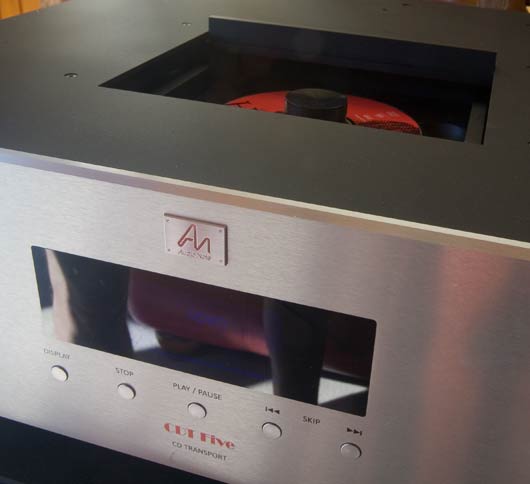

(the CD is IsoMike’s release of the Fry Street Quartet playing Haydn)

For the first time since Audio Federation started I started bringing out old OLD CDs. Old Cocteau Twins. Old Patrick O’Hearn, Old Pink Floyd live concert bootlegs [you never seen 3 people more hypnotized by the music – ever have a hard time blinking? – as we listened to an old version of Echos. Magic? Drug-like? How about Warp Drive-like]. Old Jefferson Airplane…

Let’s use Surrealistic Pillow as an example. A gold CD from 1985 or so. Sounds horrible. Seriously, seriously mucked up, man. Especially the complicated electric guitar sections – bright, confused, over-saturated, noisy, you name it. On the CDT-5/Fifth Element you could hear exactly how bad it is – but it wasn’t painful and there wasn’t any problem with listening to the whole CD. This digital playback is really good at stitching together the stuff it finds on CDs and making notes and stringing them together into music. This makes it sound nothing like a ‘digital sound’ with good CDs and makes bad CDs also not sound like digital, but instead like just good, but very badly recorded, music.

Typically, bad CDs are very painful to listen to because their badness, often very aggressive digital-sounding notes, is too hard for most players to handle – and those that can handle it, it is because they just dull and smooth the notes down to round blobs… which of course they also do to all kinds of music played, good or bad. But the CDT-5/Fifth Element does not sacrifice resolution or detail – instead one might say it is the over abundance of resolution, and perhaps especially harmonic resolution, that allows us to have our cake and eat it too i..e very well recorded music has all the detail you will ever be able to hear and bad music is actually listenable and to some extent enjoyable [limited in this case by our knowledge that we should be able to find a better recording of this if we could just get our lazy butts off of the couch :-)]

OK. Kind of a longish review. I won’t bore people with the “equipment has to go back, hate to see it leave, wish we could afford it” end-of-review cliche.

Instead, I will mention a way we use to make us psychologically come to terms with this eventually having to go back to the continent [it is AN’s show digital]. We could just not play music for a couple of weeks – and let the memory dim. We could throw a tantrum and stomp our feet [Oh, I so much want to do THIS!]. We could close Audio Federation, sell a lot of demo stuff off the floor, and just order them up.

But, another perspective is… we now know what the best digital is. No question. And there is nobody else really trying to make the best digital [though they are good at making the most EXPENSIVE this or that out there, and, with the press, the most hyped]. So we put it on The List, we look at the budget, and when we can afford it we will get it back. The hardest part – the analysis and getting to the actual buying decision, is done. And meanwhile we can enjoy other digital, hearing some issues they may have but that is OK. The CDT-5 transport, Fifth Element DAC and Fifth Force power supply are on our (capital ‘L’) List, don’t you know?…

i.e. …They’ll Be Back.

[thanks Jim, I think I stole this perspective from you(?)]

A More Formalized Description of System Faults (part 2)

[Where we try to use the formalism of the previous post to shine some light on the turnkey solutions for magical drug-like system design]

Looking at Mtotal from the last post, the total mutation (some might say mutilation) of a signal from a music source by a system of components can be divided up into several parts:

Mtotal = Mdistracting + Mrequired + Mmagic

Similar to Jim from Encinitas’ observation that [paraphrasing] a system has to sound real enough to satisfy and occupy our minds so that the magic of the music can reach our hearts… the equation above says that for the total mutated sound of a system, Mtotal, to be magical, we have to minimize the mutations that are distracting [like brightness] and those that filter out the good stuff [i.e. remove microdynamics and subtle information] because, optimally, we really want Mtotal = Mmagic, where Mmagic is the set of all allowable mutations to the sound that do not affect its magic.

I am not sure this approach reveals any more information about how we can design a turnkey magical system at a given price point. Distractions that are significant might be a slightly shallow soundstage for one person and a lack of macrodynamics for another. Mmagic might be just plain whatever is on the media for some [most] people whereas others want a slightly exaggerated harmonic richness perhaps[?].

Perhaps what we really want is to do, with only a slight nod to the formalism here, is to create a spreadsheet-like approach where everyone fills in their preferences and wham bamm we get a lit of components [speakers, cables, amps, etc] that are best suited to our tastes at various price points.

For example, I might fill in (on a scale 1 to 10, 1 is most important):

Mdistracting [Do NOT want]
tonally incorrect 1
dull sounding 2 (a little dull sounding is OK)
bright sounding 1 (a little bright is 3)

Mrequired [Do very much want for it to sound reasonably real]
micro-dynamics 1
separation 2
good tone 3
rhythm 6

Mmagic [Do very much want for magic]
micro-dynamics 1
separation 2
good tone 2
rhythm 6

This means that it is very important for me that micro-dynamics, separation and tonality get through the signal chain from the source media to the speakers to my ears, and it is also very important that in so doing the signal is not made very dull, bright or tonally incorrect.

I wonder if it is just me, but the things I kind of require for something to sound reasonably real can, when one or more of these same things are rendered EXTREMELY well, often become magical for me.

A More Formalized Description of System Faults

In the previous post “What Absolute Sound?”, when trying to describe various issues with systems with more and the minimum number of components in the signal chain, the idea of describing a system as a chain of Filters and Mutations came up.

Since a Filter is just another Mutation, one can describe a system of ‘n’ components as a sequence of mutations M on the signal coming from the source media:

Mtotal = M1 * M2 * … * Mn

Where M1 is the mutation caused by component #1, M2 by component #2, etc. A component can be an amp, cable, speaker, the room… everything that affects the sound of the system. A typical mutation might be one that removes some dynamics, it might exaggerate note attacks in the midrange, it might shift the harmonics a little bit in the upper frequencies, etc. or it might do all of these things.

For example: if M1, a cable, is lean and only lets through 90% of the bass and M4, a preamp, is also lean and only lets through 70% of the bass, and all other components are bass neutral, then the system lets through 0.90 * 0.70 = 63% of the bass.

A “balanced” system is one where all frequencies are mutated the more or less same way.

A “pseudo balanced” system is one where various frequencies that are mutated significantly by one component are ‘almost’ counterbalanced by a mutation in another. I.E. if one mutation is bright, exaggerating the attack of treble frequencies, then another would have to be rolled off on top, or in some other way unexaggerating the attack in the treble somehow so that, overall, the frequencies in the treble end up being mutated the same way as the frequencies in the midrange and bass..

An “optimal system” is one where the mutations M are very small and have no significant effect [in practice, there is always a slight filtering of the signal as it winds itself through cables and connectors and various cir5cuities. Also a slight leanness or bass emphasis might be present and detectable. All else being more or less mutation free or sufficiently nuanced as to defy easy detection].

Vintage Voltage Expo (Denver)

Vintage Voltage Expo March 27, 2011 Ramada Plaza Convention Center

Dear friends and fans of vintage audio,

The 5th annual Vintage Voltage Expo is in just 3 weeks! We’re only hosting ONE show this year – back to our annual March schedule at the Ramada Plaza in Northlgenn/Denver.

Over 1,500 dedicated fans of vintage audio, radio and music gear attended our show last March! Every year more and more people are finding out about us!

WANT TO SELL? Register now to be a seller at www.vintagevoltage2011.eventbrite.com .
More info at http://danacain.com/vintage-voltage-expo/ . Dealers Tables are $40 or 3 for $100.

LIKE US ON FACEBOOK! Be part of the year-round community.

And for those of you heading up to the Big K Record Show today – Have a blast, look for our fliers and help us spread the word!

General show info follows. See you in 3 weeks!
– Dana

Sunday March 27, 2011

Ramada Plaza Convention Center

I-25 at 120th Ave, Northglenn/Denver
10 am – 3 pm
(Early Bird admission: 9 am)

Winner:
BEST VINTAGE ELECTRONICS

Loads of Vendors from Around the Region Selling:

vintage electronics – old school audio gear – tube amps – antique radios – transistor radios – speakers – turntables – vintage LPs & 45s – hi-fi – synthesizers – stereos – 8-tracks – electric guitars – amps – vintage TVs – ham radio – commercial equipment – video games – parts – and MORE!

— All kinds of cool old electronics and music stuff! —

It’s like a:

– Antique Radio Swap Meet

– Vintage Audio Convention

– Record Collector’s Show

– Used Electronics Flea Market

– and a Vintage Guitar Show

ALL IN ONE!

Bring a FRIEND and come on down! It’s Guys’ Day Out!

COLORADO RADIO CLUB:
The Colorado Radio Collectors Club (CRC) will be hosting their big annual show within our show! Don’t miss this chance to see LOADS of the best radios in the STATE! Big Radios, Little Radios, Old Radios and Even OLDER Radios! This is a REALLY GREAT bunch of guys! For more info on the club, visit www.radioace.com

VINTAGE VOLTAGE EXPO

Admission: $5.
Kids under 12 Free.
CRC members FREE.

Early birds ( 9-10am) $10.
(if you want first crack at this stuff!)

Vendors:
6-ft Vendor Table: $40
or 3 tables for $100
Set-up 7 – 10 am.
Tear down – 3pm (no early tear-down)

Payment Options:
Pay online with credit card at:
www.vintagevoltage2011.eventbrite.com

or mail check to:
Dana Cain (made out to me)
5061 S. Stuart Ct. Denver, CO 80123

More info: http://danacain.com/vintagevoltagexpo.html

Please Forward to Interested Friends, Groups and Lists!

What Absolute Sound?

This subject comes up periodically on the forums and recently on this blog – the subject being how can modern music be used to test the sound of a sound system – and are we not really dependent on comparing what unamplified acoustical instruments sound like on our systems versus what they sound like in reality?

I.E. do we need a reference ‘perfect’ sound with which to determine just how much fidelity our high-fidelity reproduction systems have?

Definitely an aesthetically pleasing argument. But does it hold up? Is this the ONLY way to ascertain fidelity of a system?

Personally, I find it too limiting.

First, one can argue that there is no ‘perfect’ sound – that our recordings of, say, a piano are so very far from sounding like a real piano and that we cannot ask our systems to sound like a piano if the source material does not sound like a piano. A corollary to this is that 99% of people have no idea what a piano sounds like. And much fewer what the particular piano sounded like that is being recorded – in that particular hall – at the location of the particular microphone(s).

Second, that many people cannot tell the difference between a modest stereo system’s reproduction of a live band and the live band itself. I think Dunlavy used to hold these demos [using very modest albeit dynamic systems] in their factory. [I am very familiar what an acoustical guitar sounds like from 2 to, say, 10 feet away. I can be ‘fooled’ sometimes because my ear will focus on a limited number of cues: the note attack and note decay and note harmonics (of the guitar body and other strings, as well as buzzing against the pick and or frets, etc) ].

Third, music like Radiohead is recorded better and has a higher fidelity to the original music because so much of the original music is electronically generated – this is its natural medium. It doesn’t have to go from vibrations to sound to microphone to weak electrical signals. Radiohead is great for testing – and fairly unique – because it is both complex and recorded very very well. Classical music, when complex, often has issues because the instruments are so spread out they are hard to record with a single microphone – and multiple microphones introduce problems, etc. etc.

So a conclusion here, it seems , is that one has to pay freaking close attention to the sound of the reproduction even if it is purportedly of an acoustical instrument. Are the notes rendered well, how does the music make us feel, etc. And we also compare to other music we have heard on this system as well as this same music we have heard on other systems as well as other music by the same band as well as how other sources (LP, CD, Tape, SACD, etc.) of this same music has sounded in the past.

It is all about triangulating and interpolating and comparing and re-comparing sound to other sounds – and whether that sound is an acoustic instrument or a electronic keyboard or a voice or whatever – it hardly matters IMHO.

OK. My usual argument went like this: very, very few people give a darn whether their music is from an acoustical instrument or not – they just care about the MUSIC and THAT is what has to sound good and have high-fidelity. The question of whether a piano can be reproduced well, and whether reproducing a piano well means it can also reproduce Hendrix’s guitar well, is fine to debate but one could just as well shirt-circuit the whole mess and just listen to a recording of Hendrix’s guitar. I.E. one listens to music one likes and if that sounds correct, with respect to memories of live performances and memories of similar music on the system and similar systems, then one is happy happy.

Radiohead: The King of Limbs (Review)

A new Radiohead album was released by the band:

The King of Limbs

Last night we heard the uncompressed WAV file burnt on to a black CD at 10X speed. We played it on both the Audio Note CDT-5 transport with the Fifth Element DAC, as well as the Emm Labs XDS1 CD player. Both digital front ends were going through the Audio Note M9 Phono and Audio Note Ongaku into the Coltrane Supreme loudspeakers.

The MUSIC

There are 8 songs for a total of about 38 minutes. They are a pretty direct descendant of their last album ‘In Rainbows’. Most of the songs have the recent signature Radiohead sound vis-a-vis an evident extreme attention to the detail of every single note and sound.

There is with a lot of stuff going on in these songs. creating an enveloping sonic ocean that, for me, appeals to the heart in equal proportions to the mind. The last song was a little different from the others – sounding a lot like Cocteau Twins but with the addition of a drum machine.

We liked it quite a bit, although it was much too short.

The SOUND

With all the evidence that CDs burnt from LPs and Reel-to-reel tapes can sound better than commercial CDs, I had wondered before I heard this whether this CD burnt directly from the WAV files directly from Radiohead might sound better than the typical commercial Radiohead CD.

In my opinion, this CD did not sound better than the typical Radiohead commercial CD. We need to do more back and forth listening, and I will update this if my opinion changes, but this CD is more reflective of the CD quality of, say, circa 1997-99. Plenty good for listening to – and enjoying – but not outstanding [for example, things like soundstage depth and harmonic purity were just average… actually a little below average].

Follow us on High End Audio Mattters

State of the systems at Audio Federation

A little update on the state of things here…


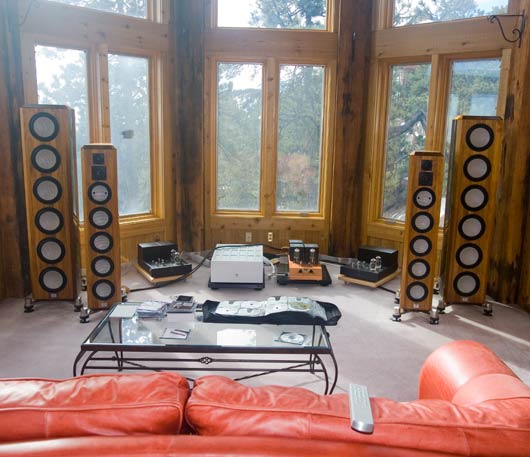
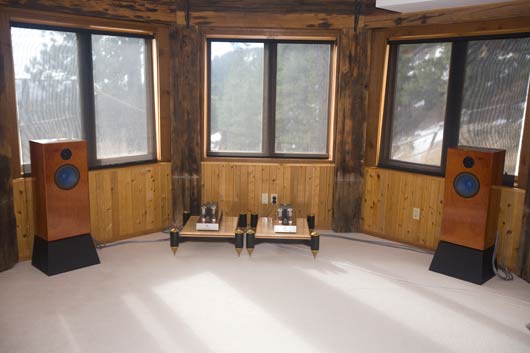
The Audio Note Ongaku integrated is on the Coltrane Supreme speakers. Those are the Lamm ML2.1 waiting in the wings. They were used as part of a recent out-of-towner audition. [Yes, the speaker cables are taking a shortcut over the Marten crossover – a little cable dressing no-no but, well, it ain’t going to reach otherwise].


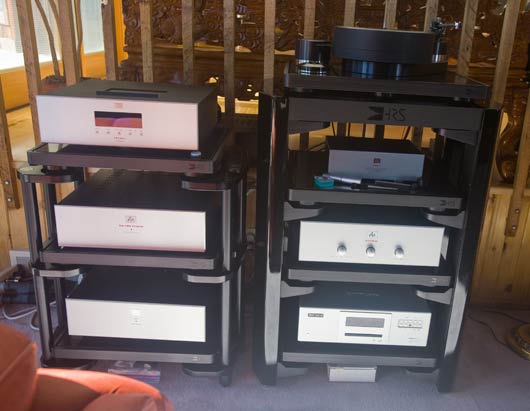
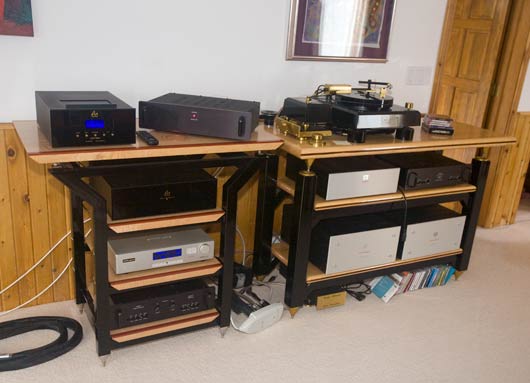
The deathstar [mixing movie metaphors here, I know] Audio Note digital is on the left: The CDT-5 transport, the Fifth Element DAC and Fifth Force power supply. On the right is the Brinkmann turntable, the Audio Note S9 step up transformer and the Audio M9 Phono preamplifier. On the bottom there is the Emm Labs XDS1 CD/SACD player.


Downstairs we have the Audio Note Kegon amps driving the Audio Note AN/E SE Signature speakers.


On the side we have a lot of stuff. We have the Audio Note CDT-3 transport and DAC 4 Balanced into the Emm Labs PRE2 linestage. We also have the Walker turntable into the Lamm LP2 phono preamplifier. Other components – not hooked up – and the Audio Note Kegon Balanced amps and M3 RIAA phono preamplifier.


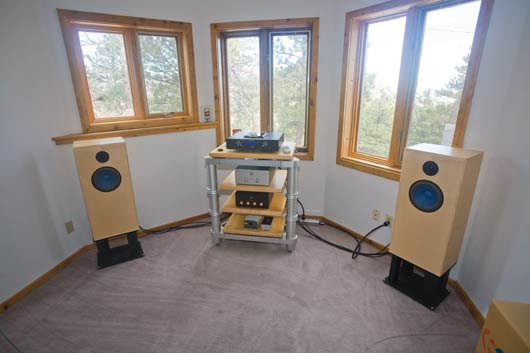
In the small room we have the Audio Aero Capitole CD player and the, I think Neli has the P1 hooked up, driving the AN/E SPe HE speakers.

Radiohead: The King of Limbs

A new Radiohead album is being released by the band:

The King of Limbs

It is downloadable (MP3 and uncompressed WAV) on Saturday. We hope to hear it Sunday [thanks Mike!] burned on a CD. We will be playing it through the Audio Note CDT-5, Fifth Element and Fifth Force digital and perhaps also the Emm Labs XDS1 and 1) see how it compares to ‘CD quality’ and 2) hear their new album ๐Ÿ™‚