
Pursuing the Ultimate Music Experiences

Audio Federation High-Fidelity Audio Blog

Boutique hardware

I find the escalating prices of high end audio gear both frustrating and fascinating

For example, the first amp from Dan D’Agostino after he left Krell. It is $45K.
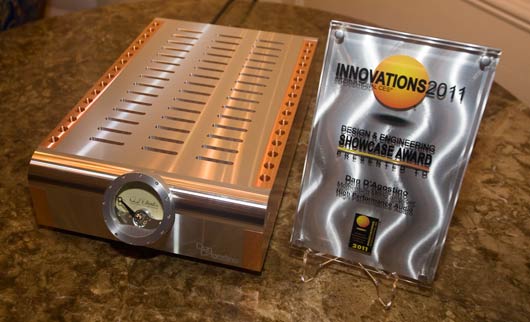
d'Agostino amp

Another example is Tenor, who after a career of making more or less average priced high end amps in the $20K to $30K range went under for a bit and then came back with an amp in the $60K [hard to find a price] region.

There are many other examples. Soulution is another, although they have been around for a few years. The Continuum turntable another example.

And these are established brand names. Many, many others come from nowhere.

What is going on?

I tried to compare it to the clothing industry.

So, say, you have Versace and they come out with $1000 pair of jeans [maybe they have, I do not know]. We look at them and see a whole line of jeans [and many other types of clothing], at a wide range of prices and all fairly well-regarded, if expensive.

This is the model for most high-end audio manufacturers up to a few years ago.

OK.

Now, one can continue along this line of thought and imagine that a leading designer at Versace [as opposed to Target or Sears] leaves and creates their own line of boutique jeans. Maybe they then go and come out with their first pair of jeans and price it $1000. One looks at the pedigree/cred of the designer, and A) the quality of the jeans and …

… there will be some B) people who want their clothes to be one-off, or very unique, or to be the first to discover a new designer, and are willing to pluck down a large chunk of their money on the jeans.

The problem is that A) is quite a bit more evident for jeans than it is audio equipment [which requires lots of associated equipment to be evaluated, etc.] and B) [explorers] I do not understand, personally, but people do seem to want to own something new and unique, albeit all the time hoping that it becomes the height of [high-end audio] fashion and quite popular, making them the ‘discoverers’.

It is perhaps the case then that boutique high-end audio manufacturers that have just a few very high-priced products are catering to that small segment of us who enjoy shopping using the B) explorers approach. The problem might be that as soon as one of these becomes slightly popular and successful, the explorers will look elsewhere. They then sell the gear, which then saturates the used market.

So how to avoid this trap if you just have a few products? 1) Put out a new version of the product or 2) broaden your product line:

1) guarantees the immediate saturation of the used market – so it is a little scary if you only have a few products. Some of the previous owners will go elsewhere, but a few new owners will be added, seeing the product as maturing and more desirable now. But as versions increase, the customer base withers. Unless a miracle occurs, this kind of guarantees the manufacturer will not grow beyond a niche status and will eventually fade away.

2) this is expensive and time consuming. But it does build a sustainable brand for the long term.

So, here is a question. How many products does it take to make a ‘broad product line’?

Take it beyond audio again to… hybrid cars. The SmartCar versus Toyota’s hybrids. You can see how having several options allows a manufacturer to weather changes in fashion and economies.

As a counter example, however, take Porsche. They do not have many models [although fairly recently adding an inexpensive model and a SUV]

That is what I meant above by ‘unless a miracle occurs’. I am sure all boutique manufacturers want to be the Porsche of their niche. 🙂

But it takes both a miracle [IMHO] and work. Porsche has a long history. They race their cars. They featured them in movies. Famous people drive Porsche. They put a lot of work building their boutique brand. So I guess that gets us:

3) put a LOT of work into building your brand when it only has a very few products

———————-

I guess the whole point here is that this is really fringe behavior – where established brands are not treated any different than brand new ones, where the pedigree of the designers is not examined very closely, where products are not compared to each other so it remains this real mystery about just how good something really is.

On the other hand, of course, this is a lot of the charm of this industry too. Kind of the wild west with a lot of wild characters doing wild and crazy things. I have no problem keeping it wild, just so long as we all kind of understand and appreciate just how wild and crazy things really are.
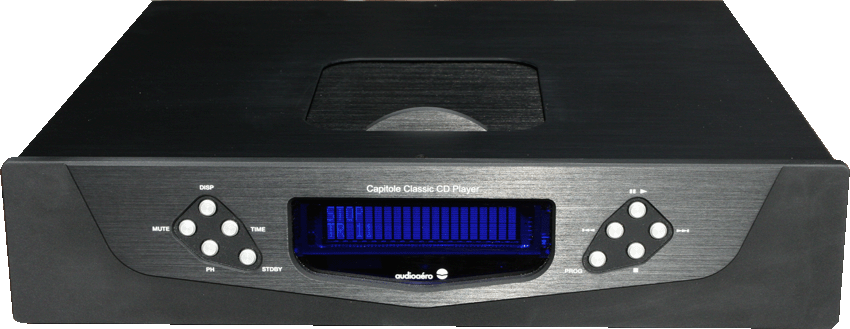
HRS damping plates on Audio Aero CD players

[And here we answer another question, this time about HRS damping plates on Audio Aero Capitole CD players]

Dear Sirs,
I contact you because I´ve just bought an Audio Aero Capitole Classic CD Player (Similar to the Capitole Reference without preamplifier section. I Attach a photo).
I red that you strongly recomend the HRS Dampening plates. (you wrote: “The player’s sound was somewhat improved with a mid-size damping plate centered on the top of the unit especially with respect to the detail and articulation in the bass extending up into the midrange.. Unfortunately, this requires moving the damping plate every time the door is slid open to put on a CD – but putting the damping plate on the side of the unit resulted in a diminished soundstage and incorrect imaging.”)
As you saw, my AA Capitole Classic doesn´t have the door problem as the Capitole Reference.
I want to know if you still recomend the mid-size damping plate for my AA. I saw other AA owners that use many damping plates.
I will apreciate your recomendation.

Hi X,

The optimal position and number of damping plates on top of the Capitole, or any component for that matter, is usually only found through a process of trial and error. I think this may be because the vibrations found at the top of a component is so unpredictable, depending on the chassis and other aspects of the component, as well as the feet used under the component, as well as the equipment rack itself. The top of a component is kind of the end of a ‘vibratory chain’:… floor -> rack -> feet -> component -> top of component…

We usually recommend that you start with the HRS Nimbus (feet) first. an HRS Isolation Base (if your budget allows) and then tune the final result using the damping plates. The Nimbus feet give an immediate, predictable, no fuss improvement in just about all aspects of the sound – especially under the Audio Aero players.

That said, around here we occasionally do still use damping plates on the Audio Aero players. However, we use them much more often on the much less expensive Audio Note players [at the bottom part of their line] which have lighter weight chassis than the Capitole.

Hope this helps!
-Mike

John Barnes

John Barnes, a local dealer (Audio Unlimited), passed away unexpectedly last week.

John ran a high-end audio dealership out of a house in the middle of Denver, and was our unwitting inspiration for starting Audio Federation. Audio Unlimited was our primary [only] competitor in the Denver ultra high-end audio market [less so in recent years] but John was always friendly, down to earth, and good-natured about it all.

I would run into John at shows, all the RMAFs and sometimes CES, and he’d always make a few jokes about the number of photos I was taking or whatever and a few jokes about the magazine coverage of these shows [he did pretty darn well at this… harrumph], the state of the Denver market [nobody is happy about it, let’s just say], and other things that made us relative newbies [not so much anymore, this is our 10th year] feel comfortable and welcome.

Thanks, John.

Audio Advistor, Music Direct, Acoustic Sounds… the big time… or last gasp?

OK. Well. The title kind of says it.

When a product starts appearing in one of these, the 3 big high-end audio mail order catalogs [we can all elusivedisc here too], what does it mean? What do people think?

Is this is kind of similar to them appearing in Ultimate Electronics (bankrupt now), Tweeters (bankrupt), Circuit City (uh…), Best Buy (still with us), …

Is it an act of desperation on the part of the manufacturer? Is it a vote of no-confidence in their dealer network? Is it the old extended ‘middle finger’ to their dealer network? Is it a way to have ‘internet sales’ without ‘being on the internet’?

Why do people buy from these catalogs? Do they have more confidence in a telephone jockey who has never heard any of this gear than in a dealer? Are they unable to find their dealer [what with all the geographical restrictions and many manufacturers not listing their dealers, requiring the audiophile to make an extra call]. Do audiophiles feel that dealers are just plain more obnoxious sales people than a catalog sales person?

Is it just the convenience of leafing through a catalog, or browsing an [well done] online store – combined with the ease of clicking Buy or just dialing the number printed on every page – that allows these catalogs to make sales?

Ultimate Electronics (Sound Track) had good catalogs. But they died. However, they were put out, I think twice a year, not every month. So maybe that is the difference. I do not think Amazon killed them – the prices weren’t all that different, and the convenience factor of shopping locally is huge. The Ultimate Electronics sales people were often creepy, though, which can be a bother.

Anyway, I see brands in these catalog, some of which we carry even, and we hear various reports of how these mail order catalogs DO and/or DO NOT [all insider info we have heard to date is that they DO NOT sell much gear – but let’s ignore that for a bit] generate any sales. And it is just a strange kind of eco-system, separate from the fray of actually listening to music, playing music for other people, meeting people, making friends, investing in equipment to show people, etc. and in some sense they should not be very successful.

But we do see various brands that had not previously been associated with ‘mail order’ in these catalogs – new ones every month [and some dropping by the wayside]. And it always makes us wonder…. why? Are manufactures trying to sell mass quantities through these catalogs, giving up on their withering dealer network?

Should dealers themselves be mailing monthly catalogs out? Should they have online ‘stores’, perhaps without carts, but offering the audiophile a pleasant browsing learning experience? Perhaps all us dealers should get together and create a giant – UN-mail order SUPER catalog for the rest of us – automatically routing audiophile’s inquiries and sales / pickups to their local dealer?

Thinking about car manufacturers (like audi.com) they do some of this, and even some high end audio manufacturers do some of this, but perhaps they need to add a Buy Now button, offering no fuss no muss buying and local pickup. Then they would actually support their dealers, the new internet economy, and their customers – as opposed to running from the internet and disenfranchising their dealer network – which is what is happening now when they sign up with the mail order catalog industry.

That is if the DO make money… that these mail order catalogs DO sell equipment (and not just music). What if they DO NOT?

Manufactures definitely appreciate the additional eyeballs / mailing lists that these places have built up. But they do not have as many eyeballs as one might think [about 6 to 10 times as much as this blog does on a good month].

In the end, after all this, are these catalogs nothing but audio porn? People read. People lust. People wish fervently. But in the end – nothing real comes of it?

[These catalogs give Neli heartburn. However, I do not mind them at all; they are kind of like a hard copy brochure-ware-type show report with a lot of photos of gear and some facts. So I just thought I’d explore the world of mail order catalogs here a little…]

The Gell-Mann Amnesia effect

[Hopefully people can abstract this somewhat humorously described concept below to understand that this quote is a reminder that we also have to take all high-end audio reviews with a grain of salt, to view them with trepidation and suspicion, to look askance when they are in our presence, to… 🙂 – in particular those reviews by reviewers who have shown that they will sometimes pound the table and insist that ‘wet streets cause rain’].

Briefly stated, the Gell-Mann Amnesia effect is as follows. You open the newspaper to an article on some subject you know well. In Murray’s case, physics. In mine, show business. You read the article and see the journalist has absolutely no understanding of either the facts or the issues. Often, the article is so wrong it actually presents the story backward—reversing cause and effect. I call these the “wet streets cause rain” stories. Paper’s full of them.
In any case, you read with exasperation or amusement the multiple errors in a story, and then turn the page to national or international affairs, and read as if the rest of the newspaper was somehow more accurate about Palestine than the baloney you just read. You turn the page, and forget what you know.
—————————————————— Michael Crichton

(Jinro, Tenor, Lamm, solid-state) Amps for Kharma mid-size speakers for mid-size rooms

[We often get questions sent to us by email. Often the answers take a good deal of time to write – and after we respond we hardly ever hear back from the questioner. So, although we have talked about doing this for quite awhile this is the first time that, when the answers seem to be useful to a wider range of people, we will start posting them here. We will keep the questioner anonymous unless requested otherwise.

I originally wrote this presuming the person was not in the U.S….]

—————————————–
THE QUESTION

Dear Mike and Neli

Reading your web site and audiogon we have very similar taste in music systems. Please let me know your thoughts that will help me with my next system. I have to ask you because

I won’t have a chance to listen to all combinations. I currently have Edolon (older) and CAT JL2. But there was always more music coming from my friend’s Kharma3.2/Tenor 75w OTL.

I think of moving towards Kharma speakers. Not quite sure which system to end up with. I consider following

1. Kharma Mini/Lamm ML2.1
2. Kharma Mini/ Tenor 75W OTL
3. Kharma Midi/ Tenor 300 hybrids
4. Kharma Midi/ MBL 9008 monos

I don’t have enough funds to go for Audio Note Ongaku amps

I really loved Tenor 75W OTL but didn’t have a chance to hear Lamm ML2.1.

Most people who heard both ML2.1 and 75w OTL leaning towards Tenors OTL. Jtinn and Mike Larvin preferred Kharma Midi/Tenor 300 hybrids. Also Tenor support was questionable for these older Tenor models and, on other hand, Lamm support was fantastic.

I will have medium size room, so both Midi and mini will do fine there.

Please let me know what would you choose in my situation?
————————————————–
THE ANSWER

I imagine that your current system sounds a little too laid back, especially at various frequencies? Much as I love the Avalon speakers, I have not yet heard an amp on them [so far!] that makes have that drug-like sound [would love to try the Ongaku someday :-)]

The Kharma 3.2/Tenor 75w is a VERY magical combination – especially w/r to midi and micro-dynamics – missing only some slight harmonic color and, of course, some of the authority and fill that a larger speaker usually has. This is a classic system. A direct upgrade is indeed perhaps the Tenor 75w on the Midi – which we have heard but as you might expect there will be some ultimate SPL limitations [and may tax the 75w to the point that it blows up more often, more often than not taking a few speaker drivers with it when it does, as the 75w’s are wont to do].

Which begs the question: what is a ‘medium-sized room’? How loud do you listen? How important is rock-solid bass at high SPLs? Why are you not just getting a 3.2/75w and putting an awesome front end on it with the left over $$$? How would you improve your friend’s system sonically [louder? more neutral? more bass? …]

OK. On to the amps…

* The ML2.1 did not drive the Mini to our satisfaction in a 15×28 foot room [5 x 9 meters] unless you are going for very intimate nearfield midrange nirvana – the speaker may be harder to drive than the Midi, and is definitely harder than the 3.2

* The Tenor 300 hybrids did not have much [any?] of the magic that the 75w OTL did

* The new Tenor hybrid are $$$ and an Ongaku is probably cheaper and definitely makes more music unless you are looking for big, BIG SPLs

* The MBL… Kharma actually does not sound bad with solidstate amps. It will not be like your friend’s system – the sound will be bigger, more room pressurizing [if you know what I mean], more authoritative. But less intimate, less PRaT, less musical, less mini- and micro-dynamics etc…

The Lamm hybrids should be mentioned, they will be a powerful denser harmonic sound – but this may be too much like your current system, albeit a good deal more lively [but just not as lively as the Tenor OTL on the 3.2].

I would pick an Ongaku or Lamm ML3 🙂 if I were you and you had the funds. Well, I am of the firm belief that we all have to always be well prepared for the non-zero probability that funds might start falling out of the sky in our general direction. 🙂

You might also consider the Audio Note U.K. Jinro ($22K USD or so. It is a copper version of the Ongaku, which uses silver) which will drive the speakers fine – with less resolution [both w/r to detail and harmonics] than the almighty Ongaku but good midi- and micro-dynamics fairly close – but not quite – to the Tenor 75w. And it won’t blow up and is an integrated. This is probably your best choice for a sound similar to your friends but bigger and I might almost say better in every way [I could say ‘better’ with confidence if you milked all the dynamics possible using HRS vibration control, and the right cables and power cords and sources. Especially with the Mini Exquisites which are just oozing harmonic and inner detail]

In the end, on a budget, I would choose the Jinro or the solidstate solution [not just MBL, but Edge, Vitus etc. We made a list on the blog of the better solidstate out there… an older link is HERE] and then tune the living daylights out of the signal you are giving them [i.e. cables and power cords and rackage].

Oh! the Wilsons… The ML2.1 on the Watt Puppies…. Let’s just throw in the Sophia and Sasha in this discussion too. And the Marten Coltane too [I am presuming you are looking mostly at the used market given your selection of possible amps, half of which are no longer being made]. You will have some ultimate SPL issues here too which I do not know will be a problem for you are not. I like these Lamm combinations a lot – although it is a ‘different musical’ than the Kharma/Tenor. It is more stately and sensual as opposed to exuberant and exciting. I think of these as comparing a wife to a girl friend. Both have their good points. [I, personally, did not mean that last sentence to apply to myself, Neli :-O :-)].

——————————————
Hope people find this kind of Q&A interesting…

Why Some Equipment Gets Reviewed and Others Not

This is meant to be just a dispassionate enumeration of the ways that I have observed that the press decides to review a piece of high-end audio equipment (or room at a show). Not saying whether any of this is good or bad; in this world, in this economy.

1. The manufacturer or exhibitor is a heavy advertiser in a magazine [getting this contentious reason out of the way up front]. A certain percentage of reviewers at a magazine will naturally feel appreciative that their mag is being supported by these folks.and write a few kind words

2. Wining and dining [often mass quantities at a show :-)]. A certain percentage of reviewers will naturally feel appreciative of the wonderful food, beverages, cigars, etc. and write a few kind words

3. Being treated as if they were the most important and wonderful person in the world [i.e. the exhibitor or manufacturer is a good sales person]. A certain percentage of reviewers will naturally feel appreciative of the respect being given and write a few kind words

4. An individual reviewer likes the manufacturer, exhibitor, or their products and/or likes what they hear [Reviewer as Champion – perhaps the most ethical reason]

5. Tradition – this manufacturer/exhibitor always gets a few words

6. Equipment on ‘perpetual loan’ [aka free]. Write a few kind words and keep the equipment for an extended period. Feature it periodically in your reviews and show reports and keep it longer. Tried and true, baby.

Ways That Do Not Attract Reviews (if none of the above are working)

1. Being nice, kind and cheerful [these exhibitors abound at shows – nary a review to be seen]

2. Being the most expensive [Where are the top Goldmund, the top Transroter (or ClearAudio) table’s reviews, etc. etc. etc. not to mention how many expensive rooms at shows are ignored. Is this the Triumph of the Mediocre – read any Stereophile letters page about the demand for ‘affordable’ gear reviews – or the manufacturers wanting to keep a mystique around their statement-level products and so avoiding reviews? Don’t know.]

3. Having the best sound [this is kind of weird, I know, but it is a truism. So much equipment out there provides good value at the price and is completely ignored. Having no special ‘aura’ of potential mass amounts of advertising dollars nor forthcoming with the food, wine and treats, and/or free equipment – and no ‘champion’ #4 above – means virtual invisibility].

Things That Do Not Prohibit Getting a Positive Review

1. Sounding worse than its peers

2. Periodically catching on fire [No, I will not divulge, except to say it ain’t nothing we sell… thank goodness]

3. Being outrageously more expensive in the U.S. than elsewhere [this is actually relatively rare in this global economy, but not unknown, and with some popular brands to boot]

—————————————————————————————-

As you can see, a manufacturer/exhibitor can take one of a few perhaps dubiously ethical and definitely somewhat costly approaches to get noticed… or hope and pray for a reviewer, hopefully prolific, to like them and what they do and be their free, unfettered champion.

For the purposes of this post, prolific posters on forums behave just like reviewers.

.

Magazine Reading with Jaded Eyes

Leafed through the HiFi+ at Barnes & Noble last night. I thought later about how my trade magazine reading has reached a different stage… yet again.

Many years ago… many, many years ago… I read them to find out what things sounded like. You know, how the last paragraph or two has all the meat and I would just read that, and then maybe scan the rest of the article if I was bored. I only read the equipment reviews – the music reviews never made sense to me (how are they supposed to know what kind of music I like?) although some background on the artists can be interesting – at least in pre-Google, pre-Wikipedia days.

Then I would just read the reviews of the ultra high-end equipment.

Then I would just read the reviews of the ultra high-end. written by the reviewers who frequently reviewed [aka knew something, anything about] the high-end.

Then I would read these particular reviews of the ultra high-end to see how much they agreed with what I had heard

Then I would read these particular reviews of the ultra high-end to see if and how subtly they pointed out the flaws in the piece of equipment

Then I would read these particular reviews of the ultra high-end to see if they had any clue about what was the important things that the piece of equipment did right and the important things that it did wrong.

Then I pretty much stopped reading reviews

Now, when I see a review, I think “cool, somebody is getting some positive press”. I mean, you know it is going to be positive, right? No reason to read the review. When I saw that the Edge G6 amp got reviewed in HiFi+, I thought “Good for Steven and the Edge factory, they got some positive press”. When I see the new Evolution Acoustics monitor speakers highlighted on the first page of the HiFi+ CES Show Report, I think “Good for Jonathan Tinn”. No reason to read the actual comments or reviews – they really do not matter. It is not like they are going to try and accurately place the sound of the piece under review in the context of its peers, the available associated amp [if speaker] and speaker [if amp] and with respect to the other components in its product line.

I am not sure what the next step is in my consumption of trade magazines.

But it probably ain’t gonna be pretty 🙂

Listening to Mixes and Masters

Todd, a friend of ours is producing an album and he brought up several versions of each of the songs on the album to hear what they sounded like in high fidelity.

We played them mostly upstairs on the Emm Labs XDS1 CD player [the Audio Note CDT Five and Fifth Element digital are currently being enjoyed in the Bay Area for a week or two], the Audio Note M9 preamp, the Audio Note Ongaku integrated amp and finally into the Marten Coltrane Supreme speakers.

The way I understand it, 16 tracks went into the mix, where their equalization and relative volume etc were played with and condensed into 2-channels and saved onto a 1/2 inch tape and at the same time onto a ‘mix CD’. The mastering engineer then mastered the 1/2 inch tape in several different ways, each time, apparently, in response to feedback from the musicians and our friend the producer. This particular producer, Todd, goes to great lengths to try and use the right technologies to try and preserve the original performance, live in this case, and not rely ONLY on tape and tubes and not ONLY on DSP software and hard disks.

So, today, what we heard was, song by song, the original Mix version of the song and two to three masterings of the song.

The Mix version was always cleaner with better separation and containing more delicate nuances – revealing more inherent emotion and musician technique than the masterings of the song did.

The masters… the mastering process is more brute force than the mixing process; there being only 2-channels instead of 16 – equalization and compression affects more than just one instrument, for example. So some mastered songs were digital sounding [too much treble?], hard sounding or dull sounding [too much compression? top rolled off too much] but some masters really were better.

Sometimes the bass would be diminished somewhat, bringing the vocals and harmony forward making it more accessible to the listener. Some masterings seemed to increase the air a bit, capturing the emotion and suspense at the very end of various phrases song by the vocalist [cool that this is how many people put emotion into their voice, at the very end of words and sentences]. Some mastered songs seemed to have much more PRaT than their pure Mix versions [which I suspect was do to slight compression of the frequencies of the main melody line – but I liked it!]

So what I learned here was that slightly different masterings have a big affect and can take what I would consider a good song and make it very engaging and involving or make it boring and brash. Just shows how much trust we put into not only the musicians, not just the studio and mastering technologies, but in the mixer, the masterer, and the producer of these albums – that they will deliver to us audiophiles something decent that we can now try and reproduce to the best of our abilities.

I also learned that, personally, although I prefer the clean Mix version [it is much more real], it took less time, and was easier, to ‘get into’ and enjoy some of the mastered versions. The music was first rate, IMHO, and I would call it a blend of bluegrass and… honky-tonk? folk?

Anyway, this was a great way to spend an afternoon.

Three pairs of Lamm ML2.1 SET Monoblock amps for sale

We have three pairs of these legendary amps for sale at used prices. This is kind of a preview notice before we put them up on the general classifieds sites and announce their availability to the general public.

You all know what kind of rave reviews these 18 watt amps have received in the ‘press’ and we have driven the $350,000 Coltrane Supreme speakers with them many, many MANY times with great satisfaction. Articulate, clear and natural sounding, great separation, good tone – an AMAZING bargain at their $29,990 full retail value compared to the 99% of the competition [which might be saying more about the outrageousness of the competition pricing strategies than the price of these amps, but…] and at their ‘used price’ a freaking otherworldly-ish good deal…


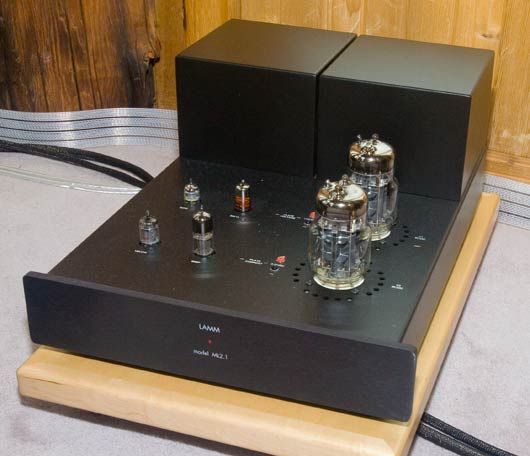
Lamm ML2.1 amplifier


Lamm ML2.1 amplifier

One pair is a trade-in by a fella who upgraded to the $139,290 Lamm ML3 amplifiers.

One pair is a trade-in by a fella who upgraded to the $105,000 Audio Note Ongaku integrated amplifier.

One pair is our dealer demo pair we have had on the floor for several years. Not sure if we are going to upgrade to the new, somewhat more expensive Lamm ML2.2 or the ML3 [would prefer the ML3, but we are kind of strange that way :-)].

Send us an email or call Neli if you are interested!