Pursuing the Ultimate Music Experiences

Audio Federation High-Fidelity Audio Blog

Email from you Verizon customers that gets bounced…

Well, it looks like we are Not going to be switchng servers after all to fix this problem…

… so, well, a lot of backups were made for no good reason.

I know, can’t have too many backups… [actually, you can. Especially if you got ones from 20 years ago.. and we do, moving boxes full of 5 1/4 inch 360K floppies, 2 moving boxes of 40 Megabyte 1/2 inch cartridge tapes, a pile of Xabyte 1/4″ cassette tapes (a step backwards, their very expensive ($2K+) tape recorders spontaneously broke all the time), CDs and now DVDs… well you get the picture. ๐Ÿ™‚ ].

So, you Verizon people, we are assured that LunarPages is working on the problem….

….and that they have fixed it once before …… …… ……. ………. ………..

In the meantime, you can send me mail at:

justacoder at earthlink.net

and Neli at:

cstinchcomb at earthlink.net

uh… replace the ‘at’ with ‘@’.

And cstinchcomb stands for Cornelia Stinchcomb, her name before she married the likes of me. ๐Ÿ™‚

After some of your emails to us went bouncy bouncy…

….we found out that email from Verizon to various sites on Lunar Pages, where AutoFederation.com is hosted, have been having difficulties….

So we are having Lunar Pages move our site to a different server that will not have this problem.

This is not supposed to be noticable to us out here in web browser land, so hopefully.. everything will just work…..

I mean, everything is backed up in about 3 different ways, but that doesn’t mean we ain’t a wee bit nervous in these here parts….

Our First Newsletter

Our first newsletter was sent out a few weeks ago.

Kharma Mini Exquisite in a Chistmas stocking
Kharma Mini Exquisite sticking out of a Chistmas stocking

For those that do not subscribe, you can view the newsletter here:

Audio Federation 2006 Winter Newsletter

We hope to broadcast these quarterly… and for them to contain general information, sneak peeks and specials. Newsletters will be posted on our site a few weeks after they are emailed.

Enjoy!

Audio Federation welcomes Acrolink to their Product Lines

[… talking about ourselves in the 3rd person unfamiliar… now we must be ready for politics or rap-stardom. Whoo hoo!]

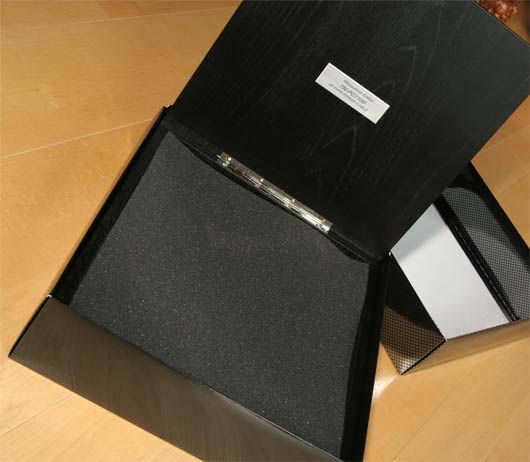
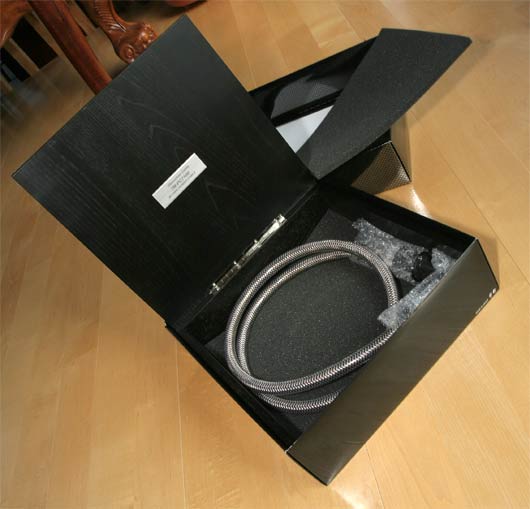
Box with Acrolink 7N-PC7100 power cable

We auditioned the Box with Acrolink 7N-PC7100 power cable awhile back and were really impressed.

There are not too many times these days when we can listen to something for the first time, broken or unbroken in, and be impressed. Hmmmm….’course we talk about all those times here, so maybes y’all don’t know how many times we are duly UNimpressed…

These power cords, and what we have heard of the Acrolink line, is in my mind somewhat similar to the sound of the Nordost Valhalla. But more distinctive.

[Neli says: “I’m not sure they’re more ‘distinctive’ than Valhalla … Valhalla power cords are quite distinctive. The Acrolink are distinctive, differently from the Valhalla, not sure I can right now put my finger on it — it’s been a while since I heard them back to back, I guess I’d say that the Acrolink is even more resolute.”]

[Mike snorts and retorts: ” I meant it in the sense that the Valhalla sound is more like the sound of most other cables – better than most, in our opinion of course, but closer to the pack… not as… ‘distinctive’ :-)]

Acrolink 7N-PC7100 power cord
Box with Acrolink 7N-PC7100 power cable

The sound:

The 7N-PC7100 powercord, $2895/2 meters) is very detailed, more so than the Valhalla power cord, with more HARMONIC resolution (not so much ‘body’ as variety of colors) in the mids. Notes are less rounded in the mids as well, but there is so much resolution it is hard to notice.

The 7N-DA6100 interconnect $4995/1 meter) is also very detailed, a little less body than the Valhalla, not as round, but cleaner, clearer sounding, and better resolution in the upper frequencies.

At least that is my impression of the ‘Acrolink sound’ – I expect these two descriptions to converge over time because of The Remarkably Similar Sound Within ‘Most’ Manufacturer’s Particular Product Lines [more later, later meaning soon. No, really.].

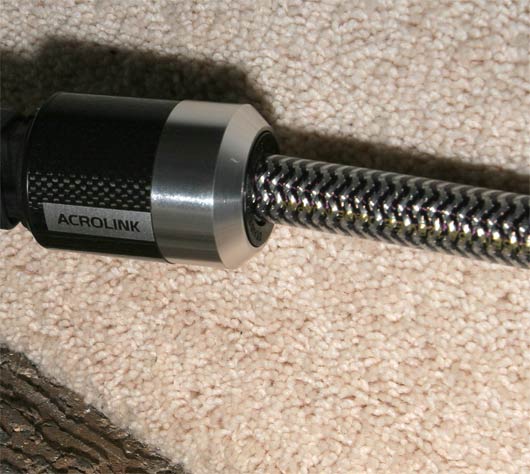
Acrolink 7N-PC7100 power cord
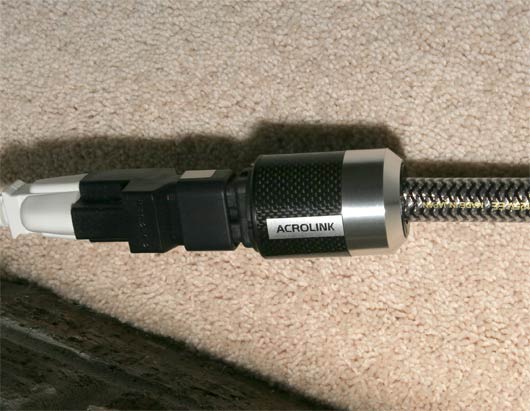
Closeup Acrolink 7N-PC7100 power cable breaking in.

The Acrolink build qaulity is second to none, and the cables are bendable :-), and do not use WBT connectors (which may be a good thing or bad thing, depending on where you are coming from).

Anyway, another arrow in our quiver… !

Power Conditioners

This has been the subject of a few emails lately. Some of you may have noticed the Belkin surge protector in some of our pictures (what we call the Office Depot Special ๐Ÿ™‚ ).

Here is an example of an email that we received from a nice gentleman,

“I perused with interest your Audiophile’s Guide to the Galaxy. In your Power Conditioners, Isolators and Regenerators section, I noticed your following claim:

Typically power conditioners increase dynamics and lower background noise at the expense of microdynamics, emotion and that toe-tapping pacing, rhythm and timing.

I mean this very respectfully, but as an experienced audio / video technician and avid audio enthusiast, I can’t think of any reason why a power conditioner should have any negative effect on microdynamics, emotion, or pace, rhythm and timing. Perhaps you will be good enough to share with me what experience or impart on me that knowledge which has led you to this conclusion.

I enjoyed your web site and will certainly recommend it to others I know.”

First, we thank you sir for your kind words and question.

There are two answers to his main question.

The first is my preferred answer, which is:

* We have tried a number of power conditioners and by far the common result is that we, and many other people, consistantly hear these negative effects.

So, this is that good ole scientific method of performing repeatable experiments and observing the results, The important thing here is that the observation, the ‘measuring’, is done with the ears and not mechanical or electrical instruments.

If someone has the time and genius to create a phsycial model of why power conditioners do this, build the instruments to verify their model, perform the experiements and determine that yes, their model matches the evidence of what we *hear*, then that would be great.

It is this return to first principles, to common sense, that many people [for example those that will not hear differences in cables] we see post on the net fail to recognize in their pursuit of science as religion [you won’t find a more scientifically geeky couple than Neli and I – but true science knows that it does not know, it only hypothesizes testable, verifyiable and often quite useful models of how many things work – but models often need revising if the experimental data requires it, and there are not detailed models for EVERYthing out there yet – like cables and powercords and power conditioners… ๐Ÿ™‚ ], that somehow science, circa 2006, now knows ALL the answers, and if science can’t explain it, then it don’t happen.

So, in actuality, no one knows exactly WHY most power conditoners have this effect.

Eventually someone will figure it out.

But it might not be very satisfying.

For example, the sun warms our skin when we are outside. Why? Because (and I am paraphrasing, and probably not absolutely correct, but follow my point, if you will) the photons from the sun hit our skin, increasing the kinetic energy of the molecules floating around in the epidermous layer by converting the electromagnetic energy of the photon into mechanical energy of the molecule, which our nevrve endings interpret as ‘warmth’.

I beleive that is the model that best describes what happens in today’s scientific gargon, but there are both a lot of holes in the explanation [how is the energy actually transfered from that massless photon when it hits that wonking large molecule? All we can say now, is, that it does. The apples falls when we drop it because of gravity. Gravity is created by the Earth’s mass deforming 4D (or 11 or whatever) space. Why does mass deform space? It just does. ]

.. and it is not as satifying as one might want it to be, as say ‘the sun is sharing its life force with us’, and the real explanation is not often very useful in dealing with the situation: warm sunrays, gravity and power conditioner effect are really dealt with better in the common sense mode: wear sunscreen, don’t jump off tall buildings and don’t use power conditioner indiscriminately.

But, with all that out of the way, and with the reader now knowing full well that I am Making This Model Up – just like everybody else who is not performing real experiments [that can be verified, othrewise we will have them proving gravity does not exist, the sun is not warm, and power conditioners all work wonders].

And it is:

That power needs to be supplied to components as instantaneously as possible, and capacitors, usually found in Power Conditioners, even after being charged up for a few days, absorb charges while simultaneously being unable to release a charge fast enough, and in correct proportion to the request to compete with a straight wire, and also cannot be large enough to release a charge that is FREQUENTLY needed by larger components like amps. Same with coupled transformers.

When the component asks for more current, there is some delay and, primarily, dampening of the magnitude of response in electron flow coming from the wall. The PCs seem more inept at handling small ‘spikes’ in the request stream that major spikes, so that often MACRO dynamics does not suffer as much, or may even be increased.

Hmmmm…. wonder if that was clear. It also helps explain (in my head if nowhere else ๐Ÿ™‚ ) why powercords work – they hold a resevoir of electrons ready to supply the component’s needs instantly.

Oh, and just to finish up, most Power Conditioners, being unable to respond instantaneously to demands for current, these small spikes, in order to render the more subtle details in music is what puts those more subtle details, microdynamics, emotion, at PRaT at risk.

Hope this helpssssss………

[The Shunyata Hydra, that we use here when we they are not out on audition – contrary to Robert Harley remark in this month’s TAS, is not a power conditioner – it is a power distributor. There is nothing in the path of the current getting from the wall to the component. BTW, also contrary to his assertion, the Pyython -sorry wordpress dies on the correct spelling – is not 98% of the Anaconda. No one, not us, nor anyone else would pay twice as much for a 2% improvement. We’re nuts but not NUTS]


More on Number 4 Setup of the Powercord Shootout

We listened to this setup more this morning.

Even awake, which I was this morning, it was a very interesting sound with the Satori on the EmmLabs digital front end and the Elrod on the Edge amps.

The soundstage was quite different from the one we are used to, not at all like the suspension-of-disbelief transparency that makes one be able to squint one’s eyes and see the orchestra laid out in all its glory.

The instruments were indeed where they were supposed to be, but … it was like the information about how things were laid out In Relation To Each Other on The SoundStage was instead replaced with something else…

Now, this is going to sound weird… ๐Ÿ™‚

But it was like it was replaced with information on how things were Related to Each Other in Purpose, or perhaps, to be a little more easy to understand as a strawman concept, Related to Each Other in Time instead of Space.

Listening to Radiohead, it was like each group of distinct notes, I do not know what they call them.. a riff perhaps, or a sub-melody, had its own life. But it was also related to the other riffs, connected by the key they are playing in, by the scale and rhythm they are all part of. And also by this point – counterpoint kind of plat that composers seem to use a lot, scripting riffs both in opposition and support of other riffs.

So, ANYway….

This system caused me, anyway, to be almost forced to be absorbed by these different aspects of the music as opposed to how I normally listen to music, which is to ‘see’ the musicians playing and hearing the music as it passes by, the words, the basic linear progression of the composition.

This is different from the ‘life’ or ‘psychadelic’ nature of the music which the Pranawire Satori added to the mix. And to think it was just adding them to the CDSD and DCC2 that made this change.

I told Neli at the time that it was like a geometric relationship now between the notes and ‘riffs’, but I do not want it to be confused with the traditional distance relationships that the images of the different notes have in a soundstage.

This is more like make visible the multi-dimensional relationships between notes, composed of tone, duration, texture, similarity of note envelope, etc. etc. and, yes, purpose – WHY those notes were composed to be there – as opposed to just where in the soundstage the musicians (or their notes, which may be located elsewhere do to those Wily Soundboarders) are located.

So two questions remain:

How do we get both the Real and this Uber Real in the same system?

and

How does a powercord, so far up in the chain, make such a difference?

Later, we put back the Shunyata powercords, one an old Python, on the Emm Labs, and the transparency and soundstaging was back to ‘Normal’.

Don’t know whether to be happy or sad.

So I’ll just be confused, instead.

And, yes, this was somewhat like our A funny thing happened on Planet Abraxus experience with the Coltrane Supremes at CES 2006.

But where that was a very ‘solid’ extra-dimensional relationship visualization experience, this was a more spiritual,…no, strike that, a more perceptive, deeper yet more ethereal experience…

We need to try the Satori, the Jorma Design ‘Prime’ and the Coltrane Supremes all together sometime…. Then maybe we can get Real, Perceptive and Solid Visuals all at the same time.

Can we handle it? [My daughter is a psych major – will she get her PHD in time? ๐Ÿ™‚ ]

Shootout at the PowerCord Corral – Shunyata, Pranawire, Elrod

By the wagons we got the Shunyata Anaconda Helix Alpha.

By the well we got the Elrod Signature 3.

and By the barn we got the Pranawire Satori.

OK. Ready. Set. Play!

Showroom 3
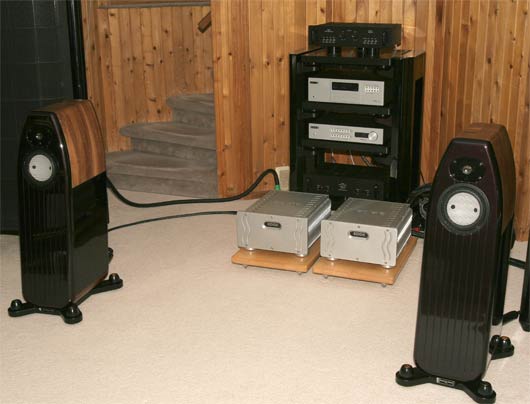
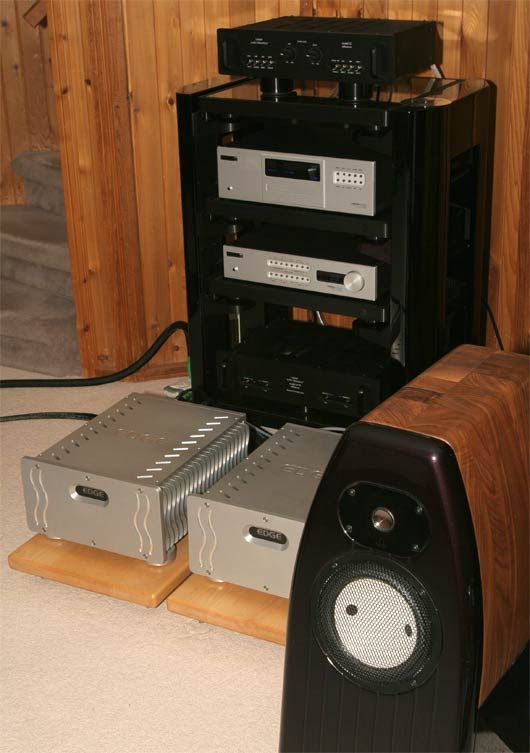
The system we compared them on was the following: Kharma Mini Exquisite loudspeakers, Edge Signature One amps, Lamm L2 linestage, and EmmLabs DCC2 SE / CDSD SE CD / SACD front end. INDRA interconnect between the DCC2 and the L2, Valhalla between the L2 and amps, and Jorma No. 1 between the amps and speakers.

We tried out all 3 power cables on the Edge Signature One amps.
Showroom 3

1.

First up were the Shunyata Anaconda Helix Alpha (who win the award for the longest name). Usually we like the Shunyata Anaconda Helix Vx cords better than the Alpha cords on the Edge, and now was probably no exception, but the Vx cords were on the Audio Note M10 linestage power supplies on a different system… so…

We played the first track on Radiohead Amnesiac. My thought when it was all over was that nothing was going to beat this – the resolution and imaging and ‘techno feel’ was first rate. And I was right, as far as it went, that nothing did beat them in these categories – there are other categories however… always more categories…

The Power Cord Fiesta
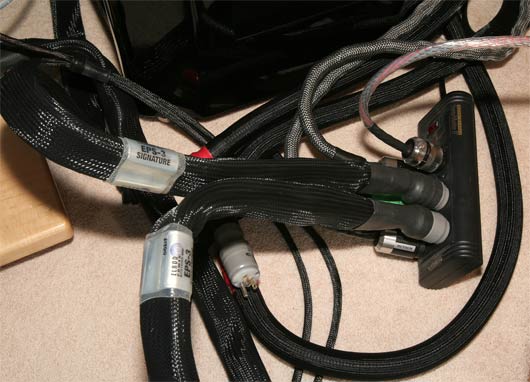
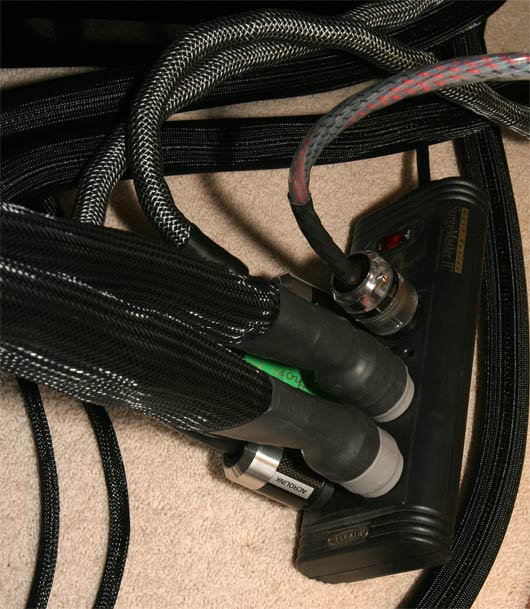
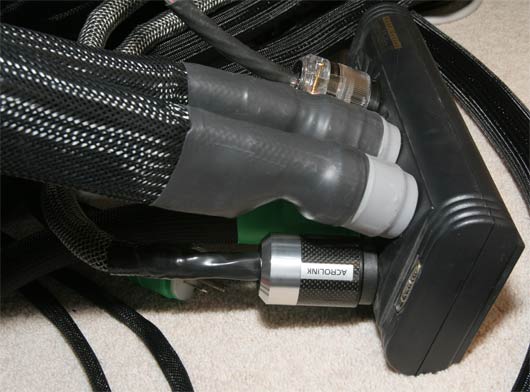
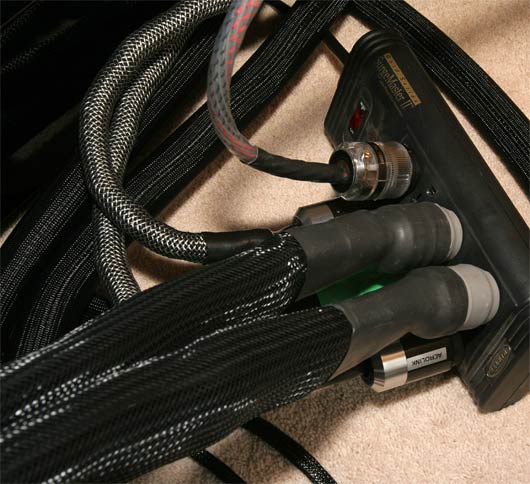
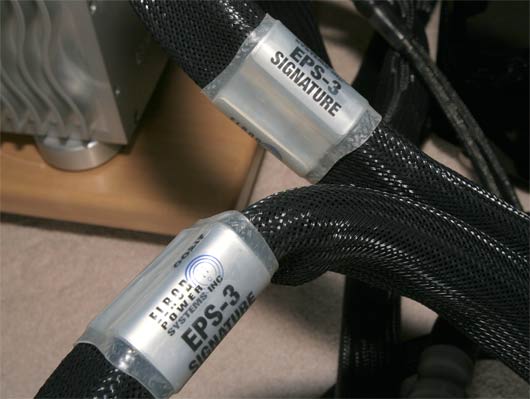
Photo taken after the shootout. Here we see the power cables with the red label (Shunyata Anaconda Helix Alpha), the green label (Shunyata Pyython [sic, WordPress has a bug that does not allow this to be spelled correctly, since this is also the name of a computer language it is confusing the poor thing…] going to the Soundlab speakers – not in the shootout), gray label (Shunyata Anaconda Alpha that were powering the Emmlabs), the silver-braid shielded power cords are the Pranawire Satori, and the big (but not as big as their brothers!) Elrod Signature 3 power cords. Oh, and the cords that look like red and blue stripes is the Valhalla going to the Lamm L2 linestage.

We also played Mark Knopfler’s Sailing to Philidelphia – first two tracks. [Pick this up if you like Mark Knopfler and high-quality music and sound – we’ve had many people who wrote the name of this CD down after hearing it here].

On the first track, Mark plays several licks that are up front and can be biting unless there is a lot of support from the system in terms of not just resolution, but harmonic integrity – the notes have to swell just right or they rise too fast and sound ‘bright’. It is in this respect that we prefer the Shunyata Vx cords on these amps – they handle the notes in a more relaxed, organic manner that seems to fit most of the music better.

2.

Next volley was heard from the Pranawire Satori. Pranawire has a trademark sound that is, what we call ‘psychedelic’ [or acid-like …including flash-backs] (and the Jorma Design Prime cable has some of this too, but in a different context, as do the Kharma loudspeakers). This sound is very very engaging – somewhat like 2A3 tubes in a good amplifier in that it is very subtle yet readily recognizable. Which is to say it does NOT distort the sound in order to entertain the listener in some kind of gross way by catering to the common human weakenesses for syrupy or euphonic sound.

The Power Cord Fiesta

It is a sound that is hard to describe – it is like adding ‘life’ to the music, or ‘color’ where there was none before but we were colorblind and did not know it. Anyway, with the power cords on the amps we heard this ‘effect’, which we have heard in their top-of-the-line cosmos speaker cable, but not so much in their cosmos interconnect. YMMV.

As for the sound, per se, solidity in the soundstage was better than the Shunyata for various instruments, accompanied by a reduction in resolution and – if I remember correctly (Neli is at the gym) a reduction in mircodynamics and air but an increase in the ability to swell dynamics from one state to another.

The Power Cord Fiesta

In many ways this was similar to going from solid-state to tubes – it is a tradeoff and depending on you and your system, you may or may not like it. I liked it, and certainly from the point of view of being a system builder: now I could add this ‘sound’ without having to deal with the somewhat large Cosmos speaker cable – which had some other side-effects – or having to swap out amps of source components or anything. I.E. swapping powercords for for the listener [who might be us!] who wants something a little more engaging (albeit a little less real) at the moment is now as easy as switching a power cord or two.

Radiohead’s voice and Khopfler’s guitar were all wonderously colorful and alive – there was however some reticience in the transition from one note to the next which we interpreted as probably resulting from these powercords being not quite burned in yet. [If you have been following the Blog lately, you might understand how we are growing impatient waiting for things to finish breaking in around here… ๐Ÿ˜‰ ]

The Power Cord Fiesta

3.

The Elrod mosey’s in with the shotgun.

The Power Cord Fiesta

The sound of these was surprising to me … more detail (though not quite as much as the Shunyata Alpha) and much more separation – the soundstage really cleared up. The solidity was about the same as the Pranawire (the Anaconda Alpha had better pinpoint imaging than either – but it was not as 3D or ‘solid’). The Shunyata Anaconda Helix Vx has been our reference on these amps – and will continue to be so as it has performed well in 100s of system configurations we have set up – but the Elrod Signature 3, which we are learning more and more about, did much of what *we* like in a system, which is walk that fine, fine edge between real and musical. It entertained our minds, fooled our minds, and warmed our hearts (though that last not quite as aggressively as the Satori ๐Ÿ™‚ )

4.

As a final test, we replaced both the powercords that were powering the Emmlabs transport and DAC with the Satori, they were what I think are from the photos Anaconda Vx (not the new Helix) . Could we hear the Pranawire effect even with the cords on a low current device like the digital front end?

The asnswer was yes, but it was only about between 15 and 25% of the effect it had when on the amps, in my estimation. It also clouded up the soundstage some,,, I think. It was weird. Maybe I was too tired at this point. Instruments and voices just sort of appeared in the soundstage, solid, but then faded from view somehow. It someway this was much more REAL than anything I have heard before in terms of what happens when a musician plays something then stops for a few moments. Or it was totally wacky and unnatural as the msucians did not seem to be in the same universe – much less in the same studio – but who knows, maybe they weren’t.

Anyway, more experiemtation is needed with mix and matching of these cords together in various systems.

Finale.

Acrolink burning in
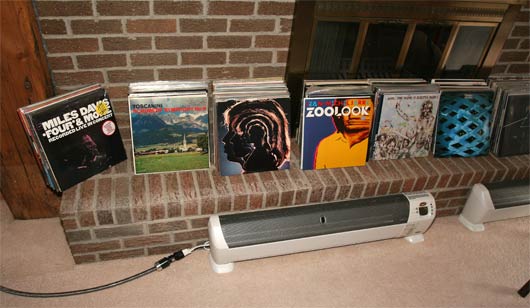
Acrolink burning in on the Winter burn-in device

Acrolink burning in

So. We didn’t get to hear from the Shunyata Anaconda Helix Vx, nor from the Valhalla (which is on the Lamm L2 in this shootout – but we do not usually put it on the Edge, but in a shootout, ANYthing can happen ๐Ÿ™‚ ), nor the Acrolink 7N power cords (which in some ways are the ultimate powercord, having both most intensly detailed resolution we have heard in a PC along with an even handed approach to harmonic body).

YG Acoustics and our CEDIA Show Report

We got this email today:

“Dear people of Audio Federation,

I have carefully inspected your CEDIA / T.H.E. Show โ€œshow reportโ€ section.

I have not found the customary clarification used by publications at both the top and bottom of the page, which clarifies when a column is written by someone with commercial interest (this is normally written in large, readable letters).

Since you are an audio dealership rather than an independent publication, I kindly request that you mention this at the top and bottom of the page. Otherwise, it may confuse readers who will believe that you have no commercial interest in the matter.

I am asking you this as a sign of good faith, with no legal implications at this stage.

Please advise as to your planned course of action.

Sincerely,
Xaver Obermeyer
YG Acoustics”

It was a nice letter, especially considering the overall uncivilized tone of much of the conversation in the audio world these days.

The show report page in question is here:

T.H.E. Show – Full Report, CEDIA 2006, Denver

Do people think it is not obvious that we are a store (there are indeed links at the top and bottom of each page) in our show reports? [For that matter, what about the Blog?]

I mean, we WANT it to be obvious we are a store… People read the report, read about what we hear, see and read what we are like, think perhaps that we might, maybe have a clue, and check us out when they are ready to make the next step in their system building enterprise.

If it is NOT obvious, we could, for example, without being tooooo obnoxious about it…

1. Make the ‘store’ text yellow, keeping the other links white (you know, that section that has: “Home | Magazine | Store | Guides | Blog | Music” )

2. Make all these links larger

3. Make the “* Denotes a product carried by Audio Federation” text larger (Neli says it is quite small on her screen – it is quite fine on mine, but I have IE and FireFox both enlarge the text for me tired ole eyes).

4. Add a large, rotating, blinking, animated image of a shrinking wallet with our logo on it

5. An animation of a Calvin and Hobbs-like Audio Federation branded Transmogrifier Machine with troops of unhappy audiophiles going into the machine on a conveyer belt on one side and coming out the other side with big happy smiles pulling wagons full of audio equipment and LPs and CDs.

6. [OK, we could spend the rest of the day doing these…:-) ]

We just posted this email and some comments on the aforementioned page in the show report, to wit:

“Well, we certainly want people to know that we are a store. And, even though there are links at the top and bottom of 100s and 100s of pages of show reports, perhaps they are not visible enough and some people do not see them? If so, this would suck. So, we will try to resolve this by posting this on the blog and seeing what our readers think would help us get people to know we are a store but without being too obnoxious about it (i.e. there is NOT going to be blinking text saying ‘We are a store’ ‘We are a store’…. ๐Ÿ™‚ ).

And as far as commercial interests in the matter go – I guess some dealerships do ‘trash talk’ their competition, and it kind of tarnishes all dealers as needing to lie to make sales. However, we do have a real commercial interest in going to shows and that is to find the really good shtuff, and talk about it… in our show reports, with you all out there, and with each other. Later we might even try to get it for our store. Most of the product lines we carry were ‘discovered’ at shows. And in general, the more we talk about what we hear at shows, the more people we meet who have also been hearing the same things we do – but they thought they were nuts because they thought they were the only ones who were hearing these things – that there was something wrong with them because they just… weren’t… able… to hear everything as being just won-der-ful. That there are always tradeoffs and some people like making those particular tradeoffs and some don’t.

And… ‘independent publication’? Love to see one of those someday.”

So, what *do* you all think? Another show report, CES 2007, is coming right up, so any decisions we make now will see the light of monitors real soon now.

HiFi+ Roy Gregory's Meridian DSP8000 loudspeaker review

Roy Gregory did a nice long review of the big Meridian speakers.

It was a fairly well-balanced review – but he forgot to mention two of the major shortcomings of these speakers (although he does mention that they lack ‘intimacy and immediacy’).

First, the plusses [in my opinion, which more or less agrees with Mr. Gregory – read the review for yourself for details]:

The look nice, they can play loud, are easy to setup [for basic CD/DVD-driven systems], and they minimize cable riot (amp and DAC are inside the speaker).

Then the minuses [also in my opinion]:

They lack the ability to render anything other than simple harmonics and they cannot produce a correctly shaped note in the dynamic domain – which is to say that they sound like they are making a lot of square waves [they also collapse into a wall-of-sound at high volumes].

These speakers are targetted to the Home Theater market, where everyone seems to expect that the sound will likely suck, and if it ‘sucks less’, they got a winner – it is like some kind of nostalgia thing, I don’t know.

Perhaps Mr. Gregory felt that mentioning the ‘intimacy and immediacy’ and publically questioning whether an audiophile would be happy with these (saying yes, probably, particularly if they would otherwise get tangled up in upgrade hell with all the choices other speakers allow their owners) were enough ‘clues’ that these speakers have a certain market, and are not a ‘please everybody’ kind of product.

Personally, we both had Meridian CD players. a long time ago, that were better sounding than the competition because they were warmer(!) sounding – this was in the days of 16bit and 20bit DACs. Then they veered off into Technical Wizardy Over Musicality Land and left us behind.

If only, if only they, or someone else, built some digital active speakers that sounded really, really good to your typical audiophile type listener. In these days of outboard loudspeaker crossovers, most of the lines we carry are going in the other direction- instead of putting everything in the speaker, they are taking more and more of it out and putting it into yet more boxes. ๐Ÿ™‚

But seriously, how many people (aka non-audiophiles) are going to want to mess with all the components that are required these days to setup a good sounding system? They have enough trouble just hooking up their new TiVo.

Then again, people who can setup their basic home theater 5.1 or 7.1 system with all of *its* options will think 2-channel is a piece of cake.

Hmmmm… perhaps is the inevitable merging of the two – seemingly what is required to get good sound AND video these days – which is confrontational and daunting.

Then add music servers… stir and bake for several hundred hours on low and take a few asprin.

I guess the point is, which seems to have been lost by this writer during this meandering post, is that the Meridian speaker’s claim to fame, as I see it, is that it is easy to setup and easy on the eyes – i.e. things that have to do with lifestyle and convenience and minimizing day-to-day fuss and bother and NOT much to do with high-end high fidelity audio.

Funny, high-end audio, in general, pays little attention to these lifestyle aspects of product design …. probably to its detriment. Kind of like all of high-end audio these days being like a old 911 Porsche, a very high performance drive – just don’t try to use the radio, or air conditioner, or automatic windows…

I know, I know, a lot of guys and gals LIKE it that way. ๐Ÿ™‚

But what if, Lamm for instance, added a remote control for their preamp in a way that was not detrimental to the sound

– and perhaps Nordost made Valhalla 100% transparent VISUALLY [it is close now, but 100%? … we would have to watchout we don’t trip over it…],

– and what if ALL manufacturers hired an Industrrial Design consultant or two to spruce up the looks…

– and what if they also hired Human Interface engineers to make sure their products were very usuable and that the workflows to set them up were easy on the noggin…

…Oh! and what if they were all members of a AAA-like organization that came over if you called them with a ‘system emergency’ and helped you perform major system mods, diagnose problems, Move Heavy Equipment(!), …[Hmmmmm… maybe there should just be a Audio ‘Geeks On Call’?]

The point REALLY is how to make the crown jewels of high-end audio, and our audio passion in general, be more inclusive of those who are not technologically savvy, and who don’t want to be [or who are and don’t want to admit it to anybody :-)]..

Comments on Upgrade from Lamm M2.2 to Lamm ML2.1

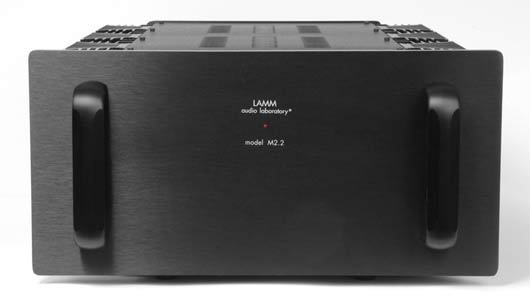
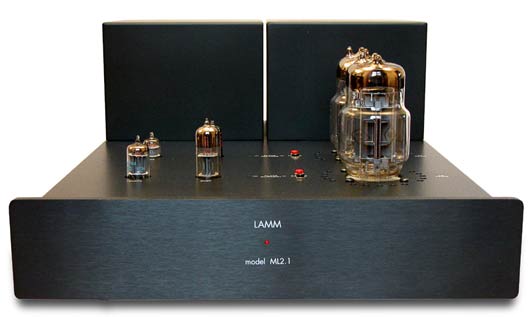
This was sent to us recently by one of our favorite customers [the Lamm M2.2 is their 200 watt hybrid solid-state / tube monoblock amplifiers, the ML2.1 is their top-of-the-line 18 watt 6C33C tube-based SET monoblock amplifiers]:

Lamm M2.2 amp
“M2.2โ€ฆโ€ฆโ€ฆ. it is like a fairly big tall obelisk, made of metal, boxlike, powerful, straightforward, detailed, straight lined, know how to do the job and does itโ€ฆ.. butโ€ฆโ€ฆ..

Lamm ML2.1 amp
Ml2.1 โ€ฆโ€ฆโ€ฆ Plasma blast, globular force field, expanding to the stars and defining them. Fastball of Thick juiciness. Like listening to the spacey parts of the band yes. I can see why it can be great.”

Well put, well put.