Pursuing the Ultimate Music Experiences

Audio Federation High-Fidelity Audio Blog

RMAF 2012 – day 1

Things you might want to check out…


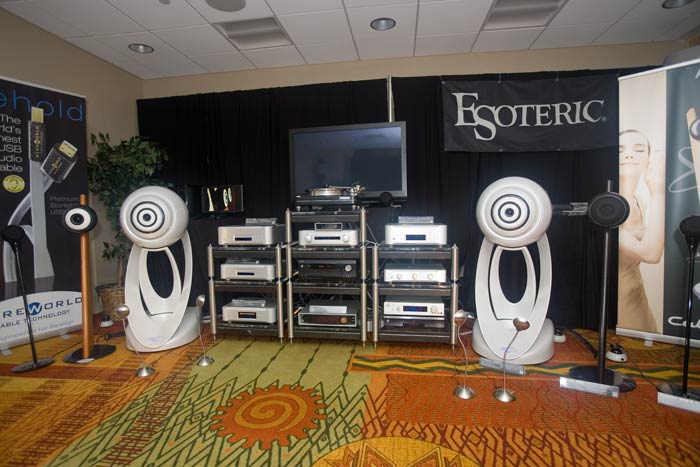
Esoteric and Cabasse in the conifer 1 room [behind the registration desk… kind of]


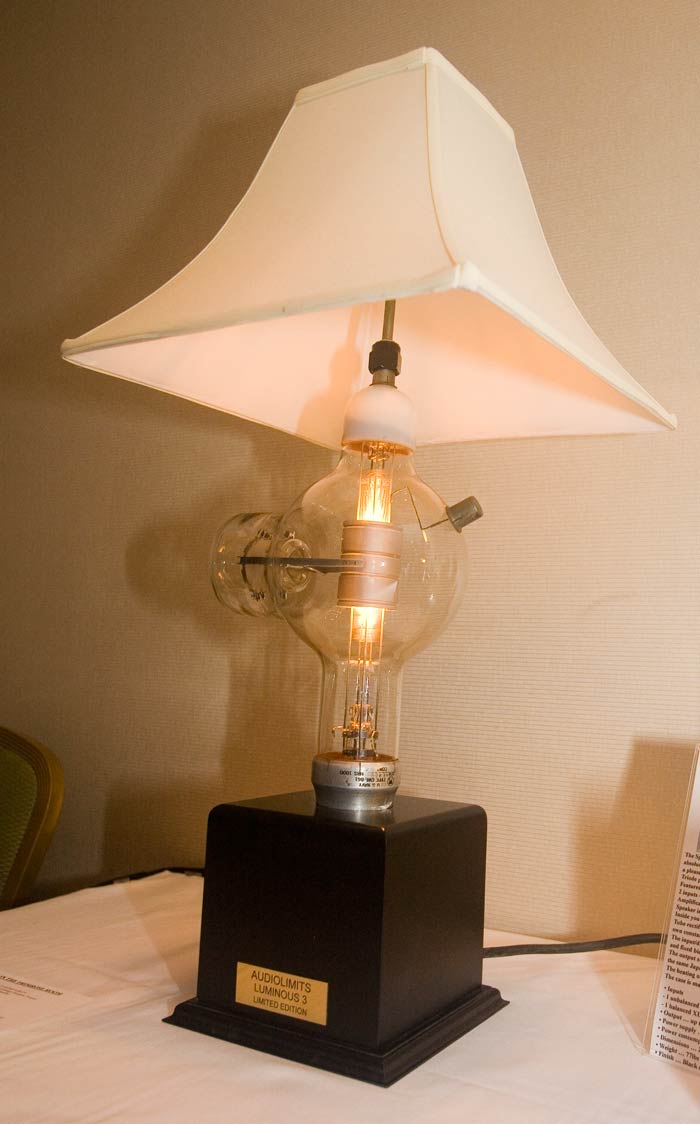
Sorry, but I got a kick out of this Audio Limits lamp in the Primrose room [also on the 1st floor, at the end of the hall extending from the atrium]


Tektron in 446


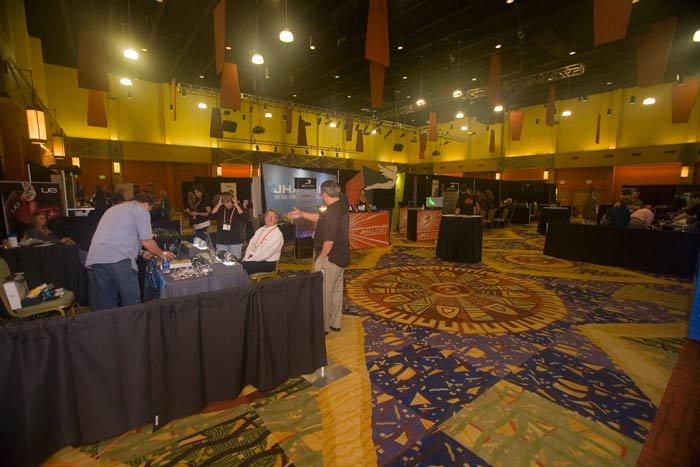
The headphone area seemed about twice as big as last year [or was that the year before?]. Anyway, lots to see here.


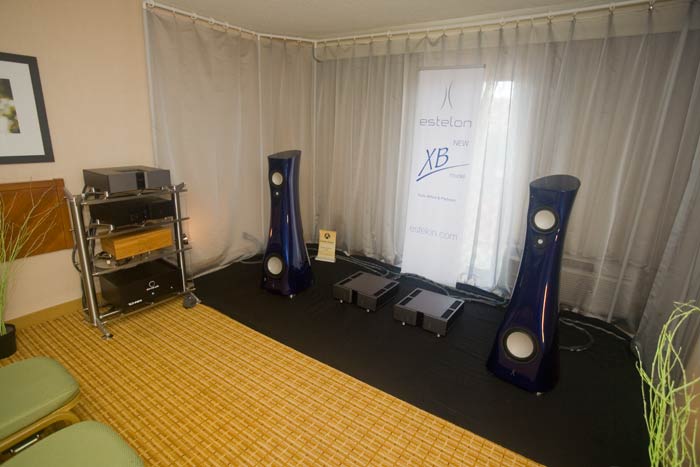
Estelon with Vitus in 517


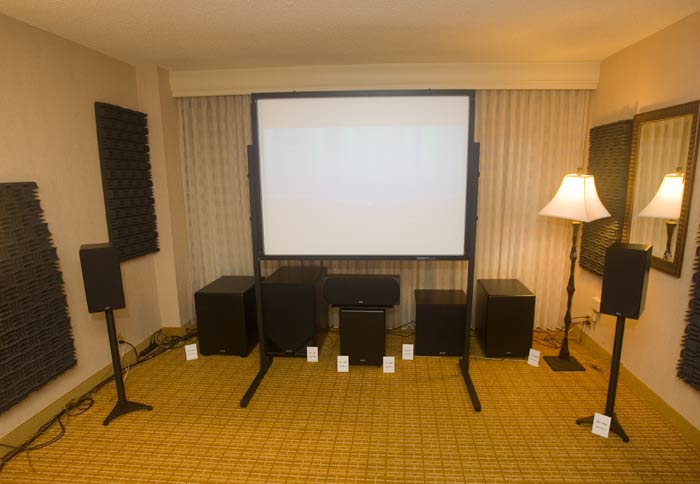
Hsu Research in 510 was a very well-balanced inexpensive system


Bob Carver, Analysis Plus, in 506


The Rethm room in 501 keeps improving dramatically each year to the point where it is one of the better sounds at the show that I heard today


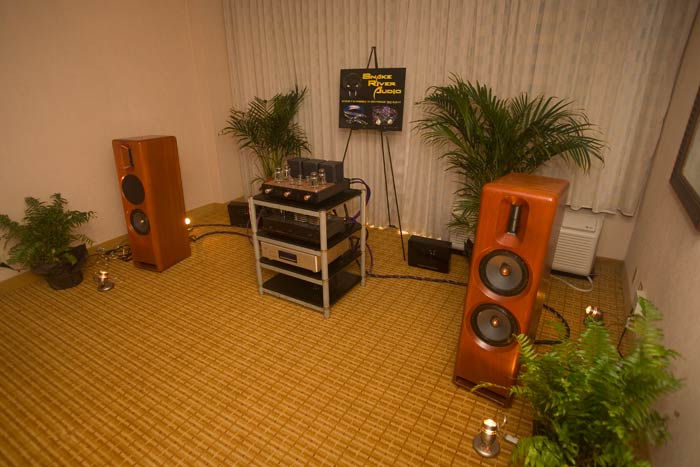
Sonist and Snake River Audio in 549


Ginko Audio, Wells Audio, DanaCable in 427


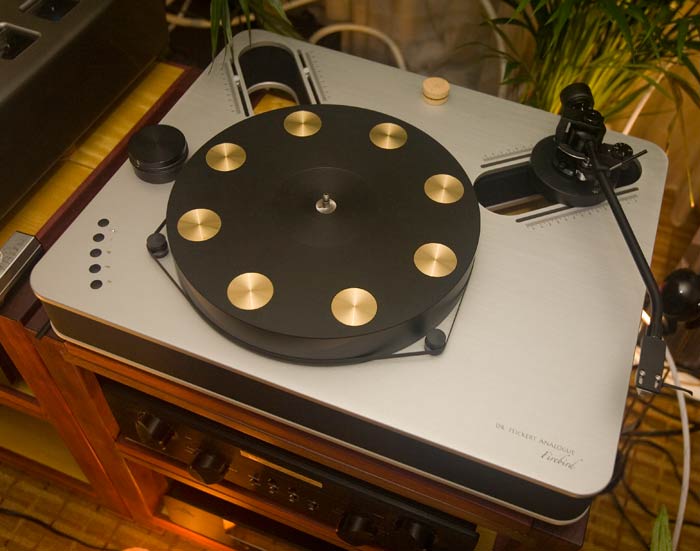
The new Feickert Firebird turntable in 423


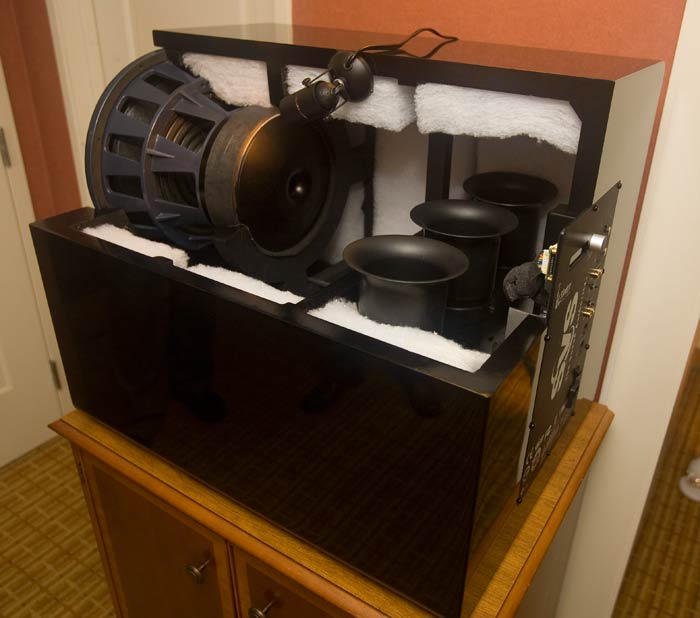
SVS’s largest subwoofer, in room 441


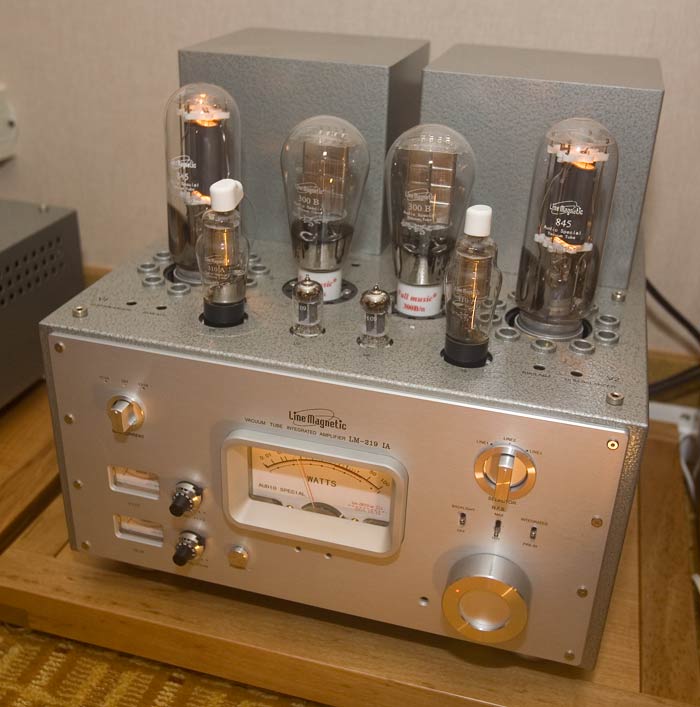
Line Magnetic’s LM-219 IA integrated amp in room 578


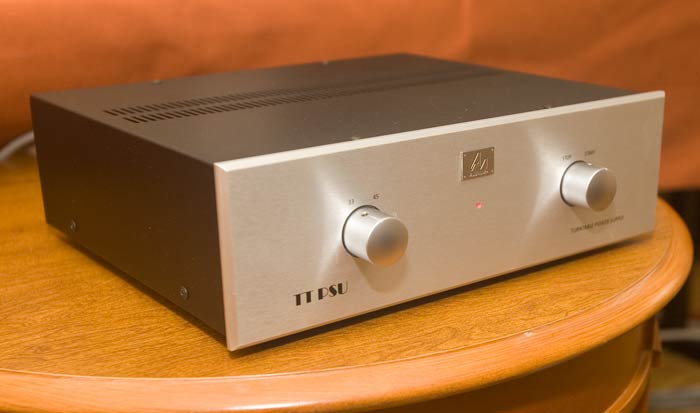
Audio Note’s new outboard turntable power supply in room in room 566


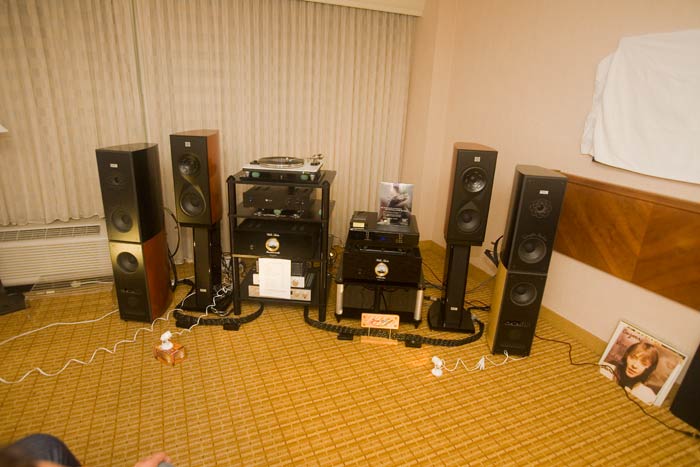
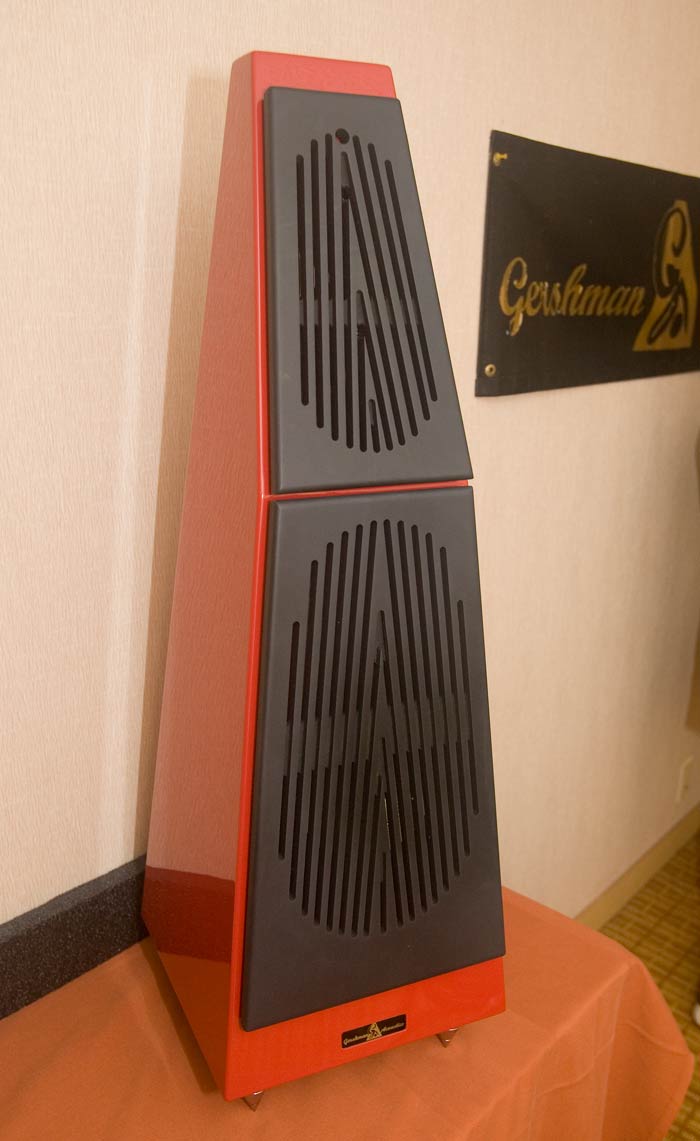
Gershman Acoustics displayed several new speakers n room 555


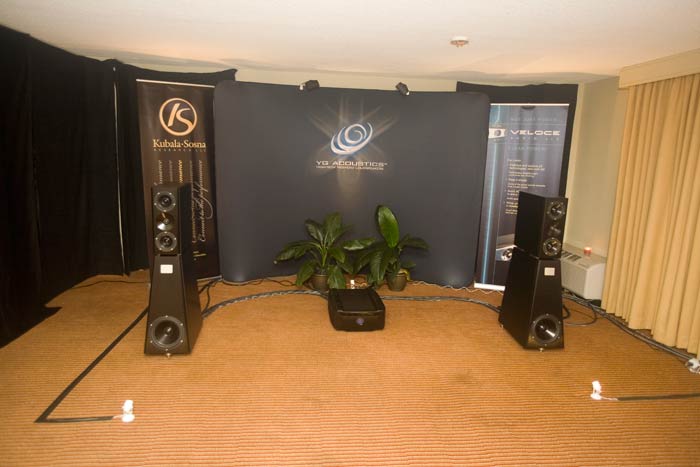
GTT Audio with YG Acoustics Anat III without the bass units on a Accuphase and Veloce front end this year (instead of the Soulution and a hard disc drive last year) in room 535

Audio Note at RMAF 2012

Audio Note will have a room at RMAF again this year. Audio federation [us!] will not for the first time ever.

The Audio Note room will feature:

Speakers: AN-E SEC Silver, Slate finish. These are one step below the SEC Signature, with internal crossover.
Turntable: TT2 Deluxe, with external power supply, along with Arm3v2, IOI and S4
DAC: DAC 3.1x/II
Preamp: M3 Phono
Transport: CD4.1x will act as a transport
Amp:
Tomei Kinsei 25 watt 211 SE power amplifier, parts like the Tomei, architecture like the Gaku-On, but with a single power tube per channel: fully transformer coupled, all directly heated triodes, XLR inputs only. 2 x NOS 6V6, 2 x VT4C/211, 2 x 5R4WGB

or

Empress Silvers. These are all-copper Kageki. The Neiro is the half copper half silver Kageki.

Cabling: the new ISIS interconnects and speaker cable:

ISIS cables… The New Copper Reference

The recently introduced ISIS Reference Copper interconnect cables have been an enormous success, redefining many listeners’ expectations of what was possible with a copper cable. As a result, we have decided to expand the Reference Copper range, and we now present the ISIS LX168 loudspeaker cable and the ISIS Mains cable.
ISIS LX168:

This is not only first true Reference Copper loudspeaker cable in the History of Audio Note (UK) it is also a departure from a design perspective. Previously, all of our cables were intended to be configured with four separate cables per side for true bi-wire configuration, or two separate cables per side for single wire configuration. ISIS LX168 – thanks to its large strand count and 8 True Litz conductor design – can be used in a variety of cost effective and high performance configurations: single cable / single wire, single cable / biwire, twin cable / single wire, twin cable / biwire, quad cable / biwire.

ISIS Interconnects
Audio Note (UK) is proud to announce the introduction of a new reference copper interconnect, named ISIS.

As LEXUS can be seen as a copper version of SOGON, so ISIS is a copper version of or flagship interconnect SOOTTO, sharing its geometry and design. Never before has a copper cable offered this level of performance, and it will undoubtedly delight and surprise you in equal measure.

Wilson Alexandria XLF speakers

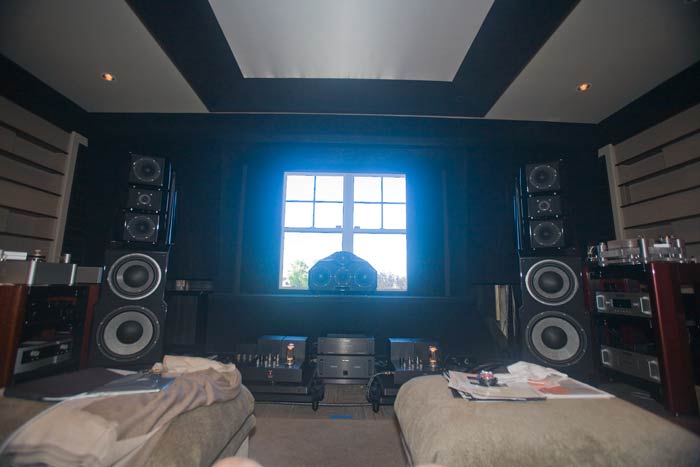
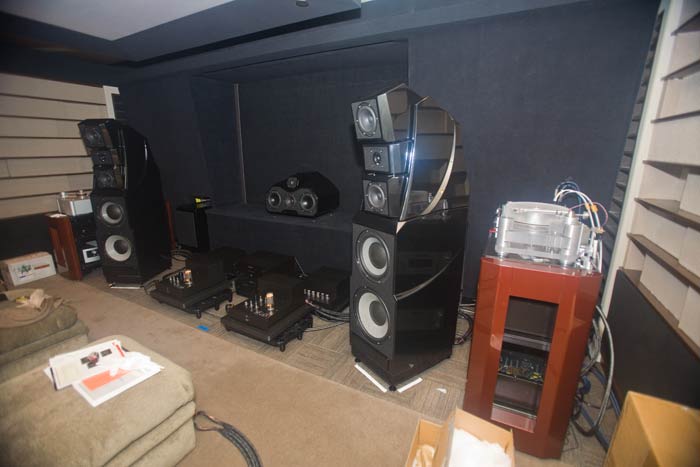
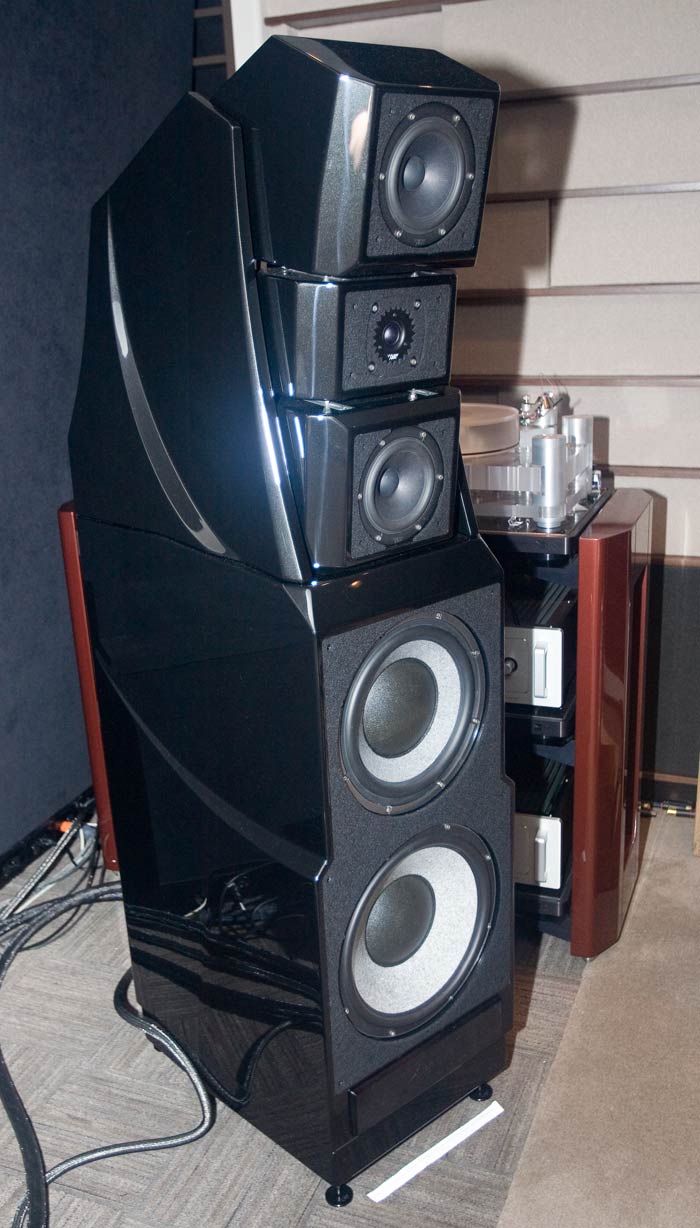
We got a chance to hear the Wilson Alexandria XLF speakers last week.


We listened to them in a nearfield position, I would say about 7 feet from the plane of the loudspeakers.

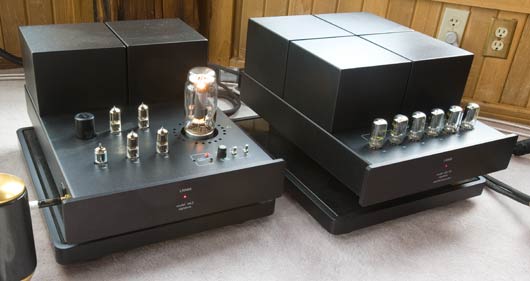
We heard them with Audio Research 750ish [:-)] amps, Lamm ML3 amps, Audio Research Reference Anniversary preamp, Lamm L2 preamp, Tara Labs The Zero Gold interconnects and speaker cables, Nordost Odin interconnects and speaker cables. Tara Labs Cobalt power cords and Nordost Odin power cords.
Source was a Basis Inspiration with their Vector arm and a Lyra Atlas. Phonostage from Ypsilon, with external stepup transformer. Everything was on HRS M3X platforms and MXR equipment rack.

Because we never heard the system in an entirely familiar configuration [there were always Tara Labs interconnects in the signal] and because we listened in quite a nearfield position to such large speakers, we cannot do an exact comparison with the previous model: the Alexandra X2 [2nd update] speakers.

But we can say a little something…


First, listening nearfield to such imposing speakers went quite well. The only issue, for me, was that the highs were always coming from the top of the soundstage and the lows from the bottom. Sitting farther away would help merge the two frequency extremes.

Second, the speakers do sound more integrated and the cabinet also more rigid – the only overt cabinet issue to my ears was that the bass frequencies tended to be drawn to the speakers [mostly noticeable only when sitting quite a bit off center from the sweet spot]. [the previous model had a preponderance of softness extending down from the midrange which sounded like the cabinet was robbing the sound of a lot of its energy – typical of speakers not perfectly rigid. For example compare the sound of aluminum speakers to ordinary speakers – with everything else being equal the aluminum speakers will have more energy and the midbass frequencies will be less likely to seemingly originate from the cabinet ]

The speakers do respond well to changes in upstream components which means one really can tailor the sound to one’s sonic preferences to a large degree.

It was a real kick listening to these this way – with the drivers exposed and staring us down it was like listening to really, really large monitors – or like a wall of speakers at a concert.

The Lamm ML3 amps are able to drive these speakers to louder-than-you-want-to-listen-to volumes without any apparent strain to any of our ears [and we were listening closely for any sign of weakness or hesitancy. This would be a fun test late at night :-)].

The speakers were back ported in this room and, although that is a little strange for such a small room with the speakers along the long wall, the speakers did not sound at all to us like they needed to be setup any differently [most listening rooms we see often need the speakers to be re-positioned to sound their best.]

Listening to the Alexandria XLF nearfield like this was a blast, but after listening to our system here (Lamm ML2.1 amps on Marten Coltrane Supreme speakers) in a similar nearfield position, and recalling other Wilson Alexandria systems, the Wilsons do sound their best in a larger room (if possible!).

I would say the XLF is an evolutionary upgrade, as opposed to revolutionary – but at this level, every last little improvement to the sound will be appreciated by avid listeners – so if you are a Wilson owner with the rest of your system such a configuration that you are [at least for the moment :-)] happy with it , you should by all means go for the XLF.

Perspectives on positive equipment reviews

There is some heated debate among book reviewers / book critics about whether there are way too many positive reviews in comparison with critical reviews. Sound familiar?

Here is a summary of some of the points of view of various people:

book reviews debate

I found most of it to be quite relevant and an interesting perspective on equipment reviews, except that high-end audio reviewers, and high-end audio magazines, have MUCH more financial incentive to publish positive reviews than do book critics [even though our reviewers do not get quoted in the New York Times… ever :-)].

It may just go to show that to a large extent the culture of a niche – whether books or high-end audio or movies or computers or whatever – dictates the percentage of positive reviews versus negative reviews. That even if we, in high-end audio, held reviewers and magazines to a higher standard, so that they had absolutely no financial incentive to publish a positive review – we would still most likely end up with near the same percentage [what is it? 95%+?] of positive reviews.

Analytical listening and short-term memory

Some background:

I have spent much of my life working by myself on technical projects. Over time more and more thoughts were in the form of pictures rather than words.

Now, after all this time, I have a have a rather harder time understanding what people are saying as they are talking. Instead, I ‘replay’ what they said, what was recorded in my short term memory, going over and over it and analyzing it [hopefully quickly! :-)] several times before I am sure what they meant, as well as getting some kind of handle on the subtle subtexts of what they said.

I presume most of us do this to some degree.

Listening closely to music:

A similar thing happens when I am listening to music – consuming both the music in real-time as well as going over it several times in short term memory.

Yes, one can miss a small snippet of music while one is doing this. But this repetitive analysis can result in moving some of what one has heard to long term memory, which can be useful if one is seriously evaluating equipment or systems and one wants to compare them later ‘offline’ as it were.

Methods:

This list is by no means exhaustive, but is instead an attempt to try and start talking about how people can analyze sound quality using their short-term memory.

1. comparative analysis. Comparing the sound: harmonics, dynamics, resolution etc. to what we have heard before – both with similar music and the exact same music

2. emotional analysis. Determining how we feel when we hear the music and, in fact, individual passages and notes in the music. Does it make us feel happy, sad, angry, involved…?

3. rightness analysis. Does it sound right? or does it sound wrong? Some of this can be as easy as determining whether guitars sound like guitars, for example. Some is more subtle, for example is one being fooled into think there is actually a real person standing there in the room playing this instrument. Finally, there is this sense of just plain ‘rightness’; something CD players did not have for a decade or two – something that is still somewhat elusive even today, but only noticeable when you actually something that is significantly more ‘right sounding than what we are used to’. [and by this we DO NOT mean accuracy or ‘realness’ – this is more about how the human mind hears things and is more related to ‘believably’].

4. separation analysis. During complex passages, did every instrument stay in place and sound like it would all by itself? Or did it blend in a mushy wall-of-sound? This is easiest if one just plays the complex passage over and over again – indeed – but a lot CAN be done by analyzing one’s short term memory recollection of the passage.

5, 6, 7… ?

Although short-term memory vanishes after about 90 seconds, at least mine does – getting more and more severe as I age – the immediate term memory of just a second or two, used for analyzing the sound of music, seems to still be working OK. Here’s hoping it continues to do so! 🙂

TAVES 2012 – The Toronto Show

TAVES 2012

The 2012 Toronto Audio Video Entertainment Show (TAVES) Starts in Just 30 Days!

Don’t miss the fastest growing North American consumer electronics show this fall, running between September 28 and 30 at the King Edward Hotel in downtown Toronto! The 2012 TAVES, presented by Porsche, promises to attract a few thousand consumer and trade visitors thanks to a significantly greater number of exhibitors, an expansion into new product categories and a large number of free seminars. This year’s TAVES will be proudly hosted by television personalities Marc Saltzman, Canada’s foremost technology expert and Yanic Simard, one of Canada’s top interior designers. Book your stay at the King Edward Hotel today for a discounted price of just $164/night – but don’t delay because this price jumps to $296/night after September 4th.

Sign up today to exhibit at TAVES – it’s not too late!

If you’ve been sitting on the fence about participating in this year’s TAVES, make your move now and become part of one of the most exciting consumer electronics shows! The 2012 TAVES is set to feature 25 percent more exhibitors than last year and will occupy nearly three-and-a-half floors of the King Edward Hotel, up from just two floors last year. Although the show is nearly completely sold out, several spaces are still available, so if you’d like to make your move please contact us as soon as possible. To simplify life for international exhibitors we have partnered up with Mendelssohn Event Logistics (800-665-4628) which will take care of all your shipping and customs needs.

Can’t exhibit this year? Be sure to at least visit TAVES! Stay at the King Edward for just $164/night if you book before September 4th.

If you can’t exhibit this year we invite you to visit TAVES and see what all the excitement is about – TAVES is free to all trade professionals. To register for your free TAVES badge, simply jump to the Registration Page by clicking this link. This registration page is for attendees only. TAVES exhibitors will receive a special registration code by email in the next few days. If you will be travelling from outside of Toronto, please take advantage of the special room pricing that the King Edward has offered us – $164/night (valid only until September 4th). After this date, the price jumps to $296/night. This is an extremely low rate for this prestigious hotel and the block of rooms is very limited, so please reserve your room this week. To get this special rate, please contact the hotel at 1-855-265-9100 (press 2 for group reservations) and tell them that you will be attending the TAVES event this September.

The first edition of TAVES was promoted on/covered by five TV networks, four radio stations, one of Canada’s largest daily newspapers and a great number of related magazines and websites. TAVES recognizes the importance of media exposure and continues to work closely with mass market and consumer electronics media to guarantee extensive coverage of TAVES 2012. TAVES will focus a great amount of effort on attracting even more visitors to discover higher quality audio video brands and consumer electronics at this year’s event.

For more information, please visit www.taveshow.com .

CES 2013 – Free Registration: Time is running out

USE PRIORITY CODE LC14.
Genius attracts. Only one show draws the greatest minds in technology from all across the world. Join them. Register now and save the $100 preshow fee!
2012 International CES Book Now
Connect With Us

REGISTRATION ASSISTANCE
Inside U.S.:
866-233-7968
CESreg@CE.org
Outside U.S.:
+01 301-694-5243
Internationalreg@CE.org
ufi Approved Event

Official CES venues:
Las Vegas Convention and World Trade Center/the LVH
and The Venetian
CES is not open to the general public. To attend, you must be affiliated professionally with the consumer electronics (CE) industry.

The Z-Tip

[Also from spintricity from about 3 years ago. Don’t have all the photos here – but hopefully it is still evocative :-). ]

Finally, finally, they are here.

Especially developed by NASA for the shuttle astronauts so that they can understand all those garbled messages from Mission Control, these amazing z-tip swabs are now available to audiophiles everywhere.

Haven’t been able to understand the words coming out of Mick Jagger’s mouth before? Dylan? Judas Priest? Not a problem.

You can even listen to your system upside down!

And for the minimalist – we have single-ended tips, available in a monotip configuration. They are very popular with people who believe short swab lengths result in purer, cleaner swabbing.

Stereo Z-Tip: $100 box (one dozen)
Monotip Z-Tip: $150 box (one dozen)

🙂

The Lamm ML3 Experience

[Another post from the Spintricity Archives from about 3 years ago.]

‘The Lamm ML3 Experience ‘

We were lucky enough to have a guest in our home for a week or so this October, followed by several days at the Rocky Mountain Audio Fest. This rather prestigious guest was the Lamm ML3 Signature amplifiers.

For technical details, I refer the reader to the Lamm Industries’ website. Suffice it to say here that the ML3 is Lamm’s flagship 4-box amplifier (two boxes per channel, one of which is a power supply) that sells for $139,290.00.

This review is more of a thinking piece than most magazine reviews. Let’s face it, a amplifier at this price point, from a company with extremely good price/performance on all of their other products [not a clunker in the bunch], is bound to sound pretty good, right? Not only that, it is bound to sound good in ways that are hard to explain in terms that we normally use to describe most other components.

Perhaps we’ll write a follow-up review with all the “Wow!”s and “This song you never heard of before sounded like THIS”es. But for now, we are going to look at just what amplifiers were supposed to have been doing all along – and how the ML3 is actually very close to finally accomplishing this.

To try and explain the depths to which we listened to and analyzed the ML3, I present a little background on how we analyze the sound of components here [a categorization that has been refined quite a bit recently, both because of the ML3, and also the Audio Note Kegon Balanced amplifiers, the EMM Labs TSD1/DAC2, and Nordost ODIN cables – all of which are break-through designs. Designs that make previous designs look clumsy and haphazard].

Audio Amplification

Definition: Taking a small signal and making it large enough to drive a wide variety of loudspeakers.

Evolution: Amps. Amps. Amps. Thousands. Tens of thousands. Decades. More decades. Sweat. Frustration. Compromises. Theories. Contrivances. Hyperbole. Failure.

Failure because the listening experience was unsatisfactory. Unpleasant, Unconvincing.

The goal was redefined. Improved. It was not enough anymore [for some] to just be able to drive a speaker. Not enough [for a few] just to minimize a marketing-driven chimera… Total Harmonic Distortion.

Now: 1. Contribute nothing to the signal but gain. 2. Control speaker so well that the sound produced is an exact facsimile of the signal entering the amplifier [that the speaker-amplifier subsystem work well together is the most important part of high-end audio system design].

Looked at another way – it is all about transforming information from one domain to another. Transforming information present in a small electrical signal on a wire into sound waves that carry the same information. It is all about preserving information, the information present in a small electrical signal that is specific to sound reproduction.

Information theory is a dense subject – and it is unlikely that many audio amplifier designers take information theory into account when they design their amplifiers.

But as listeners we all do indeed understand which information is absent, and which has been mangled, if only subconsciously. Or emotionally.

Types of musical information [this is a work in progress]:

Dynamic information. 1st order. Magnitude of a note. Is the loudness we hear what it is supposed to be. 2nd order. Rise and fall of the loudness. Is the way the notes gets louder, and then decays into nothingness what it is supposed to be. 3rd order. Are the associated harmonic frequencies of the note also rising and falling correctly. 4th order. Notes interaction with other notes. Is the way the notes interact with other notes, occurring during or immediately before/after a note, behave correctly.

Timing information. 1st order. Are note leading edges occurring when they are supposed to. Do we hear a beat. 2nd order. Are all parts of the notes, crests, decay, end and various subparts of the notes occurring when they are supposed to. 3rd order. Are notes occurring when they are supposed to at all volumes, all frequencies, all levels of musical complexity.

Harmonic information. 1st order. Are the basic tones at the correct frequency? Does it ‘sound right’. Are the under and over tones present and correct? 2nd order. Are the various subtle changes to the tone, from natural instruments, present and correct?. 3rd order. Are the tones correct at all volumes, all frequencies, all complexities?

Types of flaws

The reverse side, the dark side perhaps, of analyzing what we are hearing is to understand and classify the many ways that the result of the information transformation from the electrical domain to the acoustical domain [i.e. the sound we are hearing] differs from perfection. To talk about how a component differs from perfection, rather than how great it sounds. To talk about flaws. This is only useful if the number of flaws is small – there is only one way to do something right, and unaccountably many to do them wrong [sometimes I think the internet isn’t big enough to describe all the flaws in some systems, and I’m certainly too lazy to try… ergo the Flaw Categorization scheme below].

Usually people just measure frequency response: how the 1st order of dynamic information differs from what it should be for a given frequency. There is a heckuva lot more to enjoyable sound reproduction than this.

Types of flaws: Dynamic, Timing or Harmonic.

Magnitude of flaw. How large, how egregious, is the flaw.

Linearity/Proportionality: Is a flaw in the correct proportion to the flaw elsewhere in the musical stream. Elsewhere in the frequency spectrum. Elsewhere in the dynamic spectrum (louder/ softer). Elsewhere in the complexity spectrum [when lots of notes are happening at once]

Non-linear flaws call attention to themselves much more than linear flaws. They make the music sound strange. Not real.

Emotional responses

Suffice it to say here that, when listening analytically or otherwise, emotional responses complete the feedback loop. If something doesn’t sound ‘good’, that means we are reacting emotionally [negatively] to it. That there are flaws afoot. If one cares to, and the system is not completely useless, one can listen more deeply and find out WHY the sound is flawed.

Process

The point of presenting this way of analyzing what we are hearing [More on this way of looking at and listening to audio in a future article] in a review of the ML3 is to show to the extreme depth to which the ML3 is performing as the prefect amplifier. Able to transform an electrical signal into something that, in this case the Marten Coltrane Supreme loudspeakers, can reproduce as sound waves that bring us back to our roots – what we expect [hope and pray!] an amplifier to sound like.

That is, when we analyze the sound of a component here at Audio Federation, we listen very deeply into the music, listening to the various orders of dynamic, timing and harmonic information, then try to characterize how this information has been mutilated [flaws], and finally to our emotional responses.

The ML3

And the point is that, vis-a-vis the ML3, the flaws are exceedingly small; much, much smaller in comparison with other amplifiers, and the flaws that exist are very linear.

In fact, the flaws are so small and well-distributed, that it is unclear to me whether the flaws should be attributed to something else, and are in fact an intrinsic part of our media, cables, sources or speakers.

For one example, let’s look at dynamics. Specifically the flaws in dynamics as heard on our system here and at RMAF. To my ears, 2nd, 3rd, and 4th order information was preserved so well it was a transfixing experience. This is a credit to the entire reproduction chain – but specifically the amps, because this kind of ‘correctness’ is very rare and it hasn’t smacked us in the face like this before [but see our forthcoming Nordost ODIN power cord review – we are starting to hear shades of this correctness elsewhere.].

But the 1st order dynamics, magnitude, is still not correct. No amplifier speaker combination can yet reproduce the real dynamics of a hitting of a single key on a piano, for example [one can quibble about whether a live electric guitar is by definition always correct later. Much, much later. :-)]. But given the linearity of the dynamic response of the system across various media, and given what we know about cables’ effect on dynamics [re: ODIN], how some digital players tweak dynamics in a non-linear fashion [see previous shootouts on the Audio Federation blog], and of course the speakers, which like all speakers are not 100% efficient, the amps appear to be completely linear, and are reproducing in exact correct proportion the magnitude of the signal they are given – EVEN IN THE REAL WORLD OF PLAYING REAL MUSIC.

This is the point I am trying to make. What an amplifier does is extremely simple. But it is dealing with a very subtle and complex signal – music – and the ways it can mess this up are extremely numerous and complex. The ML3 doesn’t mess up in the ways that amplifiers usually mess up. I am arguing that the ML3 is, like the Coltrane Supremes and the ODIN before it – the first, truly competent, amplifier.

Designing systems around these components is different than around other components. Their own flaws are not only so very small [given the real-world limitation of physical laws and the conventional implementation of these audio components], but they are also NOT designed to compensate for inherent flaws elsewhere in the system or media.

These ‘competent components’, these perfectionists, just reproduce the sound they are given. With much, much better success than most other components. They don’t play ‘games’ with the sound. Now a system of all perfect components may not be for you. Maybe just one or two will be preferred. Some people seem to find the media itself, whether digital or analog, to still be missing something and want an extra zing. Others just prefer the sound to be ‘better than real’ and want some extra zoom. For most people, a system filled with perfect components might only be a start – followed by tweaks of special cables and components to tailor the system to fit their personal, and doubtlessly idiosyncratic and unique, taste, exactly.

Or should I say… perfectly.