Pursuing the Ultimate Music Experiences

Audio Federation High-Fidelity Audio Blog

Why high-fidelity?… its not the music. It's The Music

No doubt if I understood the mathematics of music better, or the history of music better, or knew all the different performances of great classical music, or knew extensive details about musical instrument construction [say how great pianos, or violins, are made and what they sound like as a function of the woods used and year they were made], that these would also given me greater appreciation of the music – beyond just the music itself.

But, I think that the ability to see into the music itself, to see the notes, and harmonics and the spaces created – that this ability can lend itself to something more natural and deeper, more brain expanding and more emotionally relevant than what is provided by the added context of being a card-holding member of these other learned professions.

This something is The Music [capitalized]. Audiophiles can see The Music better than non-audiophiles.

You might think that being a musician would give one an even greater appreciation of music.

But, no. Musicians hear all the mistakes and imperfections – making it potentially even harder for them to experience The Music than non-musicians.

What is The Music? The Music is the quintessentially perfect analog to what we hear as ordinary music. For each note and harmony we hear in the music – the same note or harmony is also found in The Music – but perfect. Every composition can be heard as music… and Music – so wonderful it is [almost?] too beautiful to bear – if you listen ‘just right’.

The Music is what musicians are TRYING to play. It is what we are TRYING to hear.

It is a communication from the souls of the players to the souls of the listeners.

High-end audio makes for a higher bandwidth for that communication. Lo-Fi is like looking at a Michelangelo through mud. Mid-Fi is like looking at a Michelangelo through Oktoberfest beer. Hi-Fi is like looking at a Michelangelo through clear Rocky Mountain spring water. [OK. Stupid analogy. But what is one of our posts here without at least one analogy that is a wee little bit forced].

Even through mud, there is some outline of The Music that people hear when listening to music. This is why we all can listen to and enjoy music. The Music is like sex. Never the same twice, always the best it has ever been and ever can be, and for a while it makes life seem like it just may be worth living after all.

This somewhat isomorphic mapping of the music we hear to an ethereal, idealized The Music is an abstract, perhaps even spiritual , interpretation of the more technical perspective, which we have examined several times, that looks at the various complex patterns found in the music we hear and how these patterns affect our minds in various ways.

Excitingness

A couple of weeks back a couple of comments on the RMAF 2013 show got me to thinking.

The gist of their comments was that although several rooms sounded pretty good – they weren’t exciting. The implication being that… well, there are several implications:

1. That we are much more ready to like and buy systems and components that are exciting sounding

2. That many systems, components and brands go for a more ‘accurate’ sound, or a ‘palatable’ sound, or, to revisit our basic sounds: Impressiveness, Sweetness, Naturalness, Realness and Emotional sounds.

3. That many people hear so many non-exciting systems, that they are not only willing to ‘put up with’ somewhat boring sound – they have come to expect no different.

4. That, although systems with Impressive bass CAN BE exciting, and there were several at this show, they can also be not exciting; like at this show. There needs to be something more than big woofers and a big amp.

So what makes a system sound exciting?

Good question, I think. [thanks, glad I asked it :-)]

For me it is a combination of great midi-dynamics and speaker control and engagedness / emotion / soulfulness. Everything else has to be good, but not great.

It helps make a system sound exciting if I hear ‘my music’ on it – i.e. music I am familiar with, either recently loved or familiar from ages and ages ago [so it seems as I recover from Turkey Day] back in my youth.

At least for me, Realness does not come into it. Nor does [closely related] accuracy, or naturalness or Impressiveness or resolution.

Also, for me, and I can argue for the vast majority of people, mid-bass are the most exciting frequencies. Around 30-40 hz.

If this is true for most people then we can see that:

1. The industry is building and wanting their sound to be a ‘non-exciting’ sound.

2. That one pays the big bucks for things, like 20hz bass and very high-resolution and very high accuracy which are awesomely fun, but which do not make for an exciting sounding music [some people may, however, opine that this is required for just a good ole basic ‘good’ sound]. This means that for many people, an exciting-sounding system can be had for not too much money [inexpensive tube amp and pre on inexpensive horn speakers (good ones of which are hard to find – try high-efficiency speakers like Audio Note) with a cheap turntable as source].

Audio Note sets up an exciting sounding system every so often at the shows, when the room is of a shape and construction that allows the speakers to be happy in the corners. Unfortunately the amp [argh] and most of the gear is often on a table that acts like a vibrating string on a guitar, causing various parts of the midrange and mid-bass to be washed out. However the vast majority of people go out of their way to mention that they really love the sound in these particular rooms at these particular shows.

It have a feeling that Excitedness may trump all other aspects of sound, assuming their is no overt bad behavior in other parts of the sound.

Why is there a resurgent interest in LPs?

This question comes up a lot. It is usually referring to the youth market, but I think the reasons we list below apply to people of all ages, and specifically to people who are not audiophiles. At least not self-described as audiophiles.

One reason is peer-pressure. Social network-induced coolness factor.

An important reason. Probably the major reason. But this Oreo-cookie of a Vinyl Renaissance has a healthy chewy center.

1. Everyone knows that CDs cost pennies to make. So when people see $20 price tags on a music CD they experience a cognitive price disconnect. Similarly, when they see that music CDs cost as much as movie DVDs, which have much more content and generate perhaps 100X the viewership – another unpleasant price shock pains the brain.

LPs do not have this problem. We just can’t make our own LPs on our PCs [or 3D printers yet]. This is perceived as some kind of added value.

A. Corollary – LPs are also cheaper [except new audiophile-grade LPs. Whew!]. From about 50 cents [used] to 10 bucks [new jazz, used rock].

2. Everyone ‘knows’ that all digital playback sounds the same. It’s just bits, right? The range is pretty much a $50 blu-ray player at Wall-mart to a $300 Oppo or full-featured Sony at Amazon. The ultimate consumer electronics commodity.

But turntables? They are not seen as a commodity. Although most sound alike [much more so than digital, and at all price ranges] nobody has been beating them [or audiophiles either] over the head with this message; certainly not for decades and decades. A $1000 turntable is something special.

3. Free music downloads and subscription services like Spotify and Pandora make digital music seem ubiquitous and ‘corporate’. Digital music is a utility. No one is going to turn off their music stream, but it doesn’t feel ‘special’ anymore to lots of people who have lived with it for almost a decade now.

Analog however does not seem tied to a specific corporate entity. It is a little bit counter-culture-ish and unique, a little bit independent, a little bit ‘off the internet grid’.

——————————

You notice I did not say it is being adopted because it sounds better.

The reason many people cannot hear the difference between cables is because their systems are not resolving enough [a pox on the manufacturers who sell $20K+ systems like this].

I do not know how resolving a system has to be for the average person to be able to hear a difference between analog and digital. I think musicality is a benefit of analog but not the driving force behind its adoption.

How to revive high-end audio

Stereophile has a post that has sparked quite a few comments, many of which provide a perspective on the industry which can be illuminating:

How revive high-end audio

Of course, you have to rule out the comments that go something like:

“High-end audio is dying because of all the high-priced gear”. Yeah. Right. And the Lamborghini and Bugatti Veyron, etc. are killing the auto industry too.

“It is all the snake oil that is killing high-end audio.” Snake oil is essentially all gear whose positive effect contradicts their belief system. Unfortunately for these people [and one of the most awesome and beautiful things about reality for the rest of us], the fact-based universe has many things that are real but we do not yet understand. Yeah, losers take potshots at us, but they used to make fun of LPs too [ 🙂 ]

“It is the untrustworthiness of the reviewers [too corrupt]. Or dealers [too unlike their customers]. Or manufacturers [too quick to raise prices for modest improvements]”. But all [nearly] people we know trust reviewers implicitly no matter what trouble they get themselves into, will find another source of the gear they want if their dealer is lacking [or just to save on taxes], and, finally, care little about specific models of products and can always seem to find something they want at the price they want [and so do not care if the price is too high, they just go find something else that they ‘hear’ is ‘supposed’ to sound as ‘good’].

These kind of comments assume there is an evil culprit, of the author’s choosing, that is to blame. A culprit instead of a systemic change in the way we think of and interact with music.

Although the middle class no longer exists the way it did a few decades ago, and disposable income is eaten up by the banks [debt., student loans and their interest payments] and Apple, it is freed up by fewer, cheaper, more reliable and longer lasting cars [and the looming death of the consumer desktop PC] – so the relative availability of funds may be a wash.

There are systemic influences – that are not really changes but the result of decades of repeating the same message over and over. Bose is the best brand. Digital is the best media. Solid-state is the best electronics.

The systemic changes are, it seems to me:

* More convenient access to more music – searchable access to not just thousands of albums but millions

* Nobody has any free time anymore. Smartphones killed whatever free time the kids used to have. The rest of us consider 40 hour works weeks to be like a ‘vacation’. The very time itself, spent on ‘focused’ or ‘active’ listening, is all of a sudden just extremely expensive for most people.

* There is no champion of high-end audio. Strangely well-respected and fashionable dog-eat-dog business ethics in combination with the Great Recession have made most players at all levels in audio enemies of each other. They fight each other instead of fighting bad fidelity. The proposals as mentioned in the Stereophile article have no chance. We even tried one of our own detailed proposals to help save dealers from extinction and circulated it around – but nobody cared. Whether dealers are suicidal or just do not trust anyone else in the business, it doesn’t matter. It is just symptomatic of the fact that to the public, there is [and will likely not be, as per the previous sentence] no one publicizing the coolness and awesomeness that *IS* high-end audio. 😉

Cross product of maturity of audiophile and hi-fi system design

I was thinking about all the different stereo systems at RMAF. Thinking about how each system seems to attract at least some people. Thinking about how bizarre this seemed to us, being that some of the systems were really quite poor sounding. Thinking about how Best Buy also does manage to sell some of their hi-fi systems from time to time. And thinking about how to sell things to those mystical members of the often talked about but rarely seen… General Public.

There seems to be a discrete set of stages, or levels, a person goes through when discovering just how some systems really don’t suck.

These stages of discovery are more or less these:

0. This sucker goes LOUD!
1. Whoa! big bass!
2. Hmmm… big bass and it can do soft delicate sound too
3. Oh my, resolution. I can hear things that I never heard before
4. Weird, I can ‘see’ the instruments and musicians! Imaging!
5. Coolness, some instruments and musicians appear to be close, and some way, way back beyond the front wall; soundstaging
6. Why do some systems make be want to tap my toe or dance? PRAT
7. Wow! Why doesn’t the (harmonica, brass, violins, etc.) on this system hurt my ears like all those other systems?
8. Discovery of ones own personal preference
9. *swoon* … engagement, soulfulness
10. Discovery of other’s personal preferences
11. Naturalness, organic sound, basic levels of believably, how some hi-fis do not have to sound like a hi-fi
13. Inner detail, texture, micro-dynamics. Cocaine.
14. Realistic resolution and resolution linearity. Deeper kinds of believably.
15. Reproduced note envelopes can really be like real notes? Wow.
16. Harmonic / timbrel linearity. Deeper, ever deeper believably.
17. Separation. No more mashed potatoes. Hear every instrument using your mental spyglasses.
18. Dynamic integrity / linearity. Deep, so deep believably
19. Inner harmonic detail. 12+14+16+18 = heroin.
20. Real-life harmonics. Recognizing the almost universal lack of such.
21. Real-life dynamics. Recognizing the almost universal lack of such.
……
1000. Forget it all, where’s the bliss?

Probably forgot a few. I keep swapping 8, 9, 10 and 11, and as far as the rest of the ordering goes, YMMV.

OK. Here are some weird observations.

The Wilson demo at RMAF was designed for people between level 1 and 2 [you can watch the video of the presentation on YouTube]. The demo was largely successful among the people who type things on blogs, forums and online magazines. But not so successful among people who call us looking for expensive speakers.

Our rooms at RMAF had been designed for people around stages 15 and 16. This was fairly successful among the people who call us looking for expensive speakers. This received quite a bit less public fanfare, however, than the Wilson room. Lamm rooms typically seem designed for people around stages 9 and 10 (same Wilson speakers, more or less, as above).

Audio Note tries to convince people they should just skip to level 1000. They have some success with the general public with this idea. They also have some success with people all along the way at the other levels because of their basic approach, innate quality and the ability of some of us to create hybrid systems with the gear.

Wilson also has some success with people all along the way at the other levels because of their basic approach, innate quality and the ability of some of us to create hybrid systems with the gear.

At shows, you can find systems targeting audiophiles at all stages of maturity, just like you can find audiophiles at all stages of maturity.

Here on the blog, we like rooms where the stage of the system, as a function of the price, makes it either a good deal [like Acoustic Zen speaker-based systems, or, lately it seems, like the Magico S1 speaker-based systems] or where the stage of the system is very high, unfortunately often commensurate with its very high price.

I like all the in-between stages, not just level 1000, because I think they are really fun and entertaining in ways that just plain great music is just… not.

And I would be willing to argue that from just experiencing some of these stages one learns how to reach deeper and deeper into reality and discovers several secrets about what it means to be alive and how to better enjoy existence. Certainly more so than the vast majority of things that people do for fun in their spare time. 🙂

Anyway, the choices exhibitors make when it comes to what stage of audiophiles to design their systems for is interesting and has many consequences, many of which are not at all clear.

The Sound of Silence

During the Boulder Flood, after about two days, it would actually, believe it or not, stop raining once in awhile.

At these times it was extremely foggy, even at night [so no starlight, moonlight or city lights], there was no electricity [so no lights, no refrigerator compressor or furnace fan, etc.].

We were stuck for several nights in what was a big expensive, soggy, sensory deprivation chamber in the middle of nowhereswille [formerly Boulder, CO].

With many hours to contemplate, well, to contemplate just about everything one could contemplate, the alternative being Death By Boredom. There was just nothing else to do [neli likes the dark and silence and sleeps like a baby under these conditions, notwithstanding any protests she may voice to the contrary. :-)].

So, I asked myself “what do I hear?”. What does complete silence sound like?

I heard my breathing and my heartbeat, of course.

I also heard a tape hiss-like noise. An ever present white noise. I finally figured out that it was like holding a conch seashell up to one’s ear. That this must be the sound of blood pumping through or nearby the ear. There typically isn’t a seashell to reflect this noise back to the ear, as we go about our business in the world, so this noise is a lot more quiet and fairly easy to ignore most of the time.

I also heard a high-pitched whine. No, this wasn’t me wanting the electricity to go back on so I could find out what was going on out there, to see if Boulder was really still there. This is not, I do not think, tinnitus – which I get from time to time, and which, for me, is much louder and at a somewhat lower frequency. My guess is that this is the sound of the gears in my brain, and that they are running a little bit low on oil, grinding against each other enough to make this whining / squealing type noise. Or perhaps not.

And there are of course noises when one swallows. And chewing noises are, of course, one of the loudest things we ever hear. And there is sniffing, jawbone clicking/TMJ, bone joints popping, the tongue rubbing against the teeth, and probably other, even more disgusting and yet still in the end quite noisy stuff.

Considering how LOUD the sound of silence is, it is a wonder we can ever hear anything else. Like, you know, music. 😉

Ultimist 2013 Rocky Mountain Audio Fest Report

Finally got most of the photos up [still some for CanJam that I have to process and upload] and added all the videos from YouTube I could find to their appropriate show report room pages.

Ultimist RMAF 2013 Show Report

Still have to add everything to the database – but hopefully I can do that over the next month or two. You know, before CES in early January? When we kind of all over do it just a wee little bit [I know Munich is the new CES, but CES is still the old CES. And it is Las Vegas. And it is warm(er). And I understand English better than German.].

161 rooms, if one counts CanJam as a room, plus 3 that I missed. This show is starting to get kind of big.

The videos can be useful if you know what to listen for – they can reveal the real sound of the room, the good and the bad.

And that’s a wrap. Sp long RMAF 2013. Hello sanity.

RMAF 2013 show reports survey

This is sort of a survey of show reports out there. There are others, but the other ones I was able to find seemed to be either random, really short, or just silly ‘feel-good’ reports, or, well, they seemed to be one of those three kinds [YMMV. I didn’t find them all. Didn’t look for them all, just the ones that I go to. Might have missed some good ones.].

Our Ultimist RMAF 2013 report [in progress, *sigh*] is a fierce advocate for the industry and all of its gear. It is even a more fierce advocate for gear that Ultimist sells. This does not require any lying about how magical, lovely, great, awesome things sound but instead vigorously attempts to describe how, why and where everything perfectly fits into the audiophile universe [yes. yes. I know. I *said* it was in progress :-)].

Our RMAF 2013 report on the Audio Federation blog here is, as always, concerned with the ultimate listening experiences. Annoying aspects of the sound means being distracted from having an ultimate listening experience. We don’t like that. Here we are always exploring brave new worlds of music reproduction, seeking out new lifelike sounding gear, and new civilized ways of talking about sound; boldly perusing the ultimate music experiences that have never been [or not near as often as we all would like] experienced before.

JV’s show report over at AVGuide / TAS / The Absolute Sound / HiFi+ is very closely aligned [how close? read here] with what we heard at the show (with the caveat that we all have our personal preferences that come out in the reports a wee bit). This makes me feel a little like we are not living up to our underground publication status 🙂

But, seriously, we are not relativists. Each room has one and only one sound, whether one likes it, loves it, … or not. Show reports should endeavor to accurately report about that sound so well that a person reading the description should be able to determine whether they would like it, love it, … or not. Our reports are no where near good enough yet – but someday…

The Stereophile RMAF 2013 report as is usual has all the information about the names of things and what they cost. Invaluable [and though they make mistakes, they correct them quickly].

Lately, though, Jason Victor Serinus over at Stereophile has started adding more negative comments for many rooms. However, he really fails to differentiate between rooms that committed several atrocities as opposed to those that committed atrocities only rarely. Strangely, the few rooms where he wants to give the Nobel Peace Prize to should really be brought up before the Haig on War Crimes charges. There should also be a rule that one should describe in the same level of detail what was actually right about the rooms, if anything [and if there is nothing, you could do what we do and say nuthin’. Nothing!], as well as what was wrong [I also have a problem with being able to do this consistently. I’m trying to do better!].

The AudioCircle RMAF 2013 show report does not rate things based on sound so much as but uses a kind of social litmus test involving similarly subjective attributes like how cool the gear looks, how cool the exhibitors are, and how cool the room vibe is. Not to be a jibe, these measures are much more closely aligned with marketplace success than the actual sound of the room [to our way of thinking, this is unfortunate]. So, although they cloak the whole thing in audiophile buzzwords, that is not where this report has value. This report is really probably the most important show report for people in the industry to read.

The Dagogo RMAF 2013 Report, this one by Jack Roberts, was one of those reports where someone wanders through what they think are the coolest rooms at the show, finding something nice to say about each room. [This report did remind us that the Coincident room this year did sound quite good. Oops. Added. And thanks]. These kinds of reports kind of reflect what a ordinary everyday audiophile does and sees at a show. So from that perspective it is a good reminder for some of us who have been to too many shows, and it is good for those who want to know kind of what it is like to wander kind of aimlessly though a show [which is what we did for the first few shows until we got frustrated with missing those special ‘wildly hyped’ rooms that everybody said were so great after the show. They weren’t by the way – but we didn’t know that until we started going to all the rooms and making sure we heard them for ourselves. Still regret missing HP’s room at the Alexis Park when he had his big Alons there].

Clement in the Stereotimes RMAF 2013 report takes a lot of photos of the exhibitors [as well as gear] and that is its own kind of fun if you are a people watcher [and who ain’t?]. Funny, he thought the smaller Volti room ran a poor second to the big Volti Vittora speaker room as did we [as opposed to some feel-good reports where you can read that they liked it just as much].

Audio Matters RMAF 2013 show report is written by a young audiophile who has a number of ageist comments to make during his report [but a lot of his generation seem to have similar issues with older folk, that they are superior beings just by the virtue of the newer release date of their smartphone, so what’s new. See, two can play at this game ;-)]. For me, it is nice to read an outsider’s perspective. Don’t agree with much of what he says, but that doesn’t matter, to me, as much as getting some insight into what it is like for a young person to attend these shows.

Then we have the friendly insider’s report at Part-time Audiophile RMAF 2013 show report. Most professional show reporters try and maintain some distance between themselves and everyone else, otherwise it is too easy to start playing favorites, or feeling sorry for your friends, and in general not wanting to harm the friendship by reporting what their room or gear really sounded like. The Part-time Audiophile report tries to walk that line of trying to say perceptive things about the sound but still be part of the ‘good old boy [and girl] crowd’ of exhibitors. Their show report then is really a ‘feel good’ show report done really well.

Audio Shark’s RMAF 2013 show report is exactly like what you might hear from one of your audiophile friends at supper during a show. Liked some rooms. Not some others. A very personal interpretation of what the show was like for them. [agree that Emerald Physics rooms often sound more like music than most, but I think they actually sounded better, more even top to bottom, more of a whole, in previous years at RMAF (yeah, and back when they cost half as much. As did just about everything else in high-end audio, to be fair).].

So, that’s that. A lot of fun stuff to read, peruse, ignore, whatever…. 😉

Our traditional critique of JV's (Jonathan Valin) RMAF 2013 Show Report

[This is all great fun, and I hope you all are enjoying this. It is somewhat unfair, to JV, in that we always get the last word here (always counterpoint to his point) but I do try and be as fair as I can, while still fully communicating what I heard at this show.]

There is a serious and woefully under-appreciated problem at shows. If you, as a show-goer, are just interested in a single piece or two in a system, you are kind of SOL [that is Sorry, Out of Luck for you kids] in many cases. Unfortunately the average show-goer is trying to do just this. So, you component exhibitors take note, it would be good for you to get the other exhibitors in your room to help make the whole system sound good, because people are evaluating That Whole System as representative of YOUR component’s sound, like it or not. This is true for rooms that cost close to a million dollars as well as those under 10 grand.

So,,, about JV’s personal preferences… 🙂 When JV goes off the deep end, he really goes for serious macro-dynamics, constipated midi- and micro-dynamics, and somewhat soulless sound. Nothing wrong with that, but seriously, there ought to be a sign at the top of his report, with a picture of a soulless zombie with a big poo-eating grin chewing a vinyl record or something 🙂 [no. wait. chewing a vacuum tube. and the tube is lit up like it is on and like it is playing music that is being enjoyed by people who like music. Or is this too snarky? 😉 ]

Seriously, though, we agreed on the overall sound quality of the vast majority of rooms – the main difference is that he felt like giving out Best of Show Contender awards to what seemed like half the rooms.

A couple of the comments on JV’s show report on the AV Guide website [link below] were interesting [to me. and I’ve only read 2 so far, so YMMV] and the concept of the sound of a system being ‘exciting’ [along with its opposite: not exciting or boring] is intriguing and we will explore this later on this blog as it is peripherally related to drug-like sound, I think, and directly related to the buying habits of audiophile gear addicts.

The link to his report is here:

JV’s RMAF 2013 Show Report

First off, JV states that this is the biggest RMAF ever. Then he suggests that in his neck of the woods, $20,000 speakers and above, the sound was the best ever for RMAF, and possibly at any show.

Agree. Disagree. Disagree.

First, I did not think the show was larger in terms of number of exhibits. When we looked at the room allocations before the show – it looked like there were several empty rooms. But now I think perhaps JV is right. We will see once the show report on Ultimist is done, but it looks like it is going to be about 160 rooms [which is the number bandied about each year but the show never quite made it to 160 before. And there were a LOT of booths this year]. There are, also, more speakers that cost over $20K as rampant inflation continues in the high-end audio marketplace. So that means JV has to review more rooms, making the show seem even larger for him, and this must be getting ridiculous. Suggest raising the bar to $50K.

Second, at the high end… there seemed to be a certain lack of effort in several rooms. The better the gear is, the more attention has to be paid to what one is using in the system. It is easy to make good gear sound bad. And if it does sound bad, perhaps one might not ought to crank it up to ear-splitting levels? Most rooms had reasonable volume levels but some of the most pricey were the worst offenders in this regard.

Third, CES always sounds better than RMAF – manufactures bring better gear and they care more about how it sounds. Better turntables (Continuum, Air Force One, etc.), better speakers (big Magicos, big Sonus Faber (this year, not last year!), Perfect 8, etc.) in addition to all the standout products here at RMAF this year (big Wilson, Venture, YG Acoustics etc.). And the rooms at the Venetian are better sounding than at the Marriott, even with large random pieces of furniture strewn about the rooms. Why do the exhibitors seem to care more at CES? Perhaps because 140,000 peers and potential customers are nearby and this makes one want to step up to the plate and do something righteous.
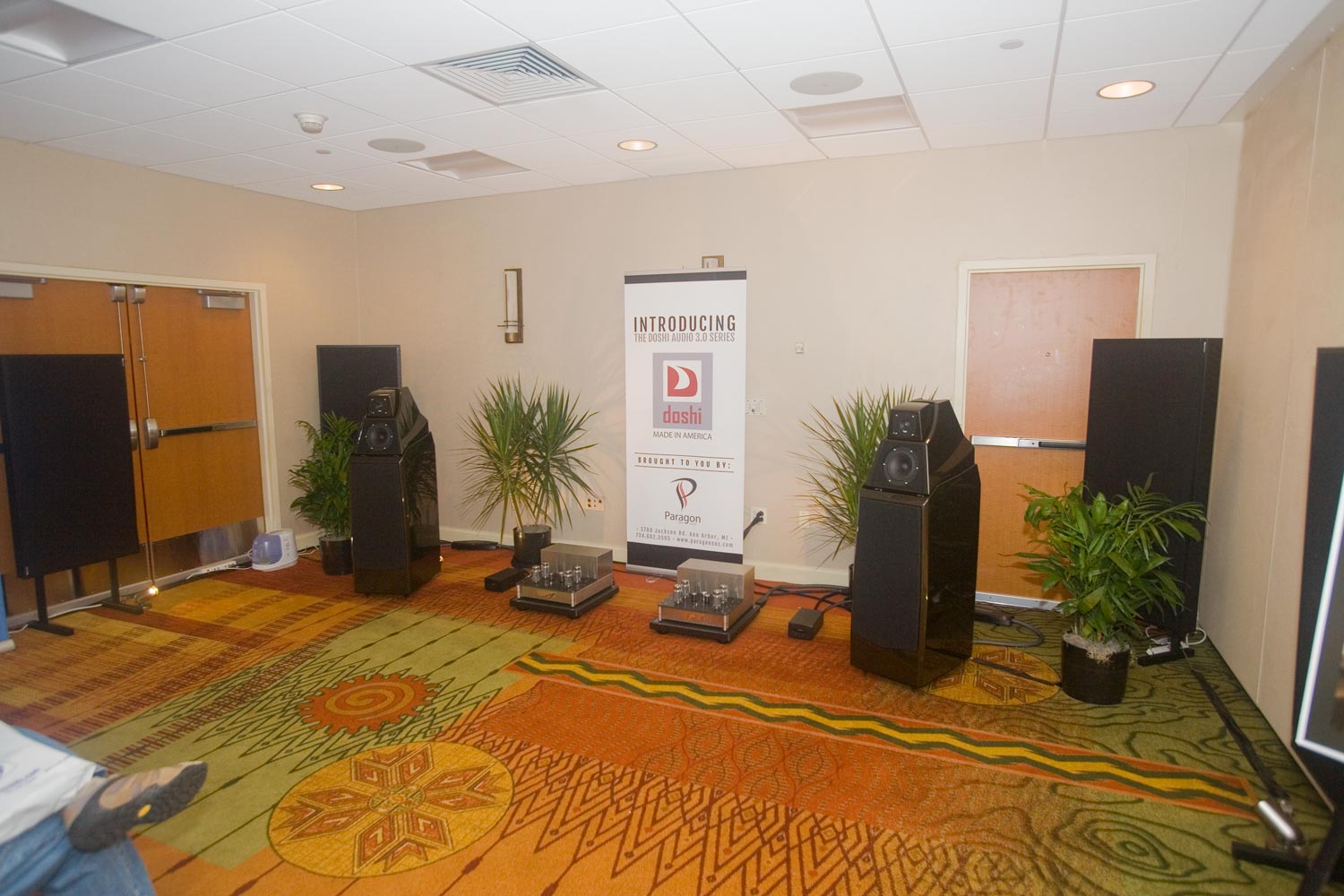

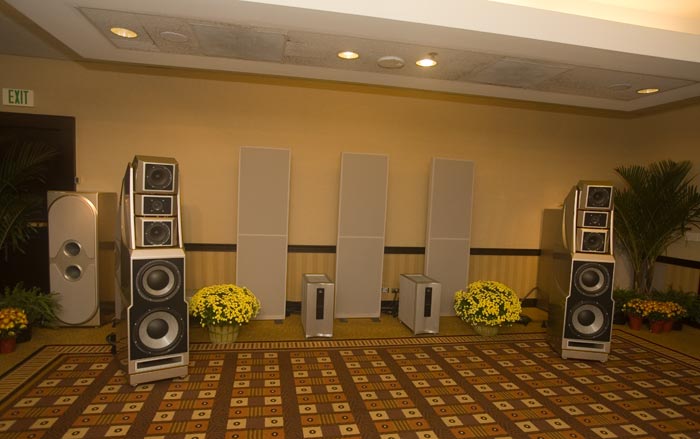
==== Wilson Audio Alexia powered by Doshi Audio ====

JV: “I was smitten with the Doshi gear and for the most part liked the speakers, which were quite realistically robust but also a bit bright, edgy, and forward…”. “I’m not sure, but the system’s upper midrange and lower treble got a bit ragged on fortes. ”

Uh oh. Have to agree with JV [I wrote this review of JV’s report As I Read His Report. I did not realize we were going to agree on the sound quality for most of the rooms at this point]. I really wanted to like this system and hear what the Alexias could do but… what he said. Anemic and edgy. Perhaps something was not broken in before they took it to the show. Perhaps, it is that the Alexias are notably harder to drive than many have expected them to be.

“…the Alexias didn’t have as much room-shaking deep bass as I’m used…”

Seriously, it might make sense to point this out if the Alexias were gargantuan Godzilla-like speakers – but they are not.

JV makes comments like this several times in the early parts of his show report. I know he is trying to get us all excited about having dumped the Magico speakers for the Raidho speakers as well as remind us he has the latest Walker turntable and a Soulution amp. But…

Just throwing this out there but I do not think show reporters should go around taking a poke at exhibitor’s systems by saying [not out loud, anyway 🙂 and certainly not in print] stuff like “Hah! Suckerrrrs! Our system at home blows this away! Let me count the ways…” I know some forum trolls do this – but don’t you all find that annoying? Especially as we can’t just go and plop down in their listening chair and check out if they are full of [exaggerating their systems attributes and minimizing their systems faults]?

And comparing “deep bass”? The hardest thing to get right at a show with wobbly bass absorbing walls? Puh-leeze.
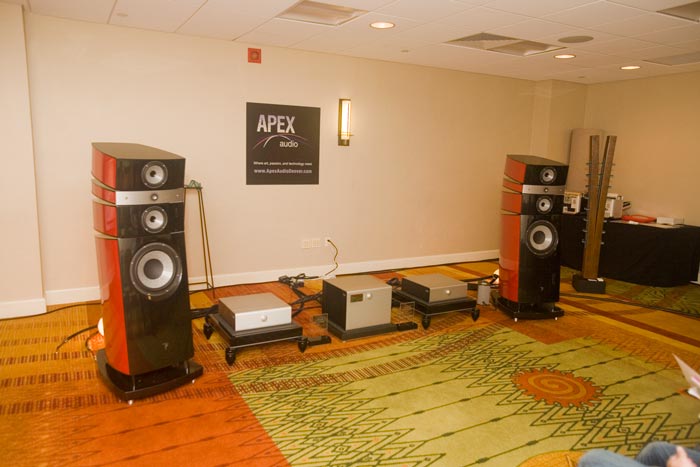

==== Focal Stella Utopia powered by Soulution ====

We’ll have to agree with what JV said, I guess, as far as it goes: “…big, full, solid, and gorgeous on full orchestra in Kije, though … not as room-shaking on the explosive timp and bass drum strikes … [as JV’s own system again]”.

But this is such a small part of what I personally call music. Big dynamic swings. Yes. Cool. Awesome even. What about the rest of the music? Hmmmm….
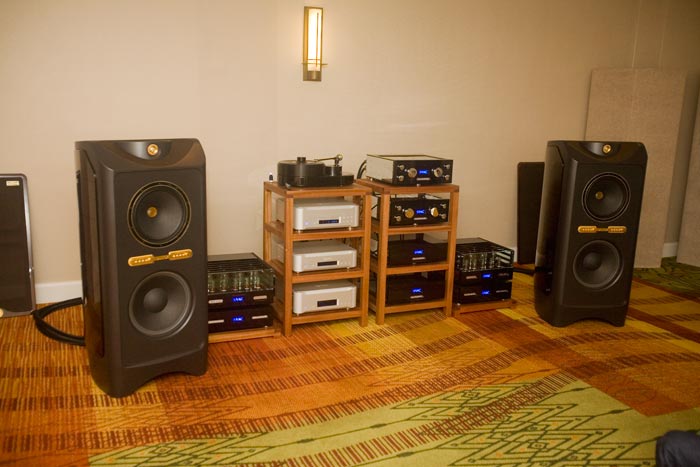

==== Tannoy Kingdom Royal statement floorstanders powered by VAC ====

JV: “…sounded extremely detailed and robust through the Tannoys, with a very prominent upper mid and treble that managed to hold detail on the swooping strings and winds throughout the very loud bursts of brass and percussion…” “There was, however, a little loss of bass/power-range color, extension, and drive on Janis… left her voice sounding a bit too “exposed” and shouty. … they added a slight granular roughness to the sound”.

Have to agree with JV with his general impressions except he is glossing over real problems or he did not play a CD. Another system we wanted to love. VACs are great. Big efficient Tannoys are great. We hear awesome things about the big Esoteric 3-peice digital. What’s not to love? But on the CD [we did not hear vinyl here, unfortunately], it sounded very ‘digital’ to us, digital in all its wonderful unglorious ungoodness [or, as we thought it through, figuring none of the filters on the Esoteric could be THAT bad – un-broken-in-cableness in all its glaringly sharpishness]. I came here several times and spent more time here than in 96% of the other rooms. Hope they find what was wrong and bring this again next year.
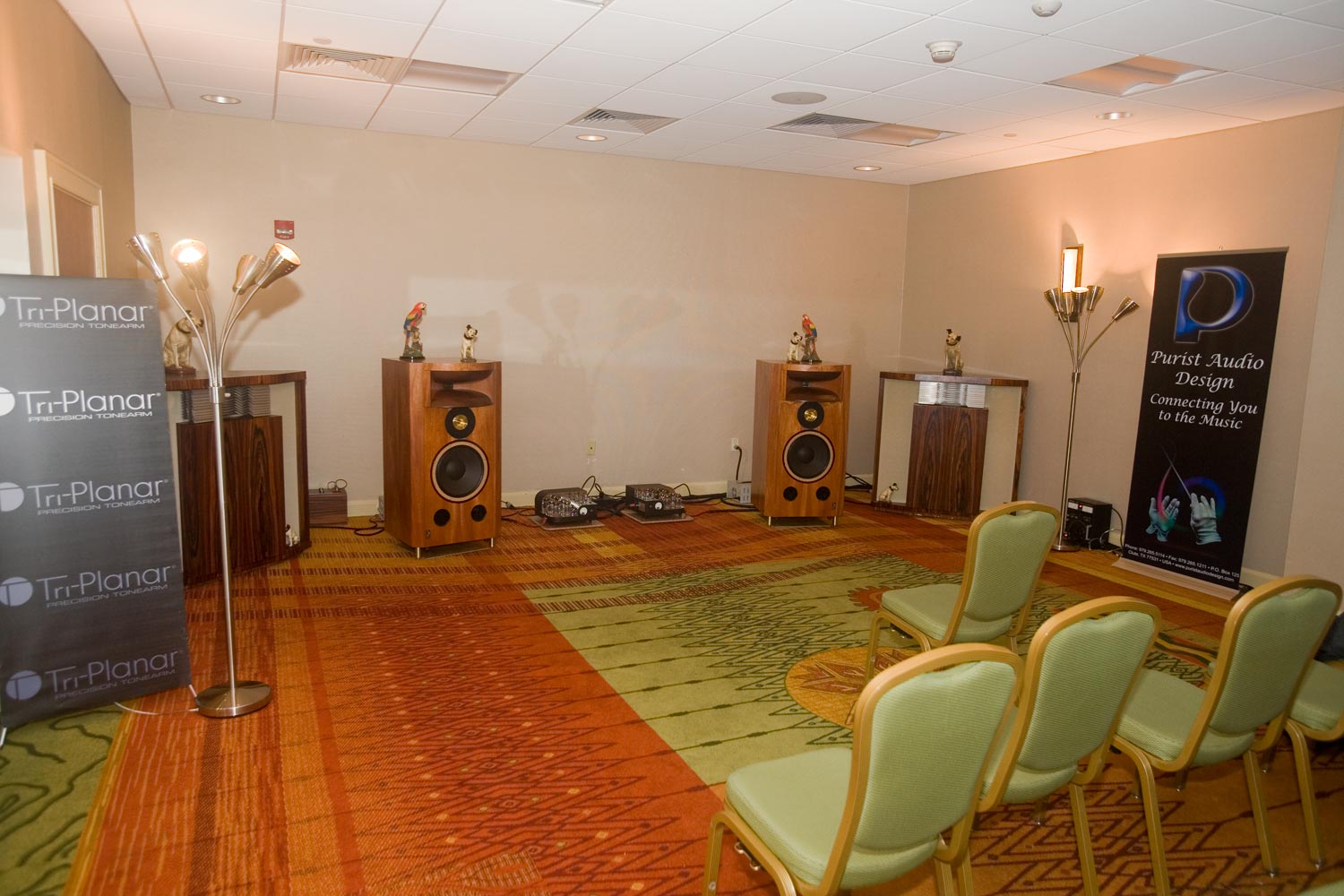

==== Classic Audio Reproductions powered by Atma-Sphere ====

“…the T-3.4 had lovely color on solo violin, showed surprisingly little horn coloration on “Long and Winding Road” with better foreground focus on Paul’s voice than CAR horns usually have (although the speaker did seem to lose focus and resolution on background instruments and chorus). A little dry and bright on crescendos, the T-3.4 suffered from a marked lack of top and bottom end on all music”

Agree with JV here. BTW Classic Audio Reproductions (CAR) is now just Classic Audio. They have been steadily improving these speakers and, last I heard, were making sure low-powered Audio Note amps sounded their best on them.
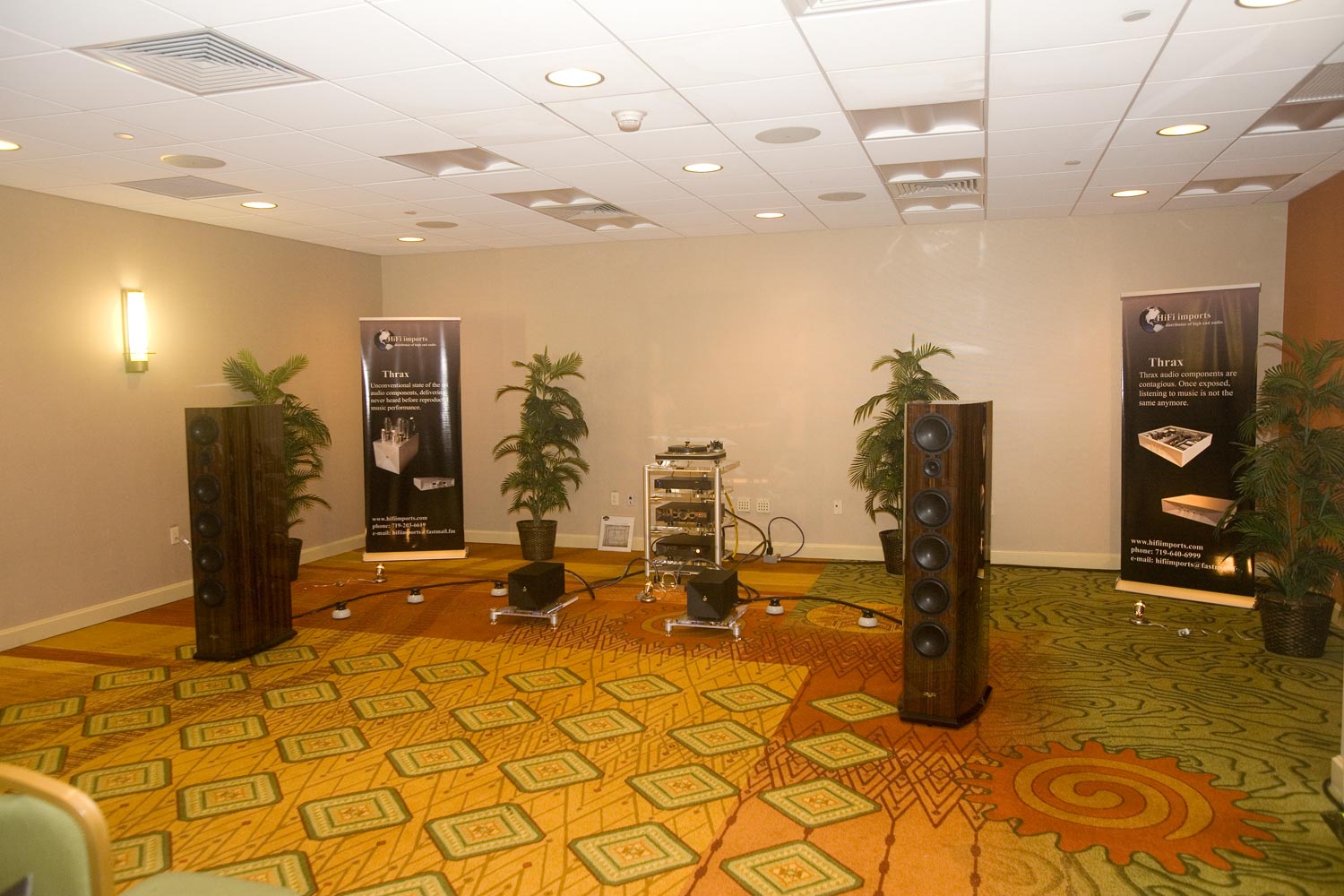

==== Venture Grand Ultimate MkII powered by Thrax ====

JV: “The sound was doubtlessly the best I’ve heard from any Venture loudspeaker. Kije was terrific—realistic tone color, excellent staging, with very good bass, dynamics, and resolution. Keb’ Mo’ ditto, though his voice lacked a little focus (but then I was sitting a mile away). The presentation may have leaned slightly to the dry side, but only slightly…”

JV seemed to like this room [but no nomination for BOS?] saying it was the best Venture room he has ever heard. I myself was only able to hear the digital source here in this room, and on the end of the first day, but I thought the Venture room at CES sounded better with a rounder, more harmonic and musical presentation. Should have gone back to hear the system on the Spiral Groove table – a table which Neli and I both like a lot. Doh!

Darrin and Gene were highlighting the Thrax gear, an amp and phono pre. These guys often run across interesting gear and the gear looks like potentials but they can get kind of overwhelmed [it being a very large room] by the rest of the gear, the speakers, and the room itself, so it is hard to hear what they sound like.
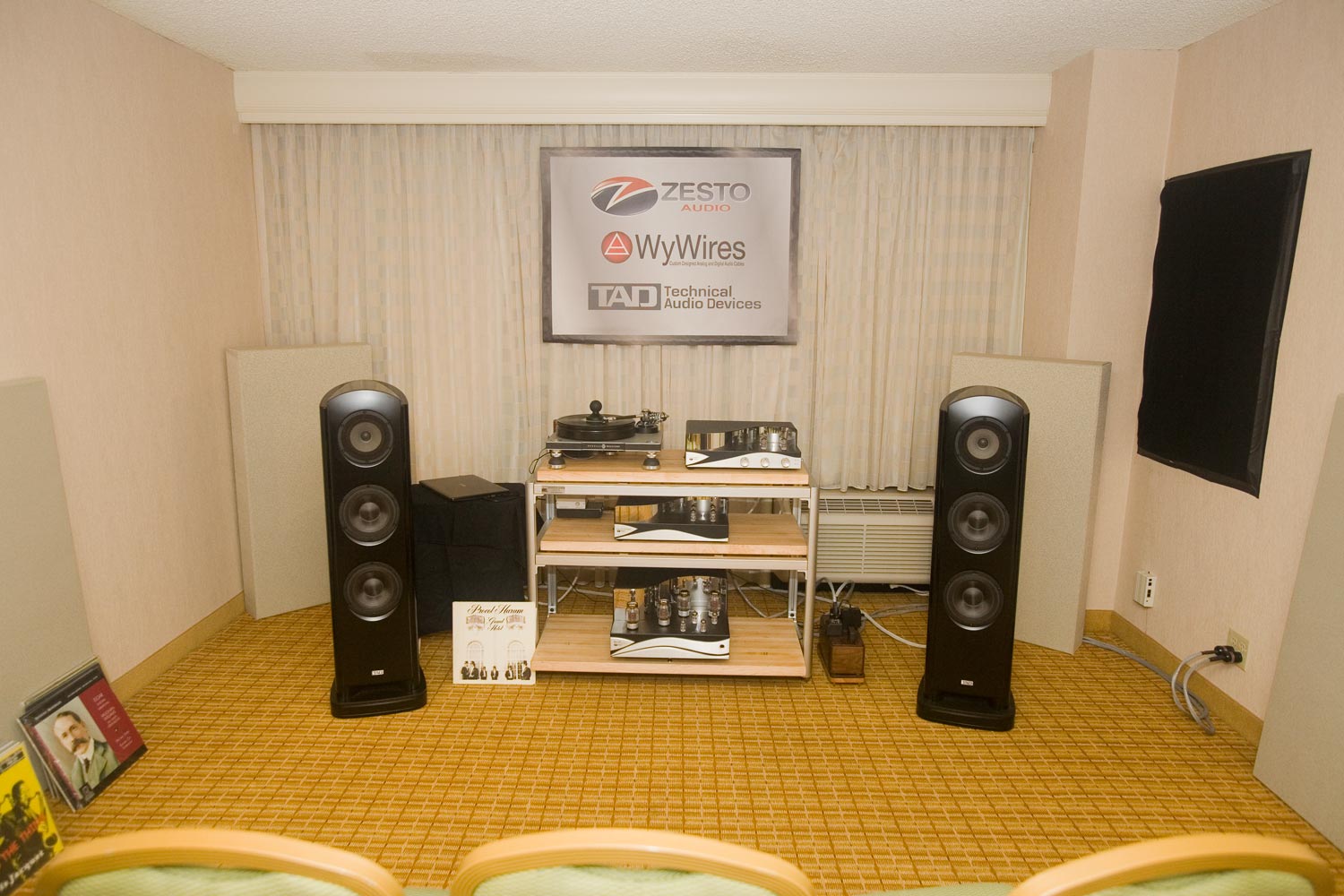

==== TAD Evolution One powered by Zesto ====

JV: “I found nothing special to rave about here-and nothing to complain about, either. I’ve always liked TADs and I liked these littler numbers, too.”.

It makes sense that JV likes TAD speakers, being focused on tight dynamics and accuracy the way he is. People seem to like the name ‘Zesto’ and you could easily hear the name pop up against the background chatter [such as it was at this quieter show] in the hallways and rooms. But this room sounded just like you would expect it to with any decent standard issue amp driving medium sized TAD speakers. Zesto could be great – but we didn’t hear it here.
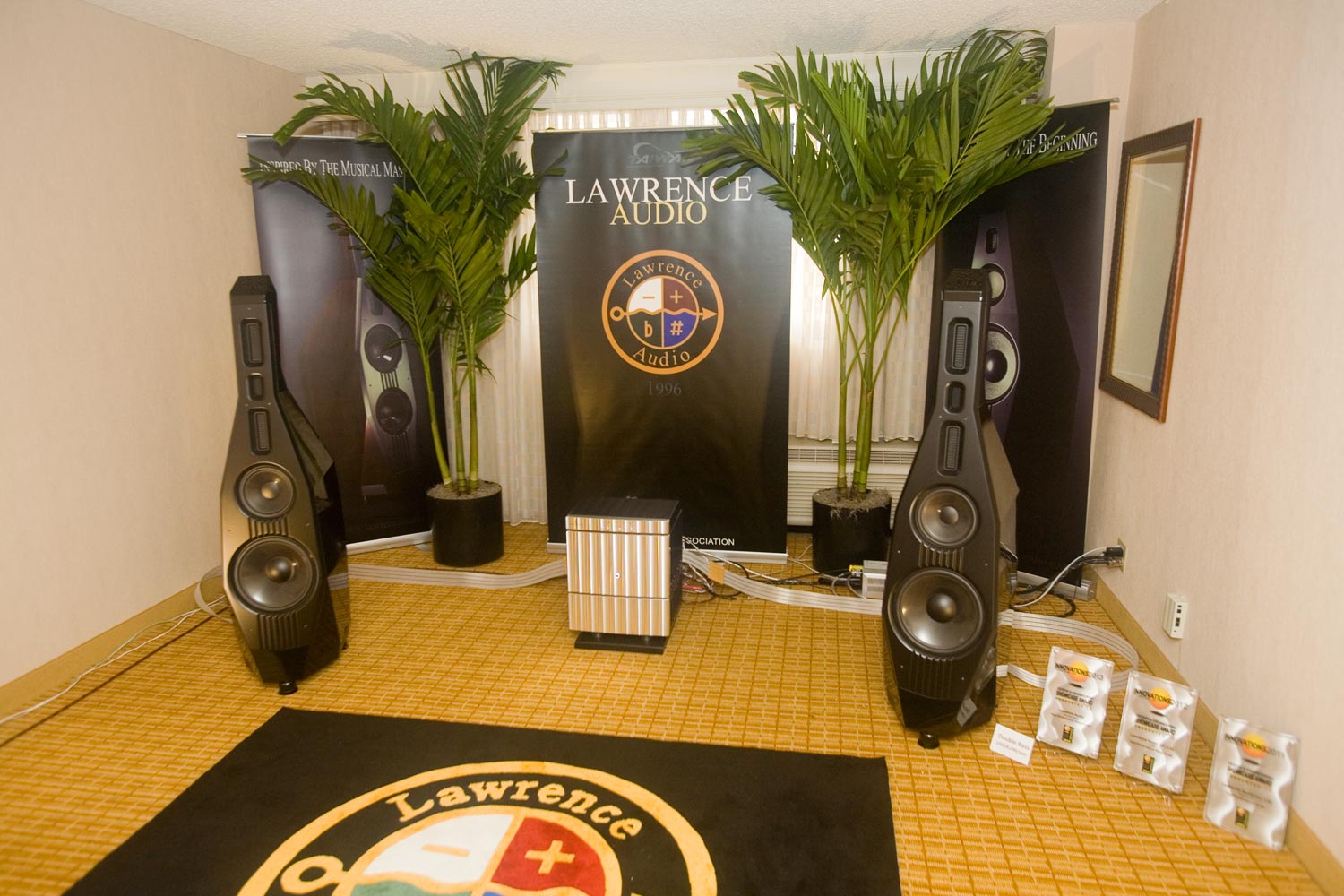

==== Lawrence Audio Double Bass powered by Jeff Rowland ====

JV: “The sound was rich, beautiful, and full-bodied, albeit with just a hint of hollow, cupped-hands coloration on male voice.”

I did not necessarily hear the “cupped-hands coloration” but there are several issues of this kind that are commonly on speakers at this price point. These are definitely the best Lawrence Audio speakers, and best sound, I have heard from them, and they are definitely trying to reproduce Music as opposed to just dynamics or resolution or detail or accuracy. I think these might be real contenders at their $28K price point if they put excessively expensive gear around them like, you know, a lot of other rooms do :-).
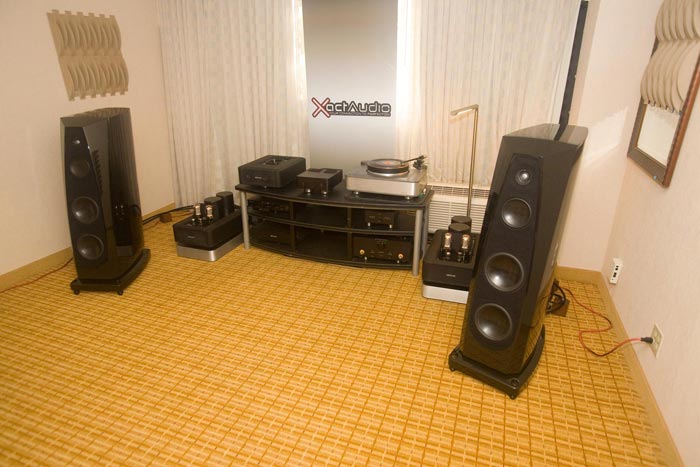

==== Rockport Technologies Avior and Absolare ====

JV liked this a lot “Thesimply wonderful texture and tone color with an unusually open soundfield and genuinely realistic power-range weight, richness, and body. Lt Kije was almost as good as I hear it sound at home. Janis Joplin was phenomenal. ” … ” full and smooth without loss of resolution, fast without aggressiveness, rich and sweet without being syrupy….”, “…only thing missing was that last octave of bass that I hear at home”.

Surprised he doesn’t always like Rockport speakers as in my mind they are close to TAD [though TAD does pay much more attention to sound at shows, usually taking great care to pair the TADs with appropriate quality gear. Rockport please take note. And SoundLab you too].

Anyway JV loves it. Neli loves it. Me? Maybe I just had a mental glitch in this room? I kept thinking about and dividing the sound I heard into two parts: that contributed by the lovely tube amp, and that contributed by the super accurate speakers. This did not happen to me with this same system at THE SHOW in Las Vegas last January. That sound I felt was muddy and harmonically drab [in a way, WAY larger banquet-sized room]. This sound here was much tighter. But because of the muddy sound at THE SHOW I did not expect much here and did not spend much time here. So, I will defer to Neli who feels strongly about this (and JV) [hey, I have to live with her. You don’t :-)]
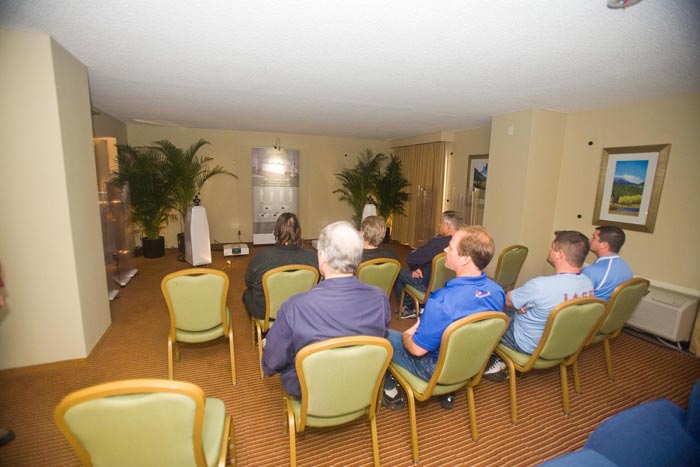

==== MBL 116F powered by MBL Corona electronics ====

JV: “Although the MBL system may not have had quite the same focus and density of tone color as the Avior/Absolare combo, the 116F came close, plus (being an omni) it had just a tad more openness and air on top”…

Comparing this room with the previous one, the Rockport / Absolare which seems nuts to me. Essentially he just punted and apparently didn’t have anything to say. No problem. I was also taken a little aback by this room.

Typically MBL scales the size of the speaker to the room. In a room this size they would have much larger speakers and larger amps. As someone who goes to these shows a lot there is a ‘MBL Effect’ one expects to hear in their rooms. Loud, very enveloping, very dynamic music. But this year it there wasn’t an ‘MBL Effect’ and it was more a normal type of hi-fi show presentation. I thought it was pretty good, but with all the problems incurred by speakers that have tight, powered, ported bass with omni speakers radiating energy in all directions when driven by less than humongous amps. Kind of a refreshing change of pace for them, all told. Just a little surprising for us old timers.
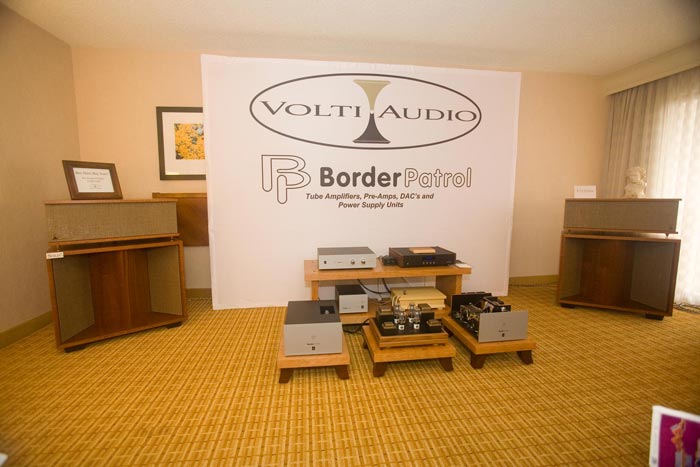

==== Volti Audio Vittora powered by Border Patrol ====

JV: “…unusually neutral-sounding for a horn (even better of-axis in this regard). Very focused, a bit forward, and a little supercharged in the mids (as horns often are), it was still pretty smooth and powerful overall with a better-than-decent blend between the horns and the outboard dynamic subwoofer.”

JV doesn’t like horns so he spends a lot of his time talking about how this was better than expected. It was indeed.

it was indeed unusually neutral-sounding for a horn paired with a SET amp. JV thinks it is a bit forward because he listens to a lot of efficiency-constrained ergo constipated speakers and over-damped amps. Just sayin’.

Now that he mentions it, that blending with the subwoofer was indeed pretty darn good. This sound was quite good in a general way, though missing some air and resolution and it was a little uneven top to bottom. But these were really minor things are were not getting in the way of the music – things that people who just want to listen to and enjoy music and not be anal about their hifi system just might want to seriously consider as being worthless anyway.
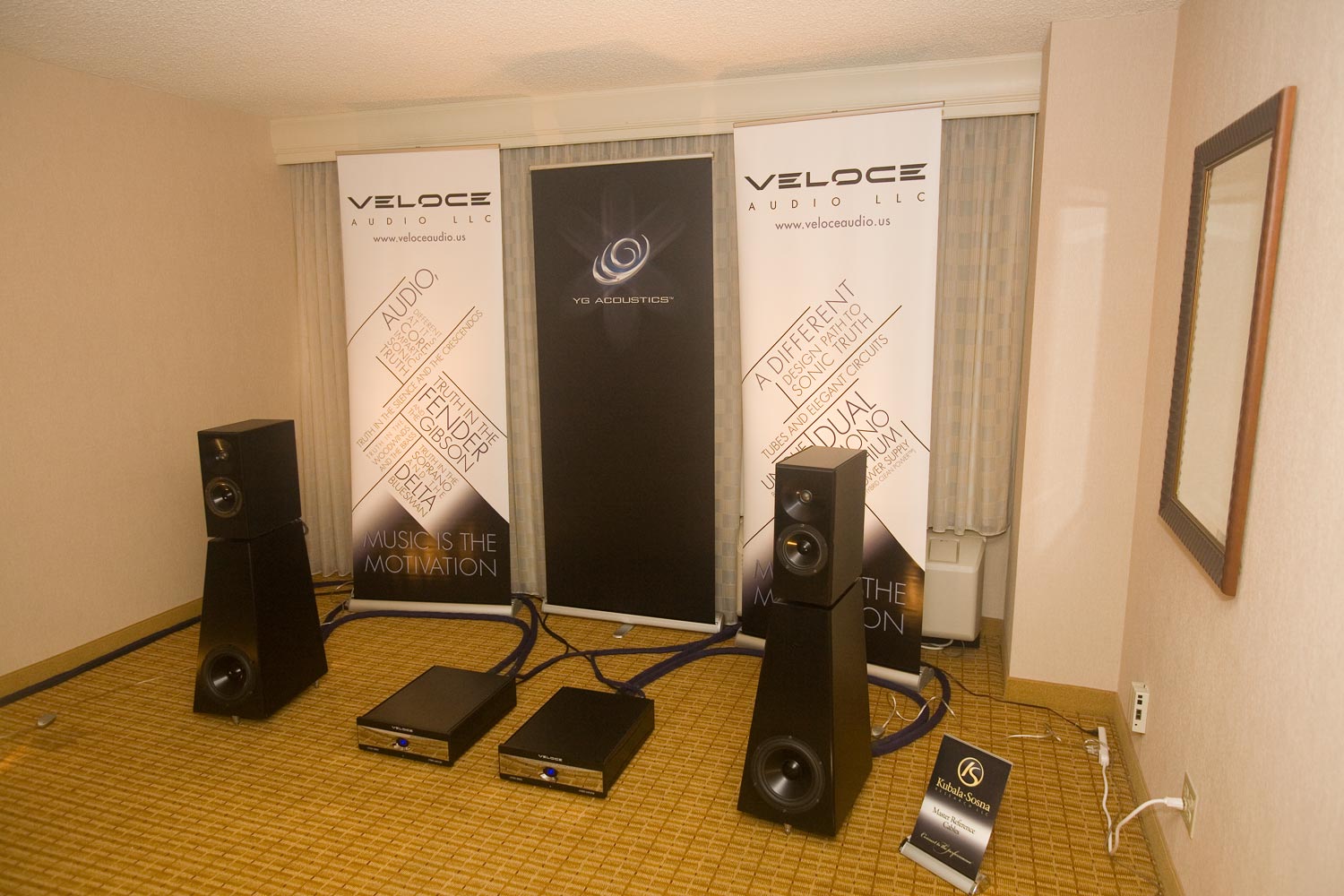

==== YG Acoustics Kipod II powered by Veloce ====

JV: “…very good air, separation, and definition top to bottom, though timbre was a little dry and bright. I thought it might be the record pressing that was thinning out color, but my copy of Acoustic Sound’s soon-to-be-released (and quite voluptuous) remastering of Kije sounded the same. Likely the room was a factor.”

I was also disappointed in this system. Perhaps the speakers were a little under-driven [a perennial problem with YG Acoustics speakers]?

Our traditional critique of JV's (Jonathan Valin) RMAF 2013 Show Report: Part II


==== Tidal Piano Diacera powered by Audio Power Labs ====

JV: “…truly gorgeous, with Saint-SaĂ«ns’ Danse Macabre simply phenomenal through the Tidals and the Aurender/dCS source. This was another BOS contender: extremely sweet string tone, superb depth and resolution, and fantastic bass for a two-way”

Neli liked it a lot too. I liked it too, although in the final analysis the sound was just a little too pretty for me and not quite as dynamic top to bottom as I might wish for. I remember really liking the Audio Power Labs on the Tidal at CES’s THE Show a few years ago a heckuva lot, almost the same exact system… [Can’t find which show. Argh. Memory Player? Perhaps the larger Audio Power Labs amps? … ah yes, here it is at Stereotimes. Oh, and here it is on this very blog: Audio Power Labs, Tidal, Memory Player at CES 2012’s The Show]


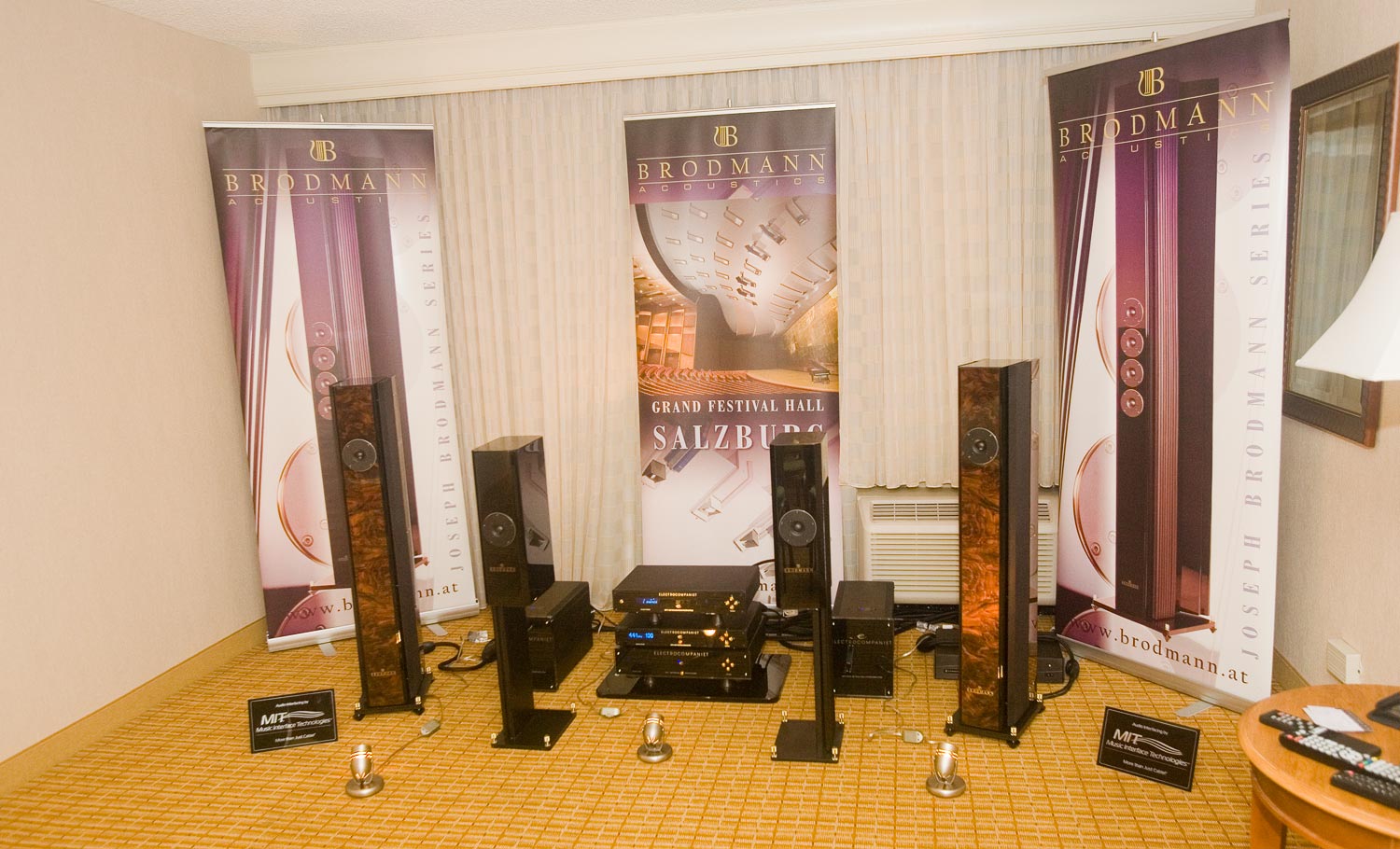
==== Brodmann Acoustics Vienna Classic 2 powered by Electrocompaniet ====

JV: “…dark and rich in timbre, but somewhat boxy (Brodmann, a piano maker, deliberately uses material resonances as part of its enclosure design) with a forward presentation and little stage depth (this could’ve been aggravated by my close listening seat). That said, the timbre of Kissin’s piano was lovely with a nice sense of the ambiance surrounding it.”

Yeah, these guys are going for a different sound than most speaker manufacturers. The speakers are designed to resonate with the music, like Audio Note speakers do, and with a similar focus on the music as opposed to audiophile check-boxes, but – I think they are going for something different.


==== Neat Acoustics Ultimatum XL10 powered by Audio Flight ====

JV: “…very high resolution and superb transient response, with just a little suckout in the upper bass and power range thinning color somewhat. Nonetheless, this was an good presentation with outstanding definition and surprising deep bass.”

These speakers are light on their feet with high resolution and good separation. I liked these speakers way back when Jay Rein had them and still think they need someone to really put a top notch system [something wildly inappropriate, price-wise] around them to show off what they can really do [and, you know, so you and I can hear it :-)].


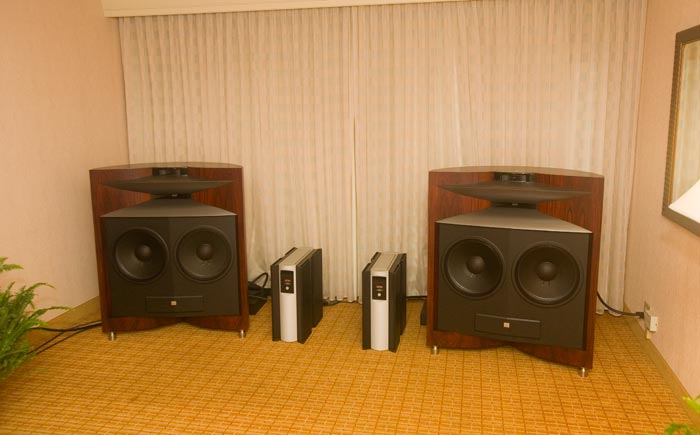
==== JBL M2 powered by Levinson ====

JV wants to review these speakers. Sounds like a good idea, but that doesn’t necessarily make the sound in this room work. I would love to hear these speakers on something besides these amps. These amps need speakers that are supremely detailed and delicate to match their classically dark disposition. Those are not these speakers. These speakers need a small, colorful, dexterous tube amp.

And when I say ‘needs’ I mean that I would really love to hear these combinations someday soon or my life will have this hole in it – and that this hole just can’t be filled any other way [come on, you all know what I mean! It is not just curiosity. It is more like a vitamin deficiency :-)].


==== Cessaro Liszt powered by Tron ====

JV: “…tremendous dynamics, very rich dark color; bass that is well integrated (though still not quite as fast or full as the horn midrange and tweeter) it was far and away the best horn at RMAF. Along with the Rockport Avior and another we will come to it reproduced Lt Kije with greater beauty, realism, and power than anything else at this excellent show. Obviously, a BOS contender.”

JV also talks about how horn speakers sound like a [often disconnected] collection of different speaker technologies. This effect can happen on many kinds of speakers – many times due to cables that mess with the frequencies or amps that are unable to control the speaker at various frequencies. I think he needs to close his eyes and ignore the fact that they are horn speakers.

Not sure what he means by ‘rich dark color’ which he is starting to use in several of these write-ups. I am thinking he means dense sound with liberal but over-damped harmonics mixed in. There are some people who prefer this sound [although we, to be clear, do not. preferring an open sound with lots of separation and clear as a bell harmonics. For us, dense sound reminds us of the wall-of-sound that occurs when a system cannot handle the complexity of the music it is trying to play or, similarly, when the music has been compressed].

We always root for Cessaro, really appreciating what good horn speakers can do better than any other speaker design. But here in this room we thought that perhaps the Tron was not up to driving the speakers or, conversely, that the horns had been so attenuated to mate with the bass drivers that they no longer had the dynamics and open sparkle of a horn speaker anymore.

I heard this the end of the 2nd day – but Kevin tells me that it sounded better on the 3rd day. I am envious of anyone who got to hear these play anywhere near as good as they look.


==== Von Schweikert VR-100XS Universe powered by Constellation ====

JV: “In the large tricky room it was in, with conventional sources, bass and power-range response were problematical—as was image focus.” … “At lifelike levels [on reel-to-reel] (which is to say about 90dB average SPLs with well-over-105dB peaks), nothing else at the show—and this was, once again, a great show—came as close to sounding real as the Universe/Constellation/UHA playing back The Doors’ L.A. Woman”…

JV liked this Von Schweikert speaker system when they used the reel-to-reel and played it very loud. I, however, just heard it playing quiet classical music and decided after several minutes that A) this was not going to change anytime soon and B) although I like quiet classical quite a bit, this was not doing it for me. The mastery, the emotion, the raison d’etre for listening to the piece, much less for the musicians to play it, was not present. And it just wasn’t loud enough for me to evaluate any other aspects of the playback. I like many of the Von Schweikert speakers and how they sound, and like the sound in many of their rooms at shows [even if their speaker designs seem a little crazy sometimes]. I wish I could have heard these, their statement speakers, in different circumstances. Perhaps at CES.


==== YG Acoustics Sonja 1.2 Passive powered by Mola-Mola ====

JV: “A BOS contender, even if the YGs were a little ragged at very very loud levels on sax.”.

The sound was a little ragged at not so loud levels too. There were also issues with unevenness in several areas as well. How I miss the old days when Bill just brought state-of-the-art gear and kicked butt [I know. I know! Things are supposed to be more affordable in this economy and shipping delicate stuff is a pain and a half. Still miss those days though].


==== Magico Q1 powered by Spectral ====

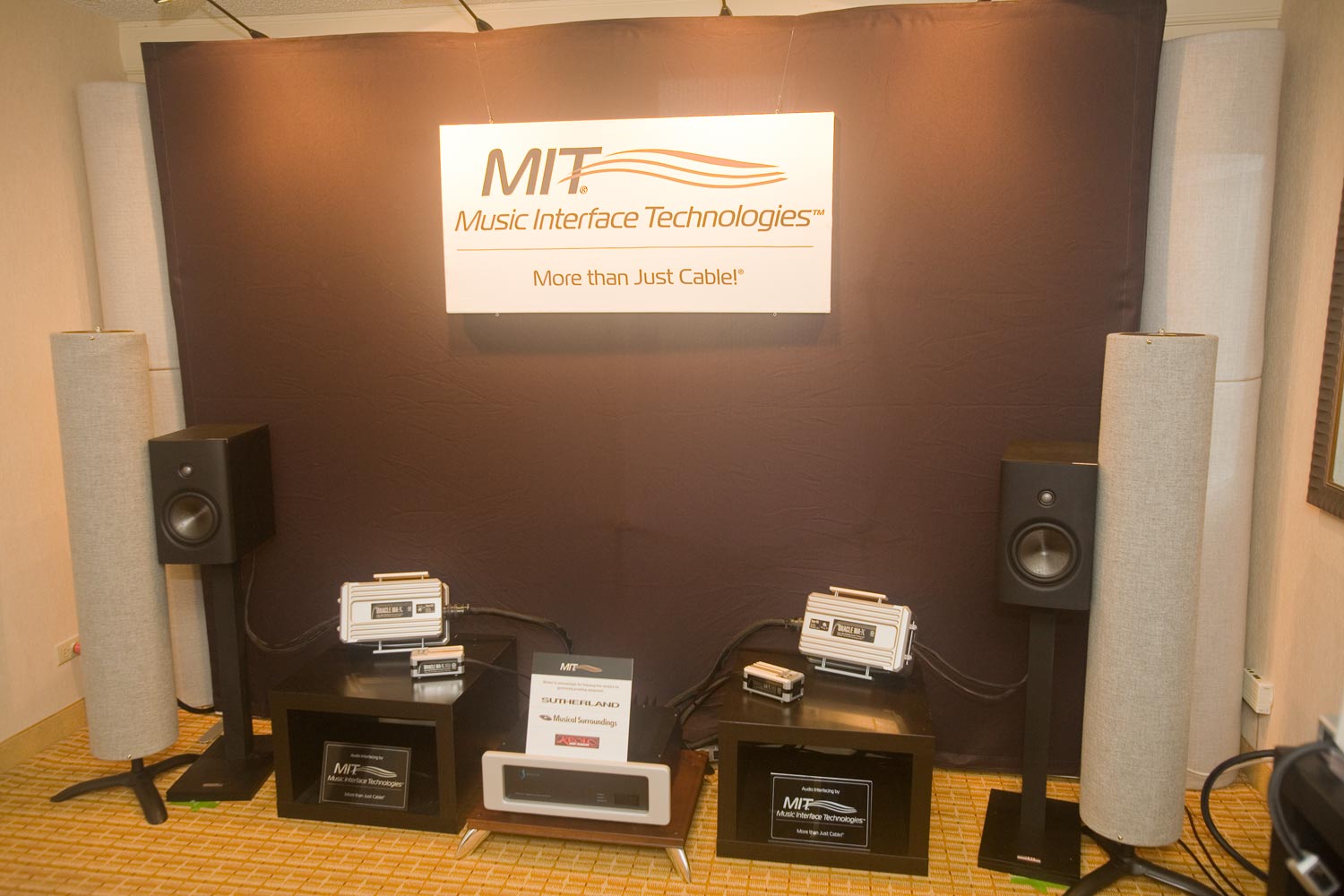
JV: ” …you can be sure that the Q1/Spectral/MIT room will be a finalist.”. Uh. Really?

When I heard this they were playing it quietly and were in a deep conversation with each other and it did not look like a good time to ask them to move a little out of the way so I could take more photos, or, you know, turn up the volume.


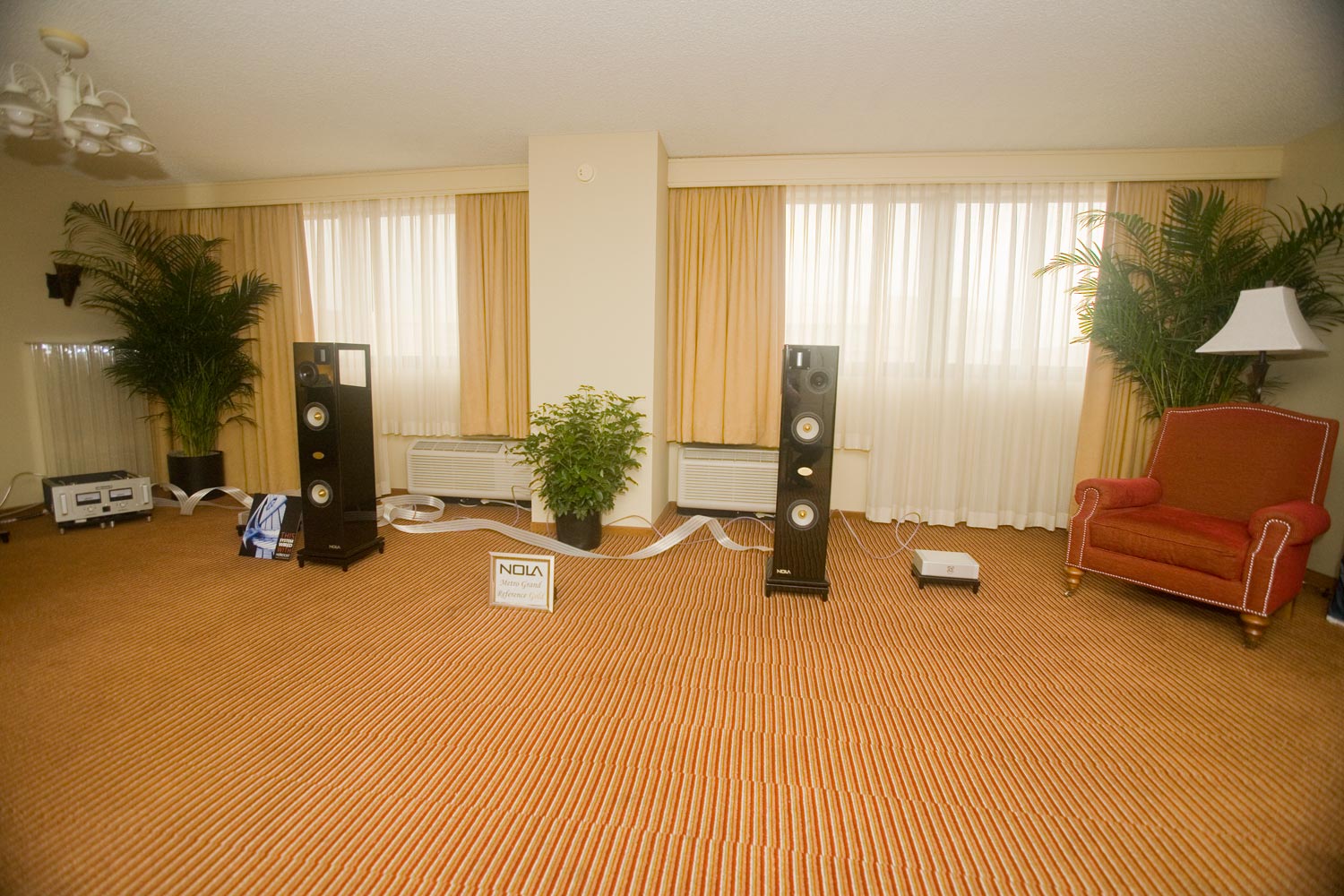
==== Nola Metro Grand Reference Gold on ARC ====

JV: “…dark and beautiful in timbre, with well defined bass on “Autumn Leaves” and lovely reproduction of vocals and piano, and spectacular staging, resolution, and dynamics on the Mercury Romeo & Juliet. There may have been a smidge of room resonance here…” … “Certainly yet another BOS nominee.”

I feel like JV is tossing Best of Show (BOS) Nominee awards around like the way most people throw eggs at the zombies.

It appears that

a) almost all speakers at the show are above $20K now and

b) the criteria for being a BOS nominee is only slightly more difficult than just showing up at the show and plugging things in.

I feel JV’s show report is degrading here as we near the end. If this continues we will have to do something else so we don’t just start ragging on the whole thing.

I feel these particular Nola speakers were not as able to hide the flaws in the upstream components as the larger ones they usually bring. The larger speakers in this very large room had, at the very least, compensations like scale, dynamics, bass, ease and stuff like that which I, at least, like quite a bit.


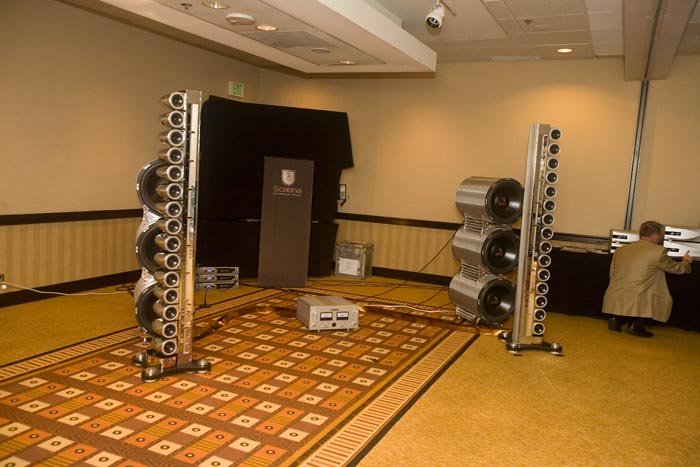
==== Scaena Dominus on ARC ====

JV: “…bass had a slightly different quality (slower, less defined) than the ribbon/cone columns.”

Essentially this is his only comment on the sound. This made me laugh. Yes, it is extremely hard to get the big depth charges to mate perfectly with the line array. They do a pretty darn good job at it though. But, no, it is not absolutely perfect.

That was not the problem in this room, though.

Neli also wanted them to play an LP on the Kronos turntable here. Maybe that would have fixed the issues. But you know that sound you get when there are no micro-dynamics, no ability to render subtleties of notes so, like, say a trumpet, being played really LOUD, makes notes that, instead of encompassing several nearby frequencies that all kind of rise and ebb a little differently creating a wonderful colorful sweeping brassy call to attention, instead just compresses it all into a single even louder frequency blast that creates a tsunami-like effect on the ear drum? If they had just turned it down some…


==== Wilson Audio XLF + Thor’s Hammer s powered by VTL ====

JV: “in spite of its many obvious virtues (color, speed, impact) “… “there was something not completely refined about the presentation—call it a want of very low-level texture—that bothered me just a bit. It was as if the XLFs got the big things really right but slightly (and I mean slightly) short-changed the littler ones. ”

He then goes on to blame it on Thor’s Hammer subwoofers and still grants it a “a BOS nomination”.

Wrong. Well yes. But why blame it on the subwoofers??? Pretty safe to throw stones at them, I guess, since they have the weakest constituency. Personally, the XLF are speakers we wouldn’t mind having here [and I am very picky. And Neli is even pickier than me (seriously. if I want to really annoy the heck out of her I just have to suggest with a straight face that we try a modestly excellent speaker here sometime. ouch.)] and the subwoofers? They seemed to integrate exceedingly well and get out of the way, in my opinion.

There were many more things wrong here and much more serious [and I feel for JV trying to put it into words and keep his job. The normally meticulously honest JA just bailed with a feel-good review] .

Still trying to decide whether to do a real review of this room. Some of the sound was so bizarre, I am still trying to figure out just what was going on.

The short description is this: The first track, which sounded like what I think of as the wooden mallets hitting copper Tibetan bowls on the American Beauty sound track, was awesome. Rich harmonics, detailed, awesome resolution and separation, swirling dynamics as the sounds ebbed and flowed. I had never heard anything better than this albeit unfamiliar music. It was lacking nothing.

Then we heard more traditional kinds of music. On these the imaging was all over the place, (for example, many notes would start in the center between the speakers and then gravitate immediately to one or the other of the speakers. And things on the soundstage would just move around all over the place), and, except for one track (!) of the demo the timber was off; every note sounded a little ‘sharp’ [a little higher in frequency – as opposed to ‘flat’]. How could this one track sound OK and the rest not? This is what has baffled me for several weeks now and the whole experience had me doubt my sanity. Whenever I heard systems that had imaging or timbre issues for much of later that day my response was to back slowly away and seek temporary refuge elsewhere.

[my current explanation to myself is that because the one track with realistic timbre was a recording off of an LP recording of a jazz session – it had 2nd harmonic distortion that filled a void somewhere in the system signal chain – and when that void was not filled, as it was not on the other tracks, then it would get filled by somewhat random harmonics. My previous explanation was that there was 3rd harmonic distortion on the other tracks that my ears were interpreting as an elevated frequency]. As for the soundstaging and imaging issues, perhaps something was wired backwards [but not everything, because we all know what that sounds like, and this was not that].

Because of my surprise and obsession during he demo with the above issues, I did not get down to the point about caring about the lack of texture / micro-dynamics / inner-detail, whatever you want to call it. Kudos to JV for pointing it out, though.

But… weird huh? Kevin pointed out the lack of soul in the sound of the demo – and we have to agree wholeheartedly – but as we all know soullessness does not perturb our reviewer friends much [JV, JA, Fremer…] nor some percentage of listeners apparently [oh, but if they only knew! :-)].

Missing: JV did not review the two Sony speaker rooms: one with Pass Labs and the other powered by Emmlabs. Nor the Vapor room powered by Atre Forma.

OK. Hope you all enjoyed the show.