Packed up. Muscles sore. House empty. Wondering just why we take so much stuff.
Actually, we are thinking about doing a much lighter system next year. Not sure if it will be less expensive. But lighter. 🙂
Whew!

Packed up. Muscles sore. House empty. Wondering just why we take so much stuff.
Actually, we are thinking about doing a much lighter system next year. Not sure if it will be less expensive. But lighter. 🙂
Whew!
OK. I am sure many of you are wondering why I like Romy with his ad-hominems and invective and posting of wildly gross misconceptions about our products and motivations.
I thought I needed to clarify with everyone, just in case they are the wondering type, that we do NOT agree with Romy’s opinion on some things, namely that everything out there sounds bad. In particular, we think that a few things actually sound pretty darn good and we really enjoy listening to music on them. These are the things we talk about on the blog and demo to people visiting our home and at show exhibits.
Romy is one of the best writers we have in audio, and one of the most perceptive – but unfortunately it does take some amount of effort to read through the emotion-laden confrontational approach.
I see a lot of myself in Romy. He sets up a Platonic Ideal of how audio *should* sound, how *all* manufacturers and dealers and audiophiles should behave – and that is that we should all be focused on just one goal – achieving that Platonic Ideal of *perfect* audio reproduction.
How is this like me (and Neli, too, in fact)? This is how we approach our other profession: computer software. No, we don’t make asses of ourselves, and we probably only think slightly less of Microsoft and Adobe and Apple’s fleet of lawyers and Rational and the average IT manager, etc. than, say, the average Linux geek.
But I would argue that Software is much more ephemeral than audio – and that the Platonic Ideal of perfect software is indeed asymptotically approachable through a little discipline and a little sympathy for all the users out there (and it would make fiscal sense). But even here – it is important to stay grounded – computers are only so fast, people only can only come up with new models of how to organize information just so quickly, the state-of-the-art has only come so far. It still will be awhile before we have Star Trek-like computers we can ask general questions of.
Romy’s problem is that he creates all these cities in his head, and then compares real live available speakers and components to this ideal. It is not even clear that this ideal would be an ideal any of the rest of us would even like – and he has not communicated very much about this ideal, which is a shame because this is where he might be able to contribute something of real significance to Audiophiledom.
At Audio Federation we seek for ourselves, and help other people find, the best available REAL WORLD solutions using the best audio reproduction equipment available today.
So, and this is my point, Romy antagonistic approach has put him more and more out of touch with real audio in the real world – and people have to be careful when they read his stuff about specific pieces of equipment [but his more abstract stuff is great]. Not recognizing differences between Marten and Kharma, about which every visitor can tell you about who has been here – not understanding the advantages and disadvantages of different approaches to vibration control – making general statements about Emm Labs [have to wonder that perhaps personal enmity is getting in the way of being able to hear what they do?] and the Supremes and on and on… leads me to think that, Platonic Ideal is fine and all that – but there needs to be some grounding in reality, in the Real World, and it just doesn’t make good sense to compare things to the Best CD Player Imaginable, or the Most Faithful Speakers Imaginable.
We are perfectly aware that the products we carry, like all products out there, have various faults. It is our well-reasoned judgment that our products have fewer faults, often much fewer, than other products out there – and further that any faults are manageable through working with the setup and the rest of the system. And it is this information about how to manage the issues like this, working with optimizing system performance, that keeps us busy with all this equipment we always seem to have have hanging around.
It is this balance, between everything sucks [except what I own, sell, imagine] and nothing sucks [that we review, see, hear about] that makes us kind of the odd man [and woman] out.
But it is this grounding in reality which gives us our real advantage. We get to live with the state-of-the-art, day in day out. We go to shows and I, anyway, get to hear every room. We talk to people and, Neli anyway, spend hours with each caller, several callers per day, hearing lots of people opinions about what kind of system they want and working with them to get them what they can afford. We focus on learning about and hearing the differences that make things sound good, stuff that is available, stuff that people can touch and have for themselves and enjoy the heck out of.
Yeah, we have our own Platonic Ideal about how things should really sound. Who doesn’t? But most of us just don’t get so angry that we start attacking people just because they are not as upset as we are that Audio reproduction is not perfect yet – nor manufacturers just because they are not getting there fast enough (or at those that do not care about getting there at all. OK. These guys do irk us) – nor at the capitalistic ambitions of honest dealers and manufacturers (very little ambitions in this smallish hobby of ours) because it sometimes hinders progress [though I would say lack of progress has more to do with human nature and people tending to be cautious and lack confidence and imagination)].
So, enough is enough. The nuggets are becoming too hard to find, mired in the anger, and the GoodSoundClub goes back on our ‘just another forum of angry people who get their rocks off attacking other people’ list, just like most of the other major forums out there.
I tried to login and post my comments there, but the site seems to have forgotten me [or I forgot my login], so I’ll just post my comments here.
The latest post in the ML3 thread at the GoodSoundClub talks about my Initial Impressions of the Lamm ML3.
I am happy that Romy found it informative [thanks Romy], but…. I have a few corrections to make 🙂
First, the Ongaku, the Audio Note …. U.K.(!) … Ongaku, that we have here is not micro-details challenged [to say the least]. The Kondo Ongaku may indeed be challenged in this way – certainly sounds that way at shows… but then again, they put the darn things on nightstands and other suspiciously inadequate platforms that are probably sucking all the micro-details out of whatever there was there to begin with.
If any of you weren’t happy with digital four of five years ago – and gave up on it – give it another try. Digital music reproduction has evolved significantly in the last few years, along with the rest of the digital landscape.
And, just another pet peeve :-), the sound of the Martens are in fact almost diametrically opposite to the sound of Kharmas. Both have their fans, and you can like both, like we do, or not. But they are really not at all more alike than any other two random ultra-high quality box speakers. One is very even handed trying to be as accurate as possible, one is very exuberant trying to be as engaging as possible [the way I think about them, anyway].
And regardless of all this – our reportage was about the sound of the ML3s in comparison to what we have heard here before – namely the ML2.1 and the higher level Audio Note. If we say there was significant micro-dynamic/harmonic capabilities [I hesitate to say micro-details because by detail most people mean – if they think about it – a well-delineated (best case) or, sometimes even sharper-than-natural leading edge to notes, usually at the macro level, sometimes at the midi-level – and this is not that. This is *extreme control* of the note envelope so that it is formed in a much more natural way than the saw-tooth-curve approach of lesser amps], then there was significant micro-dynamic/harmonic capabilities with respect to these other amps that we are familiar with [which themselves are the best we have heard in this regard, especially on average-efficiency speakers] – as heard on a very, very high resolution system, whether someone thinks they will like the system or not.
And, as far as “Mike always overly-exuberant about the things he sells”, well, I try to be clear about why I recommend various things, whether we sell them or not, that I think people would love to hear for themselves. But me? Overly exuberant? If you knew me, you’d realize how much of a stretch this would be. 🙂 But seriously, most people want me to be MORE exuberant on the blog – but less so than the typical reviewer – so that is the balance I struggle for.
Anyway, Romy, you are welcome to visit here anytime, or our room at RMAF. Then, at least you would know *exactly* how bad everything sounds 😉
While checking out what other websites are talking about the Rocky Mountain Audio Fest I came across this thread at Steve Hoffman’s forum:
http://www.stevehoffman.tv/forums/showthread.php?t=153011
Which talks about what kind of music a new exhibitor should bring to a show with them.
I don’t know who any of these people are, I am not registered there and the site does not let you see people profiles unless you are registered :D.
Well, besides disagreeing vociferously with the suggestion that exhibitors should not play show-goer’s CDs because they will invariably sound bad [a true signature of a bad sounding system all around, eh? If the system can’t play the music that an audiophile loves, then what use is that system for that audiophile? An accent for the livingroom decor?] – our suggestion would be to bring music that you love.
If the exhibitor brings music they love, or just music they want to play to see what it is like, then at least one person [i.e. the exhibitor] in the room will be enjoying the music. Sure, show some eclecticism – don’t just bring country, but bring some of your runners up like western and rock-a-billy and country-rock and bluegrass, etc.
This has the side effects of at least putting the exhibitor in a good mood and of attracting ‘like minds’ who love the same music. There is also a level of honesty implicit in this kind of approach – which we happen to think is a good thing.
Yeah, we get blasted for this approach [as being ‘unprofessional’] from some other dealers and reviewers – who, in another industry, would not let people test drive their prospective new car, or maybe just for 2 or 3 minutes [yes, there are still car dealers out here like that – ones that we visit just ONCE] nor review a car without Corinthian leather bucket seats [OK, my metaphor sucks – but moving on…].
This year I feel that we want to bring mostly things we have gotten recently: a CD by the Dave Holland Quintet – Extended Play [yeah, yeah, plenty good audiophile quality – but the songs are long – a no no at shows 🙂 and it is complex enough that it’s depths are hard to plumb in just a few listenings… like Radiohead … except it is Jazz ;-). Oh, and way less complex than Sun Ra or even Ornette Coleman – or is that Ornette Coleman and even Sun Ra?].
Anything else? I don’t know … usually we just do a mad rush through here and pick things we like and want to hear. The only problem is that Neli and I usually disagree significantly on the selection. So – we just end up with a his and hers side on the CD and LP collection at the show.
Our extensive show coverage will be here:

RMAF 2008 Denver’s High-end Audio Show.
The large room at 930 will have:
Marten Coltrane Supreme loudspeakers
Lamm ML3 Signature amplifiers
Lamm L2 Reference linestage
Lamm LP2 phono stage
EMM Labs TSD1 transport
EMM Labs DAC2 DAC
Brinkmann Balance or Audio Note TT3 turntables
HRS MXR and SXR equipment racks
Nordost ODIN and Valhalla, Jorma Design PRIME and No.1, and Audio Note PALLAS cables, along with assorted ELROD and AcroLink powercords
Computer laptop as music server
The small room at 926 will have:
Audio Note AN/E SEC HE Signature loudspeakers
Audio Note Kegon Balanced amplifiers
Audio Note M9 or M1 phono preamplifiers
Audio Note DAC4.1x Balanced DAC
Audio Note CDT-Three transport
Audio Note SOOTTO, SOGON and PALLAS cables
AcroLink power cords
Acoustic Dreams equipment rack and amp stands
and possibly the Audio Note TT-2/Arm 3/S4/IO1 turntable setup [requires that something else besides amps go on the floor – because that 4 shelf rack only has… 4 shelves].
The amps are continuing to improve as they fully warm up and settle in.
I have not seen such a smile on Neli’s face for years and years. She is spending all her time cleaning and playing records [while I slave away in my office around the corner ;-)]. She was even talking about putting up a new post about them on this blog. I think this is the first time ever for my blog-shy wifey that she even TALKED about posting.
They seem to be perfectly balanced and really do excel equally in of the aspects of sound reproduction that audiophiles usually look for: Sophisticated, Natural, Real, Emotional, Impressive. They are very much like the Coltrane Supremes in this way: not showy – just perfect un-heard-of-before-this-what-were-we-all-thinking competence.
We are waiting to do any critical listening until the Lamm L2 linestage arrives – which should add another leap in improvement just based on the synergy between the two Lamm pieces if nothing else [and, face it, the L2 is just mo better than the linestage inside the DCC2 DAC].
The speakers also should be moved if we are to optimize the listening experience. It is funny how both the Audio Note Kegon Balanced and the Lamm ML3 Signature both had strong enough personalities to make us want to move the speakers to different locations – that they are both so different from the other amps we had here – and so different from each other. [Personally, I am trying to put off the speaker moving thing until the show in a week or so – at which time I will get our fill of moving things, let me tell you] .
I proposed that we move everything up front by the amps (9 boxes on their HRS M3 platforms: 4 amp + crossover + 2 L2 and TSD1 and DAC2) so that we can hear the system with just Nordost ODIN and Jorma PRIME cables – at least for the digital… but noooooooo, Neli doesn’t want me to be contributing any more to the electronic component sprawl [already at 5 boxes, what is a few more boxes? 🙂 And so what if we have to push back the front row of chairs a little to make room for all of the boxes? ;-)] in the front of the room at the show. Sucks.
Lamm Industries generously loaned us a pair of ML3 amps for the Rocky Mountain Audio Fest – and we got them setup and they were warmed up enough for listening last night.
We did most of our listening on the Brinkmann Balance turntable, since the Emm Labs TSD1/DAC2 digital is still breaking in. Even so, we are running it through the Emm Labs DCC2 DAC’s linestege as we wait for our Audio Note M9 and Lamm L2 preamps to arrive.
I spent a lot of our listening time comparing these to the big Audio Note amps: The Kegon Balanced and Ongaku.
For now, my matchbook cover, over simplification of the difference is this:
Our friend Dave Cope once described the top flight Audio Note amps [and specifically the M10 linestage] as drill-sergeants – they are so intent on controlling each note with an iron [titanium] grip.
Well, in comparison with the Lamm, the AN primarily controls the MACRO dynamics with an iron grip, and leaving the micro-dynamics to be slightly less controlled [in comparison with the Lamm] and the Lamm controls the MICRO dynamics like nobody’s business [as Neli would put it], and the macro-dynamics is less controlled [in comparison with the AN]. Get it? They are PRIMARILY focused on different parts of the dynamic spectrum – not that they don’t control all parts of the dynamic spectrum better than any other amps out there, because they do. It is just that their APPROACH to the reproduction of the sound is different from each other.
So with these ML3’s, you can hear WAY into the music, the details are very, very three dimensional, the micro-harmonics incredibly varied and complex, the micro-separation really excellent.
For example, on Stevie Ray Vaughn’s Tin Pan Alley LP, the Lamm ML3 had an ability to convey how HARD each note was played on the guitar [which I grew up with and play on and mostly off – so I can hear rightness better than say, Neli :-)] not primarily through the different levels of dynamic punch, but because you could HEAR that the string was stretched and hear the pick as it slid rapidly and with great force across the string as it was picked. So this resulted in a sound that just whacked the listener across the ears – sometimes it sounded like that guitar string would BREAK if Stevie kept doing that – which is just like it is supposed to sound on those particular notes.
So this was a case where something that might be considered macro-dynamic was clearly rendered perfectly by the ML3. That is why I talked about how, using this hypothetical model of the two amps, their PRIMARY focus seems to be on different areas of the dynamic spectrum – but that this is just their APPROACH to the sound, that they still dominate all areas and aspects of the reproduction in ways that will take quite some time to understand [probably longer than the two weeks or so we get to hear these particular amps] .
[P.S. Neli tells me to post that she thinks that I am not being enthusiastic enough about the amps… not the Lamm nor the Audio Note. I guess I am being very analytical but I do have to focus mightily on understanding the sound so I can try and describe it in these clumsy words we all communicate back and forth with – and maybe I am just tired of the very, very long reviews that I read – when I read any at all these days – that, for their extreme, time-wasting length, are nothing really but vacuous cheerleading at best and disingenuous brown-nosing more often than not.
Hopefully describing WHY these are great amps speaks louder than “OMG Best Amp/Speaker/Digital Ever!!!” (… even though in these particular cases they, in all likelihood, ARE the best… ;-))
It is like, I imagine our very friendly, intelligent and passionate hypothetical readers to say “OK Mike, we have read and surfed our fingers to the bone and it seems like there is nothing out there that is not ‘The Best’. Now you say that these are the best. Now, describe WHY and HOW they are the best. And describe for us how they are different from all the other bests and second bests you have there. ….. And, only if you must, just briefly describe how these bests are better/different than the ‘stuff’ that other reviewers, dealers and manufacturers swear up and down are the ‘best’… but JFYI you can skip the comparisons with Bose”)
If any of you very friendly, intelligent and passionate hypothetical readers want to add to that, please let us know].
OK… photos:
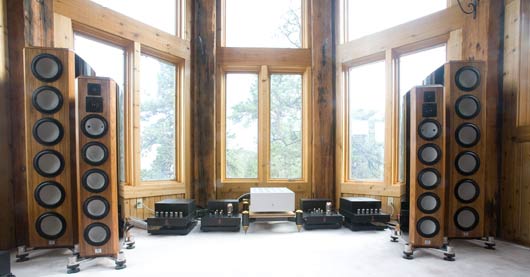
The system all setup
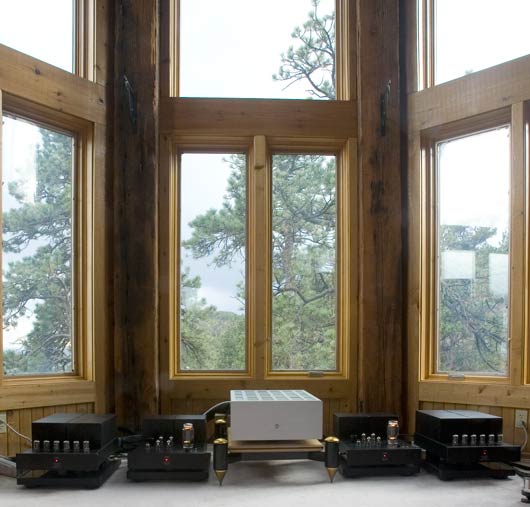
Warming up
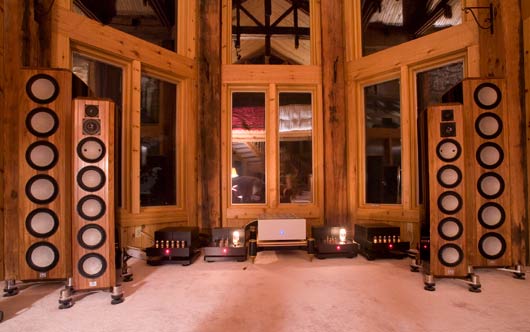
At night. Those GM70 tubes are quite bright.
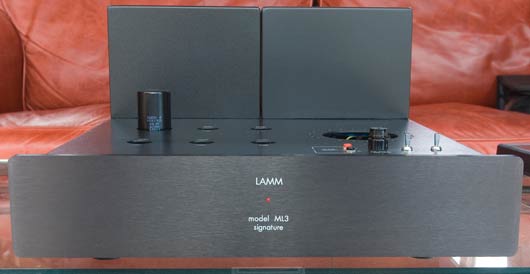
Earlier in the day, the ML3 front
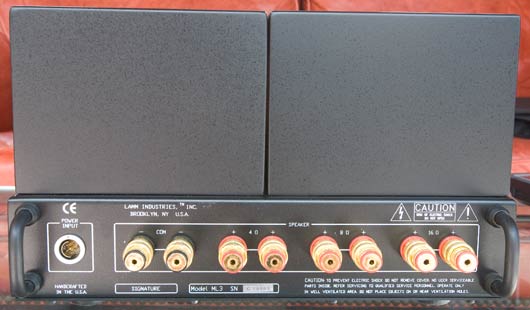
The ML3 rear
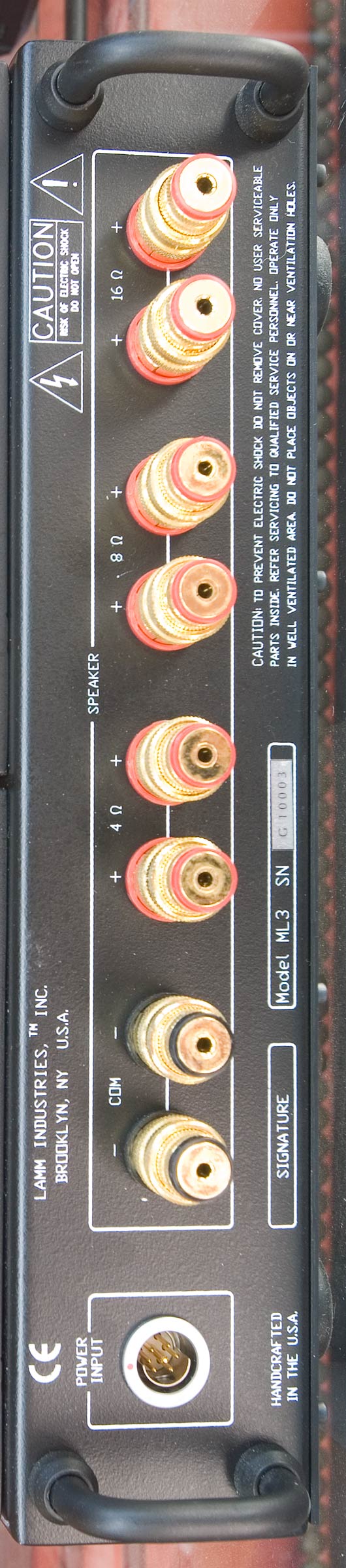
Closeup of the rear
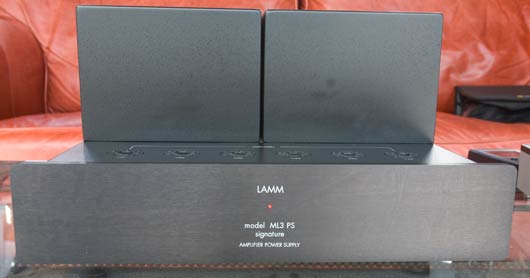
The ML3 power supply front
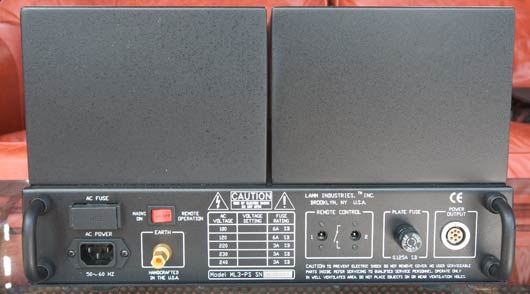
The ML3 power supply rear
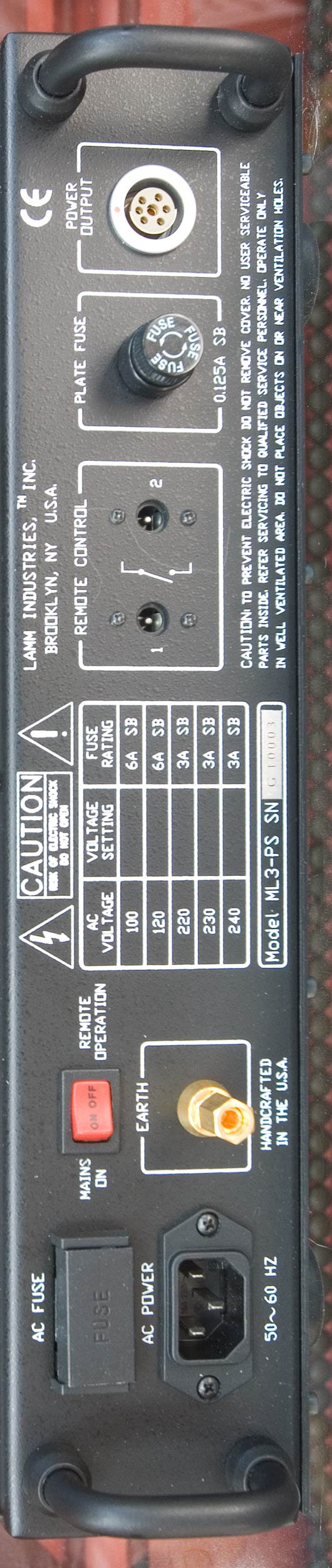
The ML3 power supply rear closeup
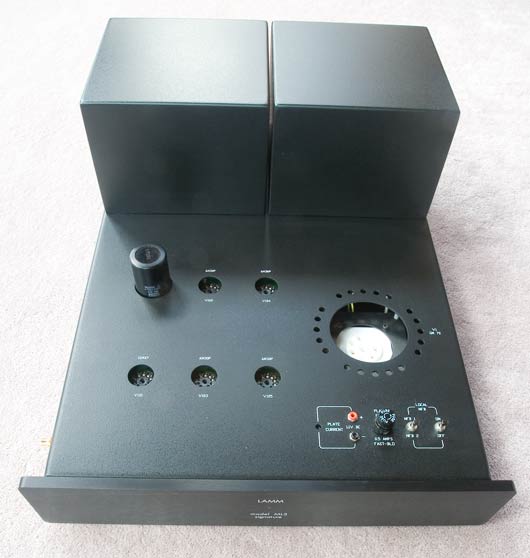
The ML3 without tubes
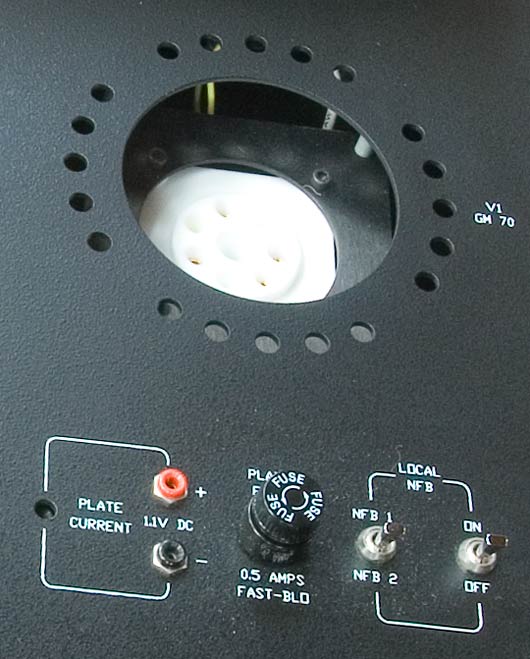
Closeup of the socket for the GM70 tube and the controls for feedback etc.
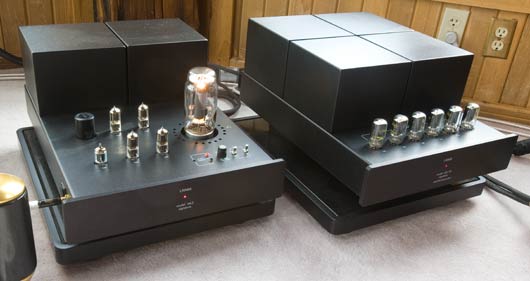
Some photos of the amps while warming up
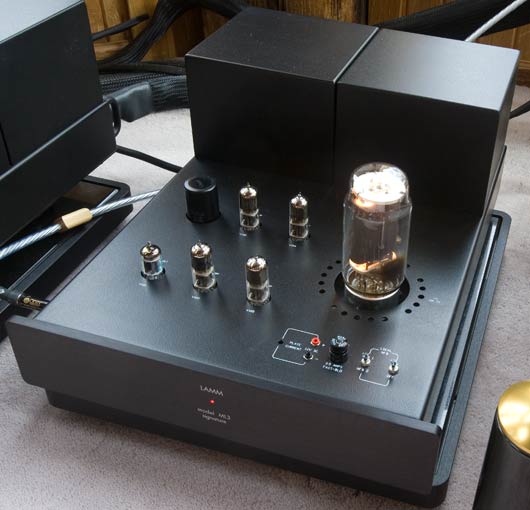
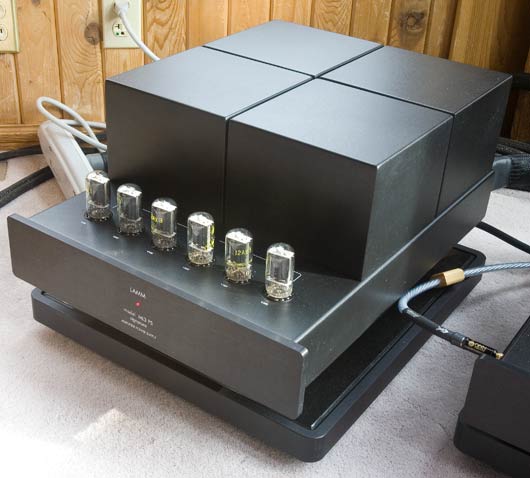
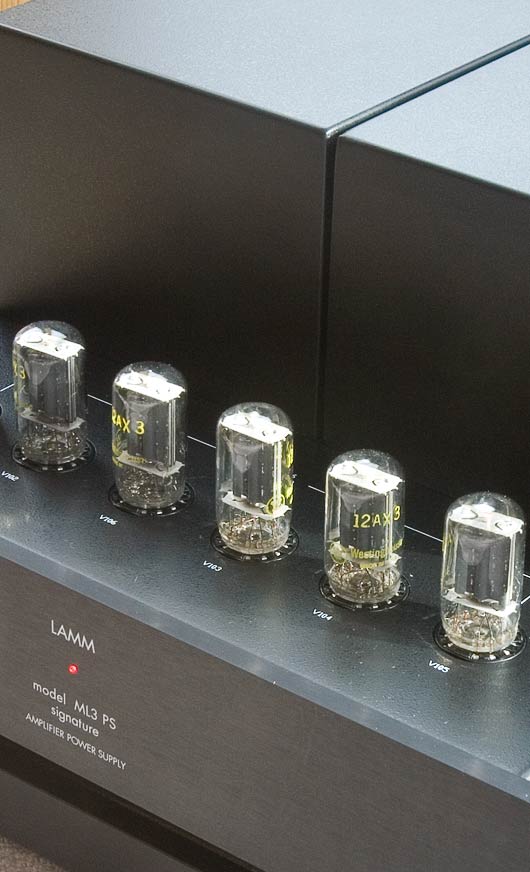
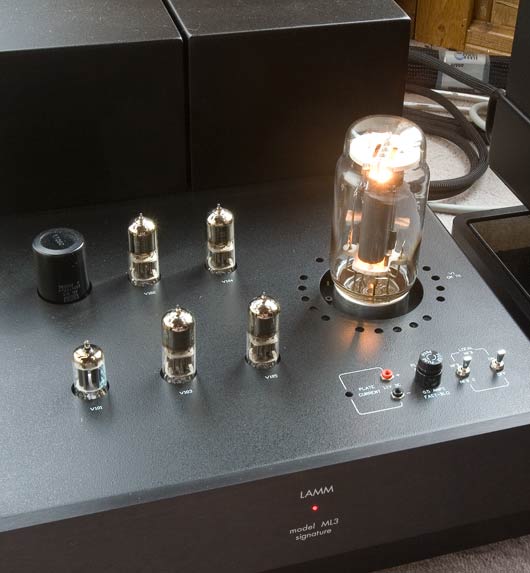
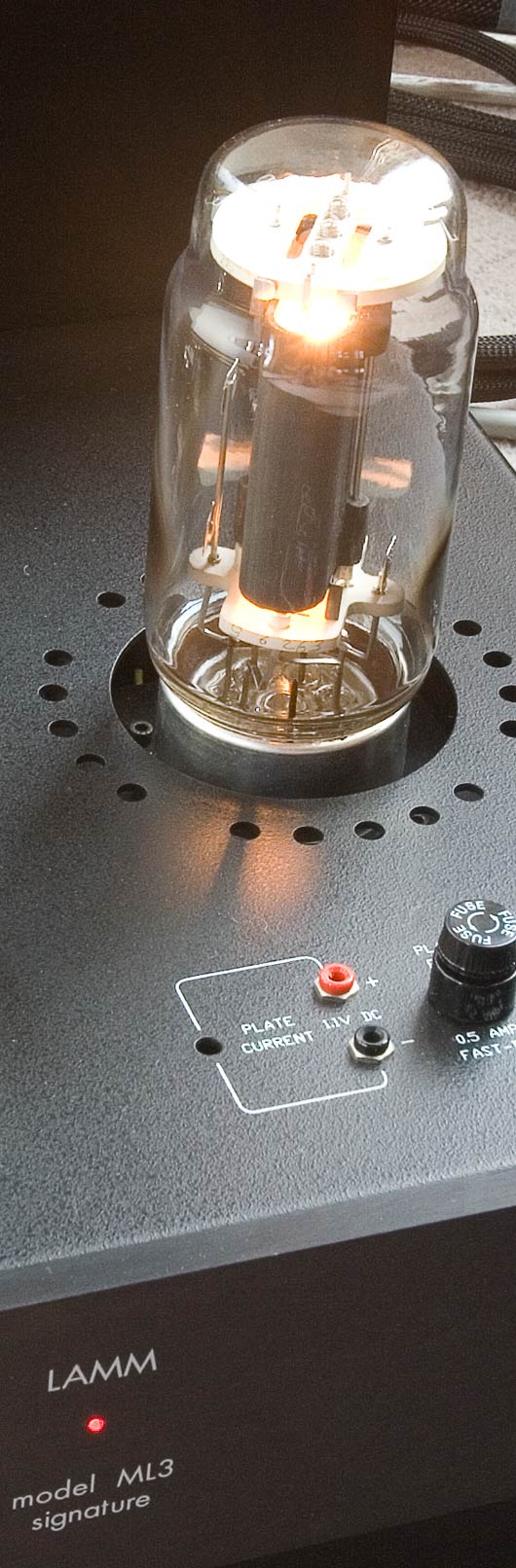
Closeup of the glow of the ML3’s GM70 vacuum tube
Here are some photos of the new EMM Labs TSD1 transport and DAC2 DAC we are taking to RMAF 2008 in a few weeks.
Here is the blurb sent to us which will fill you in on some of the particulars:
“The chassis is completely machined thick aluminum in gorgeous brushed silver with matching metal remote when bought as a set completely redone and retooled from the CES units so they look and feel a lot better and seamless.
The DAC2 is our next generation converter with a host of digital inputs and can be used EASILY with ANY digital source. It has Ed’s MFAST technology that allows it to completely get rid of source jitter and phase distortion inherent in all 2 or multibox systems and acquire audio seamlessly in milliseconds even from the most difficult sources like Satellite Radio, DVB, Computer systems, portable media players etc. It also has all of Ed’s prior technologies, MDAT up-conversion technology where incoming audio is up-sampled to 2X SACD (5.6Mhz) and Ed’s discrete custom built DA converters all built on composite aerospace EMMbed PCB circuit boards. Along with the regular I/O like AES, SPDIF, TOSLINK etc. it also has USB Audio port for connection directly to computers and music servers.
The TSD1 is has the built in MDAT up-converter and 2008 German drive plus it sports the new transport software and LCD screen. It also has the new single fiber EMM Link for interconnection between it and the DAC2.”
DAC2 MSRP is $9,500 US
TSD1 MSRP is $11,000 US
We can testify that when you look at them [and especially when you pick them up :-)] you can see that they are made with a thick aluminum chassis that feels very solid and robust.
First impressions, after about 3 whole hours(!) of playing [with :-)] them is that they are very lively like the CDSA but more so [through-out the entire note], that the notes are very well controlled throughout the entire note – something that neither analog nor digital has really contributed to in my experience [instead, we rely on uber amplifiers to do the best that can be done with the signal they are given], and a very black background [the honorable competition, and even the Emm Lab’s own CDSD/DCC2 pair to some lesser extent, seems to try and fill in the background with a lot of extra information – amplifying the quiet sounds so they do not get lost, or to please the listener with a sense of higher resolution – similar to the tipped up midrange on showroom speakers and tipped up contrast on showroom TVs? I don’t know but the digital revolution is still advancing at a rapid pace and this sounds like this will be de’rigeur in a few years. The feeling is that there is a lot more separation between the subtle notes].
But it has only been THREE HOURS. Right now we have to listen around the Cold New Player Effect – things will likely get even better if past experience [with new players] is any predictor of the future experience [improvements associated with broken-in players]. Already I think both Neli and I prefer this pair over the previous Emm Labs digital [and we preferred THAT over other digital we have heard – with the POSSIBLE exception of the Esoteric P-01/D-01/G-0s, which is much more expensive [at $60K+] and we would have to hear much more closely to get a feeling which is ‘better’, or just ‘different’. But this *is* the league EMM Labs is playing in – the best in the world.].
More in a few hundred hours or so. Or come to the show and hear for yourself 🙂
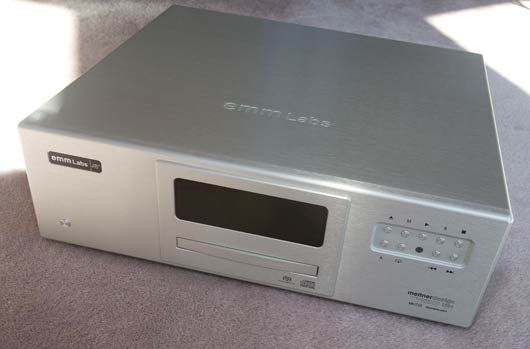
The TSD1 transport
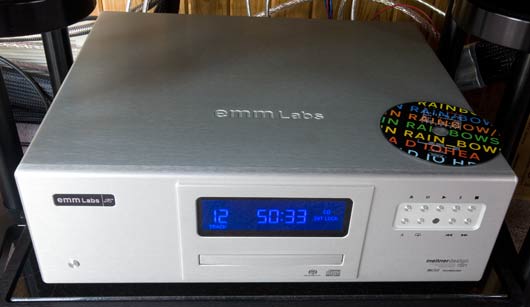
The TSD1 transport turned on
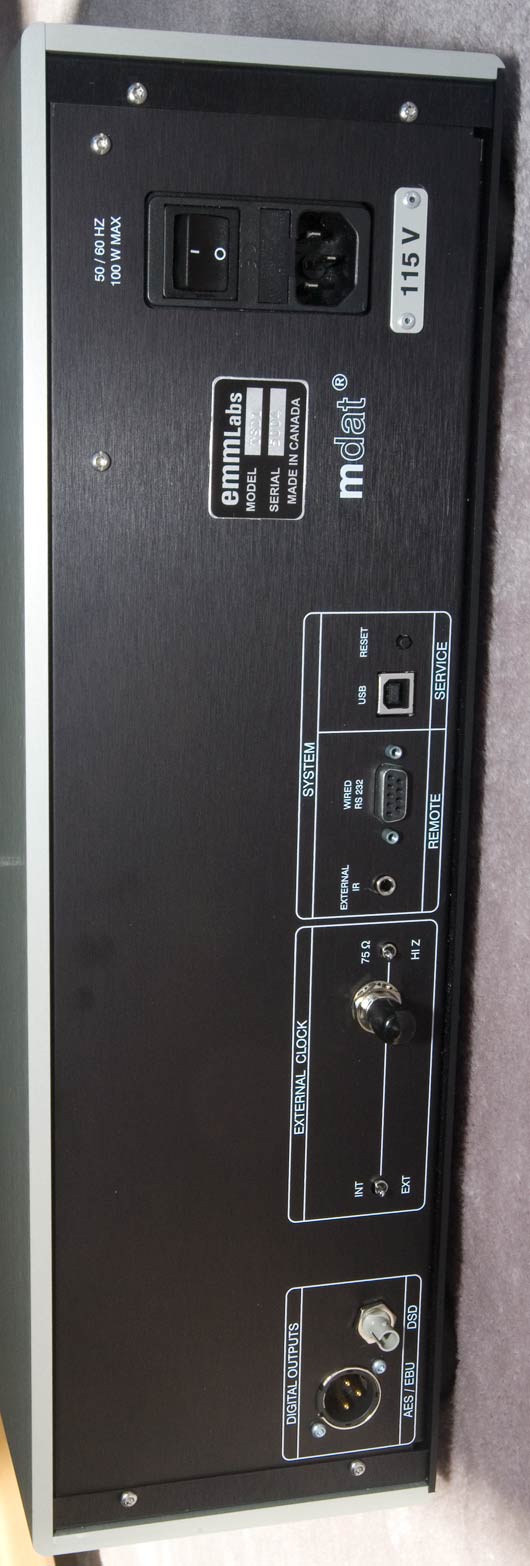
The TSD1 rear panel
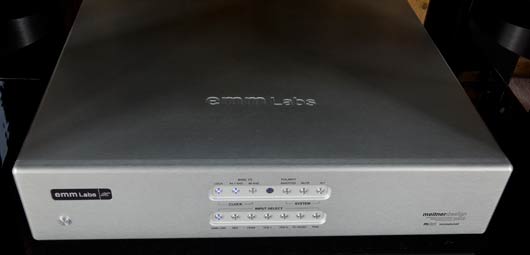
The DAC2

The DAC2 rear panel
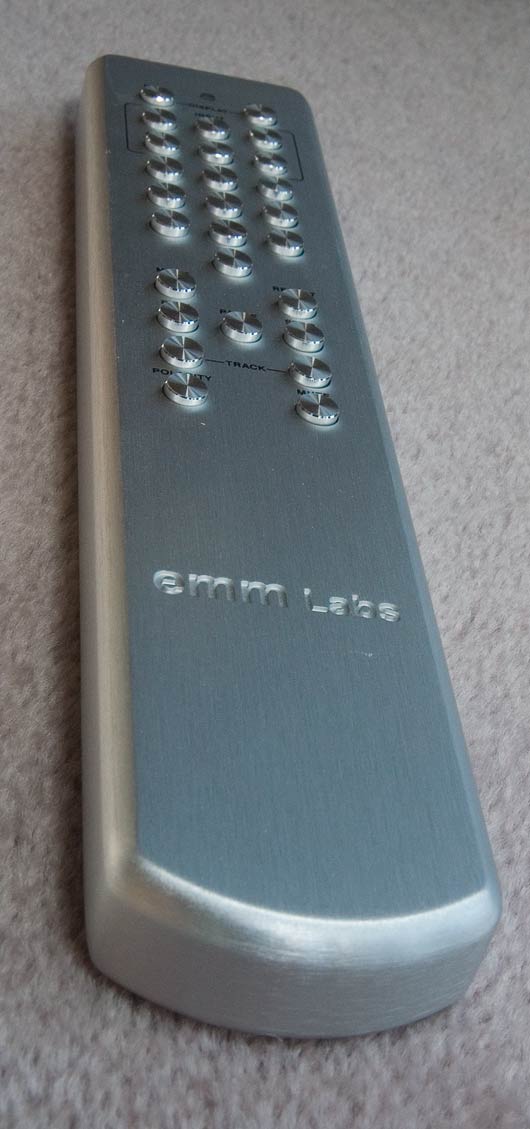
The new remote
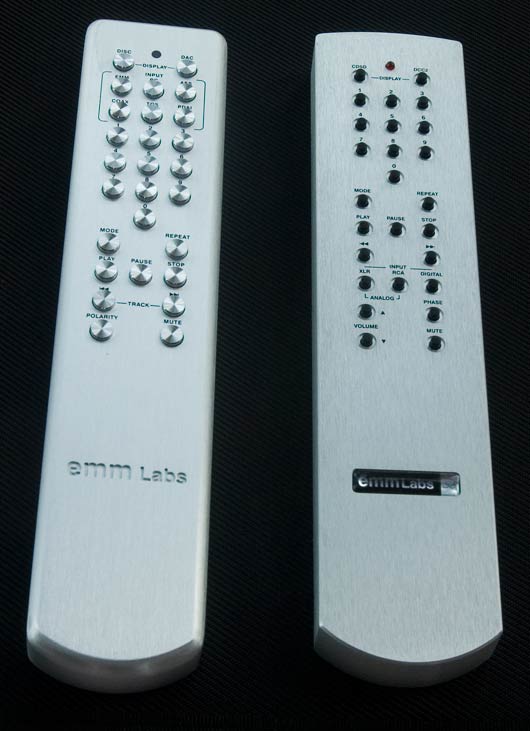
The new remote next to the remote that comes with the CDSD/DCC2. Not as wide, same thickness, and without volume controls… Both feel great in the hand
[unlike Sony XBR remotes – boy, my mute button is already squished in after 2 weeks of use. What a POS remote – and these are their top-of-the-line LCDs too].
We had a chance to compare these two players recently as we were swapping in the DCC2 DAC’s linestage for the Lamm L2 reference linestage [which was getting refreshed for RMAF].
We ran the warm CDSA SE [with broken-in new transport] and then the cold CDSD SE [with the older transport] + DCC2 SE DAC, both through the L2.
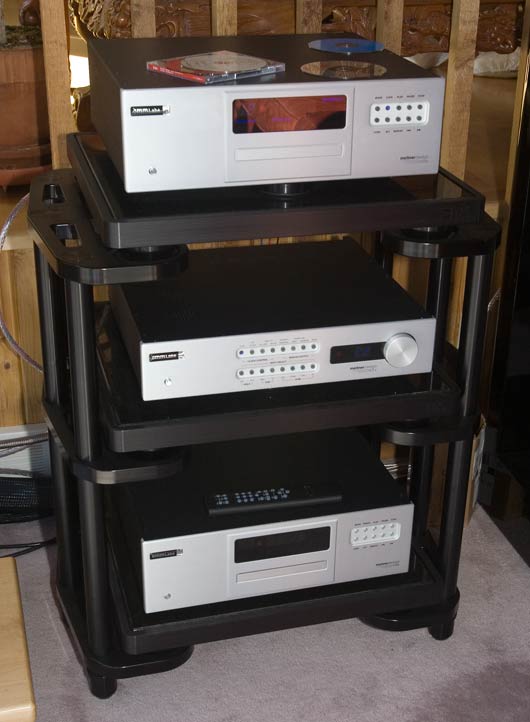
We are most familiar with the CDSA on this system, as we have used it quite a bit up here on the Coltrane Supremes loudspeakers these last few months.
Even though the CDSA at $11.5K costs about exactly half as much as the CDSD/DCC2 pair [with its added linestage = inputs for the turntable, for example] it has received such affection from everybody, everywhere, that even we were wondering about the real differences between the two digital front ends.
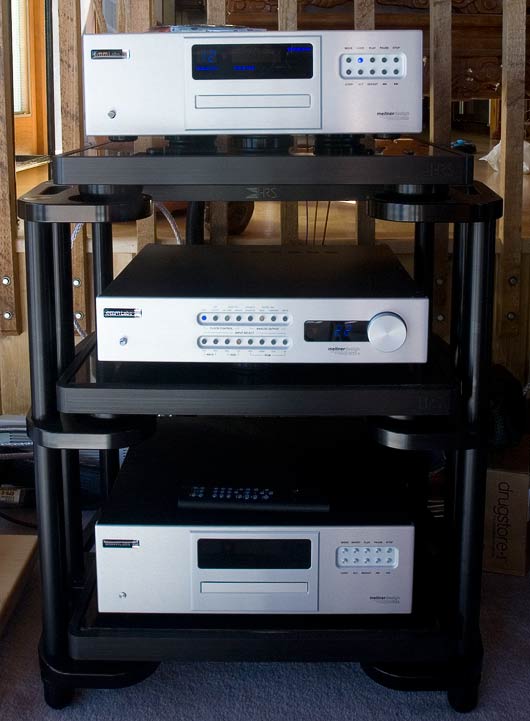
Well, even completely cold the CDSD/DCC2 pair had greater presence, PRaT, detail, image solidity and soundstage realism, dynamic solidity… you name it. There wasn’t any area in which the pair was not better than the CDSA [if one figures that the linestage in the DCC2 is about a $5K preamp – and it is at least of that quality compared to stand-alone preamps out there, then the pair is only about 50% more expensive than the CDSA – and it’s quality is indeed about 50% better, given the expected diminishing returns at this level of high-fidelity]…
… except…
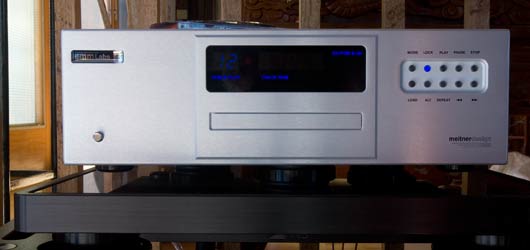
The CDSD transport
When thinking about WHY the CDSA is so charming – I think [besides the killer price] that it is a little more enthusiastic at the leading edge of each note – or has just a little bit less detail there, which makes it seem a little more dynamic right there at the leading edge. This makes the CDSA seem to sound a little more youthful, and at the same time a little more like other devices in the galaxy of solid-state equipment – a little less analog, but a little more familiar to people used to solid-state or who prefer a little more youthful presentation.
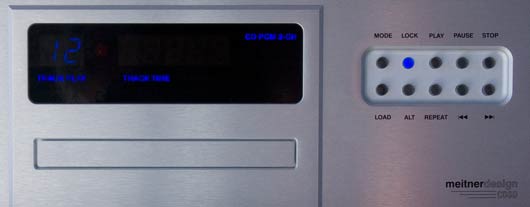
The CDSD transport close-up
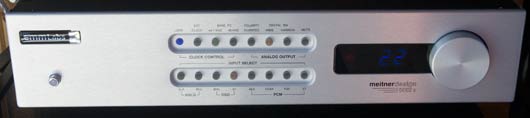
The DCC2
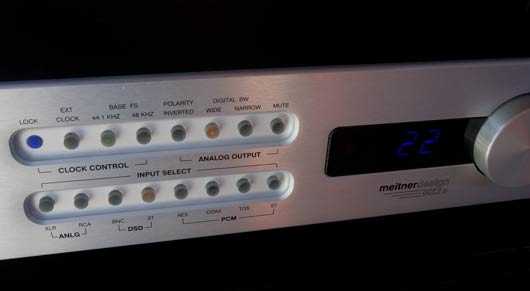
The DCC2 close-up
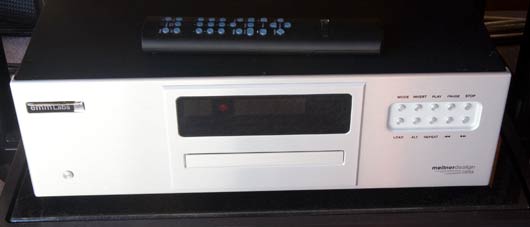
The CDSA
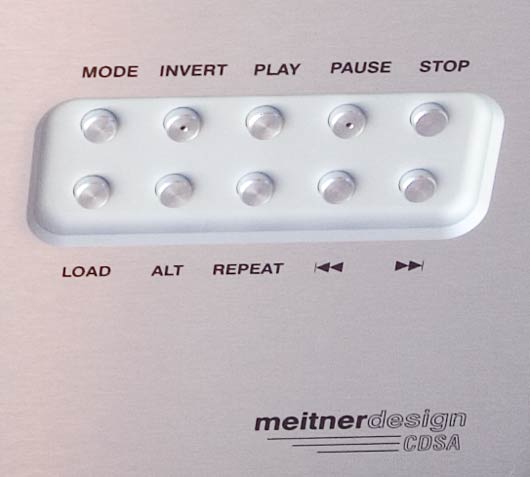
The CDSA close-up
The CDSA is now downstairs on the $90K Audio Note Ongaku integrated amp and $60K Marten Coltrane and it sounds killer. We love this 3-piece system and in fact would like to take this exact system to the RMAF 2009 for one of our small rooms. Sounds great, looks great, … and is a lot easier to move than some of our other systems here… 🙂
The CDSD/DCC2 pair is on $300K Marten Coltrane Supreme system and connected to the $90K Audio Note Kegon Balanced monoblocks, no wait, it is now – this morning, connected to the Lamm ML2.1 amps, … no… wait… 😉
Ooops – Tour three got posted before two.
Well, not much is happening on this floor. Two nice systems. The EDGE is still on the AN speakers – where we are performing some macro-dynamic shock treatments and seriously braking them in, using solid-state so we do not have to waste any tube life on the somewhat contrived process.
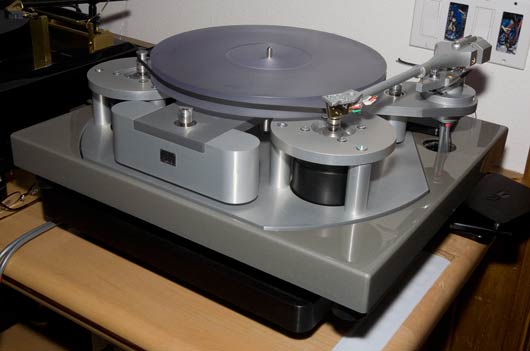
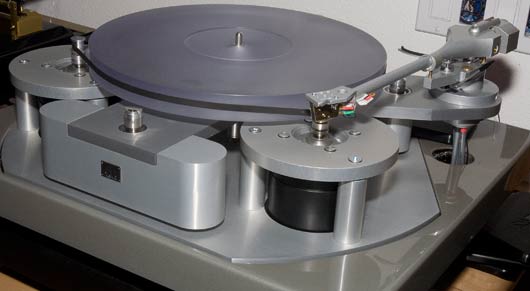
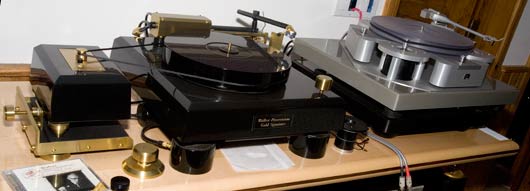
Some shots of the Audio Note and Walker turntables. No phono-preamplifier down here yet – so these sit here, appreciated only for their good looks.
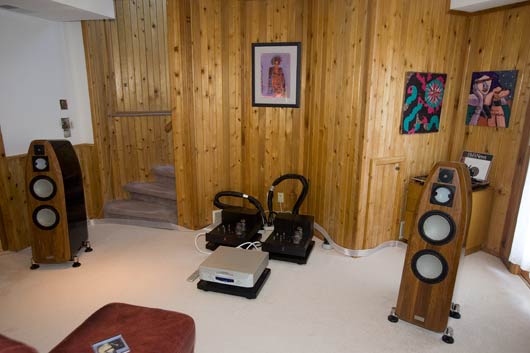
The Marten Coltrane loudspeakers [on consignment] on the Lamm ML2.1 and Audio Aero Prestige
