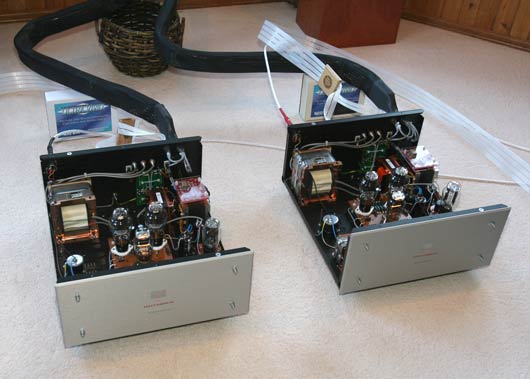
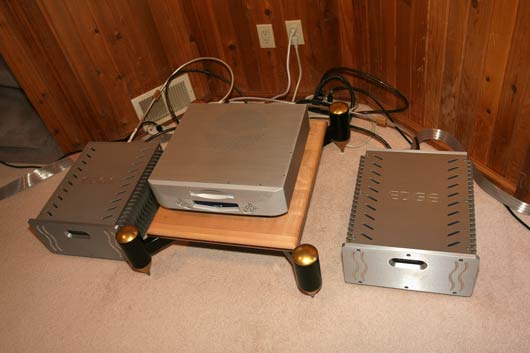
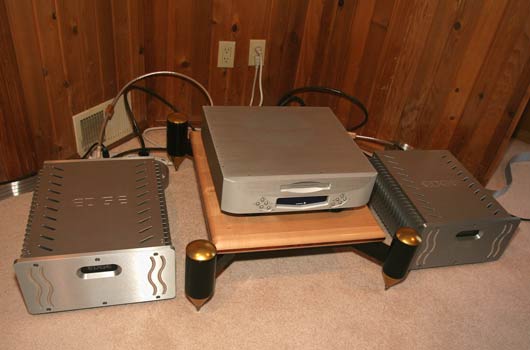
We have so many things in the queue … so many things lined up to try, that it gets a little overwhelming. The exact sequence of things gets a lot of discussion and seems to be updated on an almost hourly basis.
We have:
1. Compare the charged ELROD powercord that has been on the Nordost ViDar cable burner to a charged ELROD that has not been on the burner – i.e. How does the ViDar affect performance? We already did the cold (uncharged) Vidar’ed ELROD compared to the hot (charged) un-ViDar’ed ELROD. [Note, ELRODs take about 3 days or so to charge up their capacitors]. While this was ijntersting, and we will report on it, not being the brightest bears in the woods, we finally realized that this was kind of confusing [I bet you are confused, too, by now :-)], overloading the charged versus uncharged test with the Vidar’ed versus un-Vidar’ed test.
I said it was fun. But it also requires a degree in Research Methods… apparently.
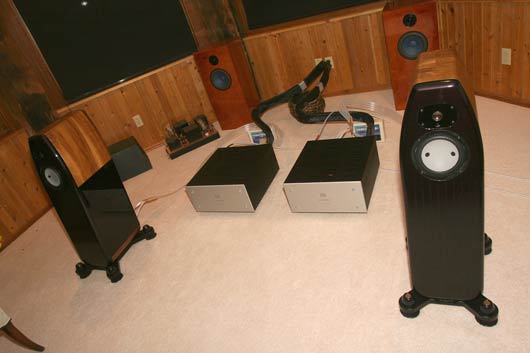
2. Compare the Kegon Balanced with the old high-gain Kegons. We can do this on the Kharma Mini Exquisites – which we anticipate will show that 1) … well, let’s not make any predictions [see, I’m getting smarter. Maybe there is hope…]. But the Kharma is actually quite hard to drive, especially the bass – especially if you want that big open Kharma sound [Kharmas always sound exciting and delicious and big, but not always that room pressurizing wrap-around that many people crave like hot butter on potatoes].
3. Compare the Nordost ODIN speaker cable to the Jorma Design PRIME speaker cable on the Marten Coltrane Supremes. This will be… well, there may not be a winner. I expect the ODIN to be more dynamic, which the Supremes love, and the PRIME to be more detailed, which the Supremes love. But for all I know I am getting it exactly backwards. That’s what shootouts are for. Proving it one way or another [at least with respect to the equipment we have here – we do try to perform part of a shootout on a completely different system to make sure that out results more or less reflect the general case].
4. Compare the Kharma Mini Exquisites to the Audio Note SEC High Efficiency Signature speakers. OK, yes, completely different… but both are 2-ways and, well they were the same price but now the Minis are $60K [seen the dollar lately?] and, well the AN speakers are… we’ll know when Neli gets the price list out [uh, oh, she’s gonna smack me when she reads this… I am already bracing for the impact… hurry up and finish this so I can delete it before she sees it :-)]. I expect the Kharmas to be more detailed and the AN more dynamic. Duh. AN is almost horn-like and Kharma has that legendary midrange resolution. But what else will we hear?
5. Compare the M1 phono stage to the Lamm LP2 phono preamplifier. OK, Neli thinks this test is stupid too… but I want to hear the difference in character between the two. We’ve had a number of other inexpensive and expensive phono stages in here, so this is not all THAT outrageous.
6. Compare the old EMM Labs CDSA to the new one with the upgraded transport and feet. We should be getting close to getting 700 hours on the new CDSA soon now, one would think [I don;t have a little 700 hours cooking timer on it or anything].
7. Oh yeah, we still have to do the interconnect shootout where the signal is quite large, between the preamp and the amp. We actually point to a system periodically and say ‘oh, this would be a convenient time and configuration to perform the aforementioned test’ [well, we don’t use the word ‘aforementioned’ in casual conversation, sorry]. But do we sit down and do the shootout? Noooooooo. It does take about 6 or 7 hours of focused concentrated listening, so it is hard to find the time. But soon….
8. We want to compare the high-power ELROD powercords to the low-powered ones on the Lamm ML2.1. At what point to low-powered amps draw high-power? Just what IS the difference in sound between the two?
9. I am sure there is a 9. And 10….