Neil Young is our most famous champion

Neil Young is our most famous champion; so audiophiles… don’t you eff with him.

In the New York Post there was a recent article (yes, I know, it is the NYP, but I think they are representative of the hordes who we do expect to eventually join our community,  albeit perhaps as causal imbibers as opposed to addicts like the rest of us)

Engineers at Neil Young’s company admit doubts on music player

This is typical Luddite fodder. First declare Neil as the Audiophile’s champion, then have what he champions, and how he champions it, appear to be ridiculed by people who are close to him, work for him or who are members of the Audiophile community itself.

They even poo poo 4K video in this article, also as ‘too advanced’ for real people to ever care about [I’ve had a large 4K monitor on my desk for a decade, and of course the size and resolution does not give me a competitive advantage :-)]

This article takes a ‘high-resolution is worthless’ position.

They interview Chesky, who explains what improvements high-res can bring [presumably on devices that can handle the higher bandwidth. Like Neil Young’s  Pono]. Yay David!

They interview Lukasz Fikus, digital audio designer at Lampizator [a relatively new and relatively unknown, but rising, brand. Their room at THE SHOW Las  Vegas  2014 sounded decent] , who explains “the difference is so miniscule that it’s not even worth talking about”. Not… worth.. talking… about… Well, I guess we better close down the blog,  since that is  ALL we talk about. Perhaps someone who thinks these differences are so minuscule does not a great digital audio designer make? I don’t know.

Hey, everybody has their favorite approach to digital audio technology.

Audio Note likes Red Book just fine. They do well with it 🙂 [We are certainly enjoying the poop out of their very expensive 16-bit CDT-5 transport and DAC5 Signature]

EMM Labs like extremely high resolution, and they do well themselves. But, if I remember correctly, feel that most players out there that  support the high-res formats do not have the horsepower [powerful enough DSP  chip and support  structures] to properly handle the higher bandwidth required.

The real situation is that most players that say they support high-resolution, like 24×192 etc, are typically better built than those that do not. They care about catering to the audiophile community, unlike that vast majority of everyday consumer electronics out there. They are making a least a small nod in the direction of people who think the quality of the sound MATTERS.

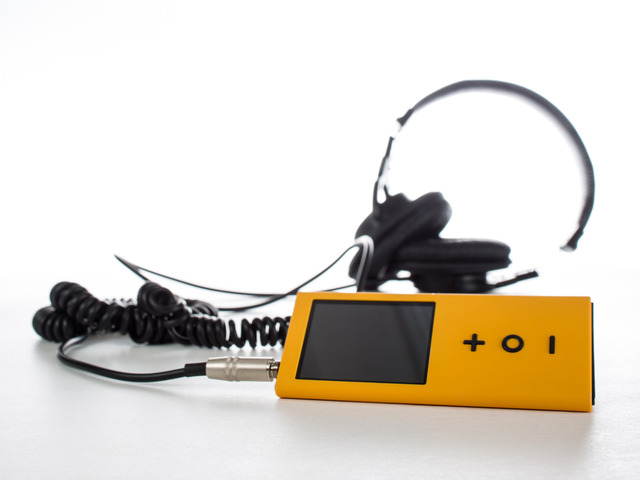
Pono_Music_Player_Black_01

And so the  Pono, by supporting higher resolution formats, is saying that they care about the sound, unlike the other mainstream digital audio players out there.

And, let’s face it, it is a mathematical certainty that higher res sounds better than low resolution…. All Else Being Equal. And the vast majority of people can perceive higher resolution quite easily  [both audio and video]. And they really like it.

All Else Being Equal.

Of course, if  you have to remaster to bring the media to the higher res format –  well, mastering often has a larger, more beneficial, effect on quality than resolution.  So does upgrading your speakers or headphones. Or cables. Or power supply. Or power supply or circuit architecture. Etc.

So higher resolution isn’t the ONLY way to improve playback sound. I am sure the Pono does other things to improve sound quality as well. Just as I am sure one could  find ‘engineers’ who question what capacitors are used, and the thickness and width of the traces used. And whether they are curved or rectilinear …

—–

Neil was on Fallon a few night ago.

His approach was to say  that the Pono [has a higher quality  sound that] is for ‘music lovers’ but not everybody is a music lover; some people like to listen to music in the background.

🙂

Them’s fighting words…

Told you he was our champion…:-)
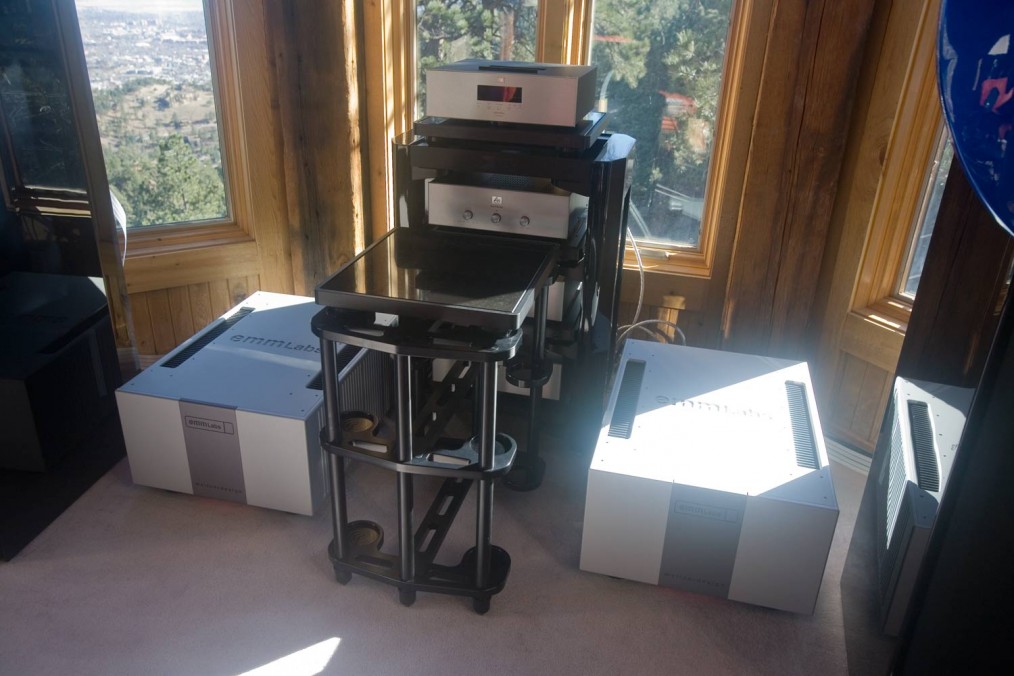


When you absolutely positively need more rack space

[As I was just getting over the CES cold I caught a worse 24 Hour Fitness cold. Now that I can stand up without coughing, it is time to move more things up from downstairs…:-)]

We wanted to put a turntable on this system – ostensibly to test it out. We didn’t want to move any of the components off the main HRS MXR rack there because we have a big demo tomorrow and everything is nicely warmed and settled.

So.. what to do. What to Do.

Inserting the HRS SXR rack in front like this works great. A little unsightly…. perhaps. But we can get to the preamp controls just fine [if we reach], and we do not need access to the DAC and Preamp power supply below on the lower shelves, so… it works!

IMG_3945-hrs-sxr-rack-in-front-of-mxr-rack

IMG_3952-hrs-sxr-rack-and-mxr-rack-behind2

Its a wonderful day in the neighborhood – about 65 degrees outside here in the Mountains in mid-February.

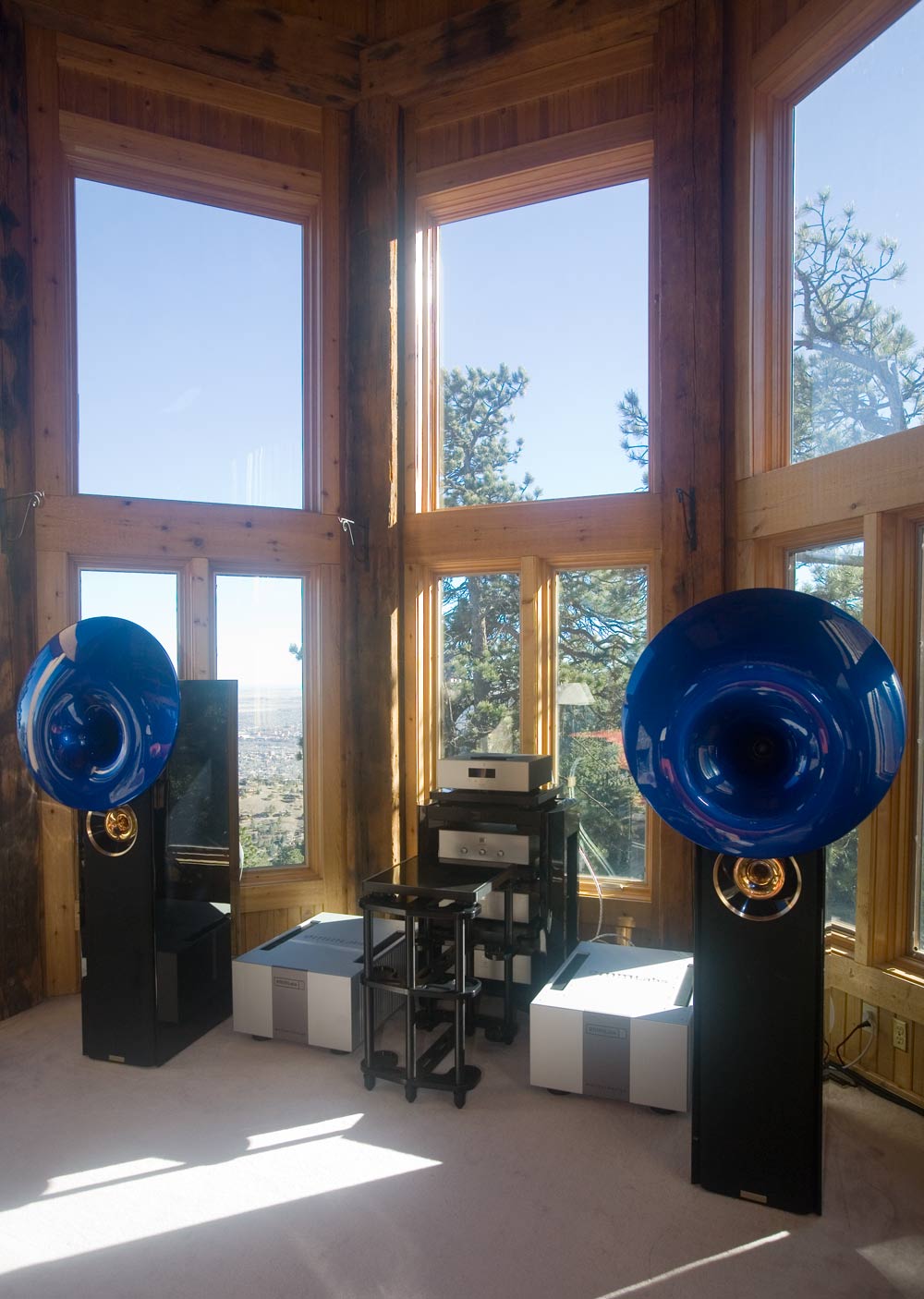
We have a lot to say about this Audio Note-fronted Emm Labs MTRX amp and Acapella Atlas system – about just what goes into a system sound that one will never forget … but give us a few days…

Some semblance of normality

The shop is back to halfway operational now… finally … after CES 2015. And after both of us getting sick…. *cough* *cough cough* *SNEEZE!* … and now mostly recovered.

Since we took the HRS SXR rack to CES, and there was nothing sitting between the massive EMM Labs MTRX amps all of a sudden… we took then opportunity to move the larger HRS MXR rack up front.

This gives us 4 shelves instead of the 3 we have on our  SXR.

Room for… the  famous 2-box M9 Phono audio Note pre-amplifier. The Audio Note CDT-Five transport. And the Audio Note DAC 5 Signature DAC.

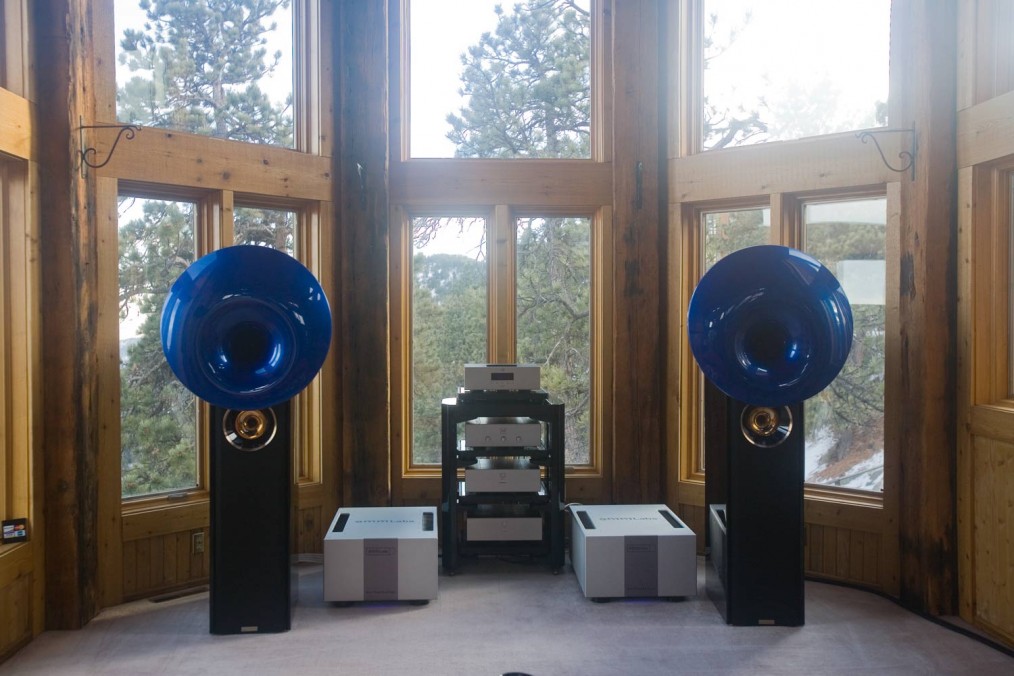
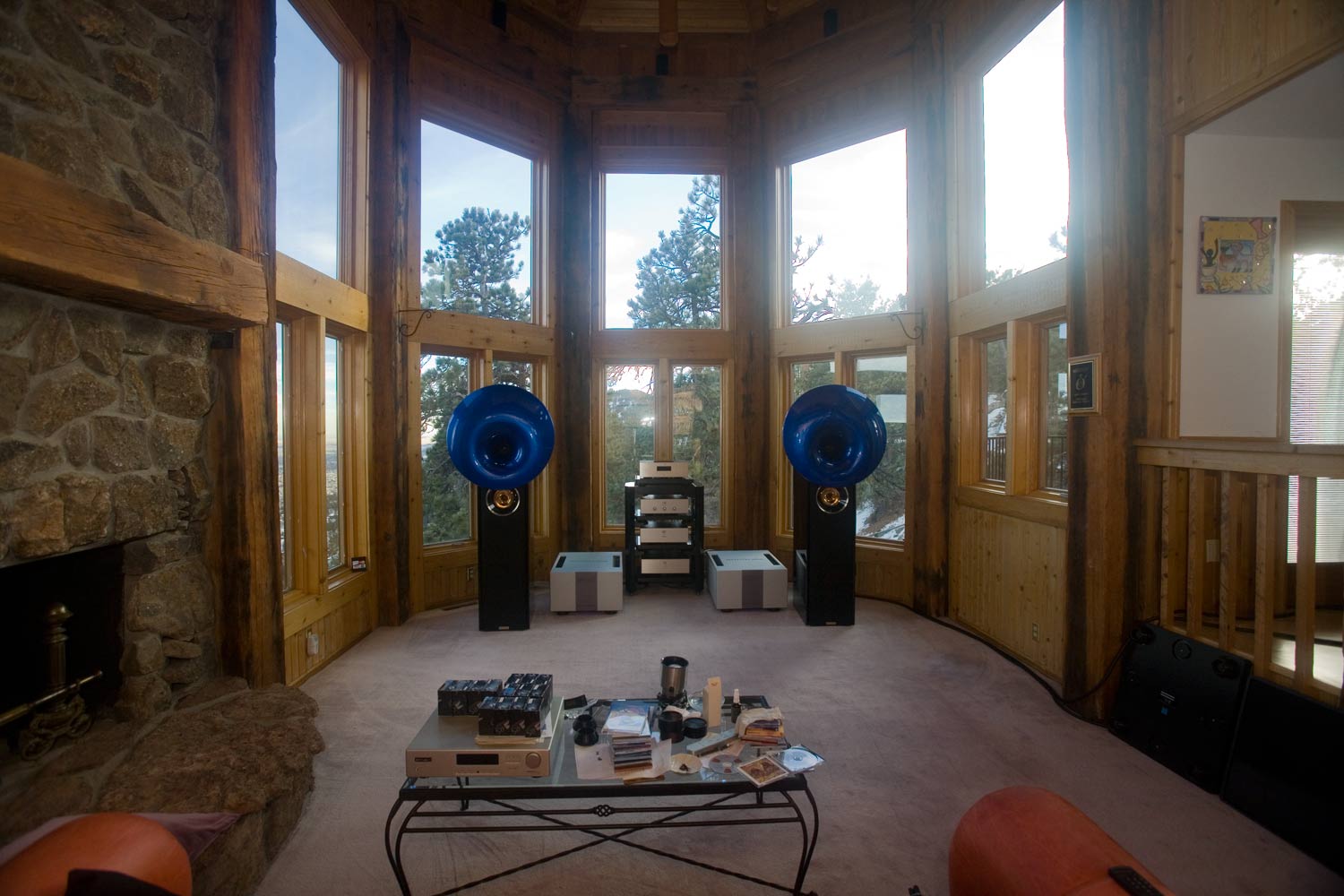
So… level Five, one step below the top-of-the-line Audio Note into the killer EMM  Labs MTRX 750 watt drives-the-poop-out-the-speakers amp into  the Acapella  Atlas hyperspherical-horn speakers.

So, now, everybody expects me to write about how it sounds. Neli wants me to tell everybody about what it sounds like.

You know, this thing we do in high-end audio…  where we change something in the hifi system and the sound changes and we evaluate the differences,  hopefully enjoying the differences…?

We do this a  lot. Most of you do this a lot.

The sound after we change something – it does not have to be all that much better. Just different. It is quite entertaining for it to be just different.

It can be…  well, let’s face it: it is  ALWAYS thrilling when the change makes the sound way better.

But it is also ALWAYS entertaining when the change is just a change.

And this change for the sake of change is what drives a large percentage of the industry, especially the used marketplace.

And it provides for seemingly endless fun here at Audio Federation as well.

CH-CH-CH-CHANGES

Changing RCA interconnects out for XLR (or visa-versa).

Maybe the component likes XLR better?

Maybe one component handles ground differently than the other?

Maybe the XLR part of the circuit is not broken in yet?

Maybe the better connectors on one  versus the other is  making all the difference?

Maybe that extra 3dB of the XLR is doing some good?

Perhaps the RCA is better shielded and the  XLR is getting too close to a transformer?

Maybe it is better to put the superior interconnect on the Source as opposed to the Amplifier?

….

Or maybe not.

Let’s try it and see!

Sometime I will try and write an exhaustive list of these things to play with and try in our systems.

[But for now… for this post… today… Sorry, I just couldn’t bring myself to write another description of yet another awesome sound of this what is becoming a very good-sounding system. Hope you enjoyed this non-post :-)].


IMG_3942-acapella-atlas-speakers-and-emm-labs-mtrx-amps