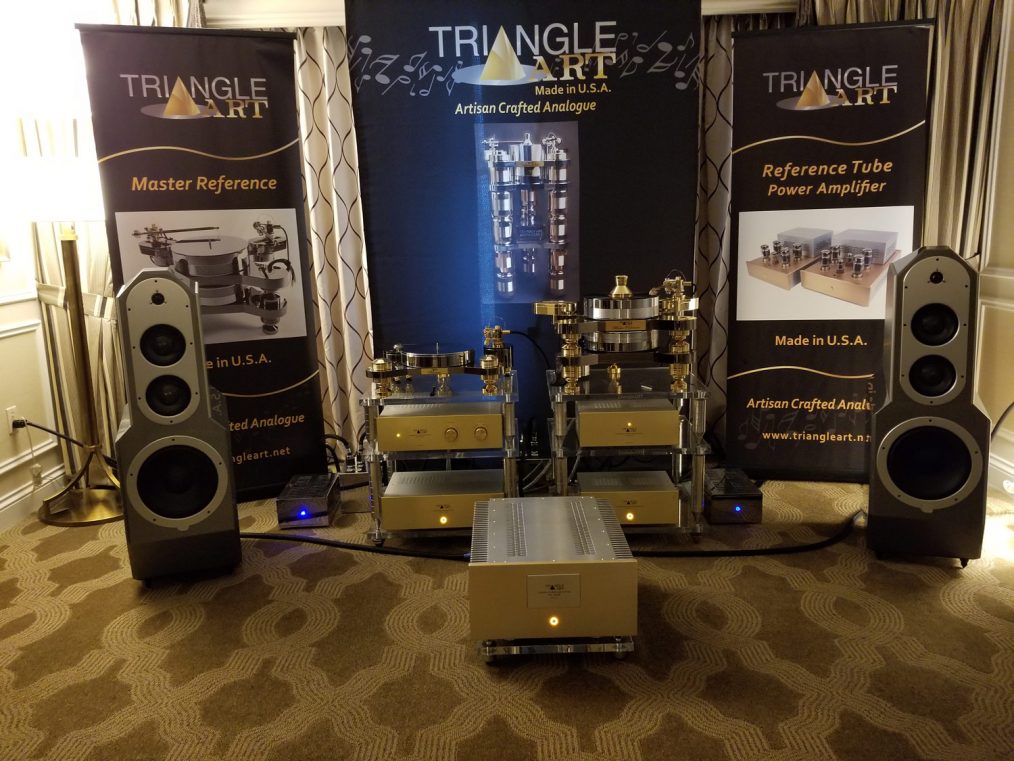
Triangle Art electronics and turntables with EgglestonWorks speakers at CES 2018
Neli took the photos this year. Mike stayed home, deciding that there was just not enough to do at CES this year. These were taken with her Samsung S8. Very nice.


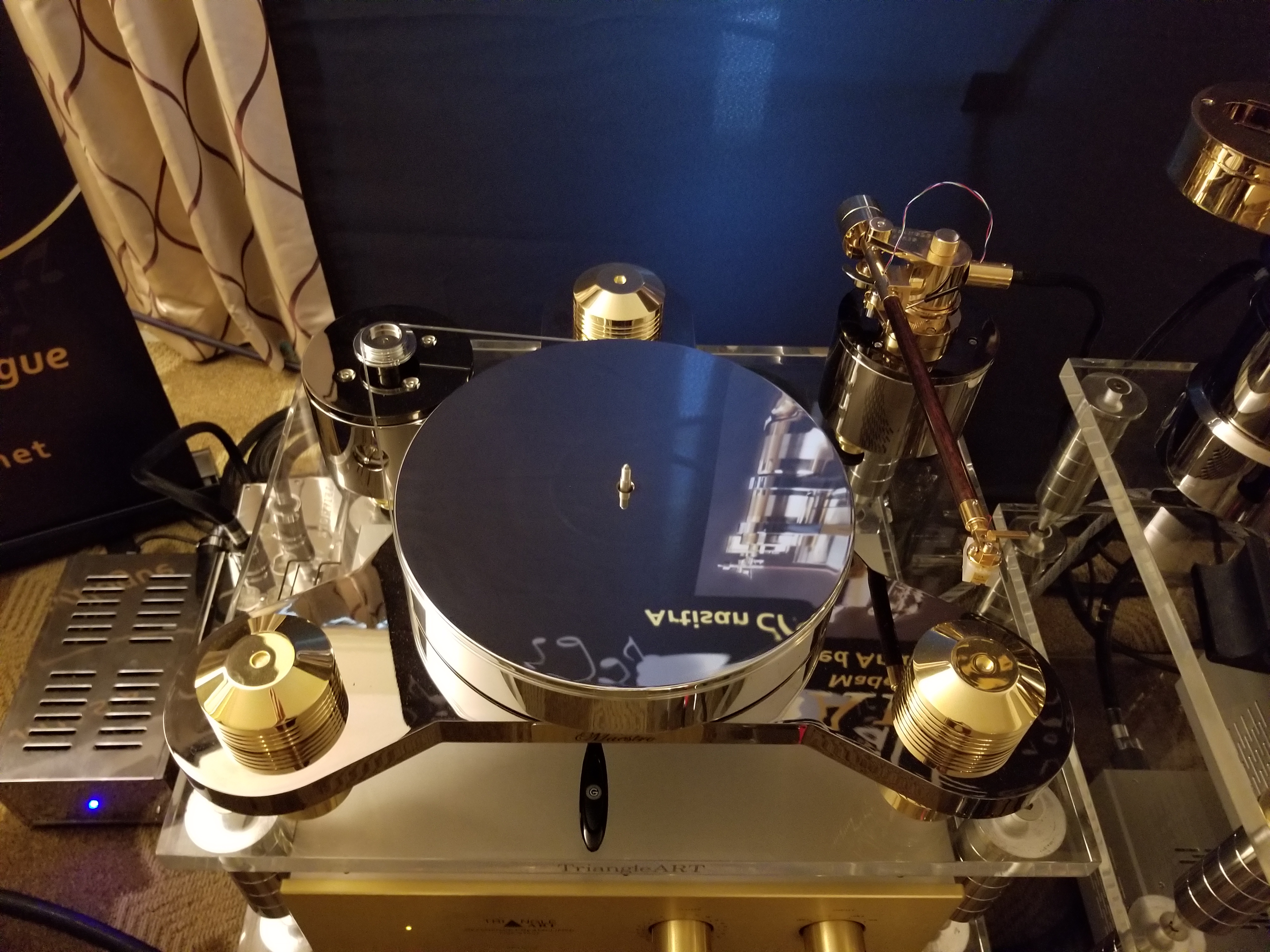
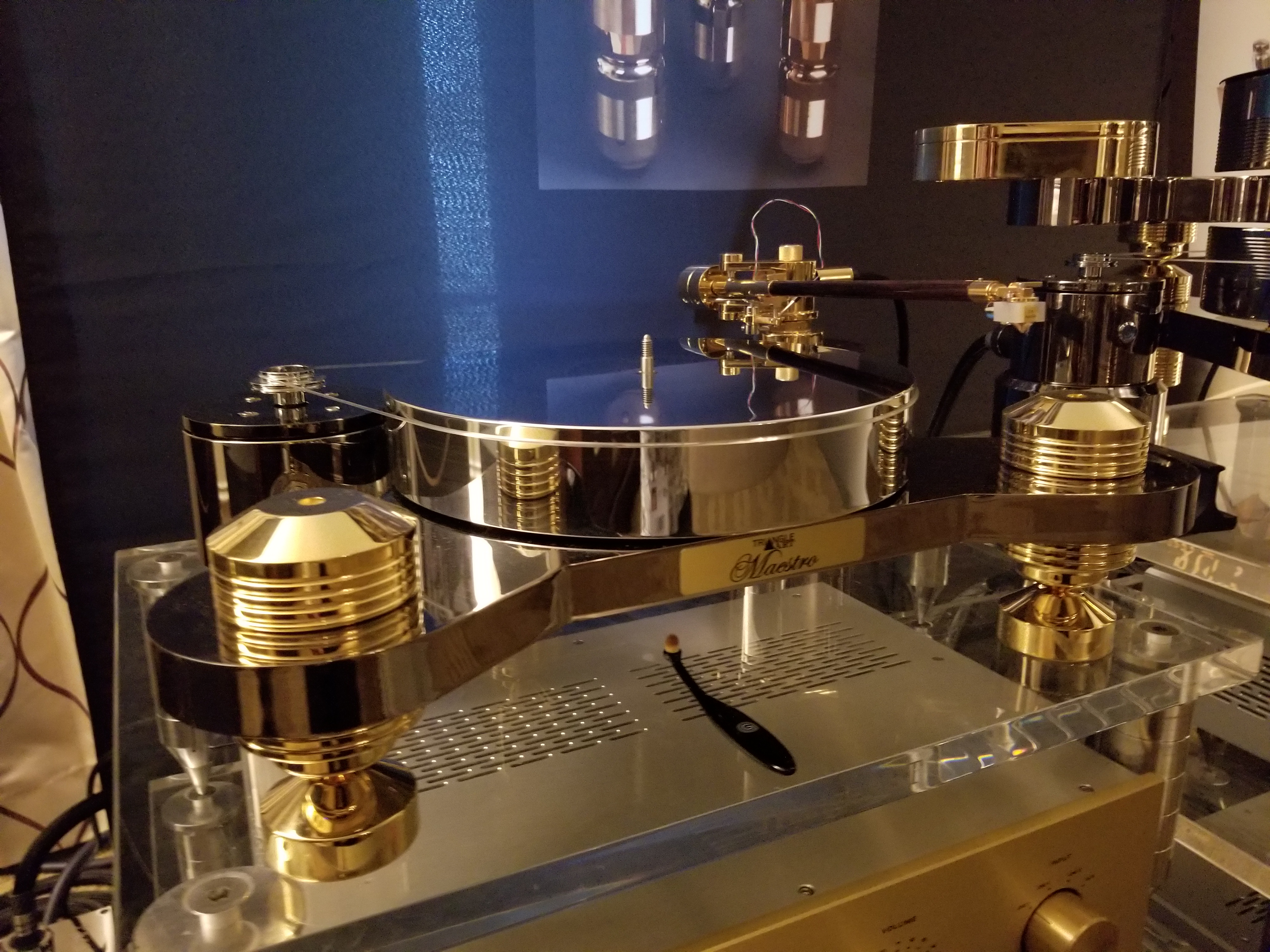

Triangle Art electronics and turntables with EgglestonWorks speakers at CES 2018
Neli took the photos this year. Mike stayed home, deciding that there was just not enough to do at CES this year. These were taken with her Samsung S8. Very nice.
CES this year is even smaller than last year.
I count a very generous 66 rooms plus or minus, including rooms for earbuds, headphones and magazines. This is a far cry from just a few years ago when we had around 200 rooms in the Venetian and 60 to 100 rooms at T.H.E. Show held nearby.
But Neli wants to go, so…. [She’ll probably be found most of the time in the Lamm room. Me? I plan on taking photos, but think I’ll also be spending some time downstairs checking out the several 1000 booths in the Sands convention center]
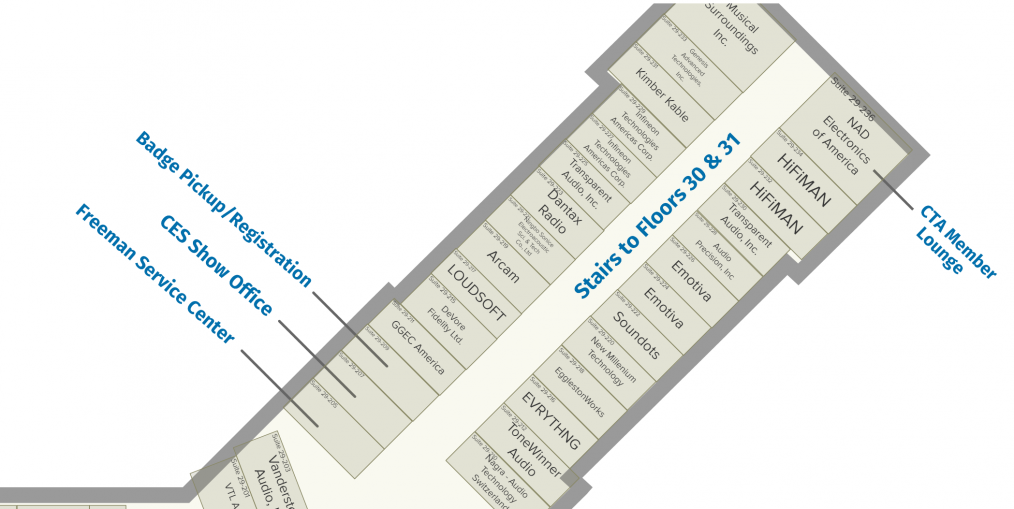
Here are the floor plans:
Lamm and Chord are the only people left on 34 and 35.
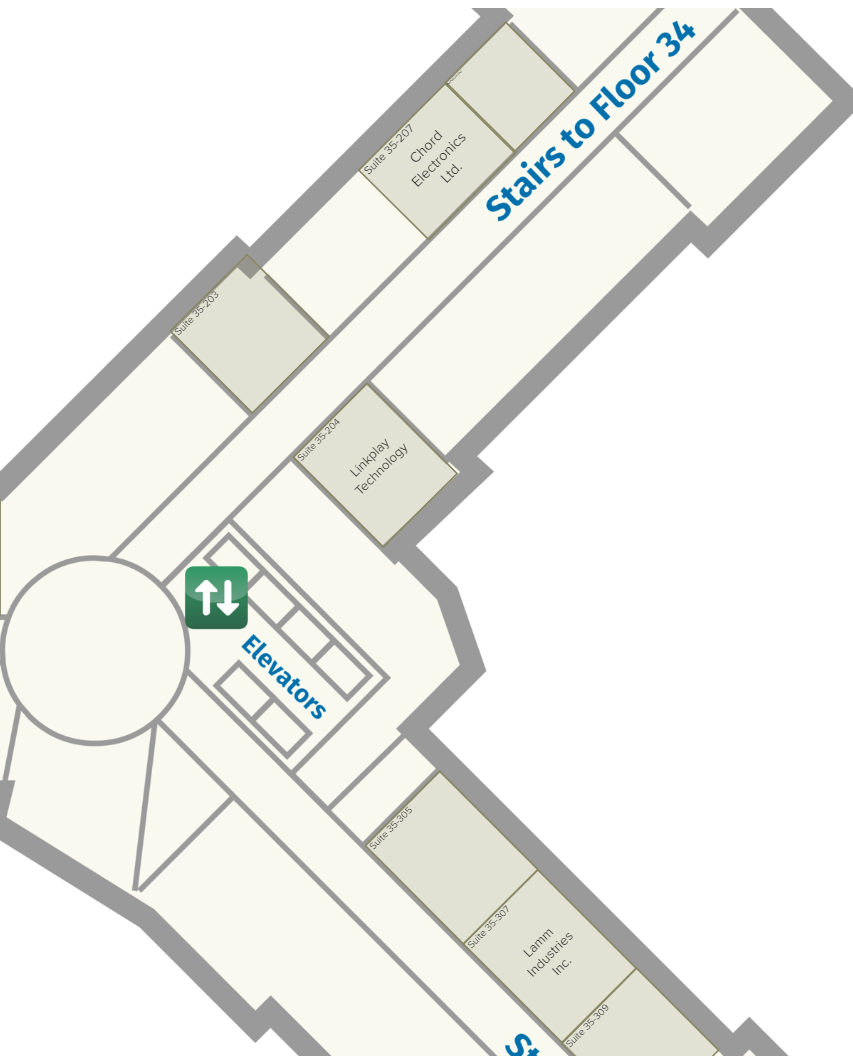
The rest of the rooms are on floor 29 [nothing is on 30 or 31 anymore except unrelated CES demo and meeting rooms].
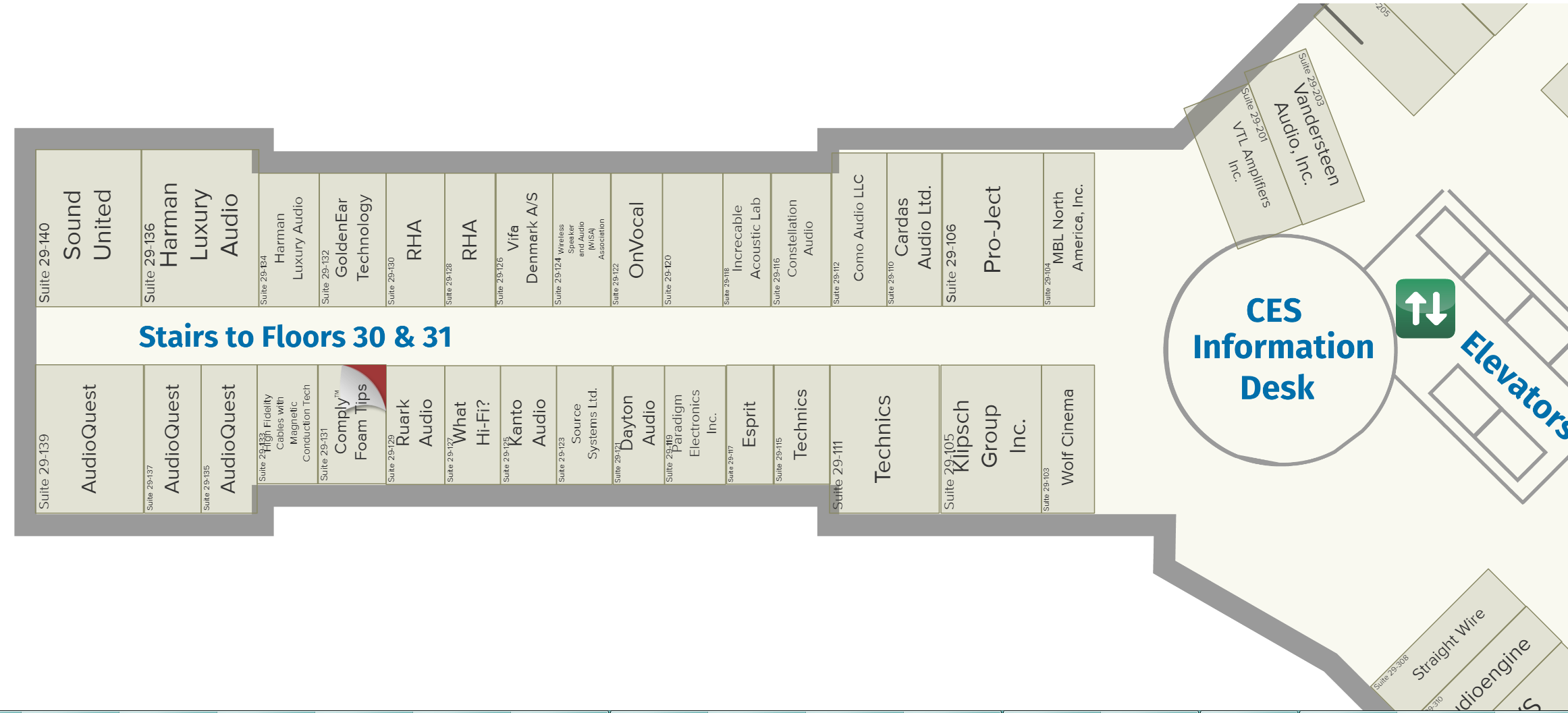
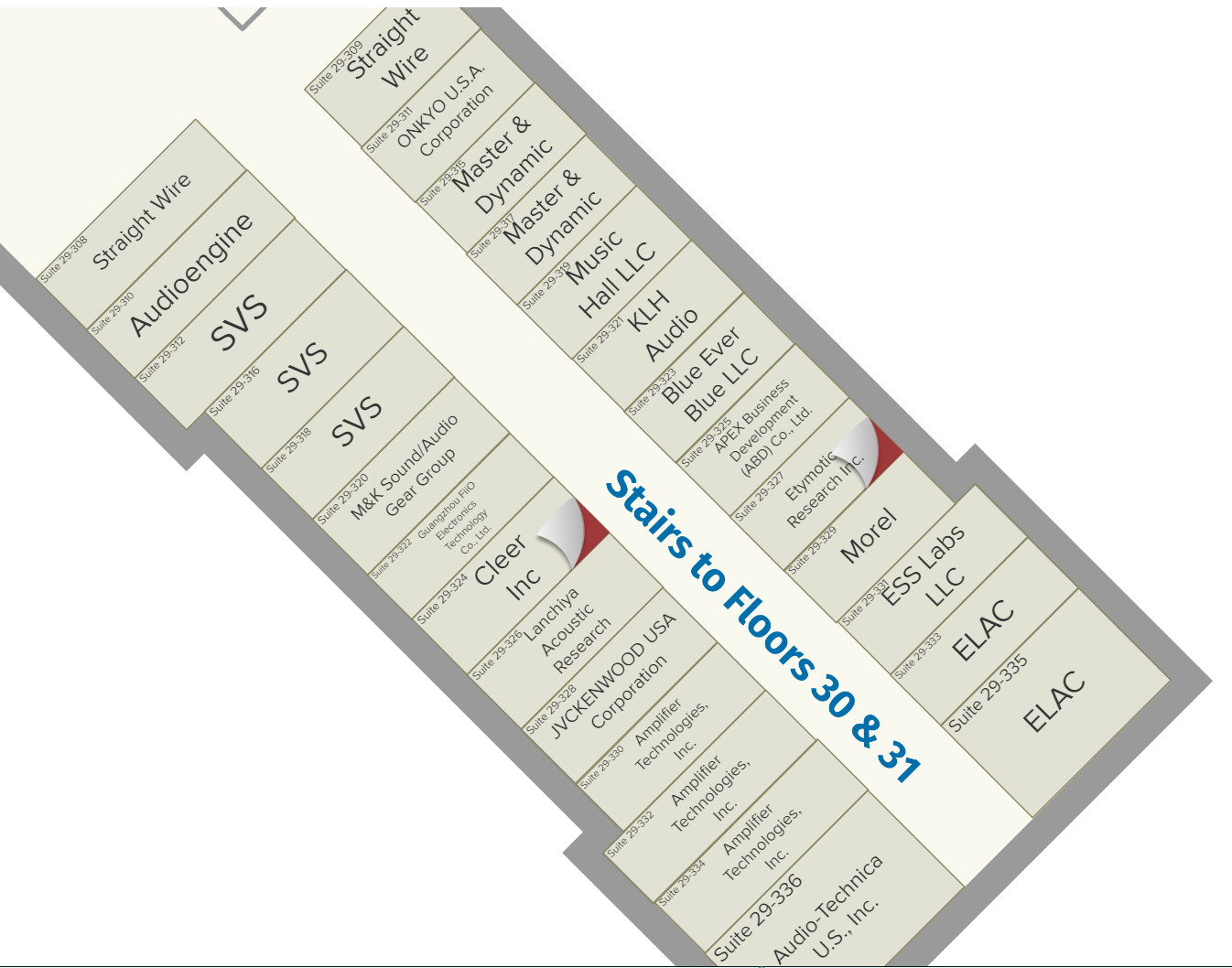
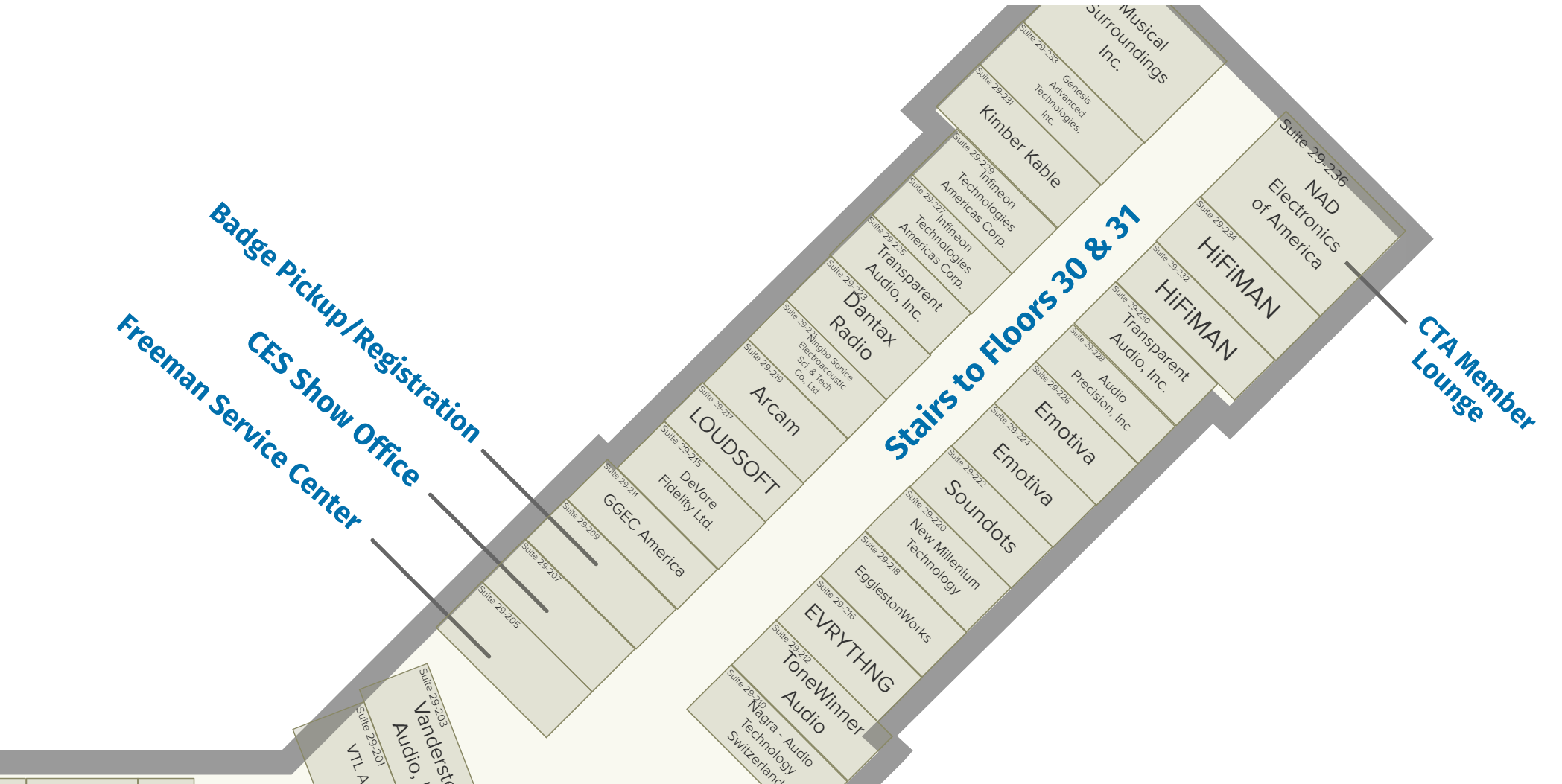
CES has been declining for several years according to some statistics, not just the high-end audio portion. But it is big enough that it garners press attention, especially the main part of the convention. [“Google Assistant vs. Amazon Alexa”. OMG. As long as I can command either using my awful emulation of the Picard-esque “Computuh…”, I am good. :-)]
We all know here that all music is drug-like, to a greater or lesser extent, but there is actually a technical paper where its effect has apparently has been scientifically measured.
TL;DR Now we just need a study that does this same test with four specific tests: with both consumer-grade and audiophile-grade equipment [readers of this blog know what we mean by that], as well as with audiophiles vs. non-audiophiles [do audiophiles get more than average levels of dopamine, and that is why we are audiophiles? Or are we just smarter, going for a safe, clean, harmless (albeit expensive) source of dopamine – kind of on the QT, everyone else thinking we are just ‘listening to music’ :-)].
And I would bet that casual listening produces less dopamine [but probably more than zero] than focused listening.
There was a paper published a few years ago in Nature, in 2011, that documented the response in self-chosen music lovers [they get ‘goosebumps’] which revealed rises in dopamine both in anticipation of enjoyable parts of their favorite music, as well as in response to hearing the favorite parts.
Wired has a nice article about these results [only the abstract is currently free, afaict]
“While [some] theories of music focused on the way a noise can refer to the real world of images and experiences (its “connotative” meaning), Meyer [musicologist Leonard Meyer, in his classic book Emotion and Meaning in Music (1956),]argued that the emotions we find in music come from the unfolding events of the music itself. This “embodied meaning” arises from the patterns the symphony invokes and then ignores, from the ambiguity it creates inside its own form. “For the human mind,” Meyer writes, “such states of doubt and confusion are abhorrent. When confronted with them, the mind attempts to resolve them into clarity and certainty.” And so we wait, expectantly, for the resolution…”
We have talked about the “connotative” meaning in some older posts, how music and its patterns anf fractal nature reflect back to us both nature as well the complicated forces and dynamics of our personal lives.
But anticipation, has sometimes been associated with PRaT, but overtime I, like probably many of you, have experienced [enjoyed!] many kinds of anticipations in music, not just the resolution [repeat] of a mathematical pattern [e.g. the Leonard Meyer idea. I would guess the whole idea of ‘refrain’ is another popular example], but anticipations caused by varying the timing of the beat slightly [jazz seems to do a lot with this], rises in frequency over several measures as we wait for the return to normalcy, or more blunt methods like the beginning of Dire Strait’s I Want My MTV. And no doubt many more.
[Love is also the drug – Roxy Music is right – but this blog is about music, so… :-)]
Another very informative and fun post on this subject:
