RMAF 2013: Peachtree and Zu Audio


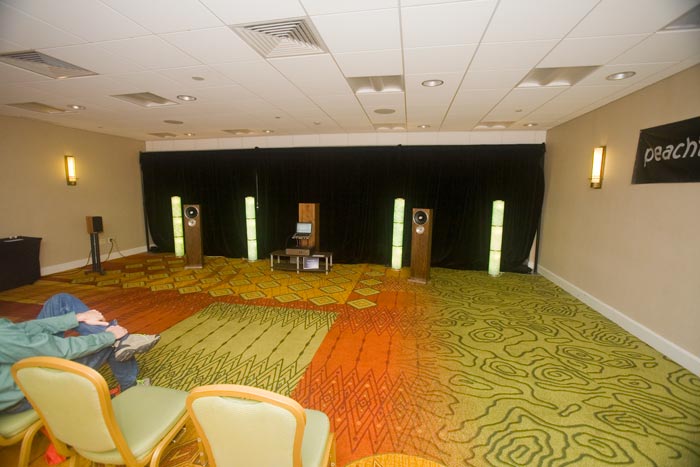
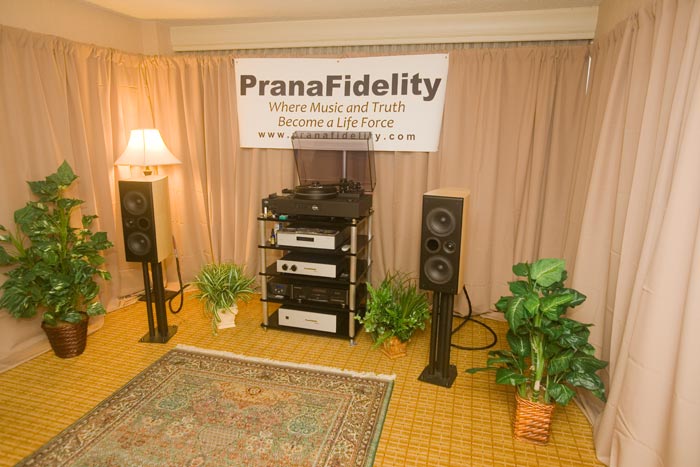
This is another inexpensive system, like the PranaFidelity system, but where that system had few faults, and filled a small room with wonderful music, just lacking the ultimate spit and polish of the higher end, this system had plenty of faults, but was fun, exuberant, and filled up a very, very large room with music.

I think, in the end, they pushed this system too far – it was loud in a space where few systems have ever been able to fill with music. It was even more or less effortless, except where it was not: those predictable places where the music crested in a complex manner, or there was a sudden amount of energy.

But this was wake-your-dorm-up, play-frisbee-in-the-park-to-the-dead loud – the way you want to play your system when the mood and the beat and the fever strikes just right [which may be everyday when you are younger and not quite so often as that as you get older. Well, unless you are neli :-)]. When those difficult to render energy peaks arrived, the music degraded in a predictable and not overly harsh manner – and there was never any sense that something might ‘blow up’; it was all done with a relative feeling of aplomb.
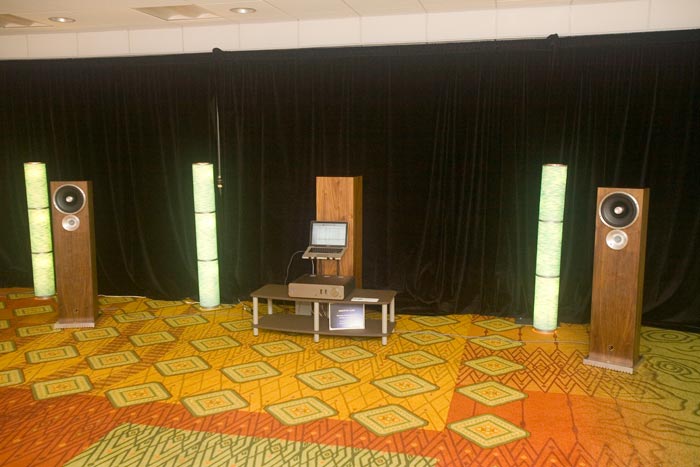
Make no mistake, this was not your traditional high-end audiophile-grade hi-fi. There were issues. But this was a system to play music on, to enjoy music on, and to rock out when the occasion demands it – and it wasn’t stupidly expensive [well, not too outrageous anyway. The speakers are the $5200 Druid Mk. V. and $4K Submission subwoofer].
RMAF 2013: PranaFidelity

We talked a long time ago about the path from silence to a perfect reproduction. Every point along the path has no bad behavior, the sound is imperfect only in that it lacks the ultimate resolution, bass response, and dynamics that the Real Thing requires. Everything off the path has nasty side-effects; the further from the ‘path’ the component lies, the worse the side-effects.

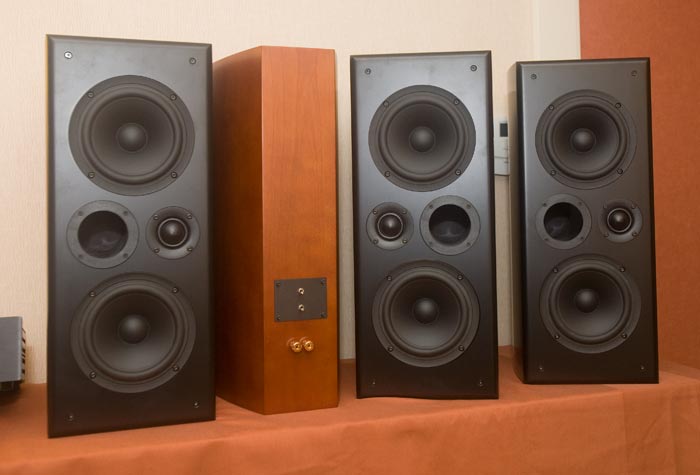
The sound in this room with the modestly priced $3950 PranaFidelity Fifty90 speakers was spot on The Path.

The sound in this room, these speakers, are only lacking those things that more money, a LOT more money, would provide. But all too often, in fact the vast majority of the time, those extra funds would bring along with several improvments the misery of unpleasant side-effects: a muddiness in the midrange or bass at soft volumes, perhaps, or a sharpness in the treble, or a myriad world of other audiophile speaker gotchas.

These do everything AOK, at ungodly SPLs [well, me, I rarely listen this loud], in terms of just presenting listenable and enjoyable music. Not too sweet, not too raw, not too warm, not too cold… these are Goldilocks speakers.

With a little gold trim, or mahogany inlay, these speakers could easily go for $10K, or $20K in today’s marketplace. And this is what I personally recommend that they do – so you might want to get your way-under-priced Fifty90s before then. Just sayin’.

RMAF 2013: NVS Sound, YG Acoustics, McCormack

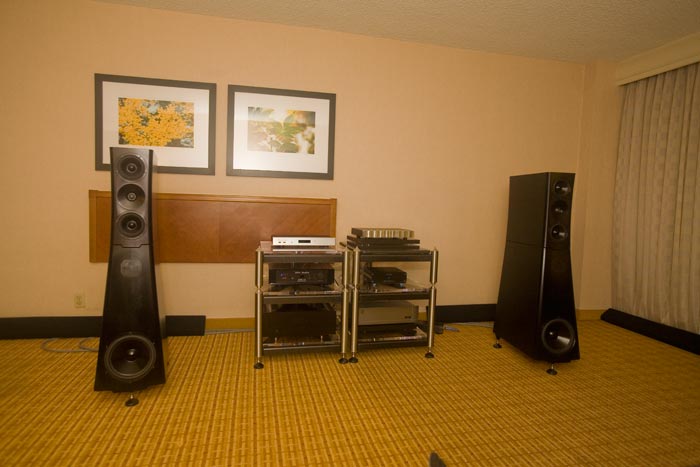
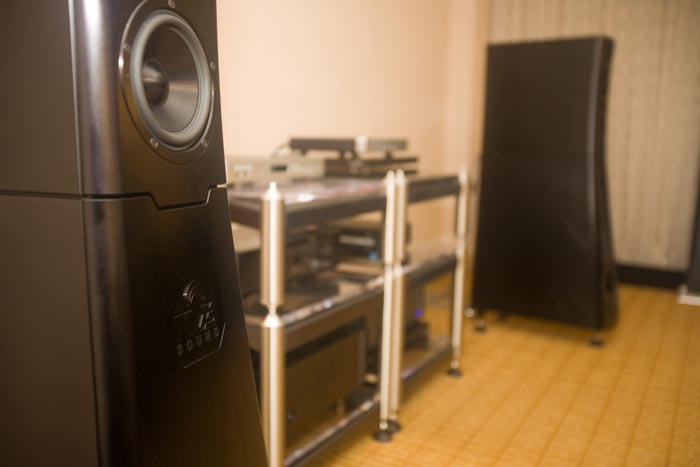
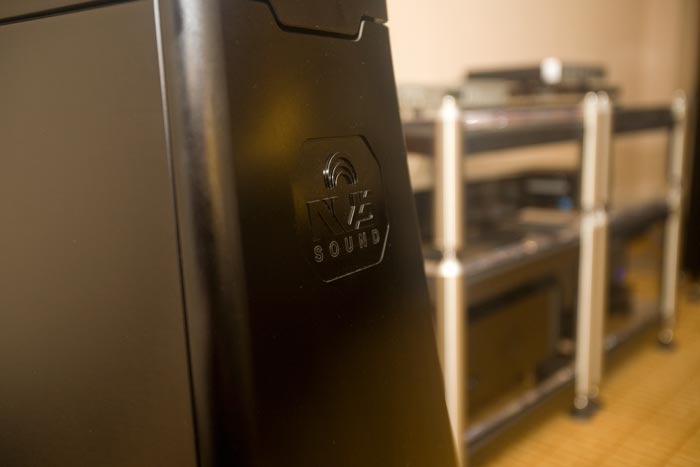
NVS Sound makes cables.

They are also working with YG Acoustics to make a custom version of the YG Acoustics speaker. The modification I remember is the addition of silver binding posts, but there are others.
[neli]: Along with the binding posts, NVS re-wires the loudspeakers with their own internal cabling, paying an extreme amount of attention to the wiring connections. They also change the spikes.

They are also working with Steve McCormack to customize a McCormack amplifier for use with the NVS Sound-modified YG Acoustics speaker.

Both the speaker and amp were prototypes and under development.

The Notes

This is all of interest because the notes generated by this system were quite good and quite an advance for solid-state, in my opinion.

The attack was decent.

The peak was a bit flattened [I think this was a 160 watt amp. More power is required apparently].

The end of the note was the most surprising. The part after the maximum peak is reached but before the decay starts. It was rounded and controlled, ending like real notes end. This was shocking for a solid-state amp and seriously unbelievable on the supremely hard-to-drive YG Acoustics speakers.

And the decay? It was average.

So, two points:

1. This system drove the modded YG Acoustics better than any system I have heard them with, and

2. The note formation was better than I think I have ever heard from a solid-state amp

But there were also severe problems as well. When I got to play something familiar: Comfortably Numb – there were occasionally some issues with various resonance frequencies somewhere in the chain – creating way, way too much energy. There was also confusion during complex passages [not too many in that song, but some].

So as a finished product this failed. But as a research project this kicked ass.

Not sure exactly where the innovation is. I know a lot of people are fanatical about of Steve McCormack gear – but we did a shootout several years ago with a $10K Edge NL10 and the Edge was much better in every way except bass slam. So we are much more cautious in our assessment where the innovation is here – maybe it is the cables, which have been getting rave reviews in Japan. Who knows – but something was definitely happening that I hope gets developed further.