Price Performance in High-end Audio (and elsewhere)


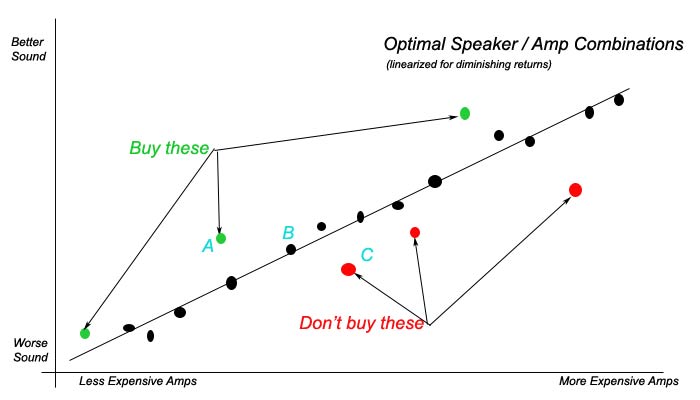
What this graph shows, is that, for a given speaker, different amps provide various degrees of sound quality.

The more expensive the amp, the better the sound quality… on average… and that adjusting for diminishing returns (paying twice as much does not usually result in twice the sound quality), most amps perform more or less where they should based on their price [i.e. their performance point lies on the ‘line’ which represents average performance for a given cost.].

But, as you can see, some amps under-perform at the price point [for this one hypothetical speaker] and others over-perform. Assuming you are not loony tunes – you will probably want to spend your hard-earned dolluhs on one of the over-performing amps. Or at least on one of the average performing amps.

Note that what we are showing here is a graph that says performance is directly related to sound quality. For many people, there are other things that they consider when buying an amp. Things such as appearance, provenance, brand, resale value, marketing slogans, discounts, technology, social network buzz, maintenance requirements, and other such things unrelated to sound quality.

Another thing which attracts peoples attention away from the basic truth of graphs like this, which is applicable in many other domains besides high-end audio, is the relationship between amps A, B, and C. This rare but real anomaly [and originator of so many conspiracy theories and misinterpretations about the way capitalism works], is where A is less expensive than B, and B less expensive than C, yet A outperforms them both. In this contrived example, the manufacturer of A has made a mistake [possibly on purpose if they are altruistic] and under-priced their amp and manufacturer of C has over-priced it [definitely on purpose]. The manufacturer of B has priced their amp just right.

Many people who cycle through amp after amp after amp, all they are looking for is an over-performing amp in the ‘A’ position, or maybe even in the ‘B’ position if ‘C’ is very popular. It makes them feel so good to have an over-preforming amp [or other over-performing component] that they spend [lose] $10’s of thousands in buying and selling amps just to find this particular one. Of course, in a perfect world, dealers and the press should be pointing out these over-performers so they would not have to waste all this money and time [and Mike Fremer does do this in turntable land] but it is almost unheard of them to do so – perhaps because they do not hear a lot of the candidates in a particular market segment to get a feel for where that average price-performance line is, or, unfortunately, because they cannot understand and categorize what they are hearing in a quantitative way.

The concept of this graph was brought up in the comments a little while ago, and we may continue to explore this graph, as we did in those comments, to nail down other component to component relationships that are kind of murky.
The Good, the Bad, the Ugly… which wins in high-end audio?

Meet the Good. Good sound with or without excellent marketing and dealer penetration.

Meet the Bad. Bad sounding. Typically has excellent marketing and dealer penetration [otherwise very few are sold – those being sold usually based on some amount of trust and personal connection the manufacturer is able to generate].

Meet the Ugly. Typically mediocre sounding. Sales are often based on any uniqueness of their technology and the desire of some people to stand out from the crowd.

Previous posts here have argued that audiophiles, unlike the general public, do not have good sound at the top of their list of requirements. That they do not ACTIVELY pursue good sound.

This post will continue that argument by suggesting, however, that audiophiles are passively interested in good sound. That good sound wins out in the end.

I would guestimate that about 80% of the gear in a typical street-corner dealership is Bad. [I wonder if this is just me being cynical or whether there is a general consensus that this percentage is just about right. Maybe I am optimistic here?].

But most of this Bad used to be competitive in its heyday and was actually Good. That the Bad is using the money and dealer network and goodwill it made from being Good and is just slaking off and becoming insipid and decadent and draining off the lifeforce of the hobby.

Then there is the gear that was Born Bad. No heyday. They just pushed themselves into the marketplace and dealer networks through force of will and lots of dollahs [a LOT more than a fistfull… ;-)]. Some of these that are Born Bad go on to evolve and improve and become at least much more sort of mediocre if not good [and successful. I am thinking of several of these. I think checking out an older Stereophile and its ads will feature many of these brands].

If the hypothesis is true, that audiophiles DO care about sound, only passively, then we should see the Bad die out, but verrrrry slowly [they would die out overnight if audiophiles were ACTIVELY pursuing Good sound, and immediately rejecting Bad sounding gear].

And this does seem to fit the facts. Look at how many major brands, that were perhaps quite a ways past their heyday and became, you know, Bad, have gone bankrupt and/or been bought out by Hedge Funds / Investment Groups.

We should see these brands get a little bump in life, perhaps becoming Born Again Bad, but if they are to survive they need to evolve and improve. Otherwise they will continue to decline, being passively rejected by audiophiles into obscurity [though there will always be some audiophiles who ONLY buy based on brand name and discounts. so it is only when these audiophiles die – not far off BTW – that some of these brands living off their heyday many decades ago will finally perish as well].

That is all well and, perhaps, a great theory about what is happening but why doesn’t Good just push Bad the heck out of the dealerships? You know, faster than geologic time?

Don’t know. Some product categories are just filled up by these brands that had their heyday come and go not leaving any floor space for the Good. Some, like Peachtree [which I consider to be pretty good], create a new product category and make their way into the dealerships that way. Others get their way onto the Stereophile Class A buying guide list and then elbow their way into a few dealerships.

There are so many Good out there that are Bad at business that dealerships are wise to stay away – these Good that are unethical kind of give a bad name to the other Good out there – scaring dealerships away from being bold and bringing lots of Good gear into their stores.

In the end, Good sound by brands with a decent to good sense of business [and hopefully ethics to go along with it] will rise to the top – it will just be so slow and only of benefit for the few of us who will still be alive [no, I am not depressed. No, we don’t really give a hoot that the Denver Broncos lost the Superbowl in such a pitiful and painful display. Just thinking we ain’t none of us getting any younger… that’s all…. 🙂 but thanks for all your condolences, anyway ;-/]

Lamm LP2.1 versus LP1 Signature phono preamplifiers – the mini shootout

predicatably
At CES 2014 in the larger Lamm Industries room, Vladimir switched between their new LP2.1 phono preamplifier and their also relatively new LP1 Signature preamplifier. The system was the Lamm ML3 amplifiers on the Verity Lohengrin speakers.


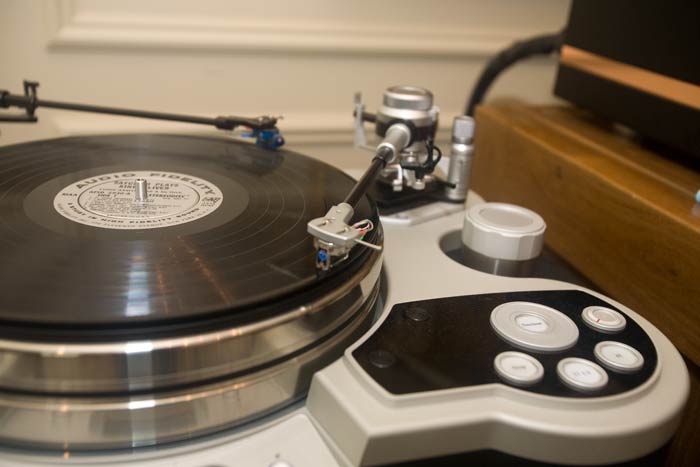
The source was the TechDAS turntable.


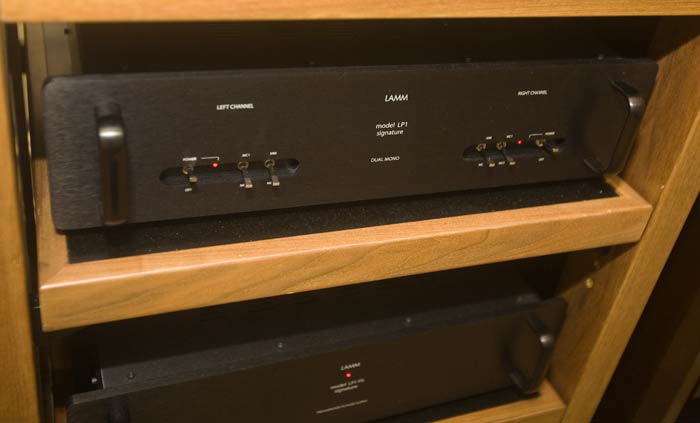
This is the main chassis of three [the other two being power supplies] of the Lamm LP1 Signature phono preamplifier


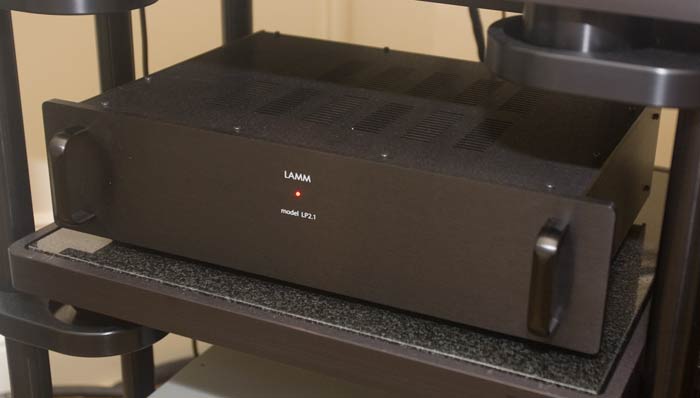
This is the new one box Lamm LP2.1 phono preamplifier

This is the transcript of what I write earlier in the CES 2013 show report:

“Vladimir Lamm swapped back and forth between the LP2.1 phono stage (which debuted this show. photos on the inside of the chassis are posted below and will also be posted on Ultimist) and the more expensive LP1 Signature phono stage, several times by using the two tonearms on the TechDAS at the same time [say what? this was fun]. With two very slightly different cartridges it was a little bit of a Fuji apples to Braeburn apples comparison, but the short and quick is that if you didn’t hear them back to back (the more expensive LP1 being smoother, less grainy, and just more of that good old analog wonderfulness) you would think you were already listening to the LP1 when it was in fact the less expensive LP2.1 all along (the original LP2 has been a giant killer among phono stages here at the Fed, at least until you get up into the $20-$30K range of the competition)”

As I have continued to reflect on what we heard, the LP2.1 still seems like an amazing value, albeit the LP1 Signature an obvious choice if you have the money to spend.

As most of the multifarious competition continues to charge more and more outrageous prices for mediocre performance, new high value phono preamplifiers take their place. And all the while, the predictably high value Lamm LP2, now LP2.1, from a well-known, well-reviewed brand, just keeps on providing excellent music for your audiophile dollar, with the LP1 Signature continuing this tradition up into the stratosphere of phono preamplifier performance space.

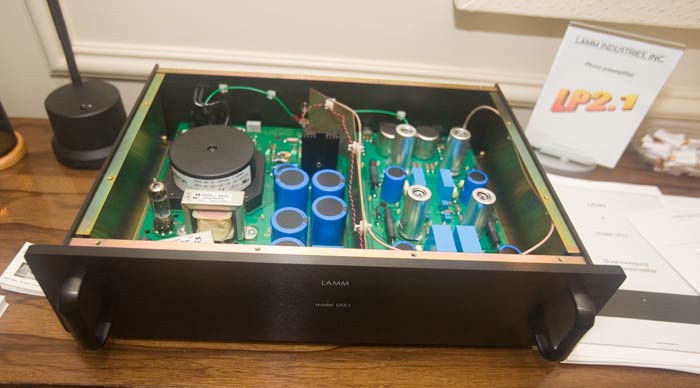
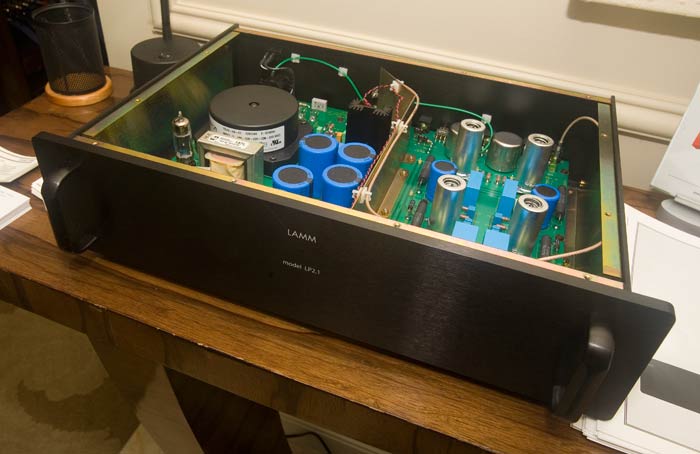
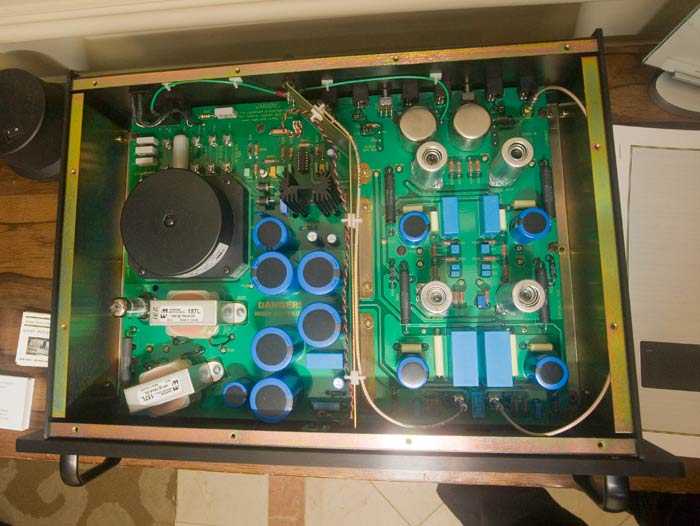
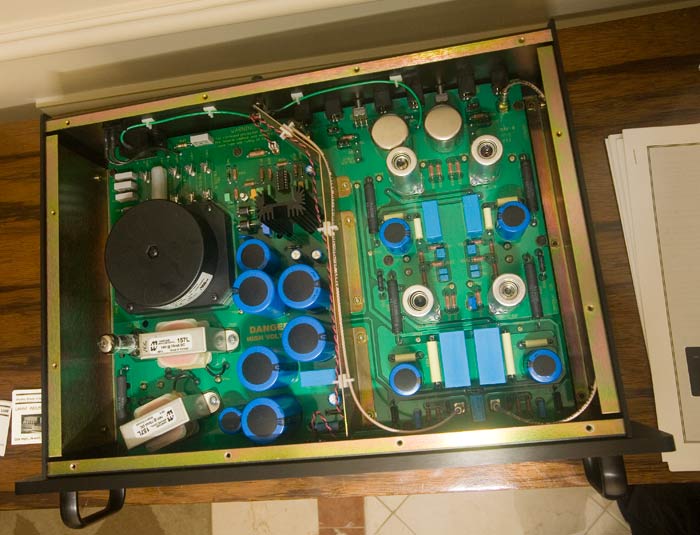
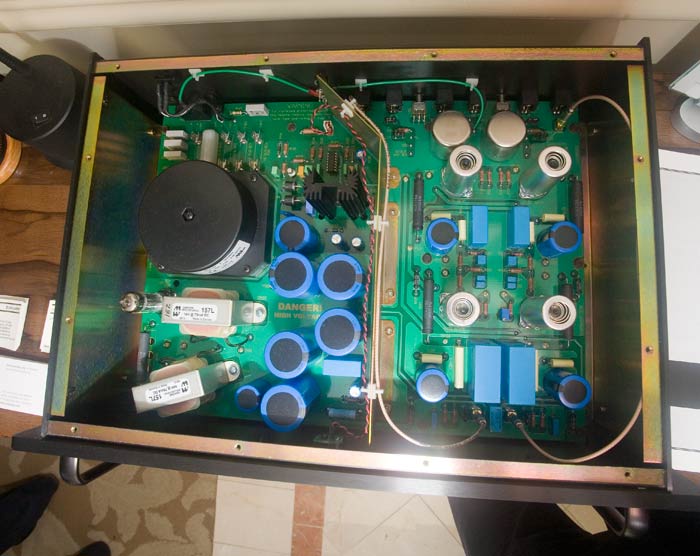
Below are some photos of the static display of the open chassis LP2.1. As usual, I couldn’t decide which was best, so I included several.