[Remember, the goal of this blog is to try to optimize the pursuit of the Ultimate Music Experiences. One method to pursue these experiences is to spend $$$ and setting up the Best System Ever – and 1/2 of the posts here on the blog are about the not so easy task of configuring and setting up these kinds of systems. The other 1/2 is how we can find some other kinds of methods that maybe do not rely so much on spending so much time and $$$… i.e. how we can be a little smarter about all this]
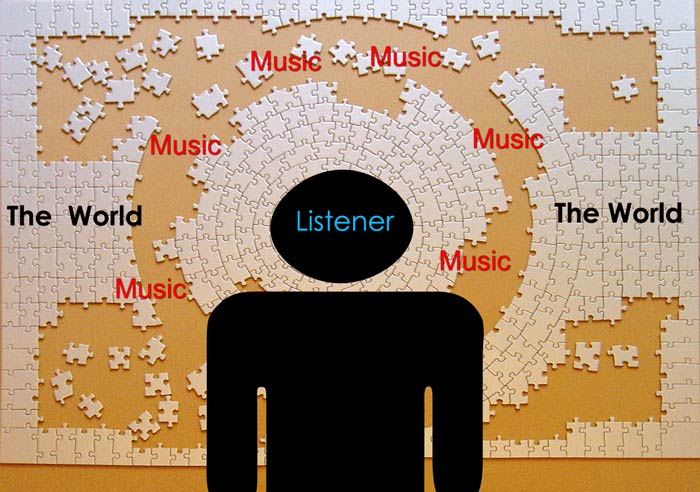
This post will try to apply the model of the previous posts, where we treat music as a ‘key piece’ that allows us to perceive the world in a much clearer manner, to try to, hopefully come up with ways to both more predictably generate those ‘Right Song’ phenomena and drug-like music experiences.
Relief – Relieving Cognitive Disconnects
At any given time, we have a number of problems on our plate, several things which are irritating us, or making us feel tired, or feel stupid.
It is these things that the ‘Right Song’ addresses and relieves.
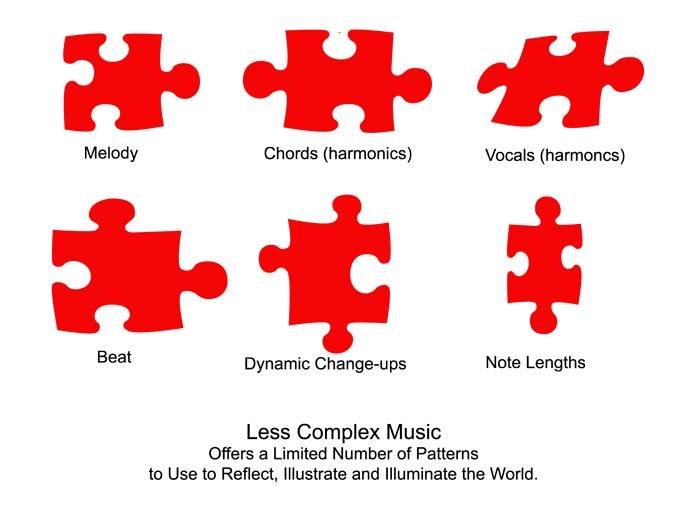
There are also a number of songs that are not the ‘Right Song’ but will have patterns, pieces of the puzzle, that will help alleviate the cognitive disconnects we are having with the World.
In fact, almost every song has *some* patterns we may be able to use, or perhaps patterns that reinforce what we already know, so its ALL good 🙂
Pleasure/Appreciation/Expansion – Connecting to The Good Stuff
There are deeper issues in life than the things we worry and fret about on a day to day basis – beyond the bad, evil and incompetent running amok out there [love that word, amok] . YMMV but there is also life, beauty, eternity, spirit, truth, etc.
For me, as an example, rich, rich tones evoke the bright purple of a tulip, or the perfume of a rose, or the velvety softness of a rose petal. Pure, PURE tones remind me of straight lines and wonderfully calming symmetries and brand new chrome plating.
What if some of the aspects of music, then, the qualities of the sound, that predispose us to let the puzzle pieces in the music represent the deeper issues in life, commonly experienced issues that we are ALL more or less hard-wired to want to understand more fully.
These qualities [let’s call them AWESOMENESS, because they invoke a sense of awe which is important to get beyond the mundane interpretations of the patterns in the music. Well, YOU think of a better name then :-)] could be anything from excellent musicianship to high quality harmonics, to wonderful decay, to perfect micro-dynamics to… [macro dynamics?] These qualities just open to door to us appreciating the way the patterns and internal relationships of the music to itself represent similar things we see when we seek deeper truths in the world out there.
We still need the patterns in the music along with the quality[s], we still need the music to be complex enough, and rendered well enough, to have this ‘meat’ on the ‘bones’ – the bones being something like great harmonics, or great dynamics, or great detail, etc. The ‘meat’ [patterns/puzzle pieces] cannot have too much distortion, or be so fuzzy, or be so atonal, or bright, or all the other things that most hifi systems do incorrectly – because if they are their ‘message’ will be lost in the noise..
————
If this model is accurate [and it does match experience, where sometimes just one excellent component in a system of otherwise just ordinary but competent components can sound quite drug-like], then, we could expect to be able to build drug-like systems by having the system:
1) render AT LEAST ONE high-quality aspect to add some Awesomeness; micro-dynamics or tone for example [micro-dynamics is great, as is harmonic resolution (beyond just excellent tone), because they serve both as Awesomeness AND they can also contain complex patterns in and of themselves] to communicate to the brain that this is something awesome, something on the order of the beauty of a rose, and
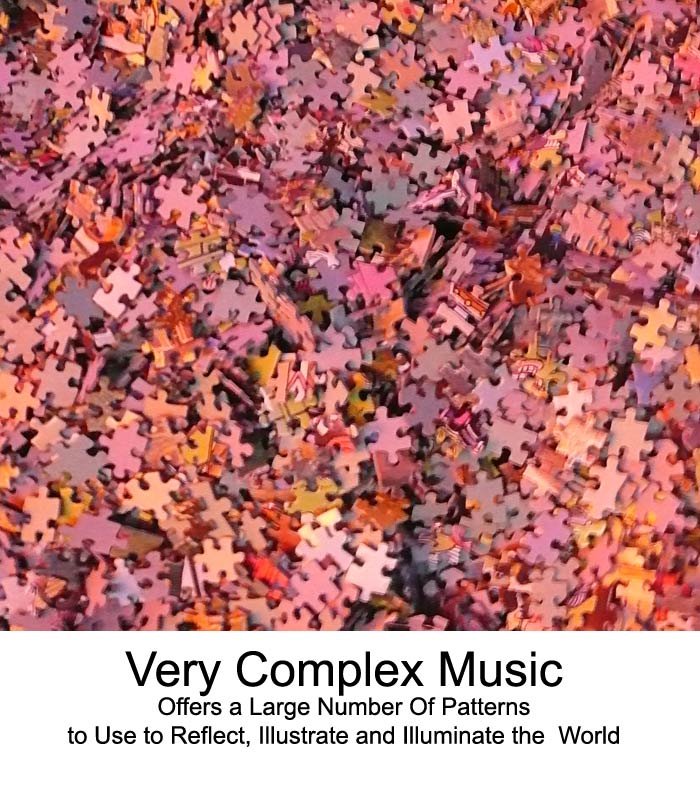
2) be able to render music with a some amount of complexity. Complexity is somewhat difficult to define here. Being able to render classical music is the obvious prime example, but an excellent singer, on a system that can render the complexities in their voice [so many emotions!] i.e. its ability to render extreme harmonic resolution, can also do just fine.
Bet we can all think of systems that have 1) and not 2), or vis-a-versa. How about systems that have neither? I frequently waver between preferring systems dominated by 1) or 2) or having 1) and 2) completely balanced. How does one define ‘completely balanced’? Ultimate systems will have both, of course, and have MANY aspects providing lots of Awesomeness and the challenges become trying to get the system, which can render any amount of complexity, to reveal more and more of the deep inner complexities/patterns in the source music [i.e. lower and lower noise floors and better and better source media].