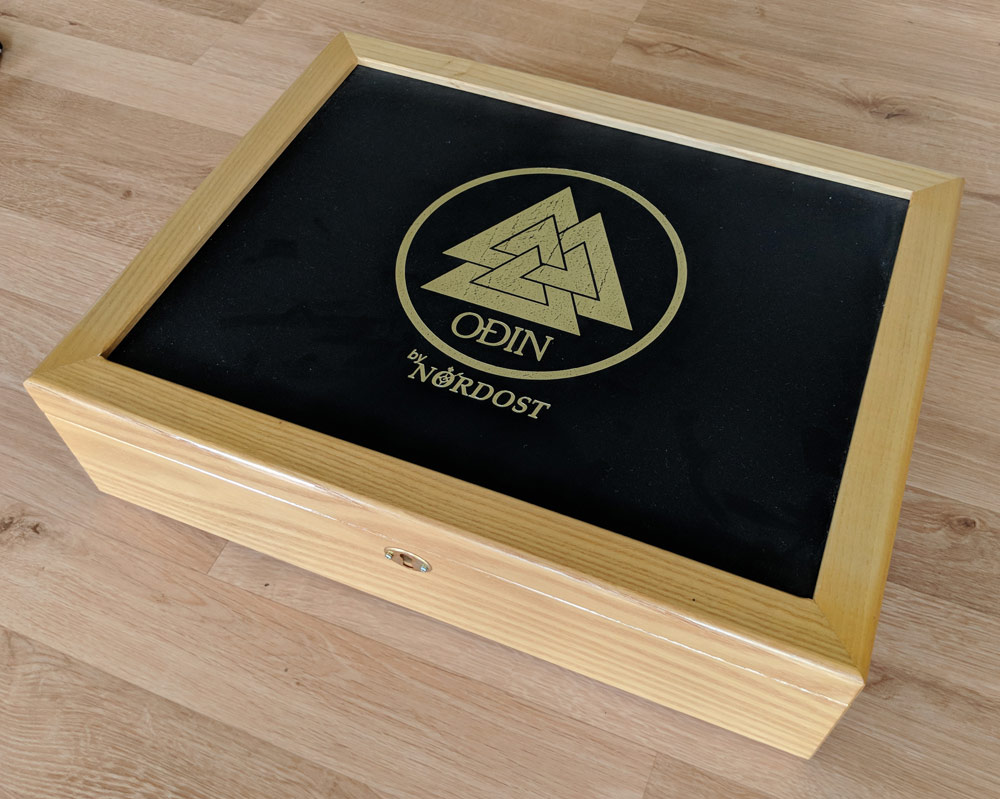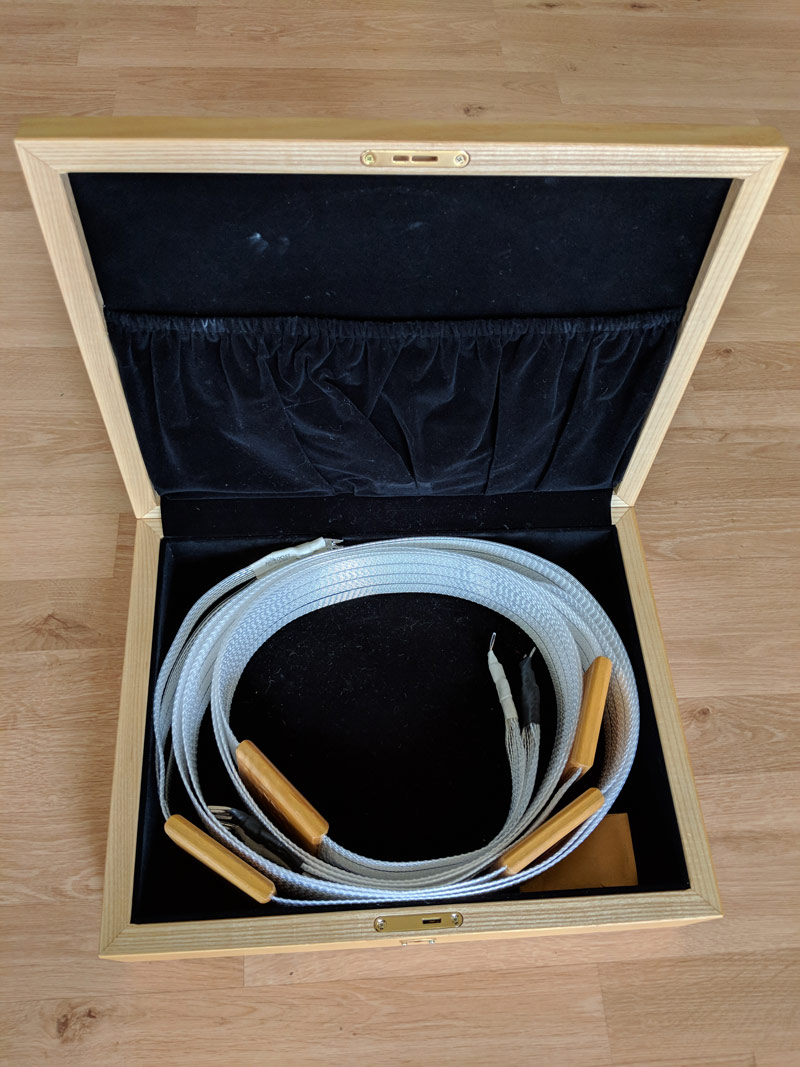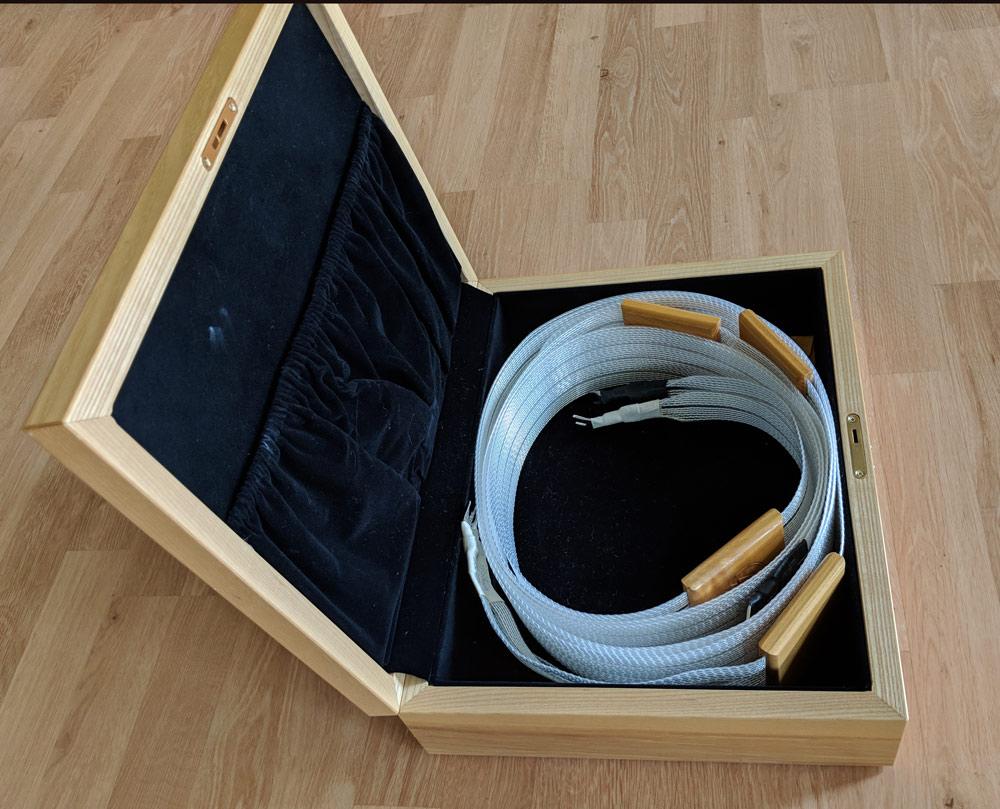
'Nordost'

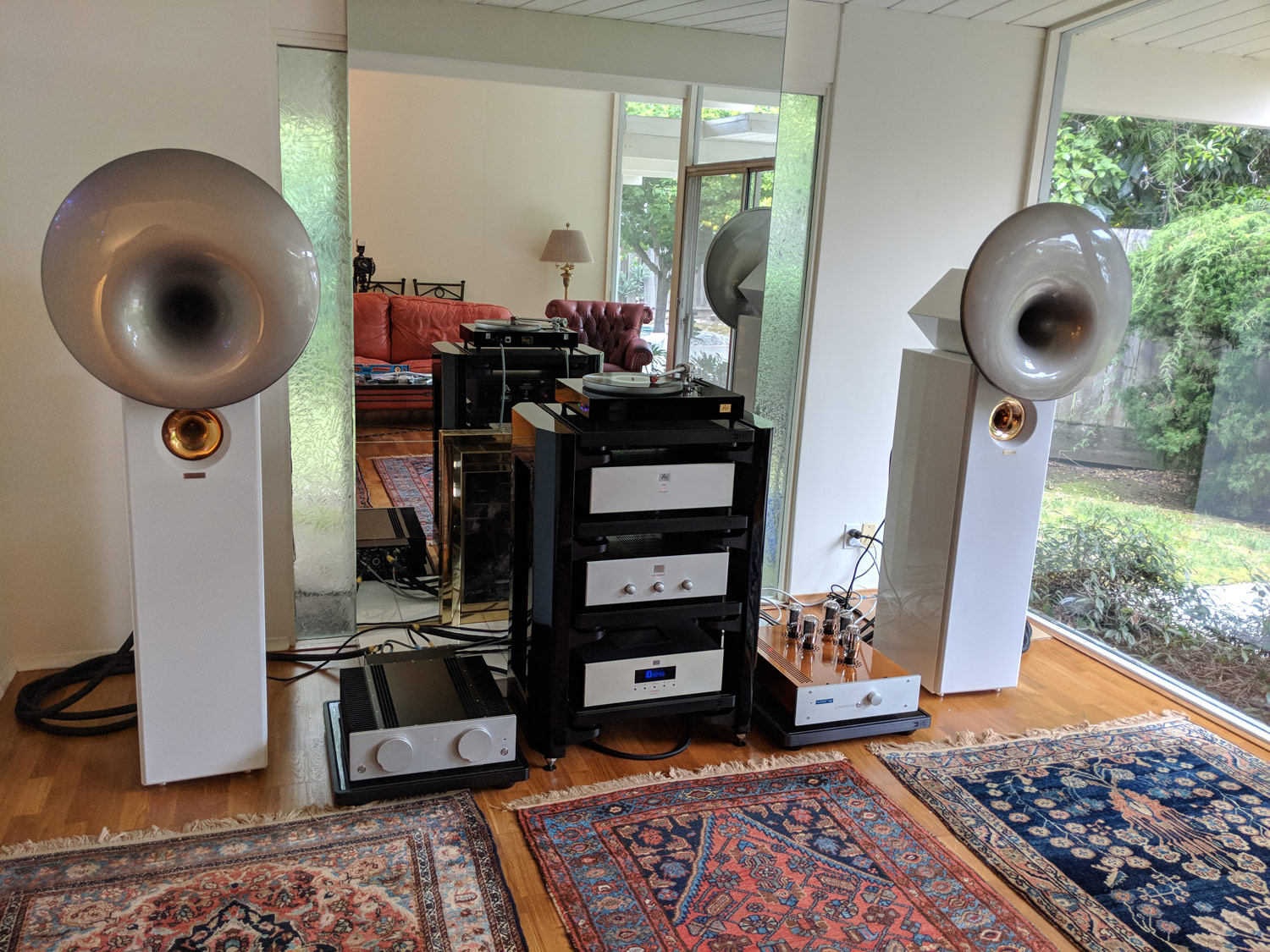
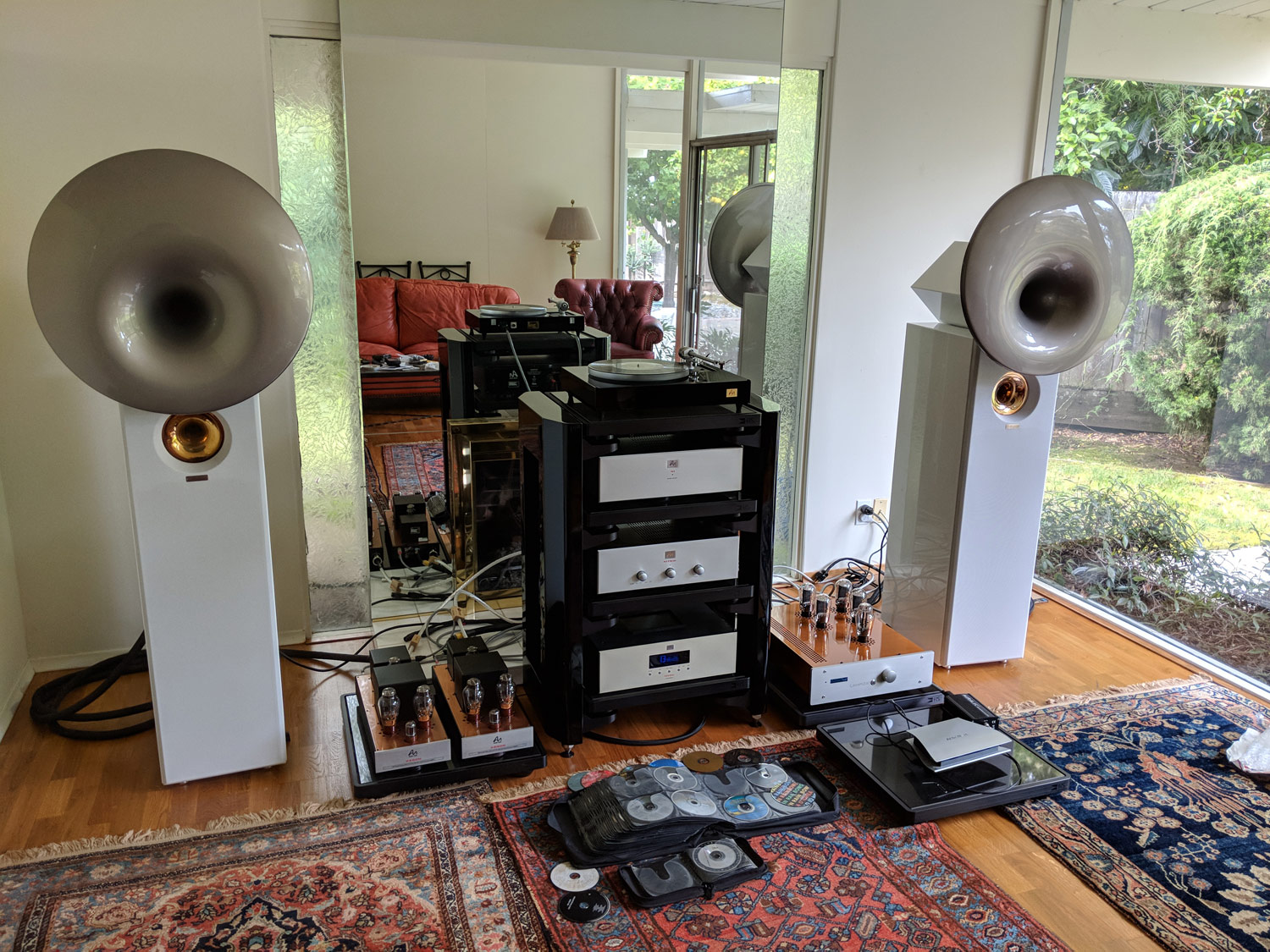
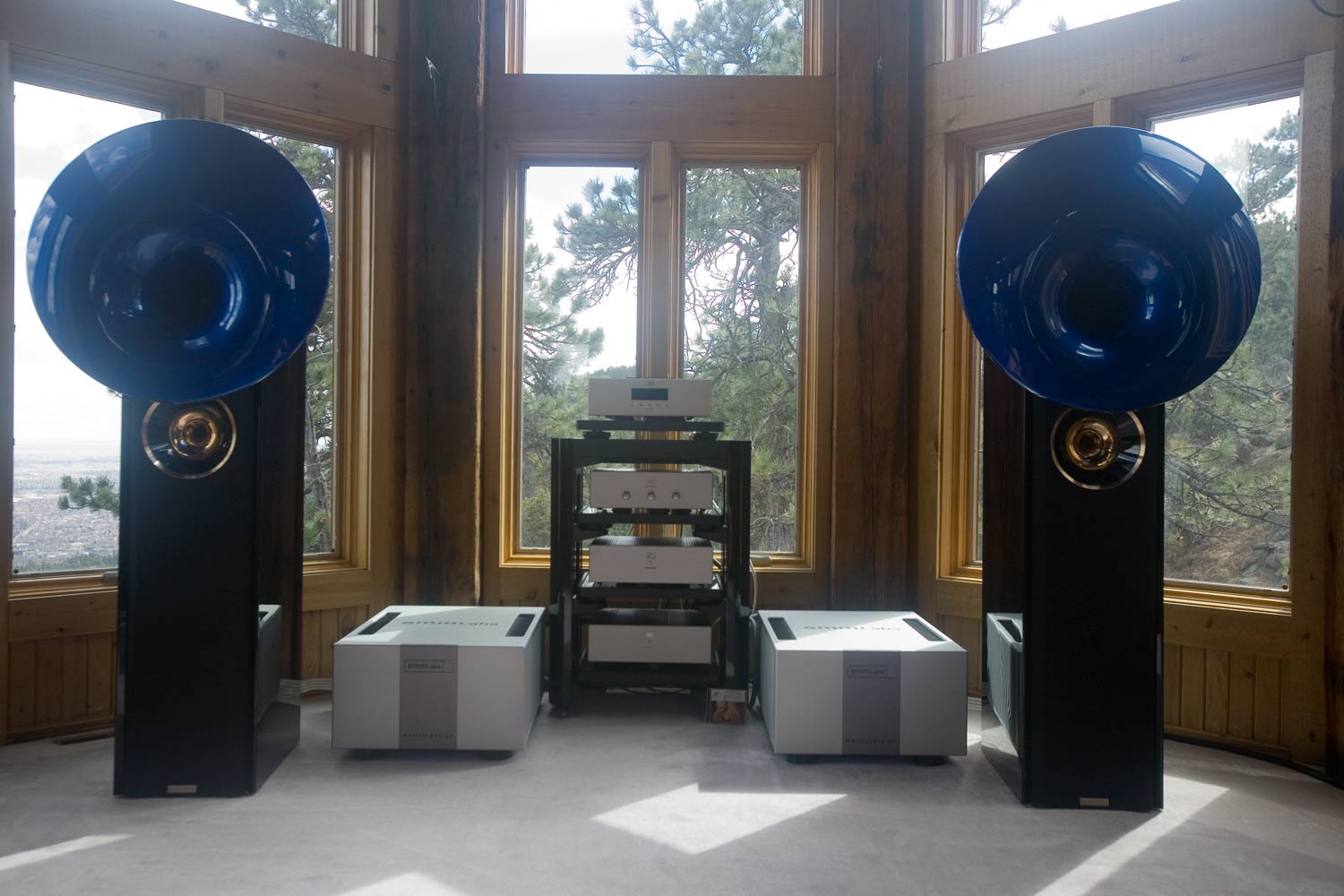
Our Large Audio Note, Emm Labs, Nordost, HRS room at RMAF 2009

Saturday, October 31st, 2009 by Mike

So, I would like to talk a little about the sound in our large room.

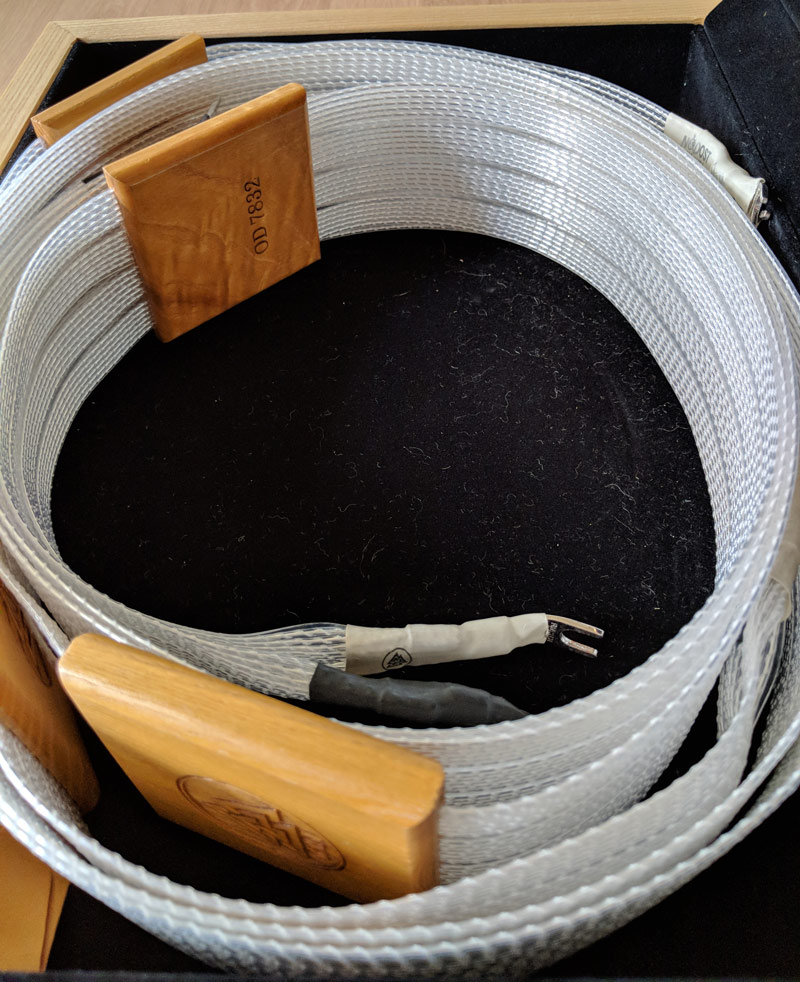
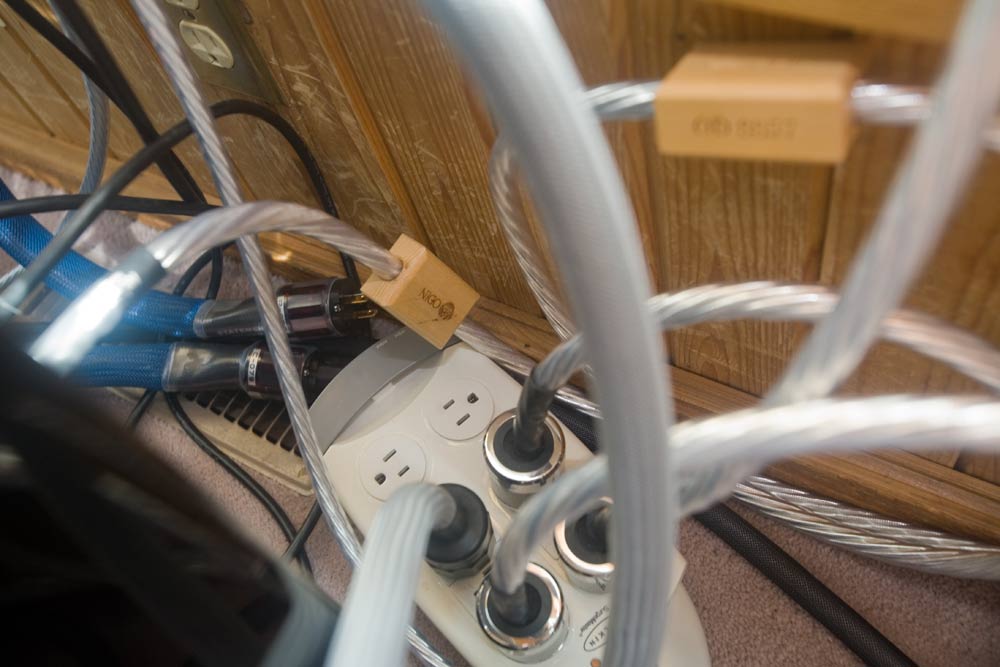
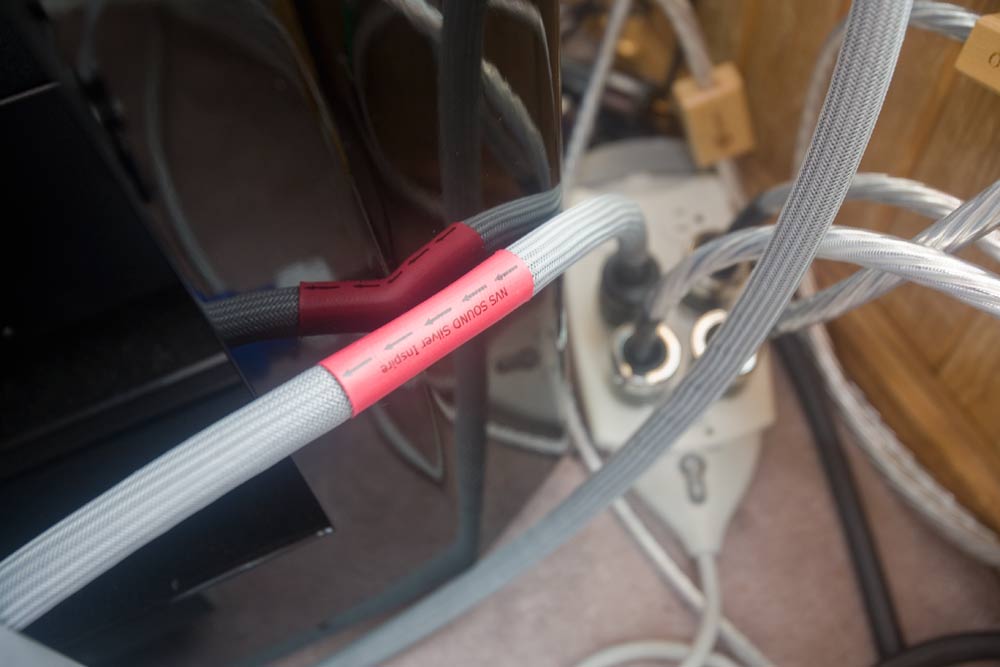
As a reminder (it has been a few weeks now. Time flies when buried in 1800 page show reports) we had the Emm Labs XDS1 single-box statement player driving the Audio Note M9 Phono preamp and Gaku-On amps. All cables were Nordost ODIN and all components were on M3 HRS platforms and we also used an HRS SXR rack

We had a little hiccup when one of the 211 tubes arrived in a non-working condition. Phil (thanks Phil!), a local audiophile, loaned us a 211 tube [and the next day Nick Gowan shipped us another pair. Thanks Nick!]. Neli arrived back with the 1st relief of 211 tubes and then left to pick up some HRS platforms we needed for under the Gaku-On amps.

All to say that I was left alone to position the speakers. [Yes!]

So, here we have 20+ feet of front wall space minus the 2 feet or so the rack occupies [also up against the front wall] - and the speakers will probably be fine anywhere.

Then Fred Crowder and Paul arrived. OK good. I moved the speaker and their comments and the expressions on their faces told me if it was for the better or worser. Every so often I would step back into the room and listen for myself. Surprisingly enough, this resulted in at least a locally optimized position for the speakers that was pretty decent. It was surprising to me because we seemed to flail around quite a bit, the sound getting a wee bit better or wee bit worse - but all of a sudden they were both nodding their heads a lot and when I stood back it really had snapped in to coolness. With only a few minor mods it became much more fun to just listen to music than it was to play with the speakers anymore.

—> Position 1.

After Fred Crowder, Paul and I positioned them, about oh, 3 feet from the side walls, and oh, 4 or 5 inches from the front wall. Angled in fairly severely to cross in front of the nearfield listening position.

This worked really pretty darn well. It was very engaging, quick, harmonic, with good soundstaging and imaging. There was enough bass reinforcement to be quite satisfying. And I would have been happy showing the system like this. Several people came and went and they all liked the sound.

Then Neli returned with the HRS platforms and we put them under the Gaku-Ons.

The added separation and tighter bass of the sound now wasn’t quite as engaging. It was ‘better’, but the speakers now had to be repositioned because, essentially, we now had a different [sounding] system and the sound coming out of the speakers reflected that fact.

So, I’m thinking… where are Fred and Paul when ya need ‘em? :-)

Then Mario from the Audio Note factory just happened to show up at the door, and I remember that these guys do shows every couple of weeks in Europe [seriously] and they must have run into largish rooms before.

So we start moving them radically this way and that. What I really wanted to know was: What kind of sound does Audio Note go for with their speakers when they do a show in a big room like this?

I mean, I was pretty sure we could get back to the sound that we heard previously, in setup #1. And it really was quite good. But, hey, we got some time, let’s experiment.

We put them closer and closer to the corners - each time hearing no overtly deleterious effects, and each time hearing slightly more room engagement. They eventually ended up just about as far into the corners as we could get them.

—> Position #2.

The sound was very big, pressurizing the room. No lack of bass, let me tell you. In fact, more bass than we let the Coltrane Supremes have in that room [the Supremes could probably do real damage to the hotel fixtures. I mean 2000 watts, 12 9 inch drivers, very efficient speakers. Give me a break]. Perhaps we have been too shy with the bass on the Supremes [trying to differentiate ourselves from the big boom box systems elsewhere in the hotel - you know, the ones that win all the awards from the newbie and want-free-equipment show reporters], because the Audio Note speakers with their more present bass worked pretty well.

The bass and the dynamics was all hitting the big time [all the components in this system are world-class dynamic champions]. The harmonics were like those never heard before [thanks Gaku-On!]. The soundstage was the width of the room. Huge. The musicians were life size. It was like they were really there in the room. Standing in a line across the stage.

Which is also to say that the soundstage depth was not very deep. It was more shallow than it should have been for many people’s tastes. In some ways, this made it more realistic, but perhaps not as much fun. We think the problem had to do with the fake side wall we made on the left, and the big curtained window on the right. Certainly position #1, away from these less-than-optimal side walls, had no problem with achieving great depth of field.

We stayed with position #2, in large part [from my point of view] to further differentiate it from last year and invalidate any direct comparisons. This was a different system… evaluate it as it is, not as last year’s system with different speakers. This is also part of the reason we did not put the system over on the side of the room: to make the system and room look different than last year [the others being 10 meter ODIN is hard to come by - 10 meters is needed to reach the rack when it is on the rear/side of the room - and we were tired of lugging tons of equipment to the show and back].

It really worked and most everybody liked it a lot, in fact everybody except those people who really do prefer a sophisticated and very accurate sound [about 5%, this show is not very kind to these people] - and those [my guess about 20% of the people [NO, I really do not think it is as high as 95%, though an argument could be made… :-) ]] who have no ears anyway and pick rooms they like more or less at random [using a algorithm, in any case, that has zero, nada, zilch to do with the sound. No, I do not think this is criminal - but when you read about what someone thinks about a show, keep these people in mind].

——————–

Compared to our room last year, this was a completely different sound.

Last year’s sound, the Marten Coltrane Supremes speakers with the Lamm ML3 amps, was a very, very sophisticated sound. The delicacy and detail, the preciseness of the harmonics, the shade and shapes of the images in a seemingly infinite 3D space was unheard of. Of course, to really appreciate it you had to know what imaging was, you had to be able to hear the harmonic structures, likely being revealed for the first time ever [they were to us], and you had to relax and trust that the system, rendering difficult notes, was going to do it correctly and so you could relax into the music in a way that isn’t possible with most [which is to say all but one or two] systems.

And this years sound, this year it was danceable, approachable, rocking, boogieable [well, it SHOULD be a real word]. Harmonics were lovelier this year, but not as nuanced or delicate. This year the sound was enjoyable, emotional, impressive. Last year it was OMFG. This year it was “Alive!”.

It is very, very much like Leonardo DaVinci versus Picasso. Leo [can I call him that? He ain’t here so…] paints with excruciatingly fine detail, it is amazing that someone could do that. It is more wonderful than real life photography. Picasso [and I speak only of his ink and brush paintings] uses a half-dozen strokes and makes a woman appear who is so evocative of a real actual person it is just amazing that someone could do that. It is more alive than most people are in ‘real life’.

I love both artist’s work - and the bizarre thing is that some people just like one or the other [yes, now we can put this into the context of some people liking our room this year more/less than the room last year]. I, personally, love both.

I think it is too simple to say that one is of the mind, and one of the body. Or right brain versus left brain. But I think it is indeed something like that. Just not that.

Anyway, since the mind and body [according to most people] cannot exist one without the other - we are now trying to build a hybrid system sound that is OMFG Alive!

And I think, I think we came really, really close the other evening - when Kevin, Neli and I ODIN’d up the system, with the Emm Labs XDS1, Audio Note S9, M9 and Gaku-Ons on the Coltrane Supremes. Horn-like dynamics and ceramic and diamond driver preciseness!

Playing with some toys left over from the show…

Saturday, October 10th, 2009 by Mike

We put the Audio Note Gaku-On amps on the Marten Coltrane Supremes. And we had a few extra Nordost ODIN cables we put on the amps [I did not trust myself to put them on the pre-amp at the same time]. With the Emm Labs XDS1 CD/SACD player there was an amazing amount of separation - both dynamically and spatially. We then hooked up the S9 step-up transformer to the Brinkmann Balance turntable with an old Lyra Titan cartridge.

It has made me re-evaluate the assumption that real dynamics could only be [best be] gotten from a horn speaker.

Almost all of our equipment lately has gone to improving dynamics - and at the Same Time increasing the delivery of uber resolution and clarity to the Supremes - which can handle everything we throw at it [try to name one other speaker that can do that. It sucks but that is where our industry is at: it costs $300K just to be able to forget about the speaker being the primary limitation of your system. …though we would like to try the Marten Momentos… and they are only $150K :-) ].

And, personally, I think the improvement of the S9 step-up over the S4 that we have been using is head-spinningly silly amazing. We will be doing some tests shortly to verify this - for other reasons too annoying to disturb our fine readers about.


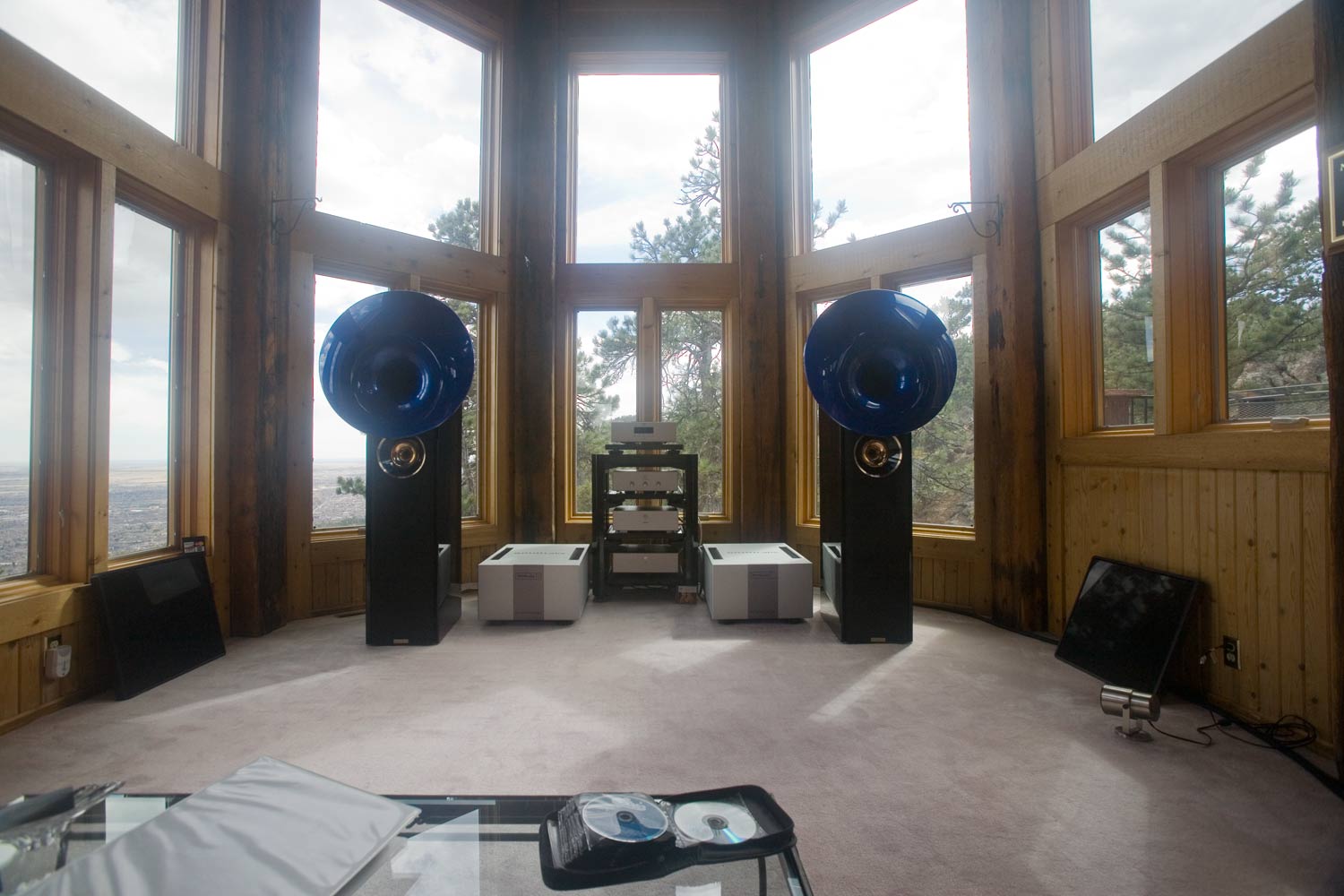
The Marten Coltrane Supremes in the foreground, the Gaku-Ons in the background.


Audio Note U.K. Gaku-On


Audio Note U.K. M9 Phono - a preamplifier with a built-in phono stage.


Audio Note U.K. S9 step-up transformer

Rocky Mountain Audio Fest 2009

Wednesday, September 16th, 2009 by Mike

So, the Rocky Moun’tane Audio Festivities are soon to begin - well a couple of weeks seems like ’soon’ to me.

We will be in our usual two rooms: 9030 and 9026. One big and one small [medium size seems just not the d’rigor for show hotels].

————————————————————————–

Tentatively we will be showing, in the large room:

* Audio Note AN/E SEC Signature speakers (we’ve shown with these before, but not in the big room!)

* Andio Note Gaku On amplifiers (Audio Note’s top of the line 211-based monoblocks)

* Audio Note M9 Phono preamplifier

* Audio Note TT3 Reference turntable

* Audio Note digital: DAC 4.1x Balanced and CDT-3 transport

…and…

* EMM Labs XDS 1 reference-level single box SACD/CD player (product debut: about $25K)

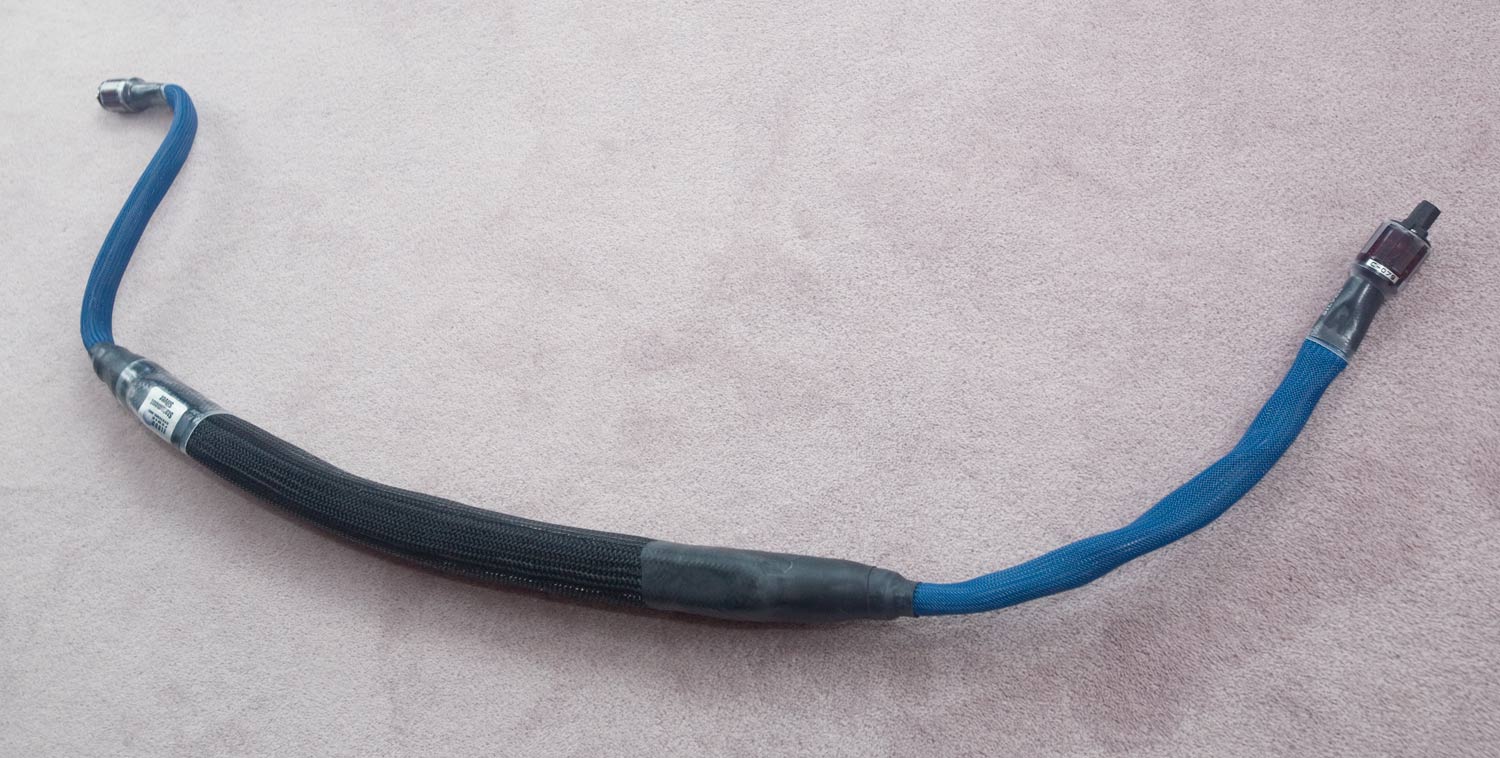
* Nordost ODIN cable (everything ODIN but our 10 meter Valhalla and the Audio Note Sogon hard-wired to the speakers)

… and …

* HRS MXR and SXR equipment racks and M3 isolation bases

————————————————————————

And in the small room:

Audio Note ‘Zero’-based system:

* I Zero integrated amplifier
* R Zero phono section
* CDT-Zero CD transport
* DAC 0.1x with USB input

… and …

* TT2 turntable with IQ3 MM cartridge
* AN/E SPe HE loudspeakers

… and…

* Rix Rax ‘Robbs Report’ equipment rack

————————————————————————

We’ll have photos of the XDS 1 and Gaku Ons before the show - both here and in Spintricity.

Hope to see you all there!

Announcement: Nordost Odin goes digital with dedicated 75 and 110 Ohm leads

Tuesday, May 19th, 2009 by Mike

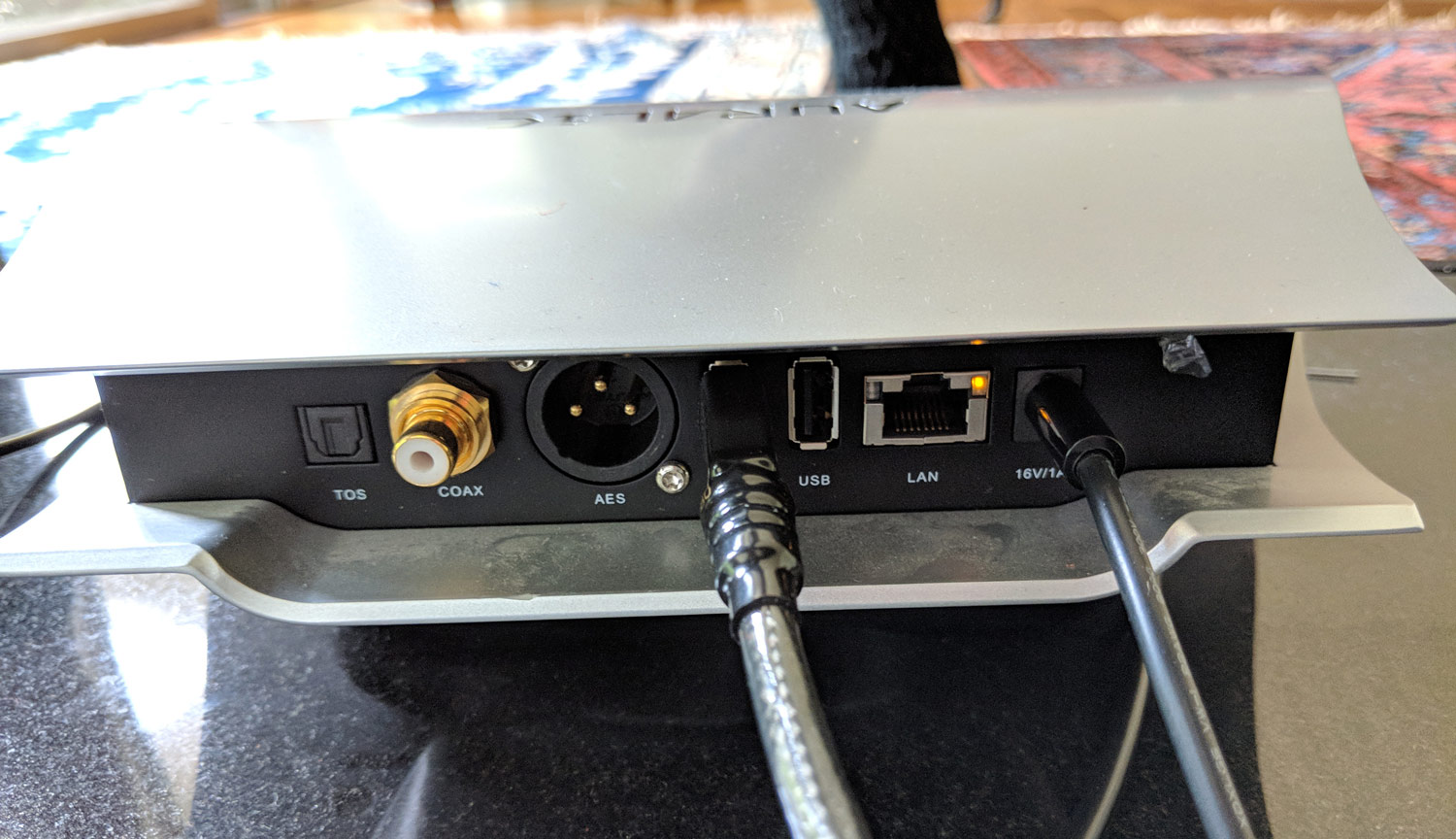
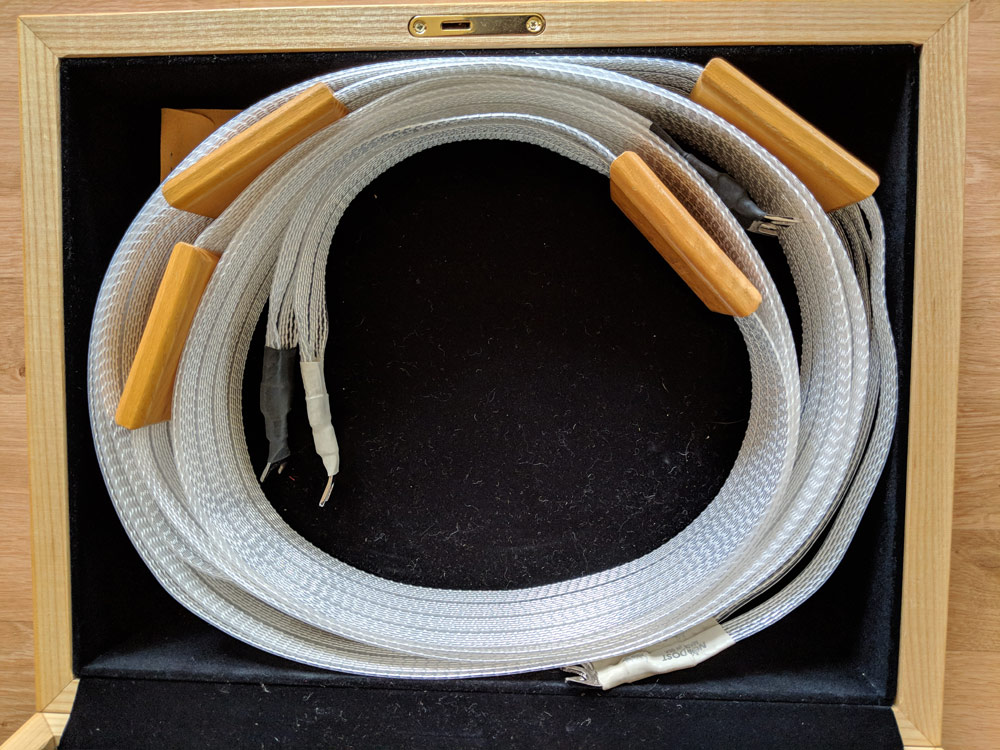
Nordost ODIN digital cable

Digital signal transfer is an exacting task that benefi ts from
all the considerations that affect analog signals, but with the
added concern of precisely defi ned termination standards.
Correct digital data transmission demands purpose built cable
solutions with dedicated conductors and impedance-matched
termination. The 75 Ohm S/PDIF transfer standard requires a
single, co-axial conductor, using properly confi gured 75 Ohm
connectors in order to avoid serious signal degradation.
The Odin 75 Ohm digital lead employs a unique, massively
oversized Dual Micro Mono-Filament construction, wrapped
in a Total Signal Control (TSC), “virtual solid” shield, ensuring
the superb geometrical accuracy demanded by a constant
impedance conductor, combined with fl exibility and the
complete shielding delivered by a tubular shield construction.
The choice of Silver NextGen RCA or Furatech Rhodium
BNC connectors ensures that the supremely accurate
transmission performance of the cable isn’t compromised by
its termination, delivering digital data integrity to match the
analog performance of the other Odin cables.
Like 75 Ohm S/PDIF data transfer, the AES/EBU balanced digital
transmission standard depends on closely controlled impedance
parameters to achieve its stated performance. That requires a
separate cable construction, dedicated to balanced mode data
connection, built around industry standard XLR plugs.
The Odin 110 Ohm digital lead corresponds precisely to the
AES/EBU standard, two purpose built Total Signal Control
(TSC) tubes delivering “virtual solid” shielding to the Dual
Micro Mono-Filament, silver-plated solid-core conductors.
The twisted construction and FEP insulation keep the
cable conveniently fl exible whilst guaranteeing superior
dielectric performance and geometrical consistency. Two
independent earth wires maintain the integrity of the
balanced grounding confi guration, ensuring common mode
rejection of spurious noise, while the professional grade
XLR connectors maintain constant impedance across the
cable termination, maintaining the Odin’s accuracy in this
demanding and critical application.

Announcement: Nordost adds Odin Tonearm Lead to complete Supreme Reference line up

Tuesday, May 19th, 2009 by Mike

Nodrost Odin tonearm cable

The tiny signal levels produced by today’s high-quality
phono cartridges (often with an output around 1000 times
smaller than a typical CD player) require special handling if
their superb but fragile musical qualities are not to suffer
irreparable damage. The capacitance of the leads used
to transfer these signals is particularly critical, requiring a
dedicated cable solution if the full majesty of what remains
the high-end two-channel source of choice for many
listeners, is to deliver its full, musical potential. After all, why
go to so much effort reading every last squiggle in an LP’s
grooves if you are just going to lose that information in your
tonearm wiring?
The Odin Tonearm Lead employs four of Nordost’s Total
Signal Control (TSC) tubes, wrapped round a dedicated
earth wire. Specifi cally dimensioned for optimum
performance with low signal levels, the silver-plated solidcore
conductors are suspended in a Dual Micro Mono-
Filament FEP helix, creating a virtual-air dielectric for minimal
signal loss, while the TSC shielding provides the best possible
protection from external interference in an increasingly RF
polluted environment. And don’t just assume that because
your tonearm is fi tted with RCA output sockets that a
conventional interconnect will be acceptable. This close to
the front of the signal chain, any compromise is massively
magnifi ed, and using anything other than a dedicated
tonearm lead between your record player and phono-stage
is exactly that – a serious compromise.
With so many different connection options available on topof-
the-line tonearms, the Odin Tonearm Lead is available in
a wide variety of terminations and confi gurations. Standard
options include straight and right-angled entry IEJ type
5-pin connectors and WBT Silver NextGen RCA plugs, while
the connections to the phono-stage are also via WBT Silver
NextGens. Balanced confi guration and other tonearm
terminations are available to special order depending on
connector availability. The leads are supplied as 1.25m
lengths as standard, but other lengths can also be ordered.

Shootout 2 - Speaker Cables

Monday, May 4th, 2009 by Mike

[we’ll be adding more photos as soon as I find where Neli has put all the Origo cables :-) ]

Speaker Cables 1

OK. At this point we switch to speaker cable shootouts. We compare the ODIN to the PRIME, as the ORIGO was not able to make it to this shootout due to a slight difficulty with respect to someone forgetting to bring it. :-)


Nordost ODIN speaker cable

* ODIN on the main towers.

PRIME interconnect. Valhalla speaker cable on the bass towers.

Eva Cassidy: Easy, relaxed dynamics. We [Neli and I] are not used to this [we had PRIME on the main towers for 2 - 3 years now]. XRAY Vision - can see into the music more.

Chinese Female Vocals: More dynamics. Open and clear. Less resolution. Less fill (especially on voice).

Radiohead: More realistic dynamics. Better PRaT.

Note the ‘Less resolution. Less fill (especially on voice)’ above. I suspected that this was because the ODIN speaker cable was expecting the higher resolution that an upstream ODIN interconnect would bring to the party [and we have noticed synergy between the ODIN cables and their brethren before]. So we replaced the PRIME interconnect with the ODIN interconnect.

* ODIN + ODIN with Valhalla on the bass units.

Radiohead: Amazing depth. More forward. Jim: less irritating [Jim is not exactly partial to Nordost cables, though he has been tempted by ODIN a few times]. Lots of musical threads to follow with my ears. More sibilance [So say my notes, though on the next song they say the opposite. We certainly killed it once and for all at the next shootout or so [see below] when Dylan was one of our test songs [actually, several Dylan songs - it was wonderful. Yes, even the harmonica :-) ].

Chinese Female Vocal: Wonderful, wonderful tone. Less body on the cello. Wonderful voice. The top 1 or 2 experiences I’ve had hearing a voice like that. Less evenly distributed throughout soundstage. Cello had more detail. Better flow. Better PRaT. [did the cables just need to settle? These songs have a lot, a LOT, of sssss’s in the words, don’t they Alex and Teck? :-) ]

Eva: Jim: Not engaging. He was right, Eva sounded bored. I wondered if it was just this song, because if we are hearing so far into the song, we might be able to hear that she really was tired of this song - it might be the 100th time she has sung it this year or she is hungry or something. The next song was better; she was more into the song [Bridge Over Troubled Waters]. You could hear that she liked some parts of the song better than others. Is this real? Am I nuts? Or is the system not quite stable and is having weird affects that make the subtle cues as to the mood of the singer kind of random?

I, personally, think it is indeed real. But I am not sure I want to know that the singer is bored. Frank Sinatra was bored from say, 1962 to the day he died [to my ears]. All of his songs sound like he was just earning a pay check. How many other singers also just go through the motions?

—————————————————————–

Interlude. Jorma Design No. 3 speaker cables

—————————————————————–

We later compared the Jorma Design No. 1 [in the Valhalla price and performance range] to their No. 3 speaker cables, their least expensive

No. 3 had less resolution, less body, less fill, less color and less subtleties. But it was a reduction in performance across the milieu that was ‘in kind’ - it still had all that Jorma Design approach to music.

Neli: not as side-to-side stable.

Tone is good. Decay is a little fast, anticipatory pause is a little foreshortened. Imaging a little less precise.

We were really happy with the No. 3’s performance. No bad behavior. It still sounded a lot like the No. 1 [and presumably their No. 2, which is between the No. 1 and the, uh, No. 3], just thinner.

Speaker Cables 2

We kept the Valhalla on the bass towers and ODIN is the interconnect on the crossover. The primary purpose of this shootout is to evaluate the performance of the Jorma Design Origo speaker cable.

Current pricing circa this date for 2.5m (not responsible for errors, blah blah blah): No. 1 $6,485 ($9,800 bi-wire). Origo: $10,300 ($19,825 bi-wire)

* Jorma Design No. 1

[one step below Origo][comparing to ODIN speaker cable, which is on the speakers now, and to a large degree PRIME, which has been on the speakers for years and with which we are very familiar]

Dylan: Soundstage blotchier. Good separation and attack. Harmonic a little bright. Needs more resolution to be less bright.

Radiohead: Thinner sounding. Good presence. No where near as smooth. Much less resolution. Less full - but leaves a nice sense of airiness. Thinner voice.

* Origo


Jorma Design Origo speaker cable

Jorma Kaukonen [I bet Neli just played this to drive me nuts here by having two Jormas to deal with :-) ]: The attack and decay was much more fleshed out. I would say ’rounder’ but that has become synonymous with an attack and decay that is sloppy and uncontrolled. This is well controlled and there is lots of resolution within the attack and decay themselves. Fuller. More real. More harmonic color. Images have more body. More resolution with respect to the images hanging in space. Clean. A happy cable like the PRIME. Much happier than the No. 1.

Radiohead: Lighter than PRIME [we will see]. Good drama and anticipation. Thinner? The voice is pretty [by which I must have meant that the cable is lighter on its feet, highlighting the little affectations of the voice as opposed to the guttural and solidity]. Neli: better PRaT. More solidity. Kevin: Subtle transitions more complete and are therefore more emotionally revealing.

More nimble. Thinner. Less fully fleshed out soundstage, imaging and harmonics. [OK, here I am already comparing it to the PRIME, as remembered]

Dylan: Harmonic pretty good. Almost enjoyable [hey, most of this post is verbatim from my notes, including that. I’ve always thought Dylan’s and Neil Young’s harmonics were very difficult to render properly unless a person really WANTED a headache].

We played 3 tracks from Dylan each time during this shootout. on track 3, there is a ‘chuck’ing/scraping of the strings of an electric guitar that was very irritating and unrecognizable for what it was with the No. 1. Later in the shootout, it was much more evident what it was, and there was actually different harmonics hearable within the ‘chuck’ sound itself.

Neli: More PRaT, clarity, dynamics, separation and detail - the more rhythmic lines make beat more evident. [OK. Neli and Kevin (Jim wasn’t here for this shootout) both started giving me long impressions talking very quickly, and at the same time would talk to each other in a manner not loud enough for me to hear what they said (we played all of this shootout fairly loud. We started loud, and then to keep it fair, we had to keep it loud.)]

Layla (LP): Somebody said turn it up! And it was me :-)

Still unbalanced and not enough resolution on the guitar [note this comparison is with the No. 1, we played Layla while we were getting settled(?)]. Kevin: Heard a lot more. Neli: Duane Allman versus Eric Clapton, can hear different emotion, pain, anguish.

More separation, resolution. More confusing with so much more detail [Kevin and Neli disagreed with me. But this song is all about lots of confusion with a voice and piercing guitar rising above it all. Or so I think, anyway. And my feeling at the time was that more resolution brought the confusion too much into the domain of the voice and guitar.].

* Prime


Jorma Design PRIME

Dylan: Voice much more real. So much more body, many more subtle details. It’s a party! Everybody ‘must get stoned’! The emotion and meaning behind Dylan’s words was not apparent [to me] before. His songs are mostly made up of catch phrases, and sometimes whole sentences, that stand on their own and the music and Dylan’s intonation emphasis this. Kind of like Eva above, his emotion changes a lot during a song - but in this case, he is mostly talking to us - and this works because many people have slightly different emotions about each different thing they talk about during a conversation; and even within a single topic, the intonations will vary.

Trumpets sound great. The harmonics cuts through and rises above it all. So much more information in the voice - you can hear what he is meaning as it changes word to word - and he is having a great time vamping a lot of the time. He is having fun, making fun, poking fun, and speaking to us, not singing to us - which is communicating at a different, more personal level.

Piercing harmonica is almost a parody of being musical - it is slightly comical it is so piercing. This is kind of what harmonicas are meant to do.

Kevin: More trademark nasality in voice.

The change to Prime was like moving from and old CD player to LP: much more real and ‘more of a presentation’, this was like a real show was happening in our room. At this point, for me, it was more fascinating than engaging. It was like hearing Dylan for the first time [the first time I really heard Dylan, that I can remember, was at a party in the University student ghetto in 69. Couldn’t figure out why everybody must have stones thrown at them. I was 11 at the time.]

Kevin: Keeps PRaT. Adds Refinement

Neli: Little more laid back than Origo.

Next song: harmonica has so many inner harmonies. Chucking on the guitar is now apparently fully rendered.


Jorma Design PRIME

Radiohead:

Kevin: More space.

Me: So much more detail around each note

Neli: More nuanced [I gave her a hard time for such a common description. :-) She came back with better layering, better density, and fuller bass].

Me: LOTS more ethereal. Sounds a lot more like music than reproduced sound.

Kevin: greater depth of sadness

Me: Violins really apparent and present

Kevin: biggest gap yet between Origo and Prime. [This started some debate as to whether we all agreed on this - or whether No. 1 to Origo was biggest jump in performance. They are both large gaps and, whereas Kevin held his position, I am not so sure].

[My suspicion is that because PRIME handles nuances better, and because Radiohead is nuanced music, that the Prime sounded especially well on Radiohead]

Neli: More organic [Now I REALLY gave her a hard time :-) ]

LAYLA:

The voice came over much more as a real voice. Echo in concert hall much more evident. The compression in the bass is more evident as well [this evolved into me going on - no, I had not been drinking, but sometimes I seem to act like it anyway - about how these Cream and Clapton-like anthems are just going to be like this; a mass of sound with people and guitars shouting with all the emotion they can muster, just to be heard. Their trademark understated anthems. Very unpretentious]

Neli: More body to Clapton before Duane came in [I think that is what she said - maybe I HAD been drinking and didn’t know it]

Kevin: Clapton by himself, more emotional and desperate.

Neli or Kevin: Piano tells harmonic story here in its decays.

Me: tweets at end of song have a dimension, they appear in various locations in the soundstage, and they each move off the stage in different directions.

——————————————————–

So at this point, we have ODIN interconnect and PRIME speaker cable. We are liking it. Hey! We say, “Let’s try ODIN speaker cable on the bass units instead of the Valhalla!”

* ODIN on bass towers

Jorma Kaukonen #9 Big River Blues: Bass more prominent. More open, more integration between main towers and bass towers [which we previously didn’t think needed to be any more tightly integrated]. Bass not as tight, but much more natural. Another layer of gauze removed?! Decay in hall better.

Radiohead #7 [on in Rainbows. Why I wrote the tracks down now and not many hours ago, who can tell]. Less compressed. Smoother? More PRaT.

Best I’ve heard this song sound. A nice ease; bass not needing to be turned down.

Dylan: Decay better in drum, and better hall ambiance. Greater ease to the whole thing - less compressed. Bass more part of song - better integrated.

Kevin: Improves menace and lurking feeling.

Me: More ACCESSIBLE detail in harmonica; can now focus right in - mind no longer has to deal with ignoring bass problems. Somewhere during the night, the harmonica became one of my favorite things to listen to in these songs - so many harmonies - so rich.

Kevin: More extension on harmonics. Somewhere in here, Kevin became an advocate for the idea that it was not only bass that was improved, but the entire spectrum of sound. I eventually proposed a hypothesis that the crossover was being affected by the ODIN cables in a positive way, that the blowback from the bass towers was now a more positive influence on the crossover, which affects all frequencies. The other hypothesis, that the bass frequencies being better influences other frequencies at various multiples of their frequencies, is also out there on the table for us to ponder as we switch back to Origo once again, but on the bass towers]

* Origo on the bass units

replacing ODIN, with ODIN upstream interconnect and PRIME on the main towers

More compressed, and less open, not as much separation. More bass texture, rounder, more definition. Music further back in hall.

Neli: Much leaner. Was Valhalla better?

Brain fried from listening to so many things. I personally can’t remember that far back. What we do is put the ODIN speaker cable back on the bass towers. The next day we rearrange several things to put the ODIN power cord on the crossover/bass-amp. This caused another jump in ease and openness and separation. Perhaps not as much as we hoped, but the PC is still in its position because currently that is the most optimum place we know to put it.

——————————

Fini

And that concludes the report of the findings at our shootouts at this time. Thanks go to Rick and Jim, especially Kevin, Dan, and, uh, oh yeah, Neli :-)

What fun was had by one and all. Have to do another one of these, and soon.

Shootout 1 - Introduction and the Interconnects

Monday, May 4th, 2009 by Mike

In one corner, weighing in at…

This shootout is primarily focused on Jorma Design cables. We compare and contrast their cables with their other cables, at different price points, as well as with the correspondingly priced Nordost cables.

This is another shootout that went on and on and just would not end [kind of like real shootouts - wouldn’t everybody at the OK Corral just hide behind something and fire a round every so often hoping the other people would just go away? Oh, but I digress]

Like I wrote before, this is based on about 16 hours of listening, with several people in attendance much of the time, and about 23 pages of notes [aka scribbles].

Why so long? Why so many notes? Thinking about it, it makes sense if you realize that we compared 6 interconnects against each other and 5 speaker cables against each other.


Upstream: This part of the shootout we used the Audio Note CDT Three transport and Balanced 4.1x DAC, Lamm L2 linestage, 10m Valhalla interconnect, Powered by an Nordost ODIN PC on the DAC, several ELROD PCs, all plugged into a Nordost Thor. Later we used the Brinkmann turntable with Lyra Titan cartridge, Valhalla PC on the Lamm LP2 phono, and the EMM Labs CDSA digital.

We also wanted to pay close attention to the differences, so that once and for all we would know what to expect when we propose inserting one cable for another.

One hopes, when one does these things, at least from a dealers point of view, that the more expensive cables sound better than the lesser prices cables, and that the performances are spread out more or less evenly, and correspond closely with the manner in which the prices are spread out.

Bargains!

And that is what we found [whew!] except that the performance of the Origo 1 meter interconnect [longer lengths increase the price rapidly] kills the competition at the $4K price point, including their own No. 1. It costs only $5200 and therefore represents a significant price/performance bargain.

This is similar to the Audio Note PALLAS 1 meter interconnect at $4500 [for use as a phono or digital cable] - either could go up several $1000 and still be good values. Just a heads up, people.

Interconnects

* Jorma Design No. 1 balanced interconnect.

Our first attempt to hear the No. 1 was on the back of the Audio Note Kegon Balanced. Previously we had the much more expensive single-ended Jorma Design PRIME on the back using a Purist Audio RCA to XLR adapter. What this taught us was that the adapter, previously thought to be only somewhat damaging, was voted off the island. Without the adapter, the sound was more open, relaxed, better macro-separation, better spacing in the sound stage, etc. Not as much resolution, or harmonic color, as the PRIME through the adapter, and in the end the PRIME probably sounded better - but seriously, the adapter is for emergency situations only.

After this particular shootout, we exchanged the Kegon Balanced for the Lamm ML2.1, which handles single-ended RCA and balanced XLR cables more or less with equanimity.

* Nordost Valhalla Balanced interconnect

Dire Straits and Radiohead: The soundstage was a little closer to the listener. More presence in the center position and less presence at the left of center, right of center positions. Neli thought it sounded more open and cleaner. I thought it sounded slightly more compressive. If you figure that our exactly opposite opinions cancel each other out - then you can rightly conclude that these two cables are remarkably similar to each other.

Opera: The singer is always quite distant in this piece, and my notes say 39th row. One might say that Valhalla accentuates the distance of the musicians from the listener, bring them closer or further away. Conversely one could say that the No. 1 dampens or moderates the distance. For my personal taste, I think I could care less either way - so I’m just saying they are different so that you, the reader, are well-informed. Valhalla has a slightly more powerful leading edge, which lends it to sound more substantial and powerful than the No. 1. The tops of the notes are slight muted in comparison to the No. 1.

* Jorma Design No. 1 balanced interconnect.

According to my notes we went back to the No. 1 again. Aren’t we thorough. We probably played things in reverse order, as we zig-zag through our 3 musical selections. The No. 1 seemed lighter-on-its-feet. Neli: better harmonics. Being a little quicker, and at the same time a little lighter presentation, gave the voice better articulation, more emotion and there seemed to be better separation. Neli: more veiled [maybe but I’ll lend her a couple of q-tips anyway].

The conclusion here, I think, is that in the spectrum of cables going from powerful sounding, like the Acoustic Zen and Audio Note [and other reasonable cables out there] to the lighter sounding like the Stealth INDRA, these 2 cables are close together, but the Valhalla being on the more powerful sounding side of the fence and the No. 1 of the more deft side of the fence. Note that the PRIME and ODIN have left the planet and are not on either side of the fence.


The Prime and Origo interconnects

* Jorma Design Origo

Funny ears are. We sat and listened to this on several cuts, as you will read below. It was easy to convince ourselves that the PRIME couldn’t be better than this. Listen to all that resolution, that even-handedness, that emotion. Uh, oh, Jorma Design has made this cable too good and nobody is going to like the PRIME anymore.

Of course, Neli and I had our suspicions that the PRIME might just be better than people thought - but how MUCH better was and is really hard to guess unless you do a shootout like this and compare them back and forth [or you live for one for a while and then do the switch insitu].

As it turned out, the PRIME killed the Origo in several different categories - but this just goes to show that 1) a person can be happy with any properly performing cable [not that there are many properly performing cables out there], and 2) unless you already have the very best cables, and even though you are more or less happy with what you currently use, an upgrade will make your system sound worlds better than it did before.

Anyway. I wrote only 2 words for the first 5 to 10 minutes of listening. Fuller Resolution.

I have been noticing lately how the better cables seem to fill in the music, making lesser cables seem weak and anemic and a sketch of the musicians instead of real-solid people.

Some of this has to do with resolution, obviously, but it is like looking down on a mountain range, and seeing only the peaks, versus seeing the valleys and the trees as well as the peaks. With lesser cables, the main players are on the stage, you can hear them, point to them, describe how far away they are, etc. With better cables, you can see the guitar, and stage, the auditorium… all the spaces in between are filled in.

Similarly, I think we could also think of it as only hearing the peaks of each note with lesser cables, compared to hearing much more of the lead-in and decay with better cables. Everything is filled in better.

Radiohead (House of Cards - what a weird song, they try and make the system sound broken by putting lots of sounds of things rattling around in the mix)

[Compared to the No. 1] More resolution. More full. Soundstage more filled in. Less cloudy. More sibilance [see below ***].

Kevin: More ghostly voice.

At this point, the Origo was so much better than the No. 1, there wasn’t too much need to describe it further - and with the change to the system [detailed below] kind of invalidating backward comparisons anyway, we are really setting the stage here for comparisons to our next cables: the PRIME, ODIN and INDRA.

Chinese Female Vocal: More separation, More midi-dynamics. Kevin: More subtle intonations in voice.

Eva Cassidy (Tall trees, Georgia) More immediate, veil lifted, more real - here in the room. Kevin: More hall ambiance.

* PRIME

Rachmaninov(?): Smoother. Better flow, better subtler texture. Not as rough. Kevin: more forceful, better start and stop. Neli: Better separation. Neli and Jim: More emotional. Neli: properly highlights soloist.

Chinese Female Vocal: More space. Subtle changes in loudness are more apparent, like when she performs a vibrato. Kevin: richer [I agree]. More intensity in midrange.

Radiohead: Neli: Better PRaT. Kevin: Juicier. Me: More subtle clues that this is a real voice.

* Stealth INDRA


The INDRA

Edgier, Grittier. Good tone. Some sibilance. Less controlled and muddier than Origo. Good separation. Some clustering around Left, Center and Right. Kevin: More forward voice. Neli: Good delicacy in the highs [yes].
[*** We switched power cords on the Marten Coltrane Supreme crossover/bass-amp box to the more expensive Acrolink from Valhalla, which cleared up most of the sibilance. We hardly ever get sibilance, and it was with surprise that 1) we had sibilance all of a sudden in the first place [although usually the crossover is on an HRS platform, which probably usually helps some to prevent this from happening in the first place :-) ], 2) that this change in power cord such a large effect on something we thought pretty much sounded the way it sounded and nothing was really going to affect it much. We now have an ODIN power cord on the crossover/bass-tower-amps box. Oooo-la-la it is good].

With this change to the system [detailed above] kind of invalidating backward comparisons anyway, we are really setting the stage here for more intense comparisons of the cables: the PRIME, ODIN and ORIGO.

* ORIGO


Origo and Prime

Many good things. Less separation in the highs, less focus on the highs than the INDRA [the INDRA is really good at this - very light on its feet in the upper registers - which makes it not so good as a tonearm or digital cable, but great everywhere else]. The Origo is more of a whole. More body.

* ODIN


The Odin interconnect on the Lamm ML2.1 amplifier

Classical: Better balance between instruments. More dynamics. The violin is much more realistic.

Chinese Female Vocal: The voice is very 3D. The decay of the notes on the cello is amazing.

Eva Cassidy: Can hear the interaction between Eva and the microphone. Lots of subtle clues here make it seem like you are there. The dynamics are very real - a little abrupt like the mic is being overloaded slightly - very real.

* PRIME

Eva: To me the Prime harmonics has a slightly orange color. The ODIN is white with a tinnnnnnnny bit of blue. More focus on the midrange than the ODIN. Less hall ambiance. Less “light” on the presentation - more laid back. Jim: better highs [which the rest of us disagreed with - the PRIME is slightly rolled off compared to the ODIN - but I put this here because he heard something in the highs he liked better than with the ODIN]. Kevin: more exuberance.

24 Pages of Notes on about 15 Hours of Shootouts

Sunday, April 26th, 2009 by Mike

These shootouts focused on primarily Jorma Design interconnects and speaker cables, [the No.3, No.1, Origo and PRIME but not the No.2], and Nordost ODIN interconnect and speaker cable kept appearing [largely because everyone was curious and as a kind of reference standard] and INDRA was thrown in once in awhile.

The Audio Note PALLAS was not part of the shootouts - it has kind of been relegated to the ‘ridiculously excellent price/performance digital/phono cable’ category [a category it now dominates]. Perhaps we are mistaken to relegate it so. We need to try and throw it in as a regular interconnect sometime.

None of the other Audio Note orNordost cables were shot at because, well, this was really about evaluating the Jorma No. 3 and Origo and we needed to focus on something … otherwise we’d be here all year doing the shootouts [awwwwww :-) ].

A quick summary:

Origo [or-eh-go] means origin in Swedish. At about $5200 or so the first meter the interconnect kills things at the $4K level. It is not the PRIME [at $10K] - but it has lots of resolution and is very open and clean.

The No.3 [their least expensive cable] is very much a cable that sounds like its more precious siblings - just somewhat leaner and with less resolution, and with less presence and image specificity - but the tone is still spot on [just not as rich] and it is quite clear sounding with above average separation.

Using ODIN interconnect to go from the Marten Coltrane Supreme speaker crossover to the amps [Lamm ML2.1 in this case], and Jorma PRIME speaker cable on the main towers and Nordost ODIN(!) on the bass towers is now our favorite setup.

The full shootout report will be forthcoming…

The Cable Shootout Results will be Forthcoming

Tuesday, April 21st, 2009 by Mike

As many of you know, and many do not, we have been conducting a large number of cable shootouts. They are many focused on the new Jorma Design ‘Orego’ cable that sits between their No. 1 [approx. Nordost Valhalla pricing and performance] and their statement PRIME cable.

Also thrown in are the Nordost ODIN [well.. why not. Wouldn’t you?] and even the Stealth INDRA [interconnect]. We are shooting out with both interconnects and speaker cables - and of course, various combinations thereof.

Hopefully later this week we will have the report up… here I think. Neli says I am not posting on the blog enough, so…. I’ll try and post store-ish stuff here and ramblings and philosophy and humor and perspectives on the magazine.

Stereophile post on our room at T.H.E. Show, CES 2009

Wednesday, January 14th, 2009 by Mike

Wes Phillips had some very nice things to say about our Audio Note U.K. room [with Nordost ODIN and Acrolink powercords, HRS M3 isolation bases and Nimbus Couplers] at:

Ongaku Means Ecstasy

We thank Wes and J.A. for visiting our room and posting their impressions and are, of course, pleased, especially Neli [! :-) ] who staffed the room by herself for the entire show.

Have to say, this being the first time I recollect seeing these two in action, they really seem to enjoy being audiophiles and playing music. Not all [aka few] show reporters are like this, many coming off as if it is all a lot of hard work [which it is].

[Not sure how I come off . To Constantine Soo (Dagogo), I think I come off as someone who gets in the way of his trying to listen a lot ;-) ))]

Funny thing [or not] while Neli was trying, and trying, and trying some more to find a CD in the folder, I mentioned something like maybe putting CDs at random in the folder wasn’t such a good idea [actually, what I said was probably a lot less coherent], expecting good ole wifey to come back with a witty, if not outright scathing, rejoinder and lighten up the situation a little bit. You know, at least something like ‘ASShole’ with that big smile of hers [no, she doesn’t always smile when she says this :-) ]. But noooooo. So I now wonder if this playfully antagonistic dialog technique between Neli and I is such a good method to lighten up somewhat awkward situations after all. ;-)

And yes, we are still preoccupied with all the optimizations that we did not get time to implement with this particular system . Some other time we’ll write about how we tried [and failed, but we got more ideas] to maintain the coherence and lack of strain and harshness, while at the same time opening up the sound-stage and increasing the separation to suit Florian [who has agreed to write for the magazine] - and of course this was Sunday night… AFTER the show when we didn’t have to worry about ‘getting back to what sounded pretty good before’ if we really messed things up].

Anyway, everybody should congratulate Neli. Congratulations Neli!