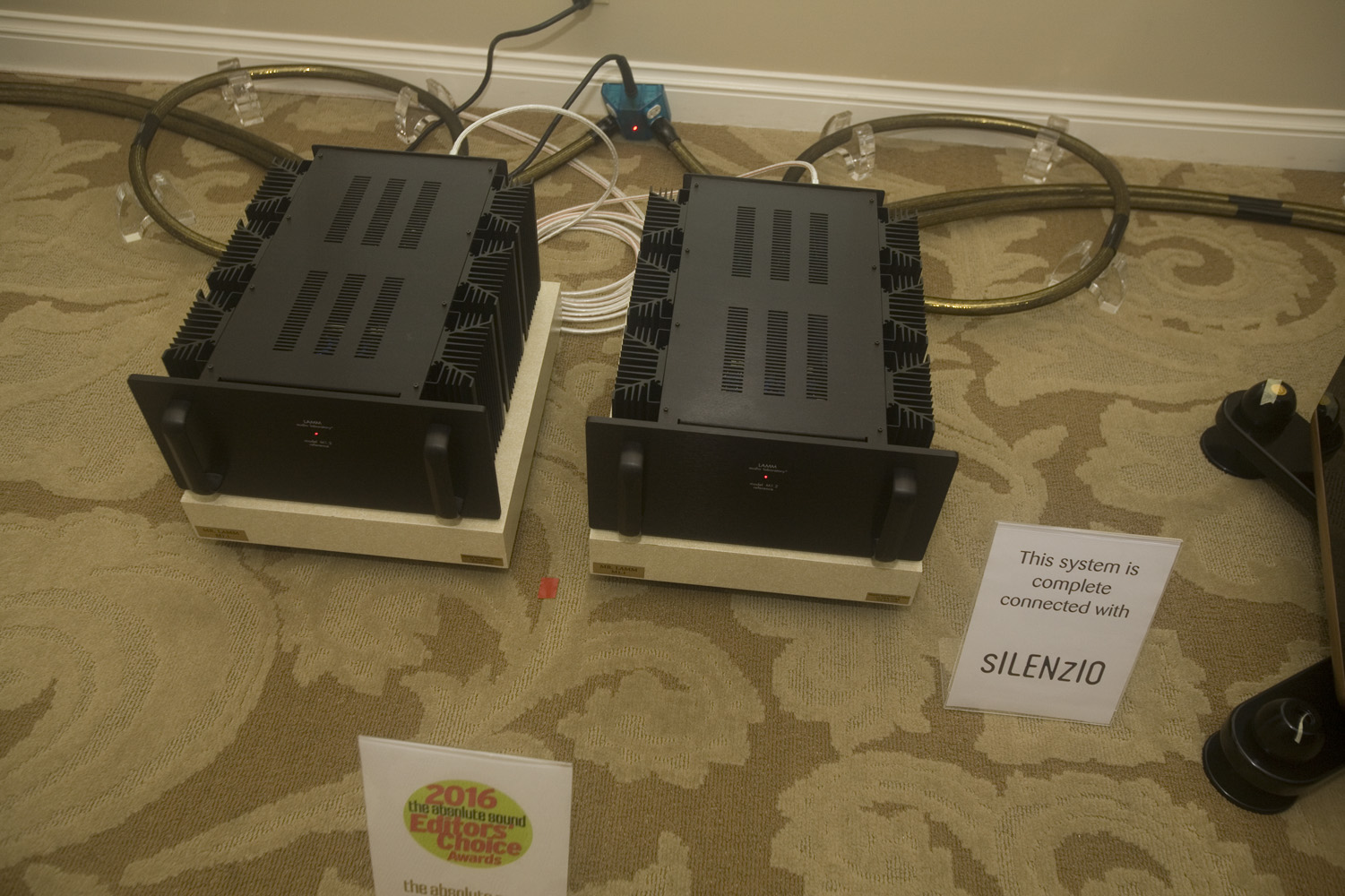
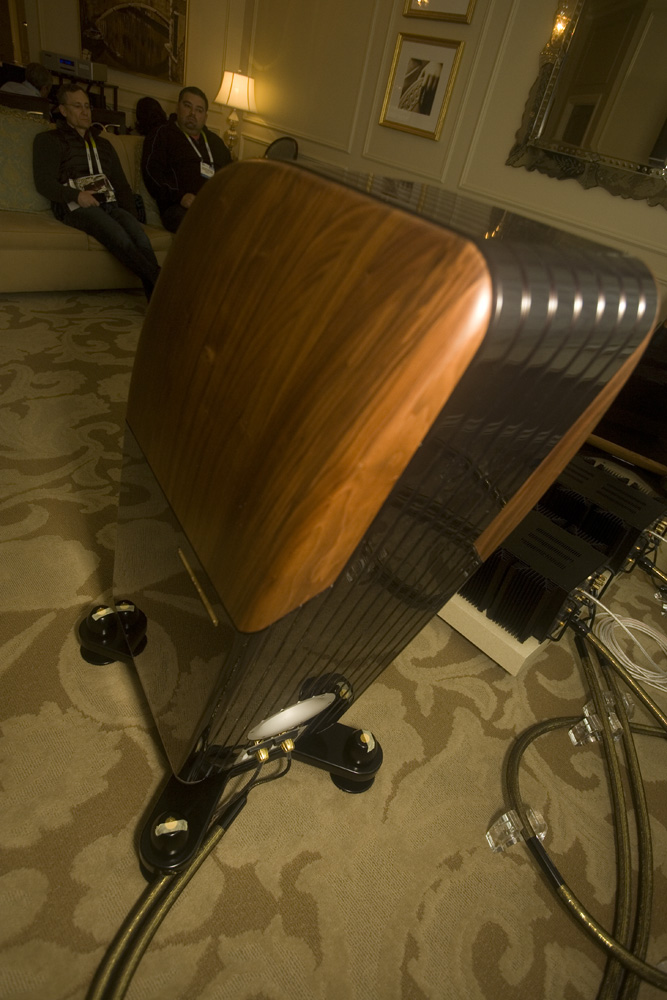
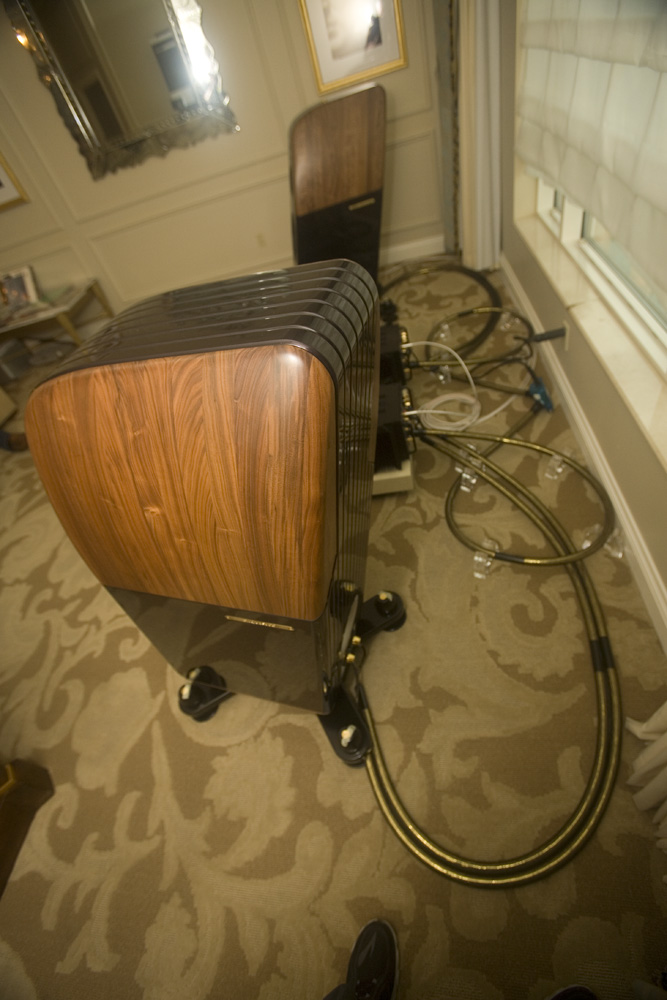
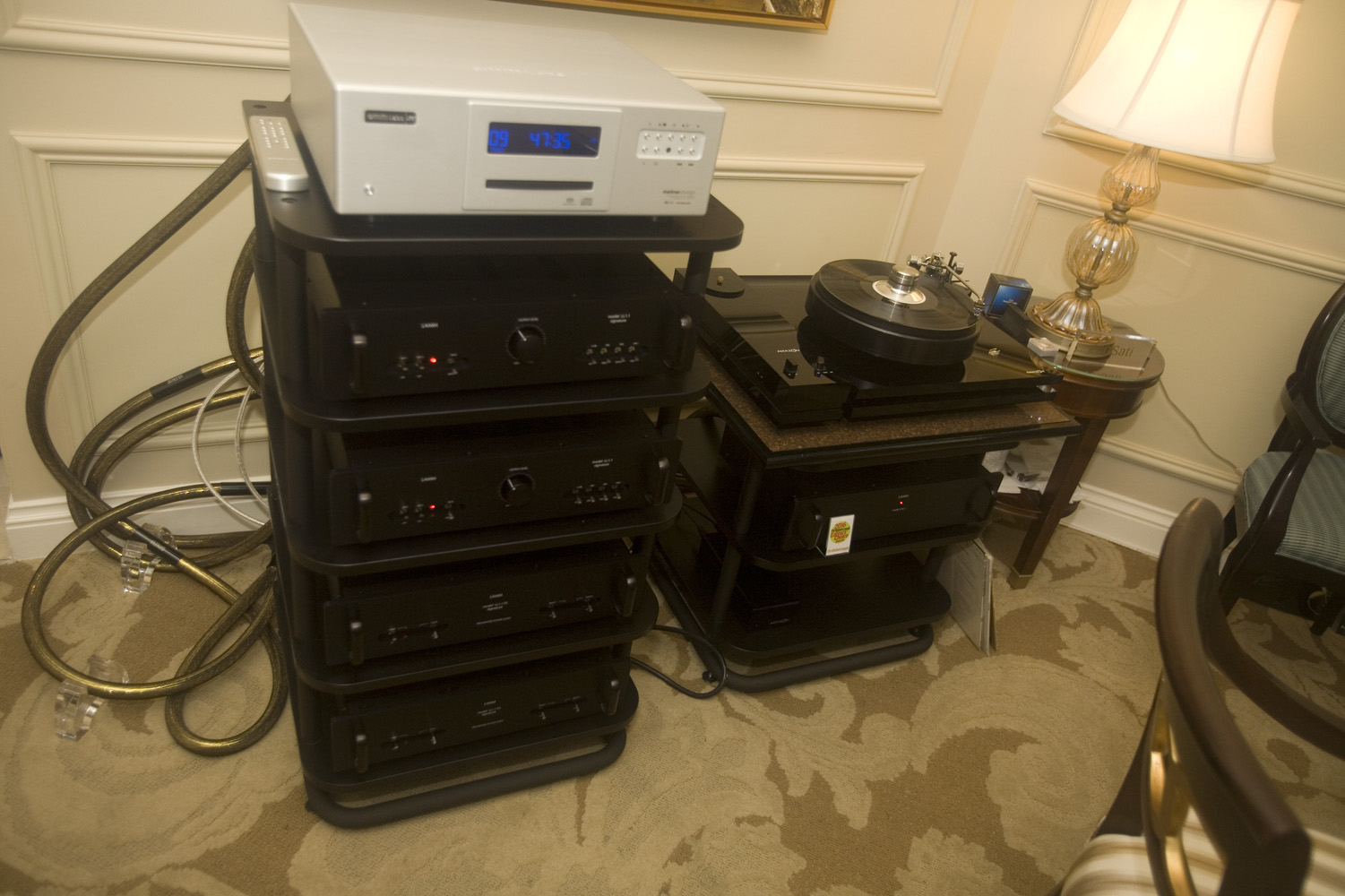
'Lamm'

Experimenting with the current systems a little

Tuesday, November 13th, 2007 by Mike

Teck, from Singapore, played a female vocals CD in our room, and likely a few lucky other rooms as well, at RMAF, and kindly and generously sent us a copy of it:

And, uh, it is surprisingly difficult to render well. The second track, specially, the singer has lotssssssss of sssssss’s in her ssssssinging that can caussssssse ssssssibliance when played back [i.e. sharp S sounds instead of delicate, sweet s sounds]. Luckily, the completely optimized system we took to the show played everything perfect, but some of our experimental systems, that otherwise play flawlessly [more or less] have difficulty here, and truth to tell, the playback in general on this CD could be better.

I think the answer will turn out to be a combination of the fact that we are playing it LOUD [what? L-O-U-D!!! Anybody else have these strange conversations when the music is loud? That usually end in “Forget it. I’ll Tell!… You!… Later!…”. “WHAAAAT!?”], the equipment is sitting very nearly right in front of the speakers, and the bass needs adjusting because the room is so large - we got used to using an integrated, and I do not think we have used solid-state on the main towers for over a year.

So we struggle, changing power cords, cleaning the CD, changing cables etc. to try and figure out what thing[s] are responsible. Everything to avoid having to move things or put a rack between the speakers [on the other hand, Neli is happy as a clam to have Mike move things, including racks, to and fro, fro and to].


System 1


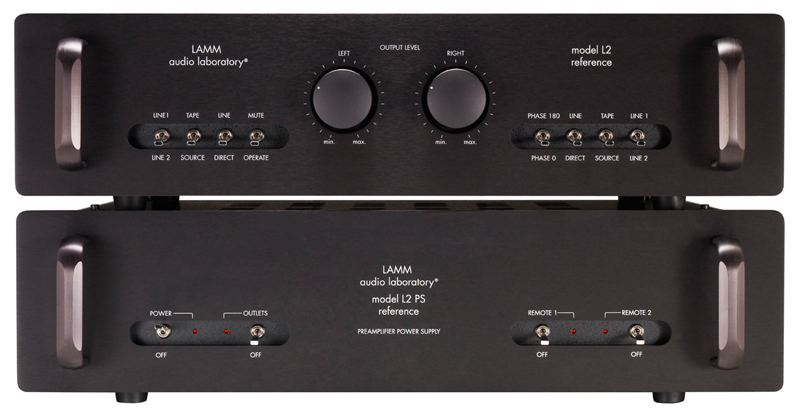
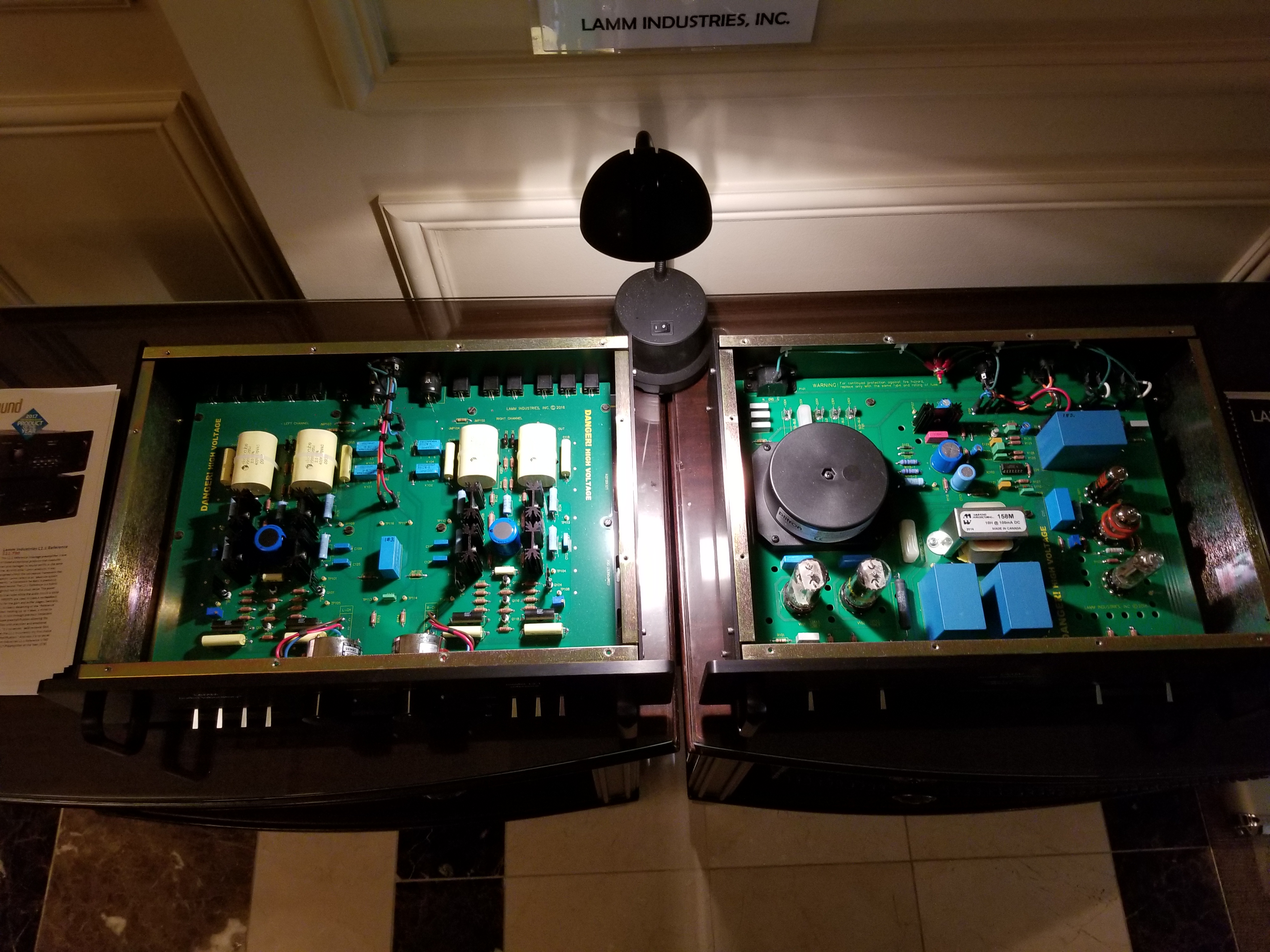
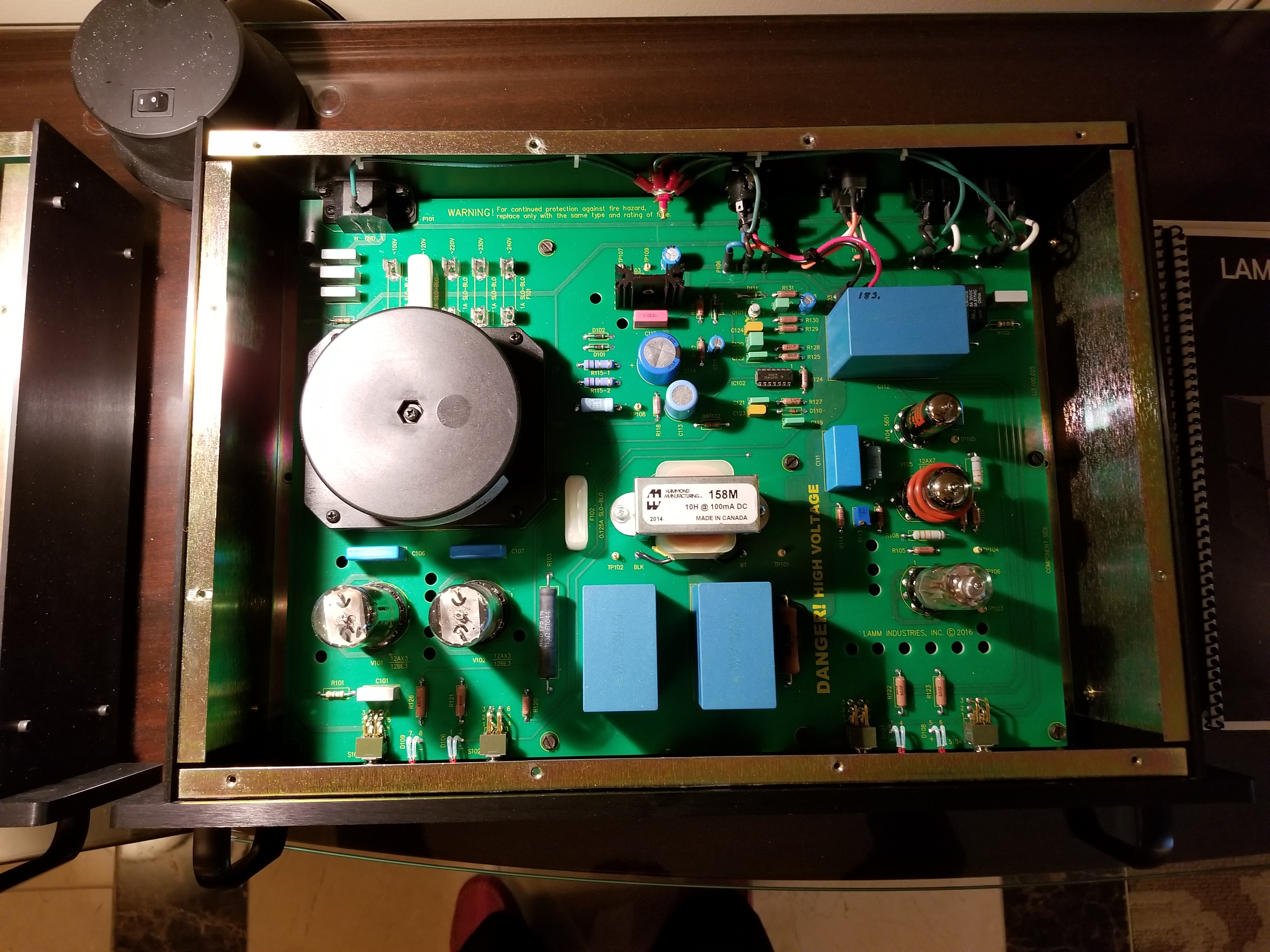
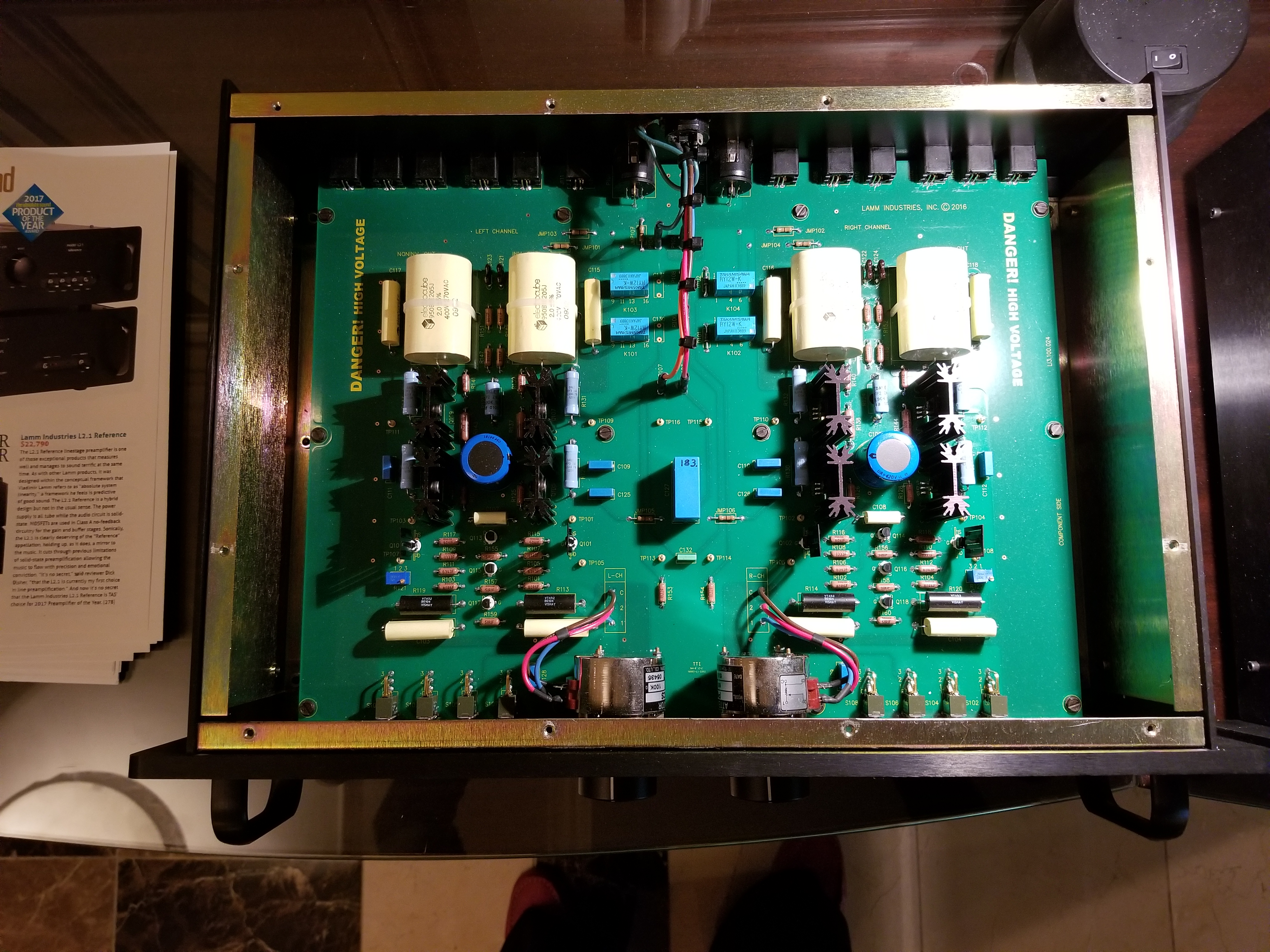
Lamm L2 linestage’s power supply


Lamm L2 linestage. Just about everything is on HRS M3 Isolation Bases.


Emm Labs CDSA CD / SACD Player.

Anyway, that is what’s happening here. The Vidar has not yet arrived so we are not burning in anything that needs to be burned in. So, we are circling the field waiting to land.


System 2


Audio Note Ongaku integrated amplifier


Audio Note DAC 4.1x Balanced


Audio Note CDT Three transport

And, yes, Teck, your other CD arrived to [Thanks SO much!]. But, uh, I accidentally left it in the Emm Labs CDSD SE which, uh, is unplugged and at the moment away from an outlet, and I need to find a power cord for it somewhere [can I use a stock $2 Belden power cord? Of Course Not :-) ] and plug it back in so I can eject the CD [See, I TOLD you all that I do this ALL THE TIME. Don’t know what it is… some kind of curse because I ‘let’ Neli clean all the CDs (and records, too) or something… :-) ]

We like the CDs. We are certainly playing them a lot. The soundtrack is a little like the Gladiator soundtrack… I mean, doesn’t it seem like soundtracks have their own genre -they’re not classical and they’re not pop. Cool depth of field though, and amazing drums.

Amplifier Shootout - Audio Note vrs. Lamm vrs. Audio Aero vrs. Audio Note

Friday, February 9th, 2007 by Mike

We held a shootout here a few days ago - $85K Audio Note Ongaku versus $22K Lamm ML1.1 versus $10K Audio Aero Capitole versus $9K Audio Note Conquest Silver. Prices rounded, so don’t quote me to Neli :-) .

The Audio Aero Prestige as serving as CD / SACD player, and sometimes as linestage as well. The Audio Note AN/E Signature loudspekaers were serving as… speakers.

So, with the disparity in pricing - it wasn’t really a shootout. More an investigation into different sounds - how the different amps sounded, given that they are indeed so very different from each other.


We finished up with the Audio Note Conquest Silver 300B amps.

We will try to describe the *differences* between the sounds, as opposed to the sounds themselves.

Going from the Audio Note U.K. Ongaku to the Lamm ML1.1.


The Ongaku and ML1.1 amps resting behind the couch after their workout during the shootout.

The sound was not as big with the Lamm, somewhat more compressed - but perhaps more even-handed because the somewhat rolled-off deep bass [which lends the deep bass a compression-like signature], because of where the speakers were located [in front of the horns, which are out of here as soon as the snow melts. If it melts.].

The Lamm sound was more laid back, the soundstage receeding somewhat, which allows one to better appreciate the music in measured doses when desired, as opposed to being transfixed unable to move for whole CDs at a time [from this description I hope people see that we like both types of soundstaging - really depends on our mood at the time].

The Lamm harmonic color was a little grayer, and the dynamics, as mentioned above, a little less exuberant. This goes in keeping with our general interpretation of the Lamm sound as being stately and sophisticated, natural and self-consistant.

This is not to say that the Ongaku is an exuberant amp either - it is actually quite balanced, unexpectedly so from my point of view, with just a little flavor from the use of the 211 tube. We still have a lot to learn about Audio Note, but it is my current impression that as you move up in the Audio Note line, things become less colored and more accurate and therefore much more revealing of the color and subtleties of the music itself, quite unlike anything else out there. This seems different to me from the brands that, as you go up their line, you get more and more improved versions of their ‘house sound’. ‘Course, you can always tube roll the amp and get just about any sound you want - but I think the point has been made.

Going from the Lamm ML1.1 to the Audio Aero Captitole amp

The Capitole was sweet in comparison with the ML1.1. More euphonic, rounder, less resolution and transparency. For some reason, about half of the people we talk to these days are conscously steering away from high-resolution sound - so this amp, with ‘just enough’ resolution, should really be on everyone’s short list. No one really knows about it, but, especially teemed with the Capitole or Prestige CD player, you can get a really wonderful, Enjoyable and slightly Sweet, sound.

Going from the Audio Aero Capitole amp to the Audio Note Conquest Silver amps


The Audio Note Conquest Silver amps in play. The Audio Aero Capitole amp behind, resting.

Easiest to compare these to the Ongaku.

Less density. By which we mean less resolution, less micro-dynamics, less macro-dynamics, less color. Just less going on. But at the same time, note by note, it was the same: the notes were where they were supposed to be, the rose and fell like they are supposed to, they were just a little thinner sounding. OK, a lot thinner sounding.

Thinner sounding isn’t exactly ‘bad’, though, There is a lightness to the music, very similar to the experience of the $11K Kharma 3.1c versus the $45K Kharma Mini Exquisite, which I think is largely a psychological, not electro-mechanical, experience that is quite pleasant and refreshing. That sometimes a ‘lighter fare’ is as enjoyable, to a listener, as the full-featured experience.

Kind of like comparing the Simpsons [the old shows which had content] with a James Bond movie. One can enjoy both. But one generally prefers, and will actually pay more money for, the Bond movie.

Well, depends on the particular Bond movie :-)

CES 2007: Day ONE

Monday, January 8th, 2007 by Mike

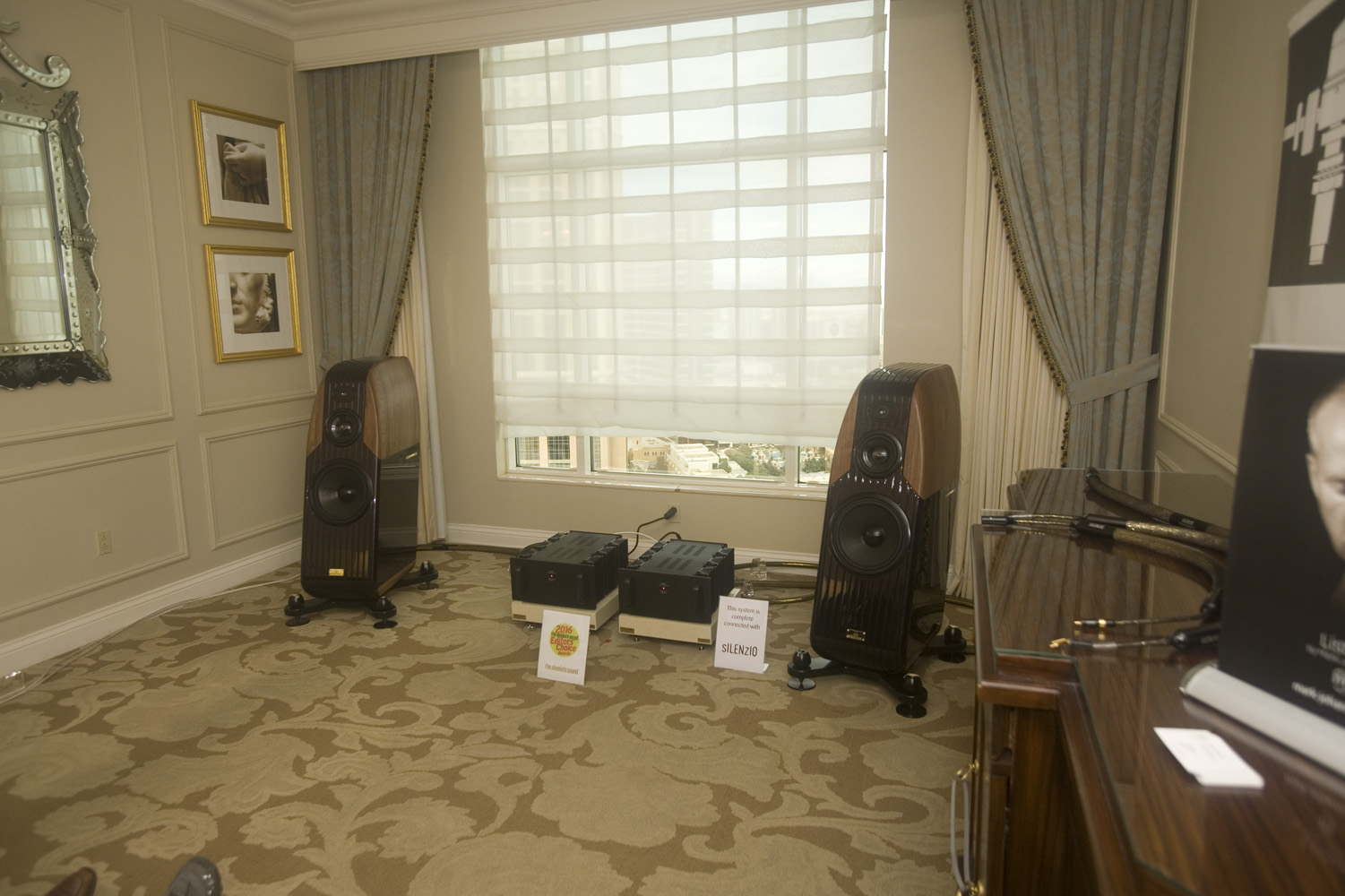
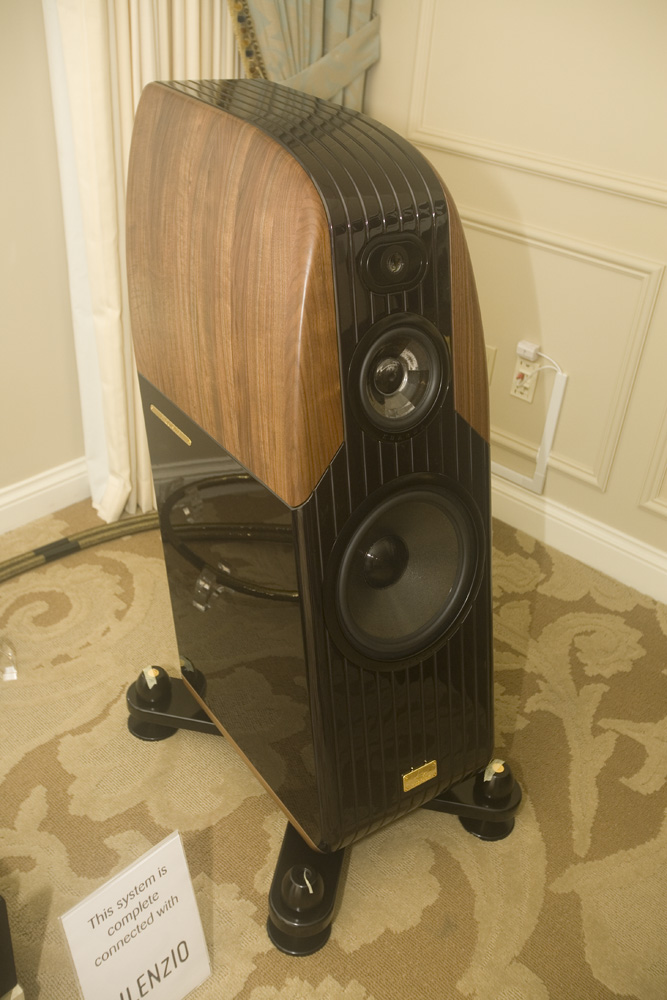
Wow. Big show. Don’t have time to uploads too many photos right now, but I’ll put a few of the Lamm ML3 up on the the DAY 1 dailies…

CES 2007 Day 1 photos

Annoucement: Lamm ML3 Signature Power Amplifier

Wednesday, December 27th, 2006 by Mike

December 26, 2006

The ML3 Signature Power Amplifier

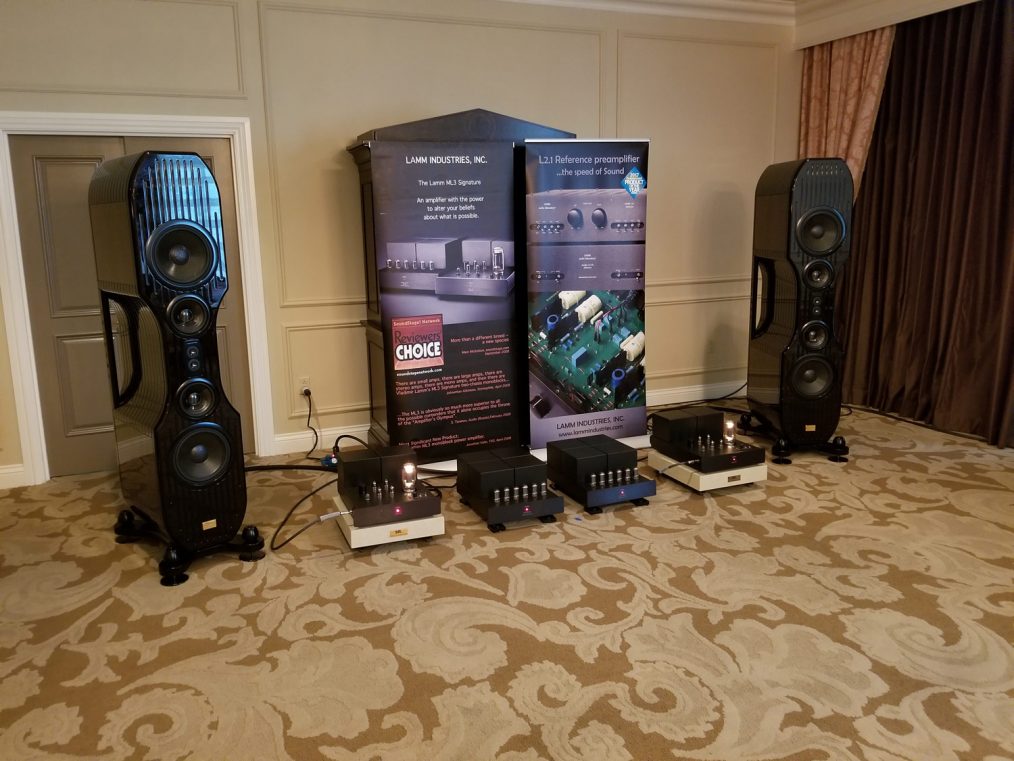
LAMM INDUSTRIES, INC. is proud to introduce its crowning achievement, the ML3 Signature power amplifier. The ML3 is a single-ended amplifier with a separate power supply utilizing a very powerful direct-heated triode GM70 (plate dissipation 125W).

The ML3 continues the fine tradition that began with the Lamm ML2 single-ended amplifier, and takes it to unimagined heights of performance attainable only now.

The ML3, along with the renowned Model ML2.1 amplifier, is practically the only single-ended amplifier on the market capable of reproducing the entire range of audio frequencies. The ML3’s midrange is beautifully rendered, along with a natural and extended bass, and unparalleled high frequency reproduction, up to now only available in our ML2, ML2.1, and ML3 models.

The ML3’s innovative circuitry enables a recreation of the original spectral balance and harmonic structure of the recorded material without loosing a strand of low-level detail or nuance. Another unique aspect of the design enables the ML3 to recreate a three-dimensional soundstage without boundaries or limitations, while maintaining an extraordinary transparency of perceived sound. The ML3 truly demonstrates what a properly designed single-ended amplifier can do.

Technical Aspects in Brief

The ML3 is a 32 Watt, no overall feedback pure class-A single-ended amplifier. It’s built on one of the most sophisticated power supplies ever used in audio, and its most prominent features are:

* Separate plate and filament transformers
* Six filter chokes
* Six rectifier tubes
* Highest quality film capacitors used in high-voltage power supply feeding the output stage
* Refined soft-start and delay circuits
* Option for turning the amp on/off controlled via Lamm preamplifiers

While the ML3 has no overall loop feedback, the amplifier features an option allowing the user to introduce small amounts of local feedback in the output stage. You can choose between two levels of feedback: NFB1 and NFB2, which differ in their levels. This allows for three feedback options: No feedback, NFB1 or NFB2.

A multi-turn trimming potentiometer, accessible through a special opening in the amplifier’s chassis, along with a set of test points, allow the user to adjust and measure the plate current of the output tube via an external voltmeter.

Absolutely unique custom-made output transformers, along with our unique output stage and sophisticated power supply, allow the ML3 to drive most real-world speakers yielding tremendous sonic impact and stability under the most dynamic conditions. Although the ML3 can drive most speakers, their full potential is best realized with high-efficiency speakers of 92dB and higher.

The design goal of the ML3 was to use best modern technology and processes in a style reminiscent of equipment from the golden age of vacuum tubes. Each amplifier is carefully constructed and handcrafted of the finest materials and world-class parts, some of which include military-graded DALE metal film resistors, PRC wirewound resistors, CADDOCK power film resistors; BOURNS multi-turn potentiometers; CORNELL DUBILIER and UNITED CHEMI-CON electrolytic capacitors, ELECTROCUBE, ROEDERSTEIN and ELCON film capacitors; HAMMOND chokes; gold-plated NEUTRIC and FISCHER connectors; military-graded low-noise long-life vacuum tubes.

Special attention was given to designing the plate and filament transformers that have no mechanical contact with either the transformer cover or the chassis, and are suspended in a special encapsulant that almost completely absorbs even residual mechanical vibrations. This plays a significant role in assuring absolutely unique clarity and micro-resolution.

Tube Complement:

* One 12AX7/ECC83
* Four 6N30P-DR / 6H30П-ДP (cyrillic)
* One GM70 / ГМ70 (cyrillic)
* Six 12AX3/12BE3

The ML3 is designed to function on AC line voltages throughout the world — 100/120/220/230/240 V — and can be internally adjusted without elaborate modifications.

Suggested retail price (preliminary): $126,290.00/pair

See you at the Venetian at CES, Suite 34-309!

Comments on Upgrade from Lamm M2.2 to Lamm ML2.1

Friday, December 1st, 2006 by Mike

This was sent to us recently by one of our favorite customers [the Lamm M2.2 is their 200 watt hybrid solid-state / tube monoblock amplifiers, the ML2.1 is their top-of-the-line 18 watt 6C33C tube-based SET monoblock amplifiers]:

Lamm M2.2 amp
“M2.2………. it is like a fairly big tall obelisk, made of metal, boxlike, powerful, straightforward, detailed, straight lined, know how to do the job and does it….. but……..

Lamm ML2.1 amp
Ml2.1 ……… Plasma blast, globular force field, expanding to the stars and defining them. Fastball of Thick juiciness. Like listening to the spacey parts of the band yes. I can see why it can be great.”

Well put, well put.

Blow-by-Blow: The Latest Marathon Audition

Tuesday, November 28th, 2006 by Mike

Thought this might be interesting …

As we mentioned previously, we setup a number of systems for the guy who is purchasing our Triolon speakers. This audition occured over a three day period.

The different sounds of the different setups are somewhat illustrative of our approach here to High-End Audio System Optmization [sorry, it looks so much more highfalutin when it is capitalized :-) ]. We started with a very good system, and slowly optimized it until it was, well, see below.

The first day I think we just played system 1 (below) and our Soundlab system, our Marten Coltrane system and our Marten Coltrane Supreme system. He had already heard Kharma speakers many times at shows, and our Audio Note system at this recent RMAF show.

He was very impressed by all the systems even though he had some (valid) concerns about the Soundlab system which was having some imaging problems on this new side of the room that we have recently put it on (we had the Adagios over there until a day earlier). Its always something that goes wrong… the walls went wrong in this case… Luckily everything else went very well.

System 1 [sorry, somehow we only got photos of about half the system setups]:

We started with the Audio Aero Prestige CD / SACD player with internal linestage running direct (no preamp) into the well-warmed up $140K Edge Electronics NL Reference ‘pyramid’ 800 watt solid-state amplifiers.We were using Nordost Valhalla interconnect and Valhalla speaker cable, Shunyata Anaconda power cords of all 4 kinds, with the Prestige sitting on a Fondato Silenzio platform and the amps sitting on Rix Rax ‘Outpost’ amp stands.

The Audio Aero adds a touch of warmth and drama and character to the tube-like big open sound of the Reference amps. The sound was big, juicy, with a very wide and very deep soundstage. All notes and dynamic swings were generated effortlessly. The downsides, if you can call it that, were that the imaging was fairly indistinct, the dynamics somewhat soft, from micro to mini to macro, and the overall resolution was good, but not great. This was as if the sound was painted with a big, gloriously colorful and fairly wet paint brush.

System 2:

A ‘minor’ change, we put the Prestige on the HRS M3 Isolation Base and Nimbuses. This is a reference system for us here on these speakers. The dynamics snapped into place and the imaging firmed up compared to the previous system setup. This system strikes a nice balance between naturalness and resolution, between a gargantuan soundstage and pin-point imaging. It is this balance that kind of keeps a listener off balance, never really believing that the system is going to continue to manage to paint such large pictures with such finness.

System 3:

System 3

Next the Edge NL Reference amps were replaced with Lamm ML1.1 90 watt push-pull amps sitting on HRS Isolation Bases with Nimbuses. We probably should have moved the big Ref amps out of the way, but they are a heavy 220 lbs, and we didn’t want to (aka plain forgot) move them then - and then later they were trapped as more and more equipment was brought up from downstairs. BTW, we do all the heavy lifting ourselves, even though every single one of our very courteous guests always offer to help - we are the hosts, they are the guests. And anyway, we need the workout… because guess who gets to carry all this stuff back downstairs? :-)

We do not run the Audio Aero directly into the Lamm very often - thinking it might be too ‘tubey’ of a sound. But it was not all that tubey at all. There was good resolution, still a nice large soundstage, good depth. It was, however, the slightest bit soft on the top and bottom. In many ways, it was very much like the Edge NL Reference amps, the Lamm ML1.1 being most like the ‘Refs of any of the demo amps here - and probably of most amps out there as well. A very good balance of resolution and naturalness and dynamics.

System 4:

As planned, we swapped in Emm Labs SE CDSD / DCC2 transport and DAC pair for the Audio Aero Prestige. The Emm labs (Meitner) was run direct into the amps using its internal linestage. Now this system is starting to do things that are hard to explain. The solid-state digital source is a natural balance to the push-pull tube amps - and it works. All the truth, the unexpurgated yet unenhanced details and resolution are provided to the Lamm ML1.1, and it is up to the amp to decide what to do with it. We trust this amp to do the right thing with that information stream - and our trust is rewarded. Now we have big, open, with enough resolution to tighten up the imaging and define the toplogoies of the soundstage, added micro-dynamics that communicates more of the subtle characteristics of the music.

System 5:

System 5

As we were talking about the sound of the Edge Electronics Signature One 400 watt monoblocks compared to the big ‘pyramids’, we just said, hey, you can hear for yourself. So the Edge amps were swapped in for the Lamm ML1.1. The amps were cold so we played a CD or two in the background as we waited the hour or so for these amps to get to 95% or so of their optimal sound [actually, a number of components were added to the system cold - and this got to be a pattern: Isert component into system. Listen casually. Wait. Listen carefully. Rinse and Repeat.]. Now, this is not a system that we play too often - the Edge Signature One amps are a very smooth and detailed sound - very much like the Meitner / Emmlabs CD / SACD player we had in the system. So the balance was likely to be, and was, a little on the very detailed but somewhat uninvolving side. The soundstage was smaller, the images more pinpoint but not as 3D-like, much more resolution and micro-dynamics, but less midi- and macro-dynamics.

At this point the Favorite was the Audio Aero Prestige CD / SACD player with internal linestasge running direct to the Edge NL Reference amps. Second was the Meitner CD / SACD transport / DAC pair running direct to the Lamm ML1.1 amps.

System 6:

System 6

Now we start bringing in the big boys, so to speak. We keep a straight face as we hook up the Lamm ML2.1 18 watt SET amps in place of the Edge Signature Ones. ‘They have to warm up’ we say (they were warm but cooled off during the Edge Sig One stopover). Hee hee hee. Bamm, the sound-stage width and depth expands to equal, if not better, that with the Edge NL Reference. Solidity, presense, dexterity, integrity, naturalness, purity - the midi-dynamics in the midrange are memorable. Note envelopes are as smooth and hypnotizingly fluid as ocean waves, as Pulitzer-prize winning as the notes coming from the Meitner.

We let this system stay up for awhile - wanting to establish this system as a milestone as we traverse further into the audition. It was now the favorite at this point. There is always this certainty that our visitors have that we do this to, I mean ‘with’ :-) , that, after this kind of Rush caused by hearing what was previously thought impossible, there is this deep subconscious questioning about why would anyone want anything better than this? Nothing can be significantly better than this, can it?

[Oops, somewhere in here we replaced the Valhalla interconnect that was running between the Meitner and the amps with Jorma Design ‘Prime’. This added another quantum step up in sound-stage definition and harmonic purity and resolution].

System 7:

The (very warm) 20 watt Audio Note Kegon SET amps are rushed upstairs to replace the Lamm ML2.1. This system, with the Meitner running direct to the Kegons, with INDRA interconnects instead of the Jorma Prime, was our primary reference system with these speakers. It is hard to describe all the things it does well, because we are SO familiar with it and we have described it so many times in the past. But, one of the most obvious differences now was the bass. It was VERY natural yet Impressive yet well-defined. These amps grip the speaker with an iron (make that Silver) fist at all frequencies, but it is most noticable in the bass, where other amps have the most difficulty.

This system was starting to pick up some ground loop hum, and so we replaced the Jorma ‘Prime’ with INDRA interconnect, correctly predicting that the WBT connectors on the Prime were picking up some nasties. The INDRA reduces the resolution and clarity and imaging somewhat, but has a purity that, in my opinion, works very well with the extreme purity of the sound of the Meitner.

At this point, there is an understanding now why we rave about these amps all the time. But, to get this sound, let us not forget the other players: the Meitner, the HRS bases, the Shunyata power cords, the INDRA and Jorma Design Prime and the Valhalla speaker cable.

But we rush to set up the next systems. Time is running out, it is the last day, and we want to spend the most amount of time with the system we think is the Most Optimized of them all…and we have a few more iterations to go…

System 8:

We add the Audio Note M10 linestage which replaces the internal linestage of the Emm Labs DAC. NOW we really have controlled bass. Never heard these speakers do this before. But before we enjoy it we have to deal with our ground loop hum, which is back again.

Do to the occasional (we hope) people who are very confused about electrical things yet get hired to do electrical inspections here in Wonderful Boulder County - the grounding of our dedicated lines are messed up. Yes, we can fix them sometime (it won’t be easy) but until then… Until then, Mike and Neli get to have a nice family discussion about cheatering (that would be me) and why not to cheat (that would be Neli) in front of our guest, and after messing some with groundwire we finally cheated and lifted the ground on the entire system.

We’ve said it before, the M10 is like having another Kegon, or maybe more like a Kegon with 40 watts instead of 20, or perahps like ‘no need to Bi-amp it, M10 it’. Everything is much more controlled, accurate, dynamic, well-formed, solid….

System 9:

Oh, wait, now we want to add back in the Jorma Design ‘Prime’ interconnect [I swear, I started getting blisters on the tip of my Switch-turning-off-and-on finger :-) ]. It goes in and replaces the Valhalla. How can the Valhalla be called muddy? It can’t. But it was, in comparision!

Bamm, off everything goes again and another Prime goes in to replace the INDRA. Another increase in resolution and harmonic integrity - but not as much, leading us to put another checkmark in the box supporting the proposition that it is the first Prime that makes the most difference.

System 10:

System 10

Bamm, Neli tells me that they all want to replace the Valhalla speaker cable now with Jorma Prime and Jorma No. 1 speaker cable (this is a tri-wired system and we only have one bi-wire Jorma Prime at this time). OK. Fine. But it is getting dark quick, so flashlight in hand, Neli and I change the speaker cables to Jorma. Not quite fast enough, we have to move a lamp over to shed some light to tell which are the red and which are the black connectors… important things like that.

Before we headed out to load up on Indian food, to let the system warm up and settle in some, it was apparent (to me, anyway, but I think I was much more interested than they were in hearing this particular change, as I have been thinking a lot about the difference in the impact on a system’s sound of the Prime interconnect versus the speaker cable) - that the sound-stage and imaging RELAXED. It felt like there was an easier and much smoother transition as the musicans, or their sound-engineers, moved things around on the stage. That, before, the soundstage was blotchy, that images jerked from place to place and clung to certain spots. Now, the soundstage was no longer constipated.Now it flowed…

This increased sense of continuity was also somewhat apparent in the dynamics as well: whereas before it seemed like there were maybe, say, 100 different ways a note could go from soft to loud (and back again) now there were 1000.

There were other improvements as well - the resultant being that the system felt whole now, having everything be wired with 100% Jorma Prime (except for the Jorma No. 1 speaker cable on the bass towers) seemed to allow the Prime’s capabilities to shine through, all the way from source to speaker.

After Indian buffet dinner (the food was kind of bland,.. how can they make bland Indian food??? How embarrasing, since we picked the place. Seems like Mike and Neli need to catch up on where the good Indian food restaurants are again.. and add a few pounds in the process I bet :-) ) we played a few songs from each of about a dozen CDs. Played it fairly loud, since it was our last night (volume set at ‘7′ for those who grok Audio Note volume controls, driving a high-gain amp on 97dB speakers :-) ). It was kick ass.

Classical music was so much more realistically laid out, both dynamics and imaging - such separation and definition, not quite at Real, of course, but there was a lot of stuff now that we didn’t know that we were missing before this [we never had the Jorma Prime combined with the M10 here before].

Played some of Lady in Satin as well, the 3D nature of her voice and the way she moved - it was much more like being in a cabaret than sitting in a livingroom.

And…

We heard this same system for a few more days after our guest left and then performed the swapping out of the front end for the Audio Note digital to see what THAT would do [see previous post].

No, we did NOT try adding analog to system 10 - creating system 11. Have to save something for next time, right? :-)

By then the M10 will be broken in (it is only 5 weeks old at this point).

And it will be the Marten Design Coltrane Supreme loudspeakers that we will use to navigate even further out into the Audiophile Gulf Stream, ….

Breaking in the Coltrane Supreme loudspeakers

Sunday, November 5th, 2006 by Mike

Oh! What hard work! Whew!

Please, no more!

Well, maybe just a little…. :-)

This is the first post with our new Category scheme - This is what we are calling “Showroom 2″ although it is really the South side of listening room #2 (it shares listening room #2 with showroom #3, which is on the North side).

The intention is that people can click on this Category (or on the photo of the room at the top of this window) and see what we, or the people who come up here for auditions, have been up to vis-a-vis each of the systems we have here.

We have a tendency - like most people who really enjoy this hobby - to keep messing around with a system until it is sounding its very best given the room it must live in and the equipment at hand. And we have a realtively large number of very high-quality, some might say extremely high-quality, equipment at hand.

There is also two of us - so, because the sound must please us both, we are unlikely to construct something that sounds great for one person and gawd-awful to everyone else.

We are also not so stuck up or pretentious [at least not yet :-) … I hope] that we don’t listen carefully to what our visitors have to say about the sound - which, more than fine tuning the sound of the systems, helps us understand whole new perspectives on what people’s different sonic priorities are. What this means is that sometimes a system here will be setup, for example, to be more in-your-face, room-pressurizing, withn the soundstage at or in front of the speakers and sometimes it will be setup to be a more laid back, 10th row, kind of presentation - and sometimes in between, based on a particular visitor’s preference. At these times this Blog will point out the type of sound we were trying to achieve - and you can match that against what you personally prefer.

[Me? I am agnostic, I personally do not care where the soundstage is - I just want the sound to be good. Often in-your-face means strident and agressive sound, and I do not like that, but it really does not have to be like this. Neli likes a little more laid back sound than I - but we both have, with the Audio Note M10, heard some great front-row-center sound].

South side of listening room two - the Marten Coltrane Supreme loudspeakers and Lamm ML2.1 amps

Speaking of which, I have been listening near field a lot on this system? Why? Who knows. I guess because that was where the chair was and I didn’t feel like moving it. For a week now.

South side of listening room two - the Marten Coltrane Supreme loudspeakers and Lamm ML2.1 amps

Rix Rax equipment rack with Walker, Audio Note digital and Lamm L2 pre
Rix Rax equipment rack with Walker turntable, Audio Note CDT3 transport and DAC 4.1x Balanced DAC and Lamm L2 preamp

South side of listening room two - the Marten Coltrane Supreme loudspeakers and Lamm ML2.1 amps
Marten Design Coltrane Supreme loudspeaker with Coltrane Supreme bass towers’ amp in background

Marten Design Coltrane Supreme loudspeaker with Lamm ML2.1 amp in background

Rear of one channel of the Marten Coltrane Supreme loudspeakers

Breaking in with a couple of classical CDs from IsoMike (thanks Ray!) on infinite repeat, and, well, you see the ports on the back of the bass towers? That is there so that the bass towers can handle VERY loud SPLs - so loud that the bass twoers cannot be harmed no matter how loud the music is played.

It is a mystery to me why people would listen to it so loud —-

So we are playing the IsoMike CDs and The Who, Who’s Next. With the Lamm L2 set on between 9 and 10 oclock (the volume starts at about 7 and we have turned it up to 1 to 2 oclock at times on different systems) the 18 watt ML2.1 -driven Coltrane Supreme system was NOT so loud that we couldn’t shout in each others ears to be heard… but…

This is of course a great CD. A great CD. Not so sure about some of the ‘extra’ tracks but a capital ‘G’ Great CD. Mastered on 1995, if I remember correctly, it also sounds pretty good sound quality wise, too… Reeeeeal good in fact. :-)

As far as breaking in - the bass towers already sound great, but the midrange ceramic drivers still need losing up, so I can only imagine that the bass towers are also going to improve over time, as well.

The 2 inch diamond midrange is spooky. Instruments and voices just ‘appear’ THERE and then slip away back into the sound stage. The whole speaker can be thought of as a supporting cast to this one driver (and maybe the lower midrange driver with the two round black spots). I guess it probably will break in more as well… what in heck will that mean I wonder? Kind of scary…

The Kharmas, the ML2.1 too, the Audio Aero Prestige, the HRS racks and their bases, the Elrod, Shunyata and Jorma Design and the rest, all here on …

Thursday, August 24th, 2006 by Mike

Picture of entire system
Picture of entire system with Kharma Mini Exquisite speakers, Lamm ML2.1 amplifiers and Audio Aero Prestige CD/SACD player on HRS M3 isolation bases and MXR equipment rack. Cabled by Nordost Valhalla and either Elrod Statement power cords or Shunyata Anaconda Alpha Helix power cords.

Picture of entire system with one Kharma Mini Exquisite in foreground

Kharma Mini Exquisite from above
Kharma Mini Exquisite from above.

Sonically, this isn’t a blow-us-away system compared to the same system with the Marten Design Coltrane speakers. It is very nice and enjoyable - but not surprisingly so. Maybe our expectations were too high. Is it wrong to be so spoiled? At what point does our addiction get so out of hand that we no longer represent the average guy or gal? Oh, you are saying we passed that point a long, long time ago? Oops.

We still have to work on the positioning - and we are planning on moving the EDGE solid-state amps over on this side of the room - they being so successful on the other side on these Mini Exquisites, and switching back and forth.

Speaking of switching back and forth….

The power cords powering the ML2.1
The power cords powering the ML2.1.

The power cords powering the ML2.1

The power cords powering the ML2.1
The power cords are the Elrod Statement III (the big ones) and the Shunyata Anadonda Helix Alpha (the red ones). The speaker cables are the Nordost Valhalla. This could be abstract art if it wasn’t so functional.

The Shunyata lends the system detail. The Elrod body and bass. If we are being picky we switch them for each song, depending on what we think will sound best. Though waiting for the Lamm amps to restart after switching power cords - waiting through their 90 second power-on cycle - is long enough for husband and wife to get a chance to talk to each other……

MXR equipment rack
TheHRS MXR equipment rack is looking a little empty. And missing the top shelf. That Audio Aero is doing source and premaplification duties - what used to take four shelves now just takes one.

Close up of MXR equipment rack top shelf missing
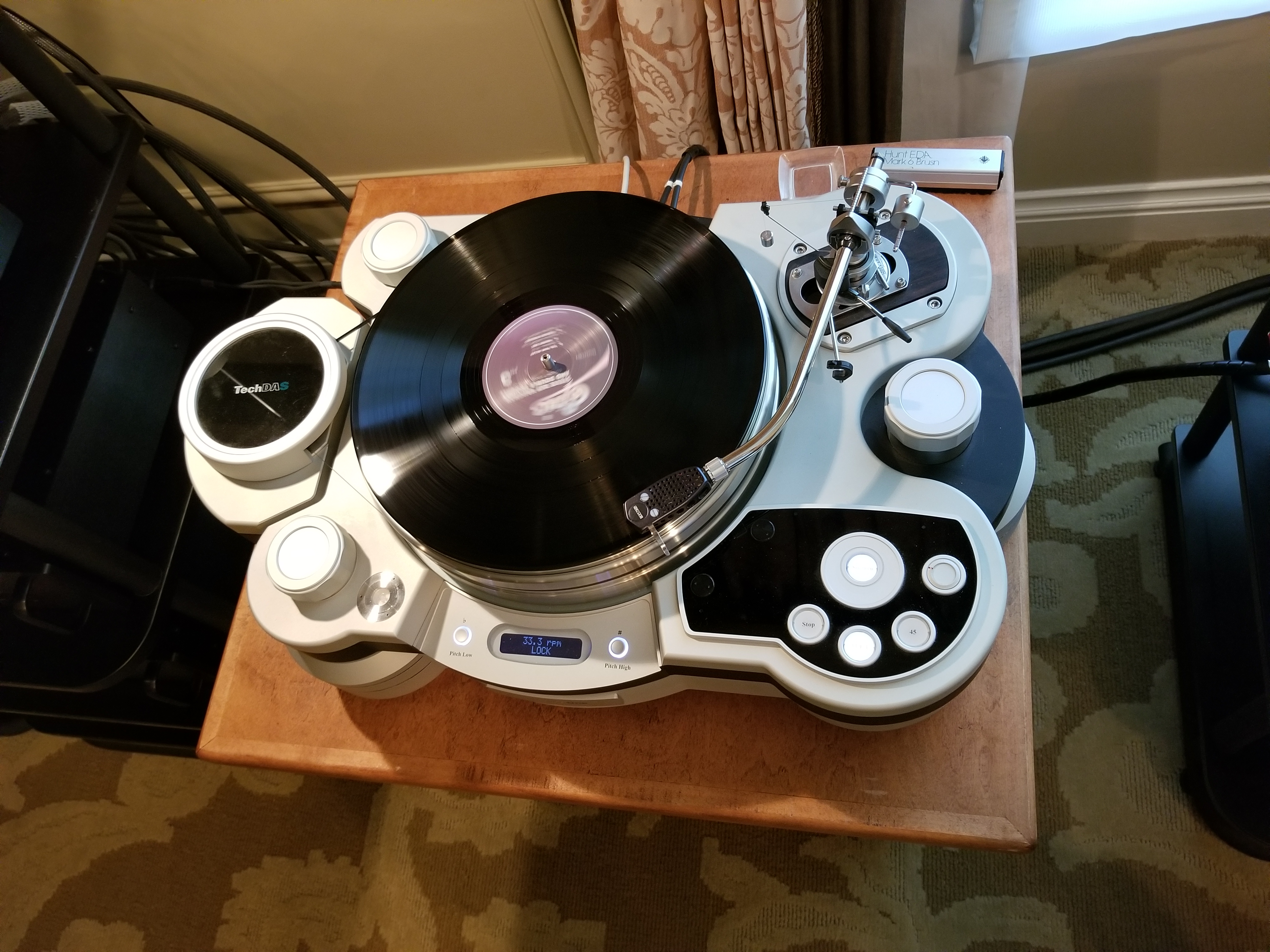
The top isolation base was out on loan - and now that it is back it is being repurposed elsewhere we are going to move the Brinkmann Balance turntable over on to the MXR equipment rack…. leaving just the Walker Proscenium Gold Signature TT on the RixRax / SoundLab system.

Jorma Prime interconnect burning in on Nordost Vidar burner
Finally, we are anxiously awaiting the conclusion of our Jorma Prime interconnect burning in on the Nordost Vidar burner.

Tick tock tick tock….

Audio Note, Lamm, Audio Aero

Wednesday, June 28th, 2006 by Mike

Audio Note AN-E/SEC Silver Signature loudspeakers, Lamm ML1.,1 amplifier, Audio Aero Prestige CD / SACD player in listening room #3
[Audio Note AN-E/SEC Silver Signature loudspeakers, Lamm ML1.,1 amplifier, Audio Aero Prestige CD / SACD player in listening room #3]

What a nice system. Works great in this room - deeply enjoyable, great PRaT, emotion, realistic and well-articulated voices…. we like it!

And everyone else so far likes it too :-)

Audio Note AN-E/SEC Silver Signature loudspeakers, Lamm ML1.,1 amplifier, Audio Aero Prestige CD / SACD player in listening room #3

OK, we have an audition this evening - now! - so we’ll have to post more on this later….

Kharma Mini Exquisites and Lamm ML2.1

Saturday, June 24th, 2006 by Mike

Kharma Mini Exquisites on Lamm ML2.1 system

We just got this going. Still doing radical repositionings (i.e. we are moving the speaker a whole 12 inches every time we adjust the placement).

It does certainly seem to have enough SPLs to fill our 15 foot by 25 foot listening room #2.

Kharma Mini Exquisites on Lamm ML2.1 system

Stay tuned….! :-)