Nordost VIDAR Cable Burn-in Device

Nordost Reference Dealers, like us happy folks at Audio Federation, now have another tool that will make sure that the cables their customers receive now sound even more better, yes, more better, than the competition than they already did before. And what a monster, er, make that kick-ass tool it is.
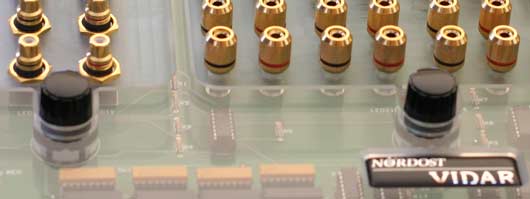
The Nordost VIDAR

Physically the unit is about 9.5 inches by 17 inches and weighs, I don’t know, say about 10 lbs.

What does it do? And how does it do it?

What it does, using 44 amplifiers, is:

1. Neutralizes spurious charges that build up around the cables and its insulation.

2. Conditions the conductor core, which changes the way signals pass through the metal using wide-band sonics

3. Conditions the surface of the conductors using ultrasonics
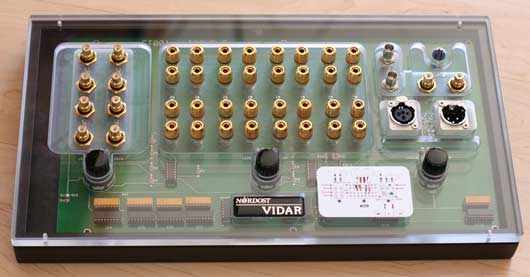
The Nordost VIDAR

How does it do it?

The VIDAR “uses a proprietary combination of composite and complex signals to condition the cable.” I bet you could have probably guessed that part.

The process involves ultra-low frequencies (to condition the core of the conductor), ultra-high frequencies (to condition the surface of the conductor), bouncing the signal ping-pong fashionup and down the length of the cable. The manual then goes on to describe how the VIDAR conditions the rest of the conductor as well as the dielectric area above the conductor.
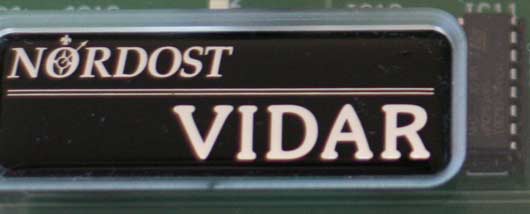
The Nordost VIDAR

Does it work?

Don’t know yet. It was very cold when it got here so applying power anytime soon was out of the question.
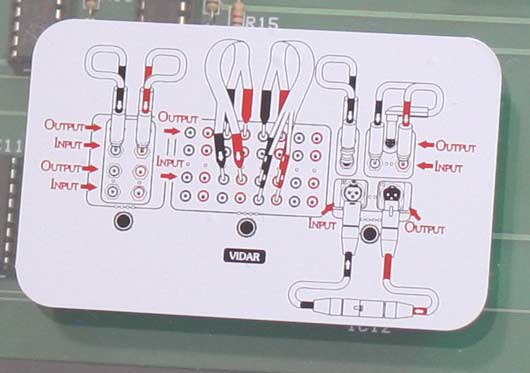
The Nordost VIDAR how-to-use diagram

But sometime…. we really should do some listening tests; perhaps one interconnect brand new, and another brand new but burned-in / broken-in / conditioned.

Our general experience has been we have never experienced any deleterious effects from burning in anything, and burning in does seem to add some predictability to the sonics, taking some of the edge off that seems to be occaisionally heard with a brand new cable sometimes… [sometimes we are in too much of a hurry to hear a cable and wham bamm out of the packaging and into the system it goes – so we do sometimes experience what un-burned-in cables sound like 🙂 ].

In any case, it at least looks cool – and it is heavy enough that the cables won’t tip it over. About 95% of the time our customers do want their cables burned-in before we send them out – and we are always happy to do so.
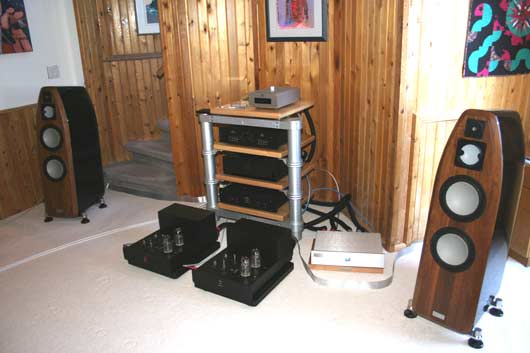
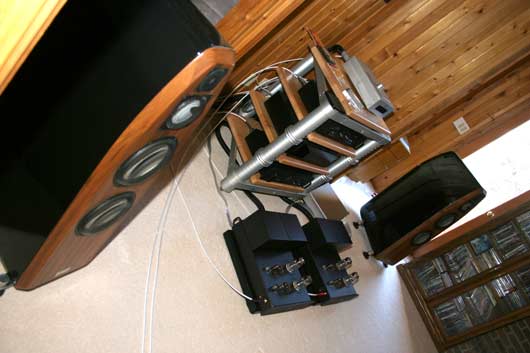
Where No Low Powered Amps Have Gone Before

I really like the low-powered Lamm ML2.1 18 watt SET amps on the Marten Design Coltrane 89dB sensitive full-range speakers.

The Lamm ML2.1 on the Marten Coltrane speakers
Coltrane speakers, ML2.1 amps, Lamm L2 preamp, Audio Note CDT2 and DAC 4.1x Balanced, Nordost Thor and Valhalla cables, Shunyata power cords

I really liked the Audio Aero Prestige 40 watt amps and the Audio Note Kegon 22 watt amps on the Coltranes before that.

No, they don’t generate that adrenaline rush of a really loud presentation with chest thumping bass.

The Coltranes can do this with the right amplification. And it is really fun. In a Homeresque Whoo Hoo! kind of way.

But the little tube amps on these speakers can hold me…..

SPELLBOUNDDDDDDDDDDDDDDDDDDDD

The little amps are able to grip the speakers pretty darn well. They also show off immense amounts of harmonic detail. etc. etc. etc. etc. etc.etc. etc. etc. etc. etc.etc. etc. etc. etc. etc.

But it is not about all this analytical crap at all.

It is all, everything, completely, about the fact that the …Sound… Grips… Me.

The Lamm ML2.1 on the Marten Coltrane speakers

Yeah, It helps that the speaker has a very high resolution, a speaker with all ceramic drivers and diamond tweeters has a tendency to do this. It helps that the speakers are full range, so that whatever bass the amps put out, the listener gets to hear. And they put out a lot of bass – make no mistake – but it is analog bass, like bass in the real world, and not electronic bass (which some ever larger percentage of our music these days likes to use and here is where the little tube amps on hard to drive speakers really do take a back seat to solidstate amps).

But this is not about how the speaker or system sounds.

It is not.

This is about how the sounds affects the listener.

In the end why should I care about the sound, beyond a certain minimum standard, any more than I care about the minute contruction details of the chair I sit in, or the the type of weaving and glue the carpet underneath my feat uses? What we CARE about REALLY is how comfortable the chair is; about how pleasant the carpet is to look at and feel underneath our feet.

What if all reviews and all show reports paid attention to nothing except how the sounds …made …them …feel.

I bet the Stereophile list of Class A components would look a lot different than they do now.

A funny thing happened on planet Abraxas

The first track on Santana’s Abraxus, “Singing Winds, Crying Beasts”, is one of our test tracks.

This track has revealed some supposedly top-flight systems to be incapable of managing the etheral ‘sound angels’ flying in and out and around the soundstage.

Abraxas cover photo

While listening to the Marten Design Coltrane Supremes I was struck with the a very interesting, some might say bizarre, 3D impression of some of the notes in this song. Now, this happens to me a lot when I am falling asleep, Jazz and Classical music seems to not be ‘heard’ anymore but instead transformed into moving, interlocking 3D soundscapes that I fly around in.

Hey, those white coated fellas can just stay where they are, thank you anyway.

But in the Marten Design room at CES, I was awake! I mean it WAS the last day of the show and all, but seriously….

Triolons
O.K. First I will describe what I usually see when I hear the sounds, in this case, the tiny bells that kind of fade in and out at various places in the soundstage during this song, while listening to the Acapella Audio Arts Triolon Excalibur speakers.

What I see is this:

It is right after a fresh snow, and it is very cold so the snow is not sticking to itself or anything else, it is very fluffy but not so fluffy that it does not have a good ratio of water to size. The sun has come out and is shining on a large number of very tall pine trees. A gentle breeze comes up and sends a number of snow flakes dancing, as they are wont to do, in all directions: up down swirling bouncing gliding…As some of the 100s of flakes hit the rays of the sun that are penetrating through the bows of the trees, the flakes ‘light up’, temporarily, in a prismatic flash of dozens of pure colors alternating with pure white snowflakeshine, before they are again returned to invisiblity as they reenter the shadows to be replaced by a 100 others. These flakes are small, about 1/2 inch or smaller.

These sparkling, flashing swirling colors popping in and out of existance is what I ‘see’ when hearing these bells. This more or less seems like a normal kind of thing to ‘see’, to me, and corresponds pretty well to the ‘type’ of the sound. To me.

Supremes
But. The Coltrane Supremes….

What I ‘saw’ was weird, man.

What I saw were these aluminum things shaped like Cheeto corn chips, in kind of an unpolished silver metal color varying between 1/2 and about 2 inches long and about, I guess, 1/8 inch thick. They kind of faded into existance, moved a little bit closer then a little bit away from me, rotating a perhaps up to 45% during this time period, before they faded out again. There was a gentle diffuse white light playing on these ‘bell chips’.

I cannot let myself beleive that the resolution was so good in that room that I was ‘seeing’ the sides of the bells as the overall sound outlined their shapes as it bounced off them and into the microphone. I mean, SACD has a lot of detail, but this is crazy.

Anyway, I wonder if other people sometimes see music as ‘things’.

And I also wonder if sometimes they also experience visual musical shapes that sometimes come unbidden and are shockingly different from what they normally ‘see’. While they are awake.