
The KHARMA Mini EXQUISITES: THE EXTENDED SHOW REVIEW

This CES 2006 room review was added after the report had been published and so is available here as well.

The Kharma mini-Exquisites – like the Kharma 3.2 but with a diamond tweeter and made to look a lot like its bigger brother, the midi-Exquisites. Driven by the small Kharma amps and MBL electronics with Kubala-Sosna cables.
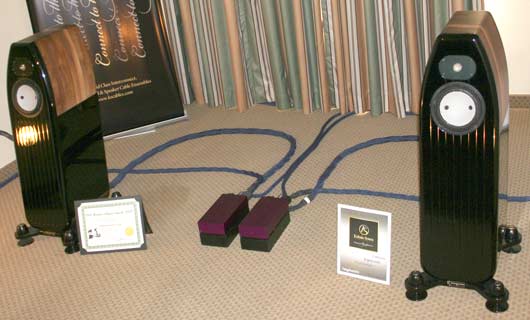
The Kharma room
The Kharma Mini Exquisite room at CES 2006

Very engaging, very musical in that classic, ‘what we want music to sound like this’ fashion. Not so much a ‘you are there’ presentation like the Marten Coltrane Supremes – more like a ‘you are alive and feel good about it’ kind of thing. I really loved the sound in this room – for a small scale system it really does ‘it’ for me.

We described the sound of the Midi Exquisites driven by Lamm amplification at the Home Entertainment New York show in May, HE2005, as being almost drug-like, like a magnetic force it tried to suck you into the music, and, if you let it do this, if you gave in to it, there was a rush of feeling and emotion that swept one away, flying with the music.

The ASR amps on the Midi Exquisites, at this show, did not have the same effect, on me anyway, for whatever reason, but the Mini Exquisites…now they had an interesting effect, though somewhat different, from my perspective. Instead of having to consciously ‘let it’ do its magic, the magic just ‘was’. And whereas the ‘magic’ was thick and dense, like a hot summer night with the Midi Exquisites / Lamm system, the Mini Exquisites were light and airy, like a sunny Spring day.

The Mini’s magic was less intense, but more accessible. Perhaps this was in some part attributable to the better support the Mini had for an audiophile-quality presentation compared to the Midi system – I was able to relax more because the Mini presentation was more balanced and more realistic – albeit at a smaller scale.

Lots of detail, stable imaging, good separation, a rather narrow soundstage which we blamed on the room, good dynamics, and bass was scaled nicely to the room. Based on our two, admittedly short auditions, we think these are a slam-dunk, you are going to be so happy, upgrade for people who have the similarly sized Kharma 3.2’s and have had the money for the bigger Kharmas, but not the room.

In fact, I have a sneaky suspicion that the little 2-way 3.2s may have been the best speaker, for my tastes, of any in the amazing Kharma lineup of much more expensive speakers – and that now I have found a new ‘best’ speaker, the Mini, also a 2-way, with more of the Kharma magic and more of the audiophile attributes that make the music both more realistic and enjoyable.

The associated equipment is interesting: warm, smooth, and somewhat detailed MBL into a small (sized anyway) detailed solid state amp. The system was quite detailed sounding and engaging. It would be interesting to put these speakers on something more conventional, like Lamm amps and Meitner digital. THEN, with this cross-section of equipment, we could perhaps pinpoint the location in paradise these speakers come from – or whether, after all, they are from planet earth like most other speakers.

Oops, being a little overly effusive, I am. Time to turn Effusive menu option to OFF.

Only problem is the price: $45K. At this price it is going up against the similarly-priced Wilson Maxx II, Acapella Violon, Marten Coltrane, Avalon Eidolon, and Audio Note speakers.

Let’s discuss the competition some.
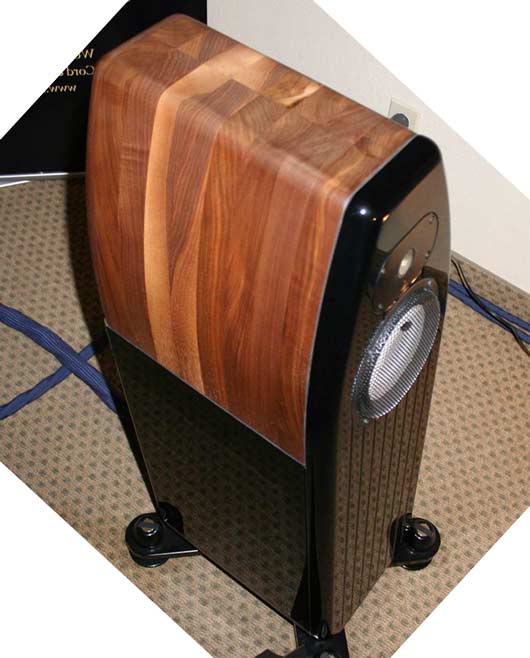
The Kharma room
The Mini Exquisites are for small to medium sized spaces for people who want engaging and startlingly emotional and detailed renditions at the expense of having less detail in the low bass.
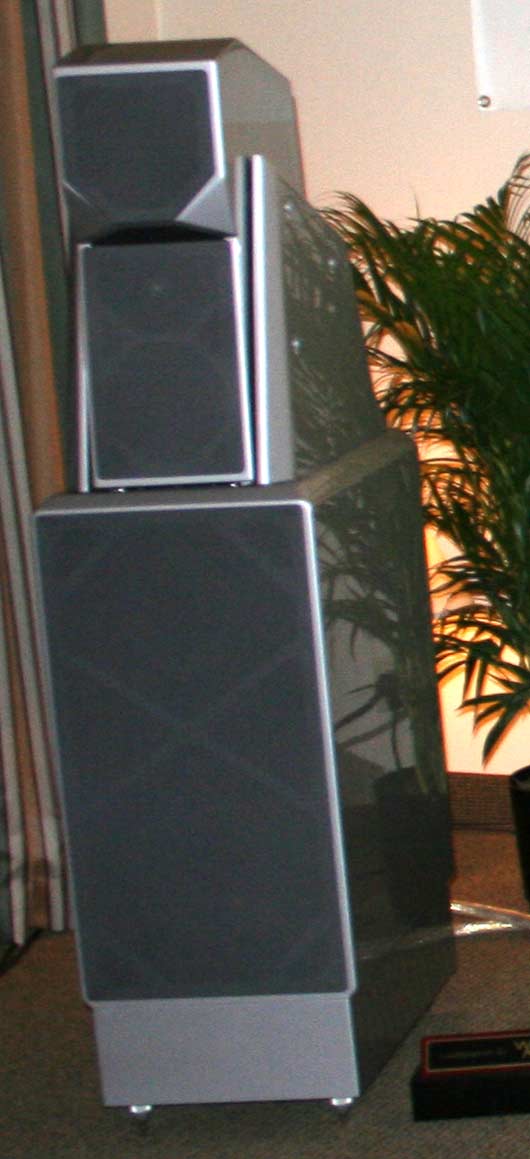
The Lamm room
The Wilson Maxx 2 is for larger spaces, and for people who want an impressive sound: large scale soundstages, midrange and bass details, and dynamics at the expense of an almost complete lack of emotional capability and some unruly behaviors like drivability and an overly enthusiastic treble / upper midrange.
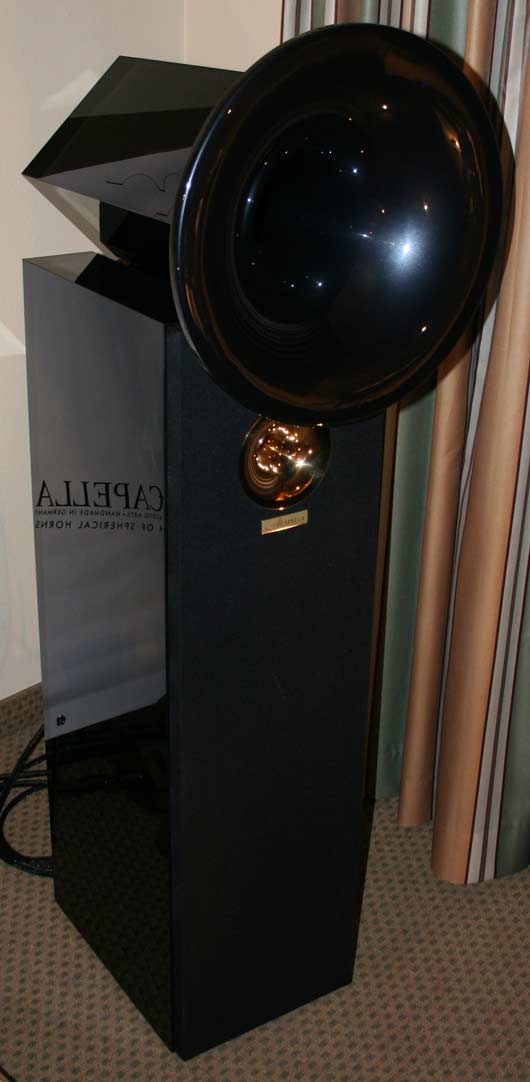
The Acapella room
The Acapella* Violon is also for larger spaces and for people who like a very natural musical realism and large engrossing soundstages at the expense of some bottom end slam.
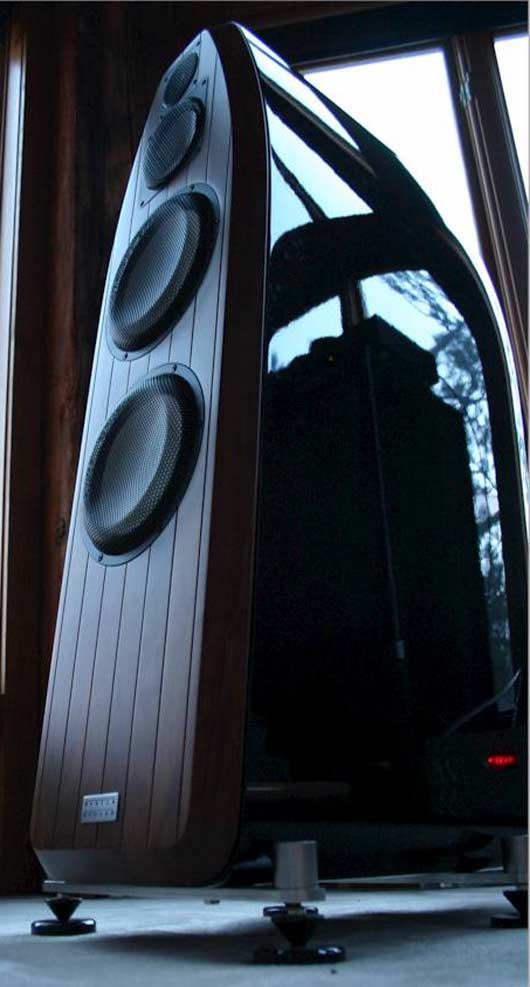

The Marten Design* Coltrane speakers are for people who like a very accurate and realistic presentation, at the expense of not having a big and open type of sound.
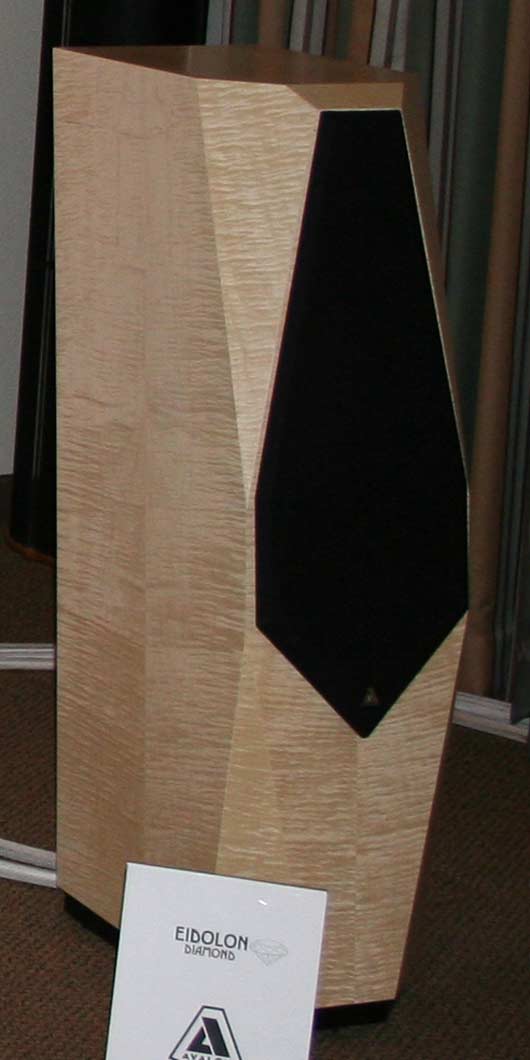
The Argento room
The Avalon Eidolon Diamond is also for bigger spaces and people who like emotional yet dynamic presentations at the expensive of deep bass control and drivability
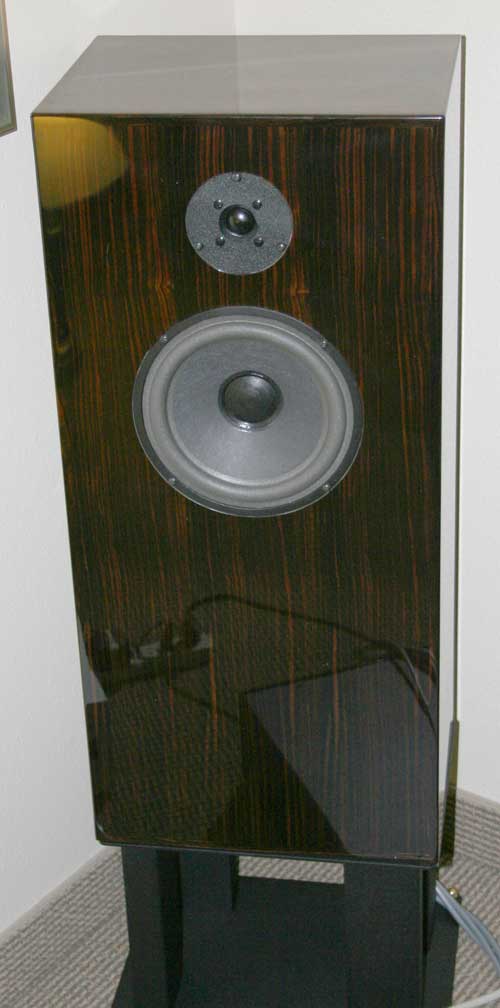
The Audio Note U.K. room
The Audio Note* U.K. AN-E SEC Signature is for smaller spaces, like the Mini, and for people who want very dynamic and exciting and harmonically rich and detailed presentations, supplied by the necessary Audio Note electronics upstream, at the expense of looking at a box.

Looking at this run down – it seems that there is indeed a place for a $45K 2-way speaker, as much as this price for a relatively small speaker may make us uncomfortable. And that place is for people with relatively small rooms who still want one of the best, no compromise, musical experiences that money can buy.

The only alternative, from the perspective of this quick survey, is the Audio Note speaker, (though the Coltrane speakers are known to work very well providing a full-range experience in as small a room as 12.5 x 16 feet) and it is also an expensive 2-way speaker – albeit one that can be driven by that amazingly pure first watt of a small SET amplifier – and it does not quite have the visual presence and beauty of the Mini, but then few speakers do.
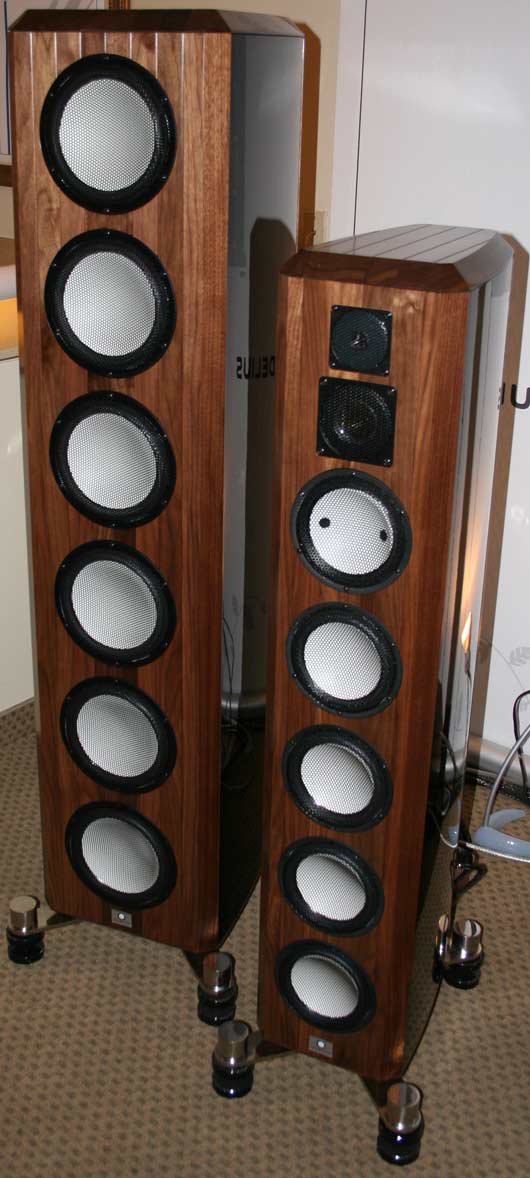

The COLTRANE SUPREMES : THE EXTENDED SHOW REVIEW

This CES 2006 room review was added after the report had been published and so is available here as well.

We spent the end of the show listening to the Marten Design* Coltrane Supreme speakers, with Bladelius electronics, Jorma Design* cables and the Power Wing power conditioner.

This system re-created the recording venue nearly as well as the Acapella Triolons here at the Audio Federation, on a smaller scale but with more resolution. Nothing else comes close in our experience to this kind of feat. Everything else creates this simulacrum, this hoax, which requires you to forcibly suspend belief to imagine that there are real ‘musicians’ out there.

On the Triolons, you don’t have to do this nearly as much, and this leaves our poor overtaxed brains much more free to ponder the quality of the musicianship, the score, the soundboard engineering, the art, the spirit, the love, the meaning of it all. To see much, much deeper into music’s other dimensions than just the physical dimension of vibrating compression waves moving through air.

This difference has had a unexpectedly intense emotional impact on our perspective of what music is, and on our lives as a whole. Seriously, this just isn’t a fucking stereo anymore.

The Coltrane Supremes gave us a taste of this. We would love to have them here and put our favorite electronics on them – and see just how far we could push them. To see just how far they could take us.

Picture from the show
One channel of the 2-channel system at the show

The Swedish Statement room presented a sonic experience that was incredibly true, but not in that in-your-face style that so many large, high-end speakers do these days. It make take a few minutes for a listener to relax and realize that the music here is not a parody: it is not pumping the bass dynamics in your face to impress, not spotlighting midrange detail to distract from a uneven frequency response (these speakers are +/- 1.5 dB up and down the scale). All aspects of the performance, EVERYTHING is absolutely top-notch in quality, and EVERYTHING is treated fairly, nothing has more tone, more jump factor, more warmth, more presence, sharper images, more stability in the soundstage, than anything else.

To be clear: very, very few speakers in the world are able to do this. I would say that just about none of them even try. They try to make something that sounds pretty damn good, pat themselves on the back, and go home.

So here you have a sonic presentation that sounds and quiets and quickens and slows just like it is supposed to, just like what our brains have been wired to expect and treat as real for millions of years. What does this do for the listening experience? It allows us to relax many of our layers of defenses and buffers and filters and shields we have built up around our listening processes to both protect us (from physical damage, from harmful and socially unacceptable psychological reactions, from headaches, from who knows what else) and to interpret for us what we are hearing.

When was the last time you heard a piano and had to think ‘that is a piano’. I challenge the listener to hear a piano on a stereo without thinking ‘that is a piano’ AFTER considerable, (and lengthy, taking perhaps up to 1/2 second, causing much of the music to be lost while we are trying to determine ‘just what the hell was that note, anyway?’) mental calculations and interpretations.

These mental gymnastics often consist of a little voice in our head that narrates a process that goes something like “that was a single note, so it has to be a guitar, piano, harp, or some kind of electronic effect”. Then we rule out things: “I didn’t hear a pluck (assuming the system is capable of rendering such a thing, stick in probability factor here that there was, in fact, a pluck), so it is not a guitar or harp. It wasn’t an open ended kind of decay, so it might be an electronic keyboard, but was there an associated sound of the echoes in the piano body? Hmmmmm… that was awhile ago now, lets see if I can pull it from the very short term aural memory…” Oops, song is over already.

The solution for most people to this dilemma, of not being able to tell what they are listening to in real-time, is to not even care. They enjoy the tune and the bombast, and do not care that they do not, and cannot, hear or understand what the musicians are actually doing. There is absolutely nothing wrong with this. You can still groove to the tune, tap to the beat, and get a smile on.

Ginevra de' Benci  - National Gallery of Art, Washington, DC

But if you, personally, think there is a difference between a snapshot of a woman’s face and a painting by Leonardo da Vinci (if you have ever seen a Leonardo painting in person, you know exactly what I mean),

if you personally want to experience the art and the majesty, the talent and the skill and the message and the emotion and the awesome delicacies and complexities of the human condition as communicated by the musicians to listeners just like you throughout the ages, then perhaps a system like this is for you.

WHY WE LIKE WHAT WE LIKE – THE SEQUEL

I think what people often want to know is the details about why we like one thing and not another.

In our report we say we do not like a particular line of amps because the sound it generates is compressed and lacks air and micro-dynamics and a sense of rhythm.

I suppose you may ask: Don’t all amps have similar problems? If it is so bad, then why oh why is it so expensive? My dealership says they sell a ton of them, if they are so bad, why do so many people buy them? The print media say they love their products and gives them ephemeral awards periodically – don’t they see and hear everything – why wouldn’t they know if it was good or not?

I will try to answer these hard questions, though to some degree the real answer to most of these questions is that people in general are not logical and often do not make the wisest or most enjoyable choices in life. Just look around when you are out driving at all the different models of cars people are buying – many of which are known to be pretty darn poor examples of engineering and safety and are really unpleasent to drive.

Don’t all amps have similar problems? The corollary is: there are always tradeoffs when you can’t buy the best, aren’t this amp’s tradeoffs valid?

No, all amps do not have similar problems. Well, yes, they do, but not in this magnitude, they are not this gross. They do not stray from the Path such a large distance. And, yes, these better amps exist, even at this price point. These other amps are just not carried by your dealer, or are not hooked up at your dealer because they are not as impressive for the customer who spends only 20 minutes to a few hours listening to a system before buying.

If it is so bad, then why oh why is it so expensive?

One reason is that, in the set of all amps that are designed to impress a customer during short listening sessions – amps that are priced less are worse and amps that are priced more are better. Dealers have a tendency to carry things that sell well. Things sell well that have good marketing and a good supply chain. This costs money. But let’s be fair, construction, materials, warehousing, offices, parts aquisition, design, all cost money. There are vrey few people in this industry getting rich.

My dealership says they sell a ton of them, if they are so bad, why do so many people buy them?

The customer who spends only a small amount of time listening to a system before buying, often with few comparisons available at the given price point, is likely to be impressed by IMPRESSIVE systems. A highly musical and realistic system will be nice and relaxing but a LOUD and agressive system with oodles of bass will often be an obvious improvement over their smaller system at home. And there will be little doubt in the customer’s mind that their (male) friends, who also will not be listening to the system overly long, will also approve of the purchuse. They in fact, may go out and based on their short yet oh so impressive listening session at their friends house, buy a set of those amps for themsleves. In this way the systems-that-are-unpleasant-to-listen-to-for-extended-periods virus spreads. This is true of other consumer products as well: it is well known that speakers that sound brighter sell better in showrooms, as do video screens that are overly bright and colorful.

The print media say they love this company’s products and gives them ephemeral awards periodically – don’t they see and hear everything – why wouldn’t they know if it was good or not?

Well, for one, most reviewer’s systems suck. The average audiophile often has as good of sounding equipment as the average reviewer. Putting a component into one of their systems, often a balancing act of bright vrs. dull, dynamic vrs.compressed components, is asking the component to particpate in this balancing act. And if the component is not ‘bright’ like the component it replaced, or compressed, like the component it replaced in the system, then the reviewer will not like it. And, realisitically, in systems like this they will not even hear the component, masked as it is by the problems in their other components.

For another one, most reviewer’s rooms suck. Well, that again make them like the rest of us.

Reviewers are also nice people, they know the manufacturers personally. It is really, really hard to say something negative about a product a friend is involved with. It makes you feel like a shit (and I should know. The only counter to this is the forlorn faces and extreme distress of the really, really upset people who save and scrimp and finally buy something that they really can’t afford, only to come to find that it sounds like hell, even though the industry and net hype led them to belive otherwise).

And finally, the real answer is: The industry lives on Hype. All consumer industries do. It is what keeps the industry (magazines, manufactureres, dealers, forums) alive between innovations.

So the short answer is: no, they do not know if it is good or not, except in a gross, it didn’t blow up, kind of way. And nobody cares.

Well some people care.

Some people are angry at this situation and want to do something about it.

We are some of those angry people. And yeah, we get some flak for saying what we say – but not all that much actually – most people are good people, even in our hobby / industry 🙂