
A digital cable shootout without any digital cables… but we won’t let THAT stop us…
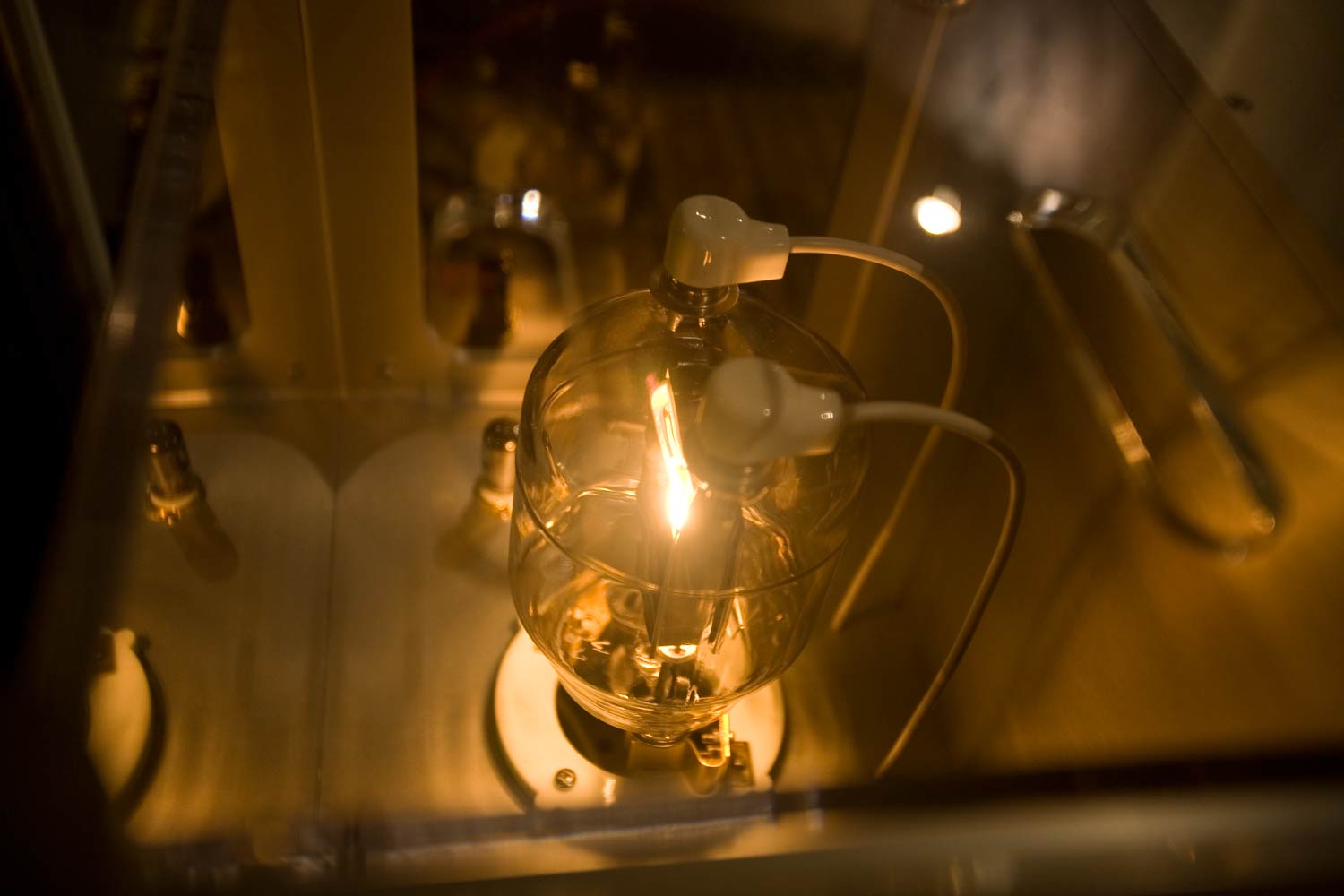
The room showing the listening couch (I sat in the sweet spot behind the couch on a chair that puts my ears on a good level].
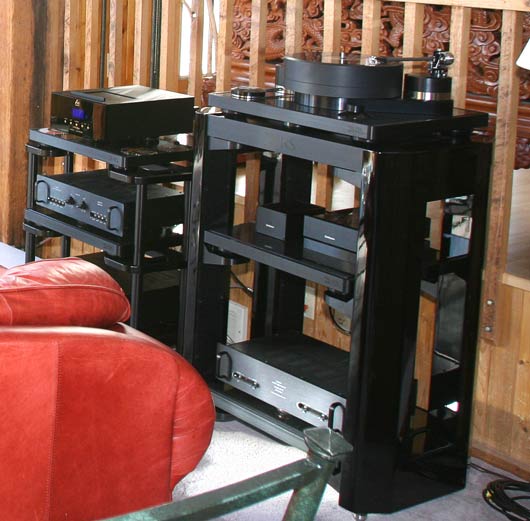
Neli, Kevin (thanks! Kevin) and I shot out 7 (SEVEN!) cables last night in a marathon listening session.
The cables were each substituted, some of them twice, between the Audio Note CDT Three transport and DAC 4.1x Balanced. The signal then ran through a Valhalla interconnect into a Lamm L2 Reference line stage. From there through 10 meters of Valhalla to the Marten Coltrane Supreme loudspeaker’s crossover box. Then through Nordost ODIN into the Lamm ML2.1 amps. Finally, that nice old signal completed its mission through Jorma Design PRIME speaker cables.
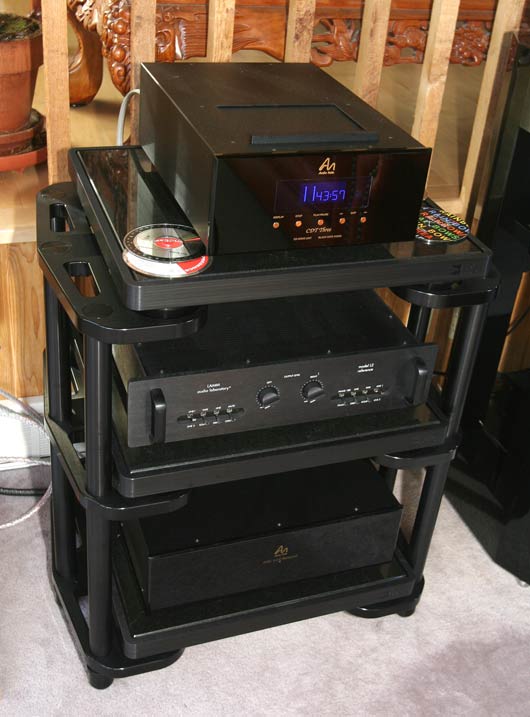
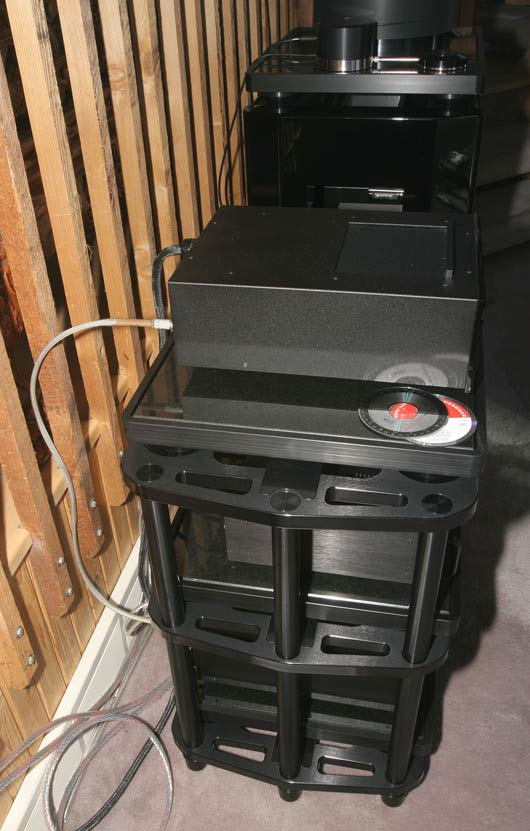
We played, over and over again till we was about to die, three cuts: Mark Knophler’s Sailing to Philadelphia track #2, Rachmaninoff track #6, and Radiohead Amnesiac track #2. Neli and I know these cuts REAL well, and Kevin knew one of them [and now all of them :-)] really well, so these particular cuts helped us focus more on learning about how the songs sounded versus on learning the songs themselves. We played CD 1, then 2, 3, 2, 1, 2, 3, 2, 1 in this pattern so that we would here some of the tracks back to back on different cables.
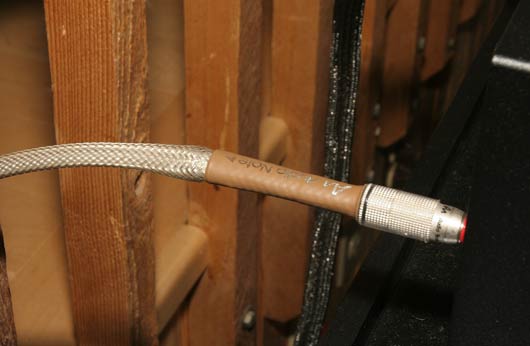
The PALLAS is still on the system this morning.
Neli did all the cable swapping, about 10 swaps in all. It took about 6+ hours. They went and got Vietnamese take out at about 2/3 of the way through. Yes, there WERE complaints about chewing sounds getting in the way of the listening. For my part, I just could not IMAGINE what Neli was chewing that would make such a noise. But, to rapidly continue on…. 😉
The cables finished the shootout in this order. Note the 3-way tie *(which we can help break for you based on your individual preferences, perhaps) and how the SOOTTO seemed to do better as a low-signal turntable cable compared to this one (that may be because this system, the Coltrane Supremes specifically, really likes to show off top-to-bottom detail and clarity – the SOOTTO being more about solidity and dynamics and color. As mentioned below, after some thought, it is perhaps the Kharmas love of dynamics that boosted the SOOTTO into a tie for first in that system]:
[[[Nordost Odin, Jorma Design PRIME, Audio Note PALLAS]]], Audio Note SOOTTO, Nordost Valhalla, Stealth INDRA, Audio Note SOGON.
Hopefully I will add some photos here… but… oh, I am!
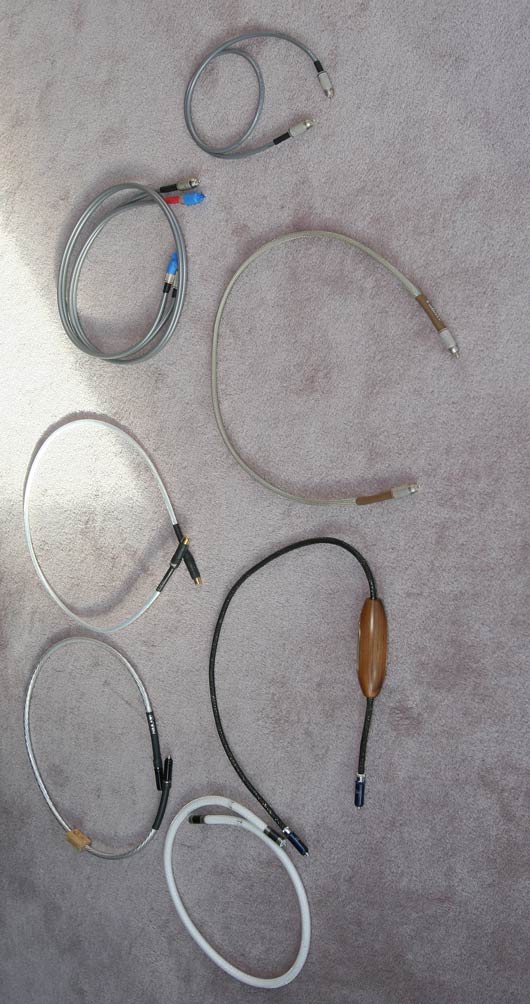
*** Nordost ODIN. ***
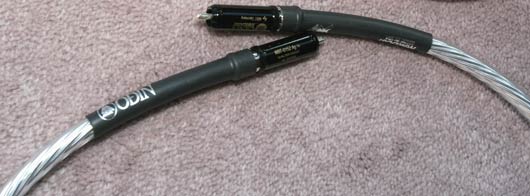
Both the Odin and the PALLAS were doing things that we all found a little hard to get our ears around. I think that is both because they are relatively new here and that they are both breaking new ground in terms of what they can do.
The Odin was the clearly the overall audiophile performance winner. Front to back depth and separation was so good it took some time to get used to. The clarity was other worldly. The even-handedness up and down the frequency spectrum. The precise imaging. Precise harmonics. This is the only ‘competent’ interconnect, just like the Coltrane Supremes are the only competent loudspeaker – they just do the things they should be doing – nothing less, nothing more.
So why the 3-way tie then?
Was it just because we were tired of getting dry-mouth, forgetting to close them during all the ooohs and ahhhhs as we listened to the ODIN?
Yes.
But it was also because we really liked the intense color and apparent humanity of the human voice when using the PRIME (Kevin called it ‘Vivid’), and the ‘rightness’ and cohesiveness of the PALLAS.
We are very familiar with the PRIME, and the sound was therefore more accessible to all of us – it sounded like our system was sounding REALLY EXCELLENT with these cables. With the PALLAS it was like being there (especially the Rachmaninoff) and communicated much more of what I thought the musicians were trying to communicate – their interplay, the threads of melody, the stage – much more like REALLY being there than I have ever heard.
The Odin was more like… WTF! So THIS is what this recording sounds like. Seems like we need to reposition the speakers because we are getting some soundstage fuzziness… there… and THERE! [True.We do. The bass towers between the main towers is just not working out so well where we have them. We either need to to move the bass towers back or to the outside of the main towers].
We would be happy with any three of these cables. They all sounded excellent. The 10th time we played each song was as entrancing as the first – even though my brain was melting and it was hard to analyze what I was hearing at the very end anynore [but the last few songs were just a confirmation pass – yes we DID hear what we heard during the first pass, and yes, it is still quite nice thank you].
The Odin would, however, push us to optimize the rest of the system a little sooner – it being such a good window on what is actually on the source media. Just like the Supremes have forced us to continually improve our system. These definitely are pushing the audiophile envelope – raising the bar of what CAN be done with a high-end audio system.
*** The Jorma Design PRIME ***
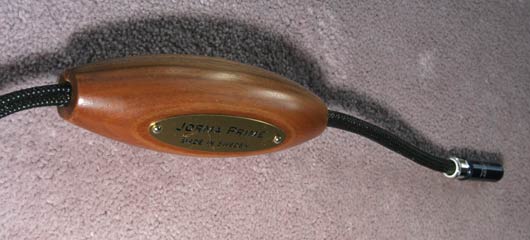
Neli says there is chocolate on the Prime, and then she looks at ME(!) Now I ask the world, who is the chocolate addict in our house? No it is not me 🙂 [But I guess I do eat protein bars that have a chocolate coating… Oh no! Banished to the audiophile penalty box!]
This will be the hardest to write, I think, because we are SO familiar with the sound – I will have a tendency to skip over some of its attributes. On the other hand, Kevin was there, and he brought up things about this sound that was a reminder to me… Oh yeah, they DO do that don’t they.
That said, each time these cables were put on was a joy. We have NOT grown tired of what they do. In fact, it was still a WOW experience.
First off, the voices. The voices on Radiohead, for example – but the Knopler too, were clearly better than the voices with any other cable. The HUMANITY of the voice stood out. This sounds like a real person! Somehow the balance of the frequencies and resolution just works. The throat and chest and gutturalness was just perfect.
There was also a lot of color to the harmonics. Not overly much – in fact just the amount that I want to hear. For example: A lot of notes in music are just plain ‘fun notes’. If you had a button and it made this sound when you pushed it – you’d be sitting there all day pushing it over and over and over because it sounded so cool. Knopler ‘s guitar, a lot of the sounds [but not all :-)] on Radiohead, some of the violins on Rachmaninoff. Just like a kid we would be. Pushing that button over and over. But a lot of our systems leave out the ‘fun stuff’ in notes. This cable emphasizes the fun stuff.
This cable also had excellent separation, side-to-side and front-to-back. details were sufficiently plentiful that it kept us engaged as we continued to find new ones – new depth and characteristics of the performance – after the 10th [1000th] time we heard the track, etc. etc. [See, I TOLD you this is hard to write down everything we know].
Not as delicate sounding, not as much finesse, as the other two top contenders [something we thought we’d never hear ourselves say about the PRIME, which has details out the wazoo compared to most anything else on this planet here].
This was the most exuberant cable of the top three. Happy Happy. Enchanting. The PALLAS was joyous and romantic. The Odin was kind of like all emotions mixed together , being VERY emotional and engaging – but nothing stood out.
This cable is probably best, out of the ones we tested here – for people who love those audiophile-like performance characteristics, who want their system to sound really, really good – but don’t want to, or aren’t ready to, push the envelope and re-evaluate what they know about system setup and configuration and just what can… be… done… with the ODIN. [The ODIN *WILL* show you what your system sounds like – not in a harsh way, unless you have a bright system and are upgrading from something like CARDAS – but in a Oh! That is the contribution of my amp! Oh! That is my CD player. Hmmm… needs some vibration control to tighten THAT up a little bit. OK let’s do that. Oooooooooh. That sounds awesome. OK, sounds like the speakers need to be moved a wee bit to starboard… Yeah. Like that. OMG!].
*** Audio Note U.K. PALLAS ***

Confusing this one is, Luke.
In some ways that I did not understand, this one had a sound-stage stability and a lack of compression and a separation that equaled or bettered the Odin – but with an entirely different kind of presentation.
Lots of delicacy, so detail and micro-dynamics were there almost as extreme as with the Odin.
The solidity though was not as impressive as with the other two top contenders. This was definitely more of a light weight, in comparison, kind of presentation.
What I kept coming back to was the ‘Rightness’ about this sound. The soundstage was laid out in a realistic manner – but it was hard to care much. Each violin could be picked out [this was really quite fun], more or less right… THERE IT IS! But it was just like at a concert, where you can point at the musicians, but not know if they are wearing underwear or not. Or maybe this is another result of our non-optimal positioning of the speakers and we will hear more, like with the Odin, when we adjust this some.
Funny, the first few seconds of all these 3 cables was like an AAAAAAhhhhhhhh experience. “How pleasant it is to hear this sound after all the others. THIS is my favorite”.
Though this cable rivals or betters the other two cables in audiophile attribute checklisting, it seems to be more a music lover’s cable. It doesn’t ASTOUND one as much as the others.
The ODIN is for being Astounded and for helping make our system sound its very best – leaving others in the audiophile history bin. Do you want to build your system into a state-of-the-art WTF [e.g. a non-denominational OMG] system?
The PRIME is a plug-and-play conversion kit to make your system into a freaking-awesome-sounding system. Do you just want to make your system sound excellent?
The PALLAS is for listening to music on a system that matches or betters all others in audiophiledom, but doesn’t flaunt it. Do you just want to listen to and grok The Music?
*** Audio Note U.K. SOOTTO ***
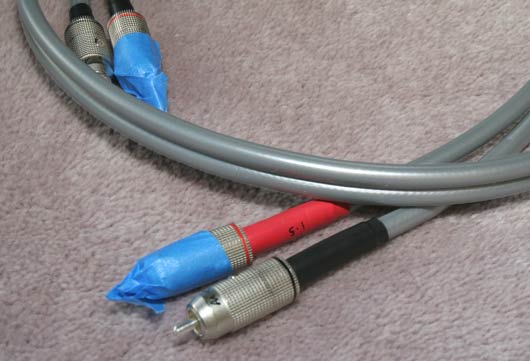
Like with our previous shootout, this is a super-charged version of the SOGON. If you like SOGON, you HAVE to hear this.
After the second pass through the other cables, it was evident that this had greater macro-dynamics and more solidity of any of the other cables, which is saying something. Knoffler’s guitar sounded EXACTLY the way one would want it to sound. Made me want to put on Pink Floyd which is chock full of soulful and very colorful guitar. So, yes, this is also a very colorful / harmonically available cable. Not as much color as perhaps the PRIME, but the PRIME is almost psychedelic.
But the solidity, it is like the amp is taking more control of the speakers – each note is forcefully placed into the air. The musicians sound like they are in perfect control of their instruments.
And the interplay between musicians was also communicated better with these cables – which Kevin also independently mentioned – so the both of us noticed, on the Rachmoninoff, the back an forth and interplay between the musicians… something I was hard pressed to identify later on the other cables.
Why didn’t it score higher? There was some air missing, perhaps? Some slight lack of detail in the upper mids? A little bit of rounding? Last night we were just in the mood for something a little more copasetic with the Supremes – which really, really like Resolution. Downstairs on the Kharma Mini Exquisites a few weeks ago, in the other shootout, it was a slightly different story – the Kharmas really being partial to anything which makes them more dynamic.
*** Nordost Valhalla ***
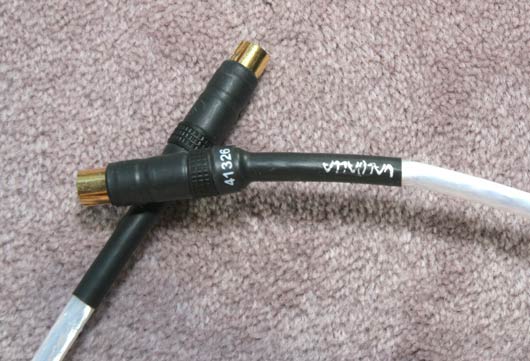
The old champion. How technology has advanced. Still hanging in there though. A little rough sounding compared to the others, good midi-dynamics though. Separation is good in a macro sense, but details are smushed together compared to the others.
*** Stealth INDRA ***
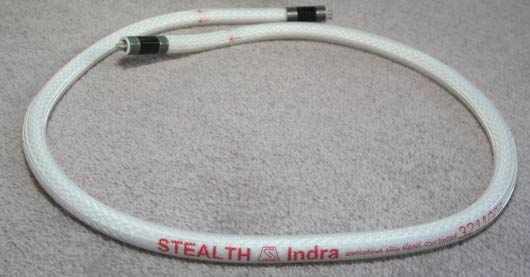
A delicate sounding cable. Very pretty midi-dynamics, but not much macro dynamics. A little more congested than the others.
*** Audio Note U.K. SOGON 50 ***

A little more laid back than the others. If we hadn’t heard the others…. But not as exciting as the others on our system.
*** More Others ***
From previous shootouts, we know we like the Nordost Valhalla interconnect better than the Valhalla digital cable. We like the Valhalla digital very slightly better than the Jorma Design digital.
Getting the picture?
Digital cables are not performing as well as their siblings who are just ordinary interconnects.

I took 6 pages of large scribbley notes – most of which I still have to add to this post. So, stay tuned….!
————————————————–
Notes:
ODIN: A larger impact than expected perhaps 75% of the performance boost of putting it in as a regular interconnect? ENGAGING. Emotion. Pacing.
PALLAS: Not as forward. Great integration, image stability, presence, sound-staging. Less aggressive. Emphatic (Kevin). Balls [Neli]. Great sound-stage fill-in. Softer and more delicacy. Romance. Not quite as good PRaT. A little congested in the mids. Better sense of the music. “Rightness”.
SOOTTO: Not as clear. Very pleasant. More like a classic recording sound. Clearer view into interplay between instruments (Kevin aslso). Not as transparent. More solid. Awesome control over the speaker. Guitar is S-O-L-I-D. Not as engaging. Some of the instruments in the background are more forward (Kevin also).
PRIME: Solidty of voice! Not as delicate as Pallas or Odin. Separation alsmost as good as Pallas and Odin. Happy Happy. Almost as forward as Odin. Good PRaT, tonal color. Happy. Great transparency.
INDRA: Congestion on complex passages. Less midi-dynamics. More focused on speakers. In the delicate-sounding cable category. Constipated. [these do a lot better on stronger signal areas of the signal chain like between pre and amp]. Some emotion. A nice audiophile sound – but not great resolution [compared to the other uber resolution cables here!].
VALHALLA: Rougher than Indra, but more emotion, suspense. Less resolution. More separation, more midi-dynamics. Louder. Less finesse. Made Indra sound too polite. Less transparent. More compressive on macro dynamics. Focused on speakers and center stage. [This is the cable we usually use in this position – as it WAS better than all the other cables we had tried before – not wanting to know, perhaps, what these more expensive cables could do in this little corner of the system – until now of course].
ROUND TWO ——–
ODIN: Amazing separation and CLEAN. The incredible depth of the soundstage, more than we are used to, throwing off perception transparency a little? [I know, almost a complete sentence in my notes!]. Harder to integrate into a whole. A RELIEF [like Valhalla used to be for us – no B.S.]. Pretty, uncompressed. Not at all focused on speaker. Good PRaT.
PRIME: Singer more human. Better presence. Less separation. This amount of congestion / compression / constipation is comforting because we are so used to it? More like a stereo system [than real]? Very enchanting.
PALLAS: Beyond separation – more like spreaderation – an evenness to the spread of soundstaging, of the management of the distance between notes. Uncompressed. Rightness. Less digital. PRaT. Happy. Natural. Wide natural soundstage. Lighter weight on the guitar than the other two.
