
HRS damping plates on Audio Aero CD players

[And here we answer another question, this time about HRS damping plates on Audio Aero Capitole CD players]
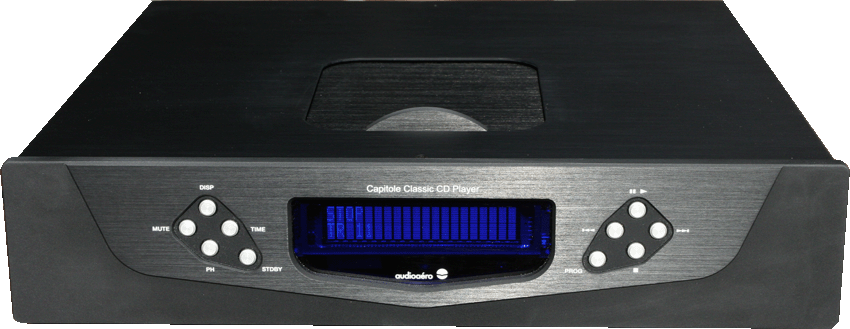
Dear Sirs,
I contact you because I´ve just bought an Audio Aero Capitole Classic CD Player (Similar to the Capitole Reference without preamplifier section. I Attach a photo).
I red that you strongly recomend the HRS Dampening plates. (you wrote: “The player’s sound was somewhat improved with a mid-size damping plate centered on the top of the unit especially with respect to the detail and articulation in the bass extending up into the midrange.. Unfortunately, this requires moving the damping plate every time the door is slid open to put on a CD – but putting the damping plate on the side of the unit resulted in a diminished soundstage and incorrect imaging.”)
As you saw, my AA Capitole Classic doesn´t have the door problem as the Capitole Reference.
I want to know if you still recomend the mid-size damping plate for my AA. I saw other AA owners that use many damping plates.
I will apreciate your recomendation.

Hi X,

The optimal position and number of damping plates on top of the Capitole, or any component for that matter, is usually only found through a process of trial and error. I think this may be because the vibrations found at the top of a component is so unpredictable, depending on the chassis and other aspects of the component, as well as the feet used under the component, as well as the equipment rack itself. The top of a component is kind of the end of a ‘vibratory chain’:… floor -> rack -> feet -> component -> top of component…

We usually recommend that you start with the HRS Nimbus (feet) first. an HRS Isolation Base (if your budget allows) and then tune the final result using the damping plates. The Nimbus feet give an immediate, predictable, no fuss improvement in just about all aspects of the sound – especially under the Audio Aero players.

That said, around here we occasionally do still use damping plates on the Audio Aero players. However, we use them much more often on the much less expensive Audio Note players [at the bottom part of their line] which have lighter weight chassis than the Capitole.

Hope this helps!
-Mike

John Barnes

John Barnes, a local dealer (Audio Unlimited), passed away unexpectedly last week.

John ran a high-end audio dealership out of a house in the middle of Denver, and was our unwitting inspiration for starting Audio Federation. Audio Unlimited was our primary [only] competitor in the Denver ultra high-end audio market [less so in recent years] but John was always friendly, down to earth, and good-natured about it all.

I would run into John at shows, all the RMAFs and sometimes CES, and he’d always make a few jokes about the number of photos I was taking or whatever and a few jokes about the magazine coverage of these shows [he did pretty darn well at this… harrumph], the state of the Denver market [nobody is happy about it, let’s just say], and other things that made us relative newbies [not so much anymore, this is our 10th year] feel comfortable and welcome.

Thanks, John.

Audio Advistor, Music Direct, Acoustic Sounds… the big time… or last gasp?

OK. Well. The title kind of says it.

When a product starts appearing in one of these, the 3 big high-end audio mail order catalogs [we can all elusivedisc here too], what does it mean? What do people think?

Is this is kind of similar to them appearing in Ultimate Electronics (bankrupt now), Tweeters (bankrupt), Circuit City (uh…), Best Buy (still with us), …

Is it an act of desperation on the part of the manufacturer? Is it a vote of no-confidence in their dealer network? Is it the old extended ‘middle finger’ to their dealer network? Is it a way to have ‘internet sales’ without ‘being on the internet’?

Why do people buy from these catalogs? Do they have more confidence in a telephone jockey who has never heard any of this gear than in a dealer? Are they unable to find their dealer [what with all the geographical restrictions and many manufacturers not listing their dealers, requiring the audiophile to make an extra call]. Do audiophiles feel that dealers are just plain more obnoxious sales people than a catalog sales person?

Is it just the convenience of leafing through a catalog, or browsing an [well done] online store – combined with the ease of clicking Buy or just dialing the number printed on every page – that allows these catalogs to make sales?

Ultimate Electronics (Sound Track) had good catalogs. But they died. However, they were put out, I think twice a year, not every month. So maybe that is the difference. I do not think Amazon killed them – the prices weren’t all that different, and the convenience factor of shopping locally is huge. The Ultimate Electronics sales people were often creepy, though, which can be a bother.

Anyway, I see brands in these catalog, some of which we carry even, and we hear various reports of how these mail order catalogs DO and/or DO NOT [all insider info we have heard to date is that they DO NOT sell much gear – but let’s ignore that for a bit] generate any sales. And it is just a strange kind of eco-system, separate from the fray of actually listening to music, playing music for other people, meeting people, making friends, investing in equipment to show people, etc. and in some sense they should not be very successful.

But we do see various brands that had not previously been associated with ‘mail order’ in these catalogs – new ones every month [and some dropping by the wayside]. And it always makes us wonder…. why? Are manufactures trying to sell mass quantities through these catalogs, giving up on their withering dealer network?

Should dealers themselves be mailing monthly catalogs out? Should they have online ‘stores’, perhaps without carts, but offering the audiophile a pleasant browsing learning experience? Perhaps all us dealers should get together and create a giant – UN-mail order SUPER catalog for the rest of us – automatically routing audiophile’s inquiries and sales / pickups to their local dealer?

Thinking about car manufacturers (like audi.com) they do some of this, and even some high end audio manufacturers do some of this, but perhaps they need to add a Buy Now button, offering no fuss no muss buying and local pickup. Then they would actually support their dealers, the new internet economy, and their customers – as opposed to running from the internet and disenfranchising their dealer network – which is what is happening now when they sign up with the mail order catalog industry.

That is if the DO make money… that these mail order catalogs DO sell equipment (and not just music). What if they DO NOT?

Manufactures definitely appreciate the additional eyeballs / mailing lists that these places have built up. But they do not have as many eyeballs as one might think [about 6 to 10 times as much as this blog does on a good month].

In the end, after all this, are these catalogs nothing but audio porn? People read. People lust. People wish fervently. But in the end – nothing real comes of it?

[These catalogs give Neli heartburn. However, I do not mind them at all; they are kind of like a hard copy brochure-ware-type show report with a lot of photos of gear and some facts. So I just thought I’d explore the world of mail order catalogs here a little…]