
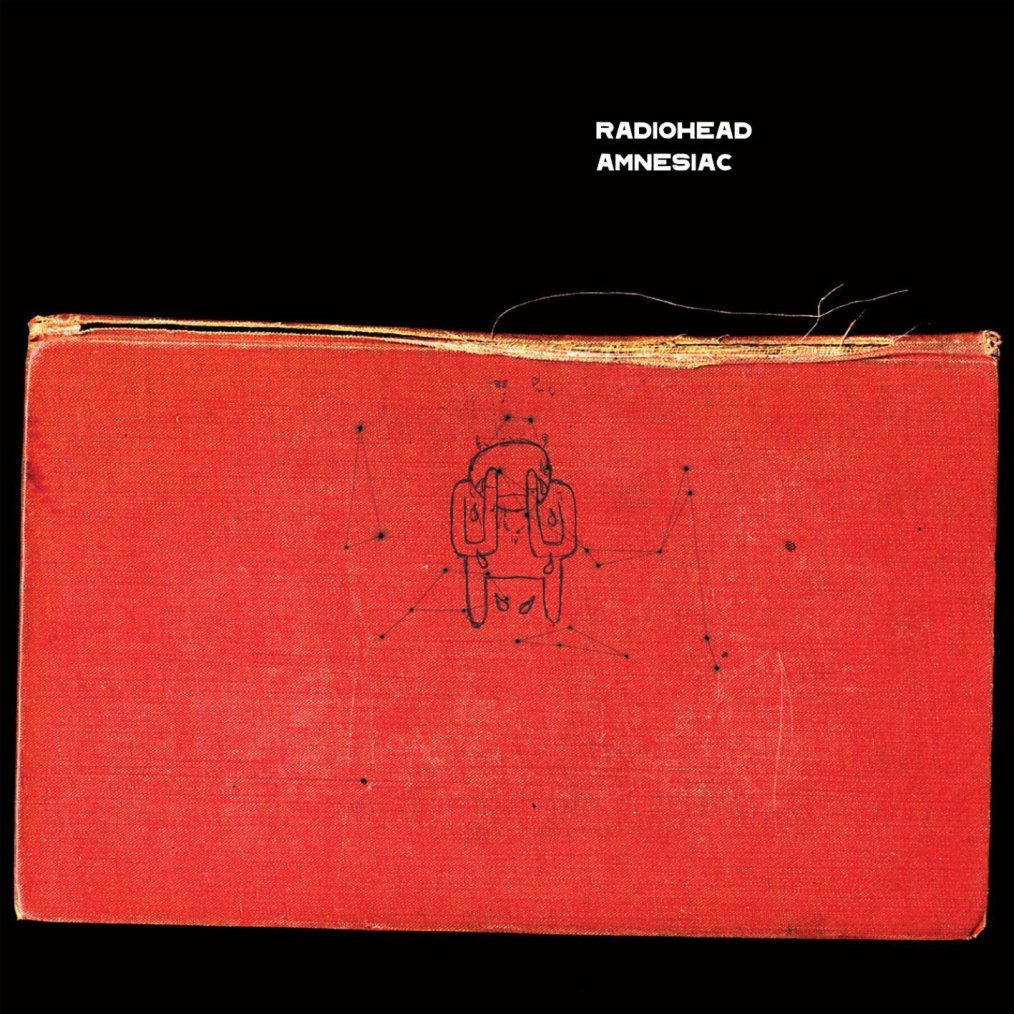
A Favorite Test Album: Radiohead Amnesiac

Radiohead’s Amnesiac album is a favorite test album here. It tests many things about a high fidelity audio system that most other albums do not.

Many people say test tracks must be music where the musicians use exclusively acoustic instruments. That one can only compare a reproduction of the sound of a musical instrument to an instrument whose sound one is familiar with in the real world. The ‘absolute sound’.

First, people who use this technique aren’t any better, in my experience, at understanding what they are hearing when listening to a system than anybody else. And maybe a little below average at that.

Second, real acoustic instruments have a wide variety of sounds e.g. all guitars do not sound alike. So, which one are they comparing the sound on the stereo to?

Third, most acoustic instruments are extremely easy to reproduce. All percussion, flutes, most instruments in a 3- or 4-piece jazz composition, etc.

Fourth, classical music, the gold standard of acoustic music, is usually recorded so badly that it is largely just a wall of sound. Great systems help; but still, poor, so poor, oh so poor quality.

OK. Back to Radiohead. Back to heavily processed very complex very well-recorded music.

Using consensus-based evaluation, after listening to a track on many different systems, at least some of which do not suck, one learns where sounds are supposed to come from: their location in the sound stage, how far away they are, how large they are, where the are moving to, what the decay is supposed to be, etc.

One learns that some systems can disambiguate a pair of notes and some cannot.

One learns that some systems can communicate that the vocals are full of angst and others the vocalists always sound bored [voice is the only overlap with the ‘absolute sound’ people, though they seem to not pay much attention at all to this ‘most popular acoustical instrument EVER’ that we all are so familiar with – especially those with talkative spouses :-)]

One learns that many of the sounds on these tracks are so weird that they are extremely hard for inferior systems to reproduce at all well – it often will sound like something is broken (though sometimes that is the way it is ‘supposed’ to sound 🙂 ) [whereas reproducing a violin or piano, possibly the most complex acoustic instruments, can be done by the most modest of stereo systems well enough to fool some people all of the time].

Anyway, Radiohead in general is great for testing hifi systems, and especially the later albums where the quality continues to improve. Amnesiac is just the first Radiohead album that I happened to fall in love with.

Anyway, that is our opinion and these techniques have worked well for us. For example, they are extremely useful when we want to know immediately the capabilities of an unknown system.

 

Older people hear music better

Older people hear music better and there is hope for high-end audio as the earbud-wearing, cheap-headphone-toting kids grow older and start to hear more and more nuances and finer details of the music they are listening to

Some think we heard better when we were younger.

I used to think YES. This is exactly right.

That music sounded glorious in our teens because we could hear harmonics better. So even inferior stereo systems sounded Grrreat. [Boy, did they!]

That we spend our later years having to build systems with more and more resolution and harmonic content because we have a hard time getting the musical content past our aged ears and hardened listening centers and into our poor overworked tired brains

But now I really wonder if this is Bull Hockey.

That the young have unformed, lazy, uneducated ears. That they could hardly benefit from high res and rich harmonic content because their young ears and brains just cannot process it.

Of course, some people’s ears never grow up. They remain lazy and dull in their admittedly extra-curricular job as fine listening instruments.

But this explains why we have all these iPod, earbud-listening kids. This just sound grrreat to them. But later, as they get older, their ears will begin to develop and they will want a more refined listening experience.

This bodes well for the high-end audio business in the next couple of decades.

I came around to this point of view because sometimes I notice my ears becoming VERY sensitive. The sound of my [long] hair moving across my face was loud and annoying me. WTF?

I have come to realize that my hearing is often incredibly sensitive, especially in the early morning or late at night.

Often painfully so.

Well. Not painfully. Supremely annoyingly so, anyway, in the wrong environment.

So, it is not that screaming kids irritate adults because the kids are all that loud. It is that adults have more and more sensitive hearing as they age.

Sure we lose a few Hz at the top frequencies as we grow old, but the overall effect is one that allows us to hear the most fantastic nuances in music, voice, and in the sounds of the world all around us.

Cool huh? 🙂

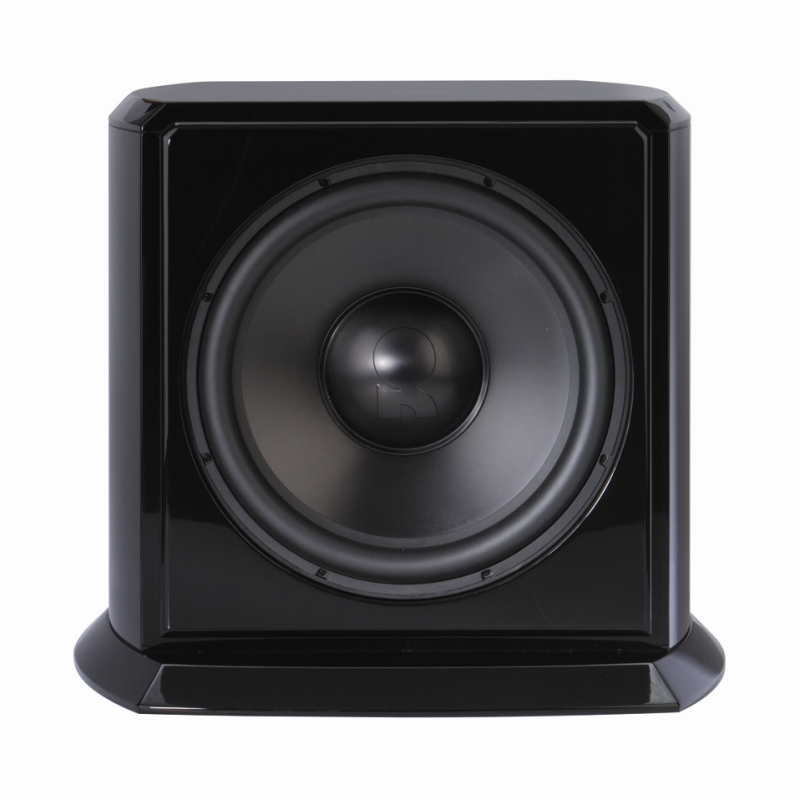
Subwoofer THIS

The subwoofer has an interesting role in high-end audio.

I’ve been thinking about these beast ever since we started our new high-end audio subwoofers page in the Audiophile’s Guide to the Galaxy

It is both loathed and reviled and cheered and loved with abandon.

PRO

1. If your system is not flat to 20 Hz, then your system sucks. It is just for leettle boys.

[Of course, at 100 dB, a subwoofer flat to 20 Hz… oh, excuse me, it says 15 Hz on the spec sheet, would have to be registered as a weapon of mass destruction. It would be hard to walk across the floor of most homes but at least the mice would finally give up and go live somewhere else :-).]

2. Subwoofers are cool and should indeed be registered as WMD

3. It is too expensive to buy a full-range speaker that goes this low

CON

1. The crossover in your subwoofer is necessarily not as deft as that in your much-more-expensive speakers, and in any case it is different, so the overall sonic quality of your playback suffers.

2. Most real music does not go down to 20 Hz. In fact most modern music is heard through JBL-like speaker systems and the satisfying bass we hear on those systems is way above 20Hz.

3. Subwoofers take up space


Most people buy subs for home theater, pairing them with small speakers that only go down to 100Hz or so. They NEED to use subs to get any bass at all. I’ve heard Magnepan systems designed like this that were excellent – small Magnepan wall-hanging speakers and a REL sub.

Us? We’ll stick with full-range speakers that go down MOSTLY to 20… uh…. 25… uh … Hz. It works for us at this time.

Subs are just not a necessity for us.

However, having heard the Acapella ION Plasma tweeter again here for almost a year now – I think super tweeters might indeed be a necessity. 🙂

[Having a hard time convincing Neli of this… but there is just so much more Presence and Life when the high frequencies are fully fleshed out…  Then again there are the same pesky CONs #1 and #3]

In the end, it is this argument [and not the “You ain’t no manly man without a sub” argument :-)]:

How can it be “high fidelity” if your system can’t reproduce all of the frequencies?

I confess. We don’t use a subwoofer. And this question annoys me.