'Elrod'

ELROD power cords - with and without the Nordost ViDar

Wednesday, April 16th, 2008 by Mike

As people may (or may not, it has been awhile) remember - we have been trying to determine how effectatious, sonically, it is to burn in the ElRod power cords on the Nordost ViDar cable burn-in device.

The short and sweet is… not that much.

We tried this on the low-power ELROD EPS-2 Signature power cables. One was on the ViDar for 2 weeks or so. One wasn’t. For this test we put both in the system for two weeks and then compared them - trying them both on the Emm Labs CDSA player and both on the Audio Note CDT3 transport.

Neli heard no difference and I thought the un-vidar’ed power cord might have a wee little better separation and emotion… in both tests … but un-ViDar’ed cord was always tried after the other cord and maybe I was just settling into the song a little better? Perhaps. In any case, the differences are so subtle, compared to what we usually talk about on this blog, as to be insignificant.

Anyway, the conclusions we reached was that the ViDar, designed for low power interconnects and cables, on which the ViDar kicks tush - does not seem to have much effect on correspondingly high current power cords. At least not these cords on these components.

In fact, the taking off of the power cord, and letting its internal capacitors discharge for about 30 seconds during our swap in and outs during this test (as we rushed one upstairs and the other downstairs to quickly put them on the other system during this test - trying to keep them charged up] might have had more effect on the sound. Hard to tell.

So that is our next test for the ELRODs - charged versus un-charged. It takes about 3 - 7 days for the power cord’s capacitance to fully charge, so we will compare one that has been in the system for awhile versus one that has not. A test that does not allow us to go back and forth - i.e. to repeat the test except once every seven days. And it requires us to have a power cord just sitting around doing nothing - not something that we can afford here these days with all four systems fully operational.

But I guess we are doing it anyway.


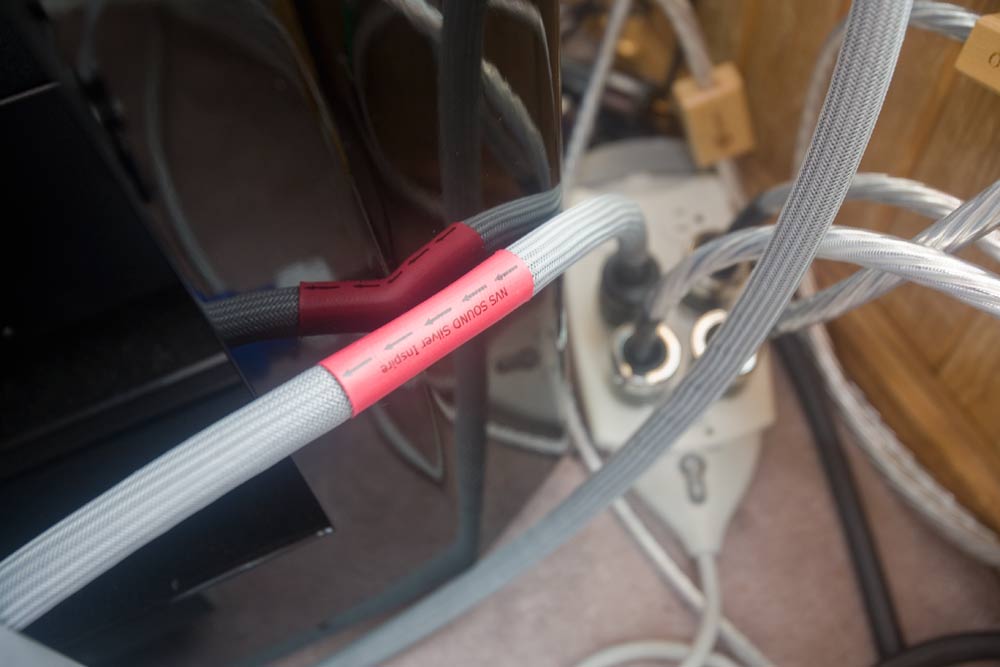
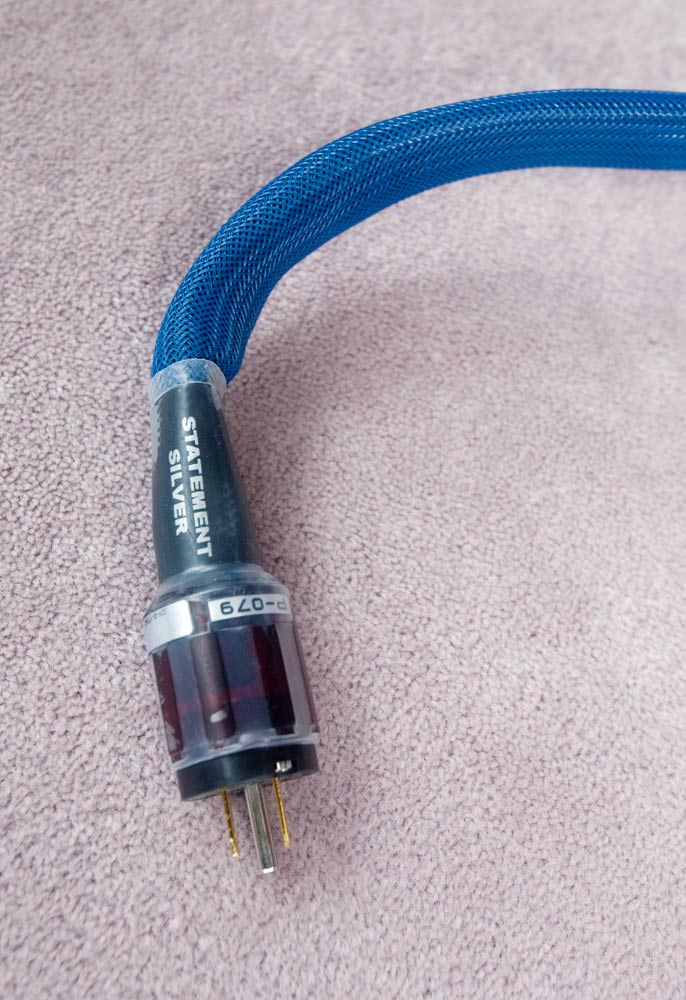
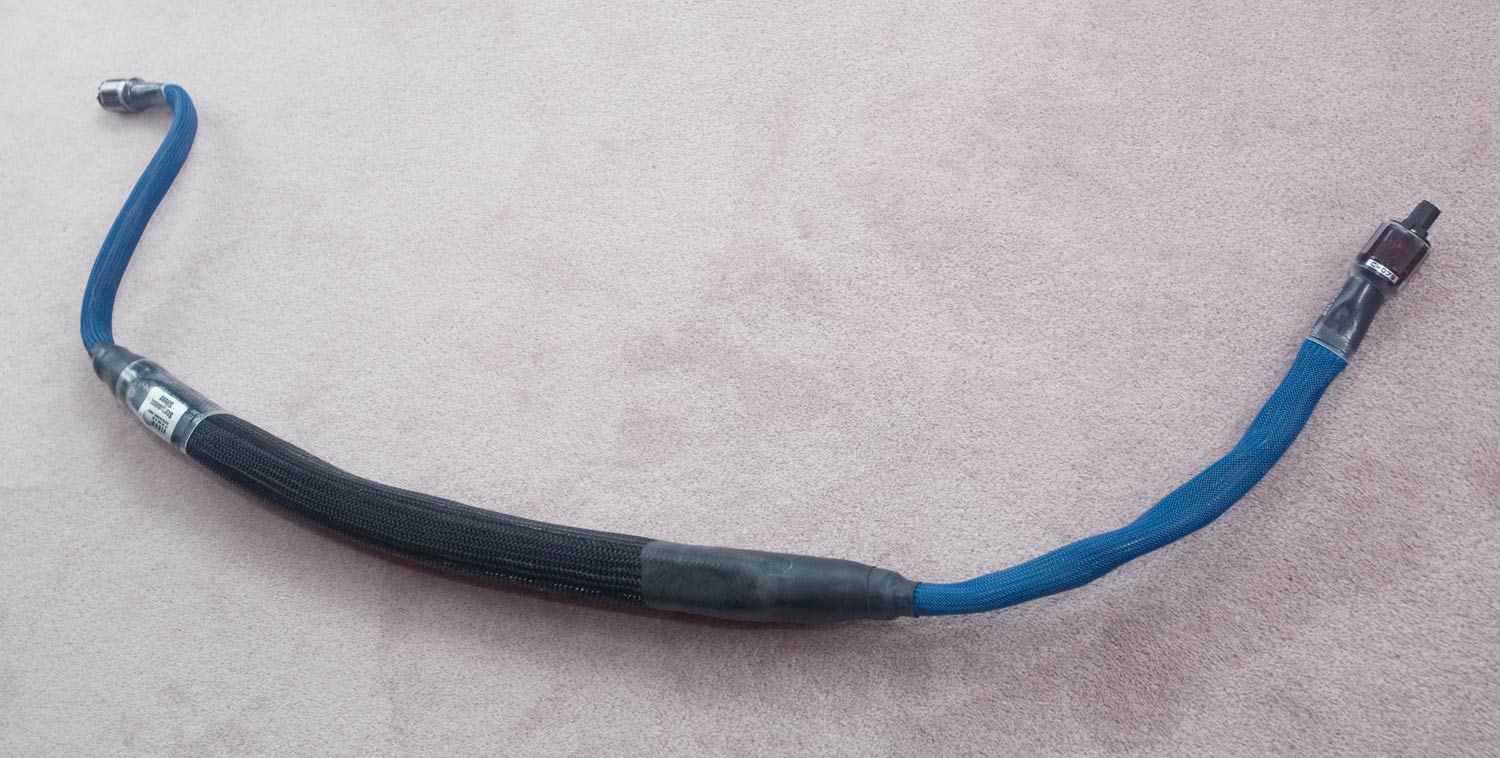
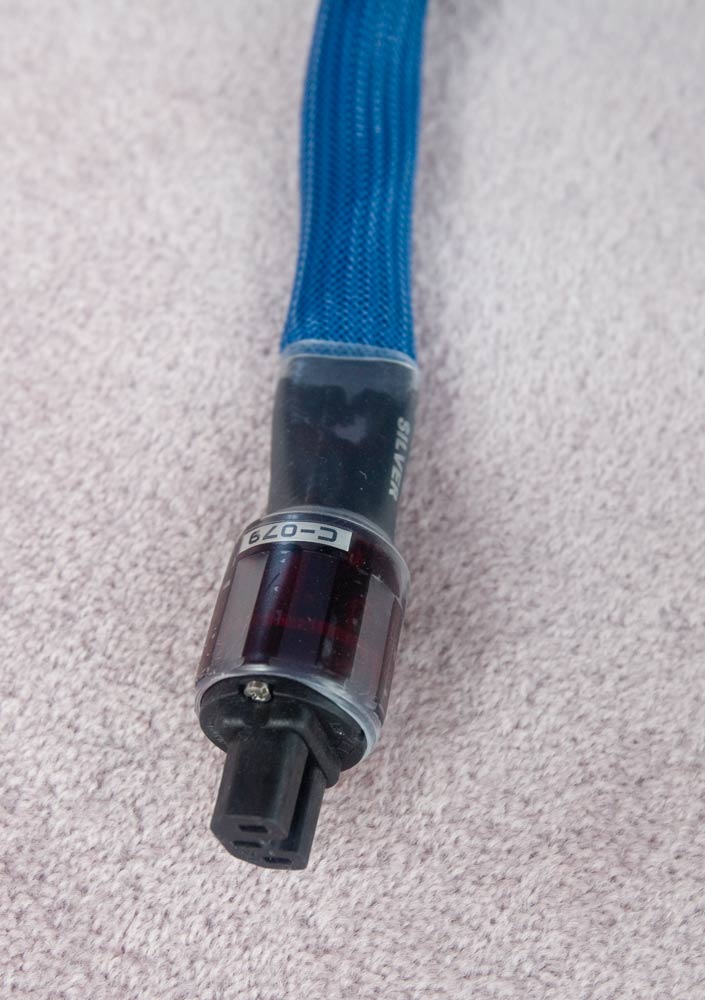
The power cord with the ‘V’ tag Neli put on it to designated its ViDar’ed status. Otherwise things might get a wee bit confusing… now WHICH cord was that again?


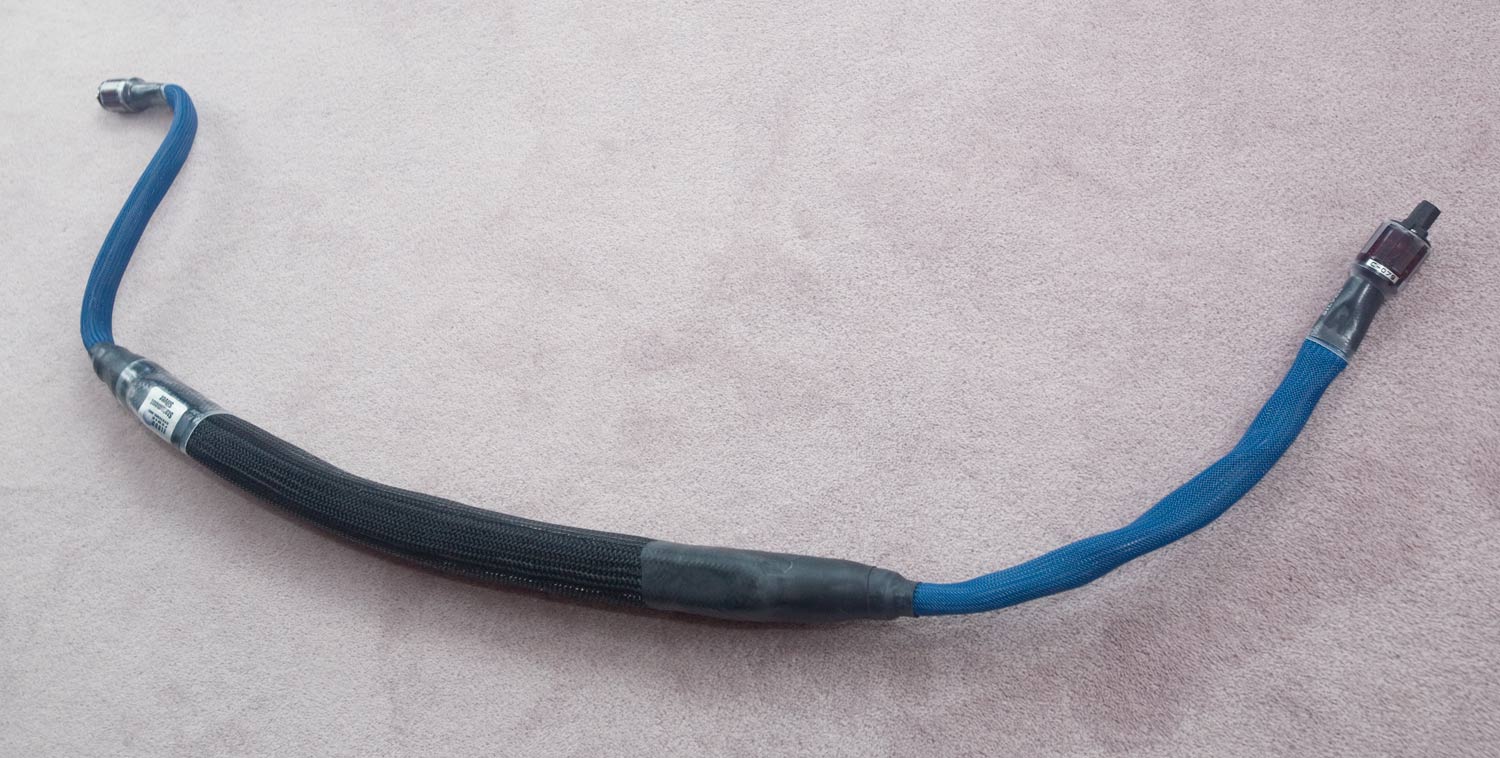
The EPS-2 Signatures are about 1/2 the size of the high-powered ELRODs.


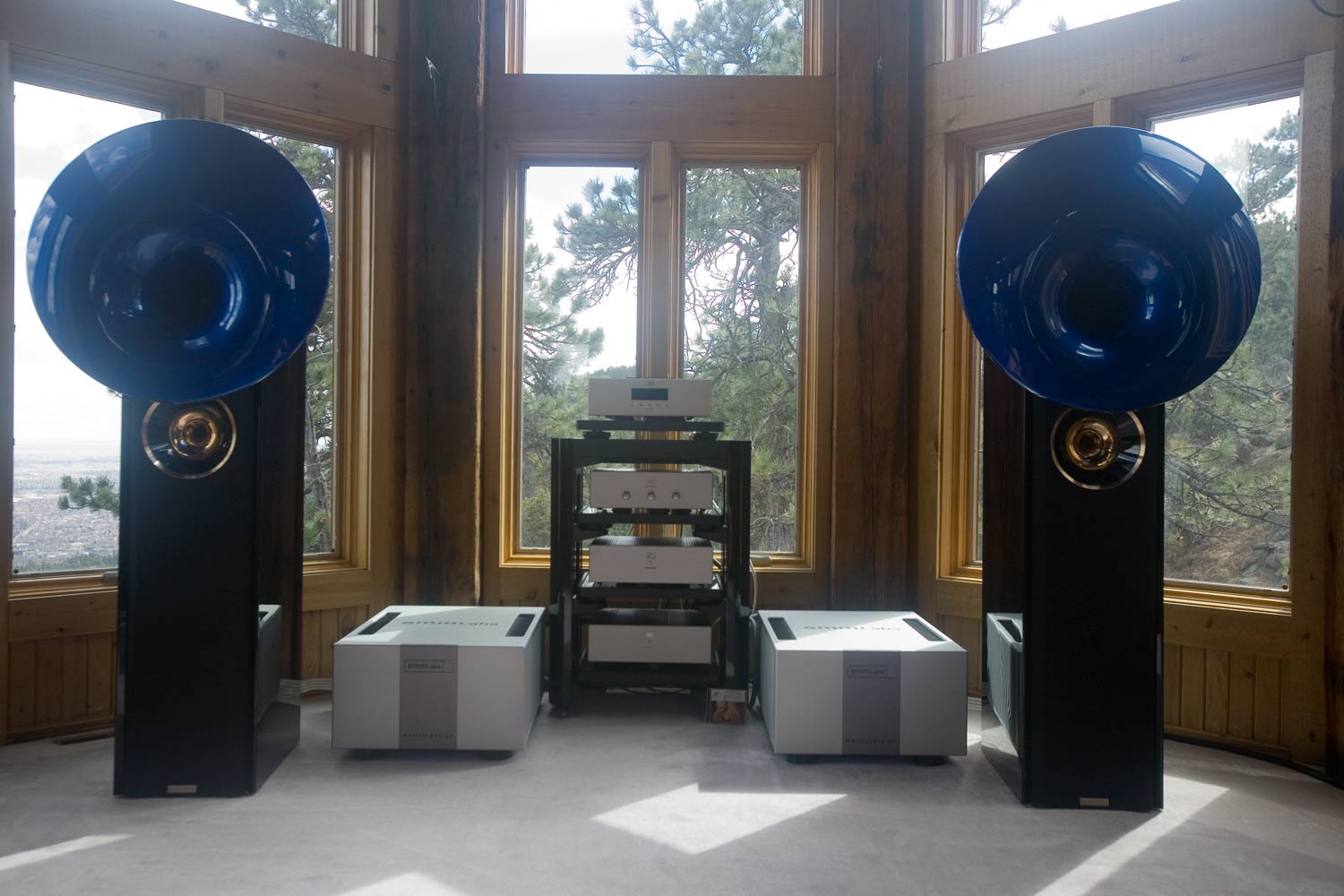
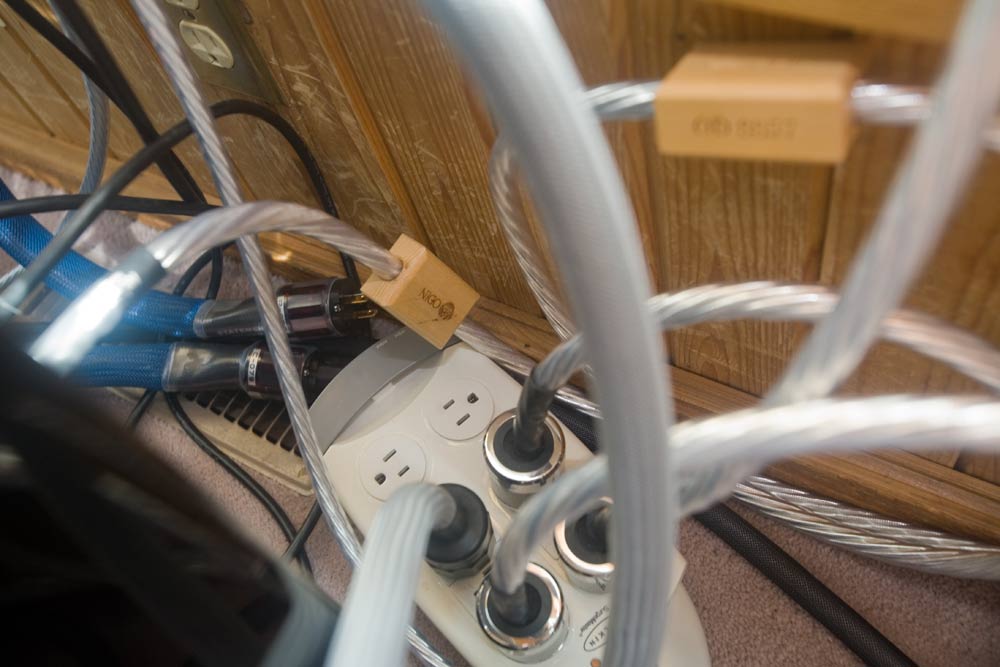
The cord on the back of the EMMLabs CDSA.


The Audio Note CDT-Three transport. It is not hooked up because…


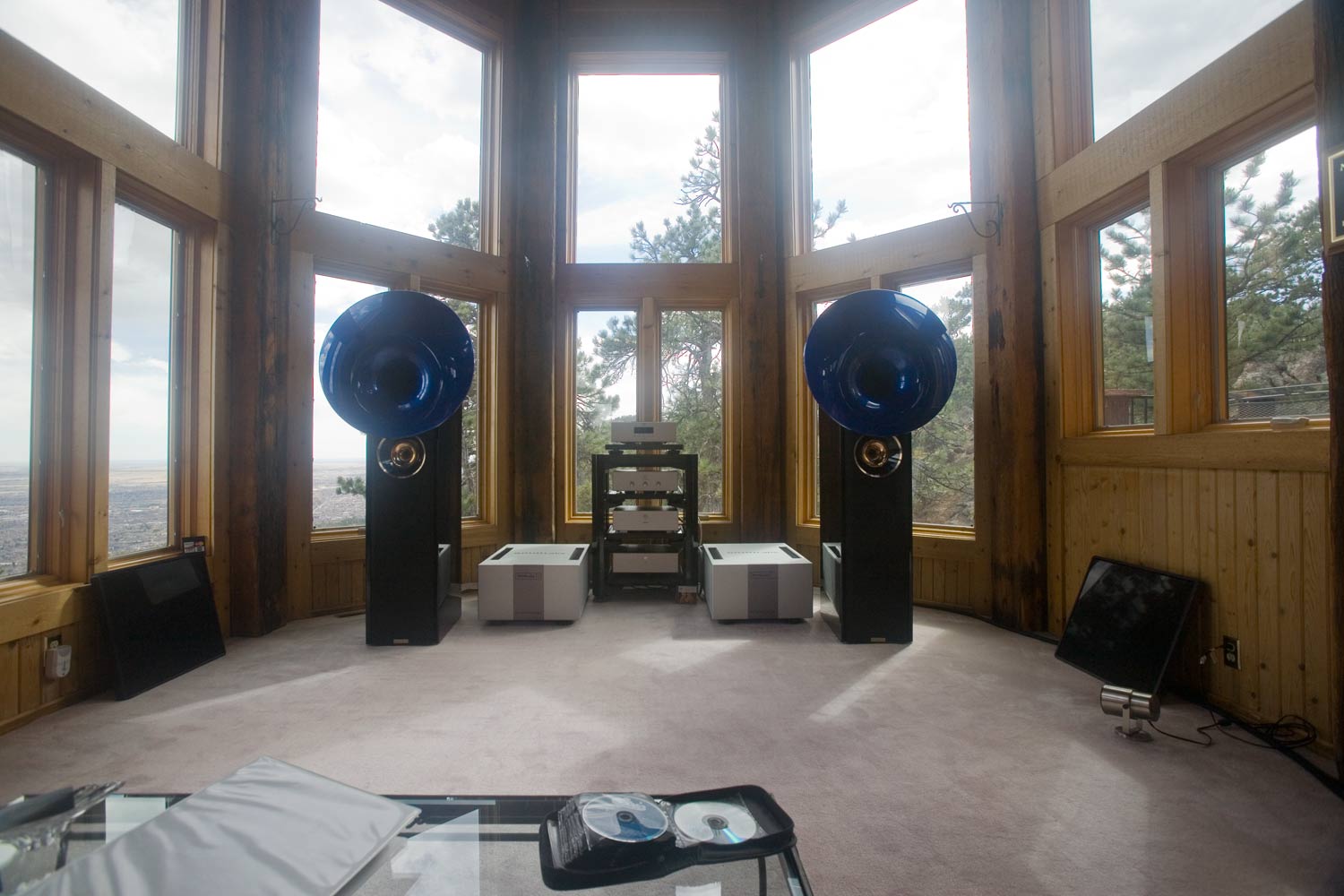
… several of our HRS M3 Isolation Bases and Neli were out on audition during this photo shoot. So the HRS SXR and MXR racks were looking like Macy’s the day after Christmas [OK, yes, so I have been watching a lot of old movies lately].

How Much Fun

Thursday, March 27th, 2008 by Mike

We have so many things in the queue … so many things lined up to try, that it gets a little overwhelming. The exact sequence of things gets a lot of discussion and seems to be updated on an almost hourly basis.

We have:

1. Compare the charged ELROD powercord that has been on the Nordost ViDar cable burner to a charged ELROD that has not been on the burner - i.e. How does the ViDar affect performance? We already did the cold (uncharged) Vidar’ed ELROD compared to the hot (charged) un-ViDar’ed ELROD. [Note, ELRODs take about 3 days or so to charge up their capacitors]. While this was ijntersting, and we will report on it, not being the brightest bears in the woods, we finally realized that this was kind of confusing [I bet you are confused, too, by now :-) ], overloading the charged versus uncharged test with the Vidar’ed versus un-Vidar’ed test.

I said it was fun. But it also requires a degree in Research Methods… apparently.

2. Compare the Kegon Balanced with the old high-gain Kegons. We can do this on the Kharma Mini Exquisites - which we anticipate will show that 1) … well, let’s not make any predictions [see, I’m getting smarter. Maybe there is hope…]. But the Kharma is actually quite hard to drive, especially the bass - especially if you want that big open Kharma sound [Kharmas always sound exciting and delicious and big, but not always that room pressurizing wrap-around that many people crave like hot butter on potatoes].

3. Compare the Nordost ODIN speaker cable to the Jorma Design PRIME speaker cable on the Marten Coltrane Supremes. This will be… well, there may not be a winner. I expect the ODIN to be more dynamic, which the Supremes love, and the PRIME to be more detailed, which the Supremes love. But for all I know I am getting it exactly backwards. That’s what shootouts are for. Proving it one way or another [at least with respect to the equipment we have here - we do try to perform part of a shootout on a completely different system to make sure that out results more or less reflect the general case].

4. Compare the Kharma Mini Exquisites to the Audio Note SEC High Efficiency Signature speakers. OK, yes, completely different… but both are 2-ways and, well they were the same price but now the Minis are $60K [seen the dollar lately?] and, well the AN speakers are… we’ll know when Neli gets the price list out [uh, oh, she’s gonna smack me when she reads this… I am already bracing for the impact… hurry up and finish this so I can delete it before she sees it :-) ]. I expect the Kharmas to be more detailed and the AN more dynamic. Duh. AN is almost horn-like and Kharma has that legendary midrange resolution. But what else will we hear?

5. Compare the M1 phono stage to the Lamm LP2 phono preamplifier. OK, Neli thinks this test is stupid too… but I want to hear the difference in character between the two. We’ve had a number of other inexpensive and expensive phono stages in here, so this is not all THAT outrageous.

6. Compare the old EMM Labs CDSA to the new one with the upgraded transport and feet. We should be getting close to getting 700 hours on the new CDSA soon now, one would think [I don;t have a little 700 hours cooking timer on it or anything].

7. Oh yeah, we still have to do the interconnect shootout where the signal is quite large, between the preamp and the amp. We actually point to a system periodically and say ‘oh, this would be a convenient time and configuration to perform the aforementioned test’ [well, we don’t use the word ‘aforementioned’ in casual conversation, sorry]. But do we sit down and do the shootout? Noooooooo. It does take about 6 or 7 hours of focused concentrated listening, so it is hard to find the time. But soon….

8. We want to compare the high-power ELROD powercords to the low-powered ones on the Lamm ML2.1. At what point to low-powered amps draw high-power? Just what IS the difference in sound between the two?

9. I am sure there is a 9. And 10….

Burning in the ELrod power cord on the Nordost Vidar

Wednesday, March 5th, 2008 by Mike

We have to jury rig the Vidar in order to burn in power cords.


The Vidar passes a very complex sequence of low power signals over cables when it is burning them in. We have run two full cycles, about 8 - 9 days, s far.

How this works for power cords, which one might think would like to be broken in with, say, a monstrous 10 amp signal, we’ll see in the upcoming shootout between this and the exact same powercord that has just been sitting in the system on a transport.


We will probably have to do two shootouts, because it takes about 3 days for an Elrod power cable to full charge up, because they have a large amount of capacitance.

So two shootouts, unless the Vidar’d powercord is obviously better: one with the Vidar’d power cord straight off the burner,. and one with the Vidar’d power cord sitting in the system somewhere charging up for 3 days so that both it and the UN-Vidar’d powercord are BOTH charged up.

Hard work these shootouts…. or maybe just hard work sometimes explaining them :-)

Optimizations Ongaku

Monday, April 23rd, 2007 by Mike

Things have been a little in flux here… which gave us a chance to listen closely to the Ongaku in several different configurations - primarily:

1. On the Rix Rax Outpost amp stand with a $2 OEM black power cord

2. On the Rix Rax with a $1600 Elrod Signature 3 power cord

3. On HRS Nibuses on an HRS M3 Isolation Base on the Rix Rax Outpost amp stand with the Elrod PCs…

And the winner is… :-)

I wanted to try out #1 because that is what some of the diehard AN experts suggest sounds best, and we will try this again in a system cabled with just AN cables and with AN components, but….

Adding the Elrod PC:

a. Removed some of the compression. In some of the guitar notes on Sailing to Philidelphia, really simple notes by the way, with the OEM PC they sounded hardened near the top of the note envelope, like the note just ran into a wall - splat. With the Elrod there was a smooth rollover as the note went from getting louder to getting softer.

b. The Elrod revealed more harmonic content

c. The Elrod removed an ’scratchy agreessive edge’ that the sound had had. As expected. A lot of people associate this edge with ‘immediacy’ (quickness, speed, etc.). If they don’t here it they may think something is missing. It is unfortunate that it is often the case that to get immediacy one has to accept this edge. In this case it did not seem to me to be the case, however, as I listened carefully for just this sort of tradeoff.

Interestingly, some people will sacrifice everything to get a little more immediacy, real or IMAGINED(!) (like AvantGarde owners :-) ) and some will sacrifice everything to get rid of the ‘edge’ (like PS Audio, MIT, and SRA owners…. etc. etc.). The latter group significantly out-numbers the former, in my experience.

d. Finally, the Elrod brought EMOTION to the party. The music became engaging,. Enough so that it was much more difficult to listen to the sound because the music kept distracting me.

Presumably this was because some of the nuances were being lost with the cheapo power cord - or perhaps the ears were shutting down / shuttoing out nucance to protect themsleves from the ‘edge’ and ‘comrpession’ artificats.

When we added the HRS under the amp… first, what a tower, looks very Chinese ….

a. the first thing was very much improved bass response. Everything tightned up - but it was mostly the bass that now had a degree of slam that was quite … impressive.

b. the next thing I noticed was that HRS has a ’sound’. Not sure what this sound is, but with 9 HRS bases here, and after trying them under everything (usually not in soup-to-nuts HRS setups though, but we are gaining more experience here as well), there is a quality to the sound that is recognizable. This is a sound that is hard to do better than - but it is becoming hard for me to analyze anymore - the old noggin just shuts down…. I could convince myself that this was less, the same, or more emotionally satisfying than the previous setup.

Perhaps over time it will be easier to settle this - and one should spend some time evaluating system mods like this - especially if one is subject to emotional swings on a minute by minute basis [aka doing system setups with one’s spouse :-) ].

More on Number 4 Setup of the Powercord Shootout

Wednesday, December 6th, 2006 by Mike

We listened to this setup more this morning.

Even awake, which I was this morning, it was a very interesting sound with the Satori on the EmmLabs digital front end and the Elrod on the Edge amps.

The soundstage was quite different from the one we are used to, not at all like the suspension-of-disbelief transparency that makes one be able to squint one’s eyes and see the orchestra laid out in all its glory.

The instruments were indeed where they were supposed to be, but … it was like the information about how things were laid out In Relation To Each Other on The SoundStage was instead replaced with something else…

Now, this is going to sound weird… :-)

But it was like it was replaced with information on how things were Related to Each Other in Purpose, or perhaps, to be a little more easy to understand as a strawman concept, Related to Each Other in Time instead of Space.

Listening to Radiohead, it was like each group of distinct notes, I do not know what they call them.. a riff perhaps, or a sub-melody, had its own life. But it was also related to the other riffs, connected by the key they are playing in, by the scale and rhythm they are all part of. And also by this point - counterpoint kind of plat that composers seem to use a lot, scripting riffs both in opposition and support of other riffs.

So, ANYway….

This system caused me, anyway, to be almost forced to be absorbed by these different aspects of the music as opposed to how I normally listen to music, which is to ’see’ the musicians playing and hearing the music as it passes by, the words, the basic linear progression of the composition.

This is different from the ‘life’ or ‘psychadelic’ nature of the music which the Pranawire Satori added to the mix. And to think it was just adding them to the CDSD and DCC2 that made this change.

I told Neli at the time that it was like a geometric relationship now between the notes and ‘riffs’, but I do not want it to be confused with the traditional distance relationships that the images of the different notes have in a soundstage.

This is more like make visible the multi-dimensional relationships between notes, composed of tone, duration, texture, similarity of note envelope, etc. etc. and, yes, purpose - WHY those notes were composed to be there - as opposed to just where in the soundstage the musicians (or their notes, which may be located elsewhere do to those Wily Soundboarders) are located.

So two questions remain:

How do we get both the Real and this Uber Real in the same system?

and

How does a powercord, so far up in the chain, make such a difference?

Later, we put back the Shunyata powercords, one an old Python, on the Emm Labs, and the transparency and soundstaging was back to ‘Normal’.

Don’t know whether to be happy or sad.

So I’ll just be confused, instead.

And, yes, this was somewhat like our A funny thing happened on Planet Abraxus experience with the Coltrane Supremes at CES 2006.

But where that was a very ’solid’ extra-dimensional relationship visualization experience, this was a more spiritual,…no, strike that, a more perceptive, deeper yet more ethereal experience…

We need to try the Satori, the Jorma Design ‘Prime’ and the Coltrane Supremes all together sometime…. Then maybe we can get Real, Perceptive and Solid Visuals all at the same time.

Can we handle it? [My daughter is a psych major - will she get her PHD in time? :-) ]

Shootout at the PowerCord Corral - Shunyata, Pranawire, Elrod

Tuesday, December 5th, 2006 by Mike

By the wagons we got the Shunyata Anaconda Helix Alpha.

By the well we got the Elrod Signature 3.

and By the barn we got the Pranawire Satori.

OK. Ready. Set. Play!

Showroom 3
The system we compared them on was the following: Kharma Mini Exquisite loudspeakers, Edge Signature One amps, Lamm L2 linestage, and EmmLabs DCC2 SE / CDSD SE CD / SACD front end. INDRA interconnect between the DCC2 and the L2, Valhalla between the L2 and amps, and Jorma No. 1 between the amps and speakers.

We tried out all 3 power cables on the Edge Signature One amps.
Showroom 3

1.

First up were the Shunyata Anaconda Helix Alpha (who win the award for the longest name). Usually we like the Shunyata Anaconda Helix Vx cords better than the Alpha cords on the Edge, and now was probably no exception, but the Vx cords were on the Audio Note M10 linestage power supplies on a different system… so…

We played the first track on Radiohead Amnesiac. My thought when it was all over was that nothing was going to beat this - the resolution and imaging and ‘techno feel’ was first rate. And I was right, as far as it went, that nothing did beat them in these categories - there are other categories however… always more categories…

The Power Cord Fiesta
Photo taken after the shootout. Here we see the power cables with the red label (Shunyata Anaconda Helix Alpha), the green label (Shunyata Pyython [sic, WordPress has a bug that does not allow this to be spelled correctly, since this is also the name of a computer language it is confusing the poor thing…] going to the Soundlab speakers - not in the shootout), gray label (Shunyata Anaconda Alpha that were powering the Emmlabs), the silver-braid shielded power cords are the Pranawire Satori, and the big (but not as big as their brothers!) Elrod Signature 3 power cords. Oh, and the cords that look like red and blue stripes is the Valhalla going to the Lamm L2 linestage.

We also played Mark Knopfler’s Sailing to Philidelphia - first two tracks. [Pick this up if you like Mark Knopfler and high-quality music and sound - we’ve had many people who wrote the name of this CD down after hearing it here].

On the first track, Mark plays several licks that are up front and can be biting unless there is a lot of support from the system in terms of not just resolution, but harmonic integrity - the notes have to swell just right or they rise too fast and sound ‘bright’. It is in this respect that we prefer the Shunyata Vx cords on these amps - they handle the notes in a more relaxed, organic manner that seems to fit most of the music better.

2.

Next volley was heard from the Pranawire Satori. Pranawire has a trademark sound that is, what we call ‘psychedelic’ [or acid-like …including flash-backs] (and the Jorma Design Prime cable has some of this too, but in a different context, as do the Kharma loudspeakers). This sound is very very engaging - somewhat like 2A3 tubes in a good amplifier in that it is very subtle yet readily recognizable. Which is to say it does NOT distort the sound in order to entertain the listener in some kind of gross way by catering to the common human weakenesses for syrupy or euphonic sound.

The Power Cord Fiesta

It is a sound that is hard to describe - it is like adding ‘life’ to the music, or ‘color’ where there was none before but we were colorblind and did not know it. Anyway, with the power cords on the amps we heard this ‘effect’, which we have heard in their top-of-the-line cosmos speaker cable, but not so much in their cosmos interconnect. YMMV.

As for the sound, per se, solidity in the soundstage was better than the Shunyata for various instruments, accompanied by a reduction in resolution and - if I remember correctly (Neli is at the gym) a reduction in mircodynamics and air but an increase in the ability to swell dynamics from one state to another.

The Power Cord Fiesta

In many ways this was similar to going from solid-state to tubes - it is a tradeoff and depending on you and your system, you may or may not like it. I liked it, and certainly from the point of view of being a system builder: now I could add this ’sound’ without having to deal with the somewhat large Cosmos speaker cable - which had some other side-effects - or having to swap out amps of source components or anything. I.E. swapping powercords for for the listener [who might be us!] who wants something a little more engaging (albeit a little less real) at the moment is now as easy as switching a power cord or two.

Radiohead’s voice and Khopfler’s guitar were all wonderously colorful and alive - there was however some reticience in the transition from one note to the next which we interpreted as probably resulting from these powercords being not quite burned in yet. [If you have been following the Blog lately, you might understand how we are growing impatient waiting for things to finish breaking in around here… ;-) ]

The Power Cord Fiesta

3.

The Elrod mosey’s in with the shotgun.

The Power Cord Fiesta

The sound of these was surprising to me … more detail (though not quite as much as the Shunyata Alpha) and much more separation - the soundstage really cleared up. The solidity was about the same as the Pranawire (the Anaconda Alpha had better pinpoint imaging than either - but it was not as 3D or ’solid’). The Shunyata Anaconda Helix Vx has been our reference on these amps - and will continue to be so as it has performed well in 100s of system configurations we have set up - but the Elrod Signature 3, which we are learning more and more about, did much of what *we* like in a system, which is walk that fine, fine edge between real and musical. It entertained our minds, fooled our minds, and warmed our hearts (though that last not quite as aggressively as the Satori :-) )

4.

As a final test, we replaced both the powercords that were powering the Emmlabs transport and DAC with the Satori, they were what I think are from the photos Anaconda Vx (not the new Helix) . Could we hear the Pranawire effect even with the cords on a low current device like the digital front end?

The asnswer was yes, but it was only about between 15 and 25% of the effect it had when on the amps, in my estimation. It also clouded up the soundstage some,,, I think. It was weird. Maybe I was too tired at this point. Instruments and voices just sort of appeared in the soundstage, solid, but then faded from view somehow. It someway this was much more REAL than anything I have heard before in terms of what happens when a musician plays something then stops for a few moments. Or it was totally wacky and unnatural as the msucians did not seem to be in the same universe - much less in the same studio - but who knows, maybe they weren’t.

Anyway, more experiemtation is needed with mix and matching of these cords together in various systems.

Finale.

Acrolink burning in
Acrolink burning in on the Winter burn-in device

Acrolink burning in

So. We didn’t get to hear from the Shunyata Anaconda Helix Vx, nor from the Valhalla (which is on the Lamm L2 in this shootout - but we do not usually put it on the Edge, but in a shootout, ANYthing can happen :-) ), nor the Acrolink 7N power cords (which in some ways are the ultimate powercord, having both most intensly detailed resolution we have heard in a PC along with an even handed approach to harmonic body).

The Kharmas, the ML2.1 too, the Audio Aero Prestige, the HRS racks and their bases, the Elrod, Shunyata and Jorma Design and the rest, all here on …

Thursday, August 24th, 2006 by Mike

Picture of entire system
Picture of entire system with Kharma Mini Exquisite speakers, Lamm ML2.1 amplifiers and Audio Aero Prestige CD/SACD player on HRS M3 isolation bases and MXR equipment rack. Cabled by Nordost Valhalla and either Elrod Statement power cords or Shunyata Anaconda Alpha Helix power cords.

Picture of entire system with one Kharma Mini Exquisite in foreground

Kharma Mini Exquisite from above
Kharma Mini Exquisite from above.

Sonically, this isn’t a blow-us-away system compared to the same system with the Marten Design Coltrane speakers. It is very nice and enjoyable - but not surprisingly so. Maybe our expectations were too high. Is it wrong to be so spoiled? At what point does our addiction get so out of hand that we no longer represent the average guy or gal? Oh, you are saying we passed that point a long, long time ago? Oops.

We still have to work on the positioning - and we are planning on moving the EDGE solid-state amps over on this side of the room - they being so successful on the other side on these Mini Exquisites, and switching back and forth.

Speaking of switching back and forth….

The power cords powering the ML2.1
The power cords powering the ML2.1.

The power cords powering the ML2.1

The power cords powering the ML2.1
The power cords are the Elrod Statement III (the big ones) and the Shunyata Anadonda Helix Alpha (the red ones). The speaker cables are the Nordost Valhalla. This could be abstract art if it wasn’t so functional.

The Shunyata lends the system detail. The Elrod body and bass. If we are being picky we switch them for each song, depending on what we think will sound best. Though waiting for the Lamm amps to restart after switching power cords - waiting through their 90 second power-on cycle - is long enough for husband and wife to get a chance to talk to each other……

MXR equipment rack
TheHRS MXR equipment rack is looking a little empty. And missing the top shelf. That Audio Aero is doing source and premaplification duties - what used to take four shelves now just takes one.

Close up of MXR equipment rack top shelf missing
The top isolation base was out on loan - and now that it is back it is being repurposed elsewhere we are going to move the Brinkmann Balance turntable over on to the MXR equipment rack…. leaving just the Walker Proscenium Gold Signature TT on the RixRax / SoundLab system.

Jorma Prime interconnect burning in on Nordost Vidar burner
Finally, we are anxiously awaiting the conclusion of our Jorma Prime interconnect burning in on the Nordost Vidar burner.

Tick tock tick tock….

Audio Federation is Happy to Announce That We Now Carrry ELROD Power Cords

Thursday, July 13th, 2006 by Mike

We have been auditioning the Elrod Statement power cords here for a few months now - and it has become one of those things that we, epsecially Neli, just can’t live without (and its not so awfully expensive that we don’t have to live without them - at least for a little while :-) ).

ELROD's STATEMENT power cables

After seeing the Elrod powercords for years at shows like CES and Stereophile’s Home Entertainment Show, an audition was arranged. Being somewhat unweildy, we tried them mostly on amplifiers.

They just do something that no other powercord does, in our experience, nor is it likely to. These puppies are massive - they seem to let the amp have as much juice as it wants when it wants it [thinking of audiphile powercords now as a local reservoir of electrons - at the ready when the music’s dynamics require there to be adequate power NOW] and the resulting relaxed, open and deep sound is refreshing and natural.

ELROD's STATEMENT power cables

An upcoming Blog post will talk more about powercords - and the shootouts, specifically - but for now just imagine a spectrum:

Very detailed, Fast < --------------------> Very open, relaxed, round and full-sounding

on that spectrum we have:

Nordost Valhalla powercords < -------- Shunyata Helix Anaconda Alpha ------ Shunyata Anaconda Helix Vx -------- older Shunyata Anaconda Vx -------> Elrod Statements

The older Shunyata Anaconda Alpha is not as open sounding as the new Shunyata Anaconda Helix Vx so it should go to the left of it…

but it is less detailed, so it should go to the right of it… so this is not a perfect scale against which to measure all powercords…. but it is a start, I think.

ELROD's STATEMENT power cables

Anywho, the Elrod powercords on the right there is the sound that we, and many of our customers, are often looking for. A sort of antidote to the tight, controlled, detailed sound that many of our other customers like - but which some find a little too clinical and unnatural and who like more macrodynamics.

We have had the Elron Statements on the ML2.1 monoblock amplifiers quite a bit of late. Luckily the Marten Design Coltrane loudspeakers have a bass adjustment knob, because we got a LOT more bass all of a sudden when we put these powercords on.

We got similar, but somewhat less dramatic, results on the other systems and amplifiers we put these on.

These powercords are an easy fix for A LOT of anemic and/or clinical-sounding systems out there!

ELROD's STATEMENT power cables