The Acapella Audio Arts

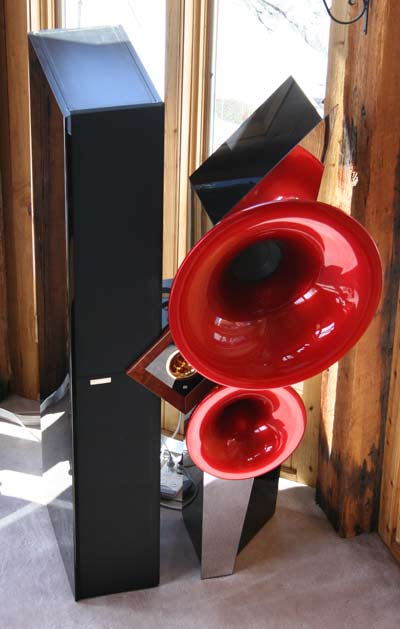
Triolon Excalibur Speakers


ITS BEEN A YEAR AND CHANGE...
 

  • The Triolon Excaliburs  should be broken in by now... you'd think. Not so sure, am I, as to really get the bass going scares the living daylights out of a person - so there is some suspicion that we could loosen up the bass units further by really, really cranking up Marcus Miller or something.


4-1-2005


 JUMPERING AROUND
 

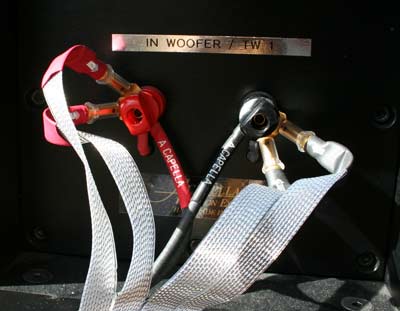
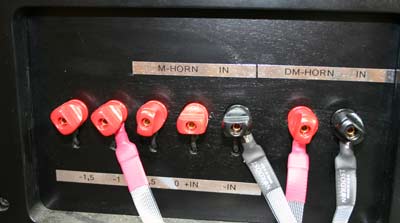
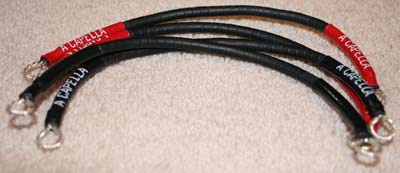
  • We've tried out a lot of speaker cables on these puppies (they need to be tri-wired, though we are now using two bi-wired runs of cable), trying to get something that bests the Valhalla to our ears. A few times we auditioned cables that we only had two runs of - so we used the thick silver 8-9 inch jumper cables that came with the speakers to help out.


  • You can actually hear the difference! And it isn't pretty.
     
  • There is a smearing of the notes in time, as well as the expected increase in imaging fuzziness. It gets to be intolerable and we usually put the Valhalla back on the bass units (they only work the range below about 700 Hz anyway...) and get rid of the jumper wire. It does sound better this way and allows us to focus on the sound of the cable we are auditioning.
 
  • I guess this is just one of those 'everything matters' kind of things. Using jumpers affects all speakers, not just these, though I can imagine speaker manufacturers who make the wire inside the cabinet longer for one of the speaker binding posts so that it would actually sound better with jumpers, assuming that the second binding post is the one with the shorter wires internally - shorter by the exact same length as the jumper cable that is presumably supplied with their speakers at time of purchase.
     
  • One can wonder how much better a shorter length would be. I know my old Sonus Fabers had a approximately 1 inch long flat plate that went between the binding posts. That is purty darn short, though I have always wondered if the flat topology of the jumper helped or hindered the sound in any way.
     
  • These particular jumpers are not burnt in yet, and it is unlikely they ever will be.
 

4-17-2005


NON-SYMMETRICAL SPEAKER POSITIONING


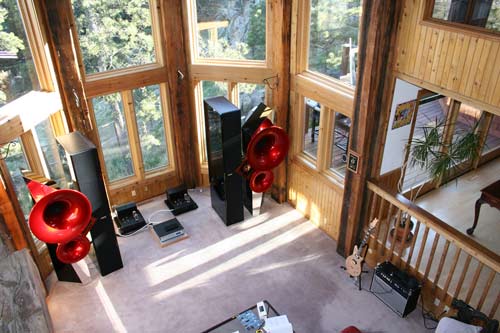
  • If you look at this picture carefully, you might notice that the two speakers are not toed in by the same amount. Similarly, they are different distances from the rear and side walls (whatever that means, see below).
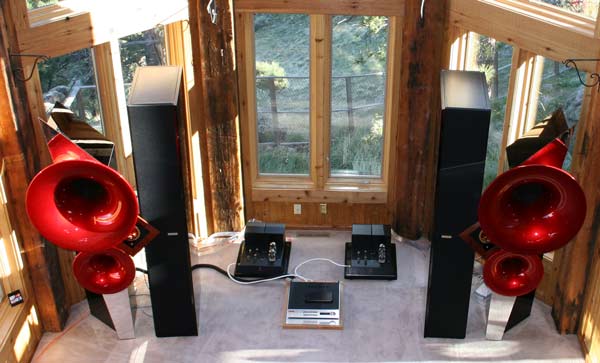
 
  • In our room, and most non-dedicated rooms one might imagine, the room itself is not symmetrical. There is a window on the left, or a door on the right, or a refrigerator-like piece of furniture in some non-optimal to put it nicely position.
   
  • In our case, we have a opening to a dining room on the right and a fireplace hearth on the left that sticks out into the room.
     
  • And what makes things more difficult here is, that the front wall is not perfectly perpendicular to the room, nor are the side walls. This is what makes measurements from the walls meaningless.
  • The point of all this is, that when setting up speakers in a room like this, one has to account for all the reflections and suck outs wherever and however they may be poisoning the sound. Imagining the sound to be like a raging river of water, and the poor listener in a lightweight raft trying to keep from being swept to either bank, we need to find just the right orientation of the speaker 'hoses' to keep us in the middle.
     
  • They only way to do this that we know of is trial and error, error and trials.
 

4-23-2005


Copyright © Audio Federation, Inc.. All rights reserved.

HiFi'ing Magazine Audio Federation

Audiophile's Guide