Home Systems Components Galleries Store Blog

'Jorma Design'

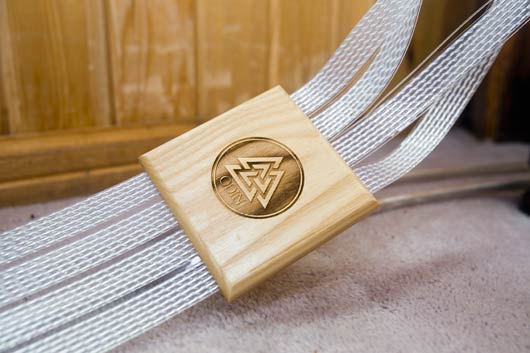
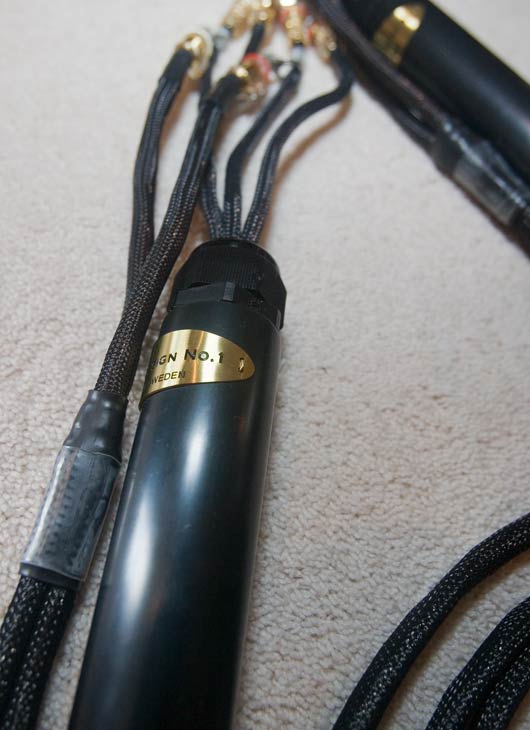
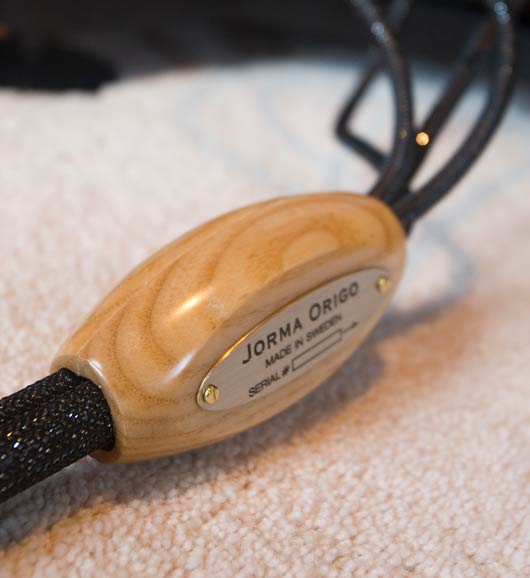
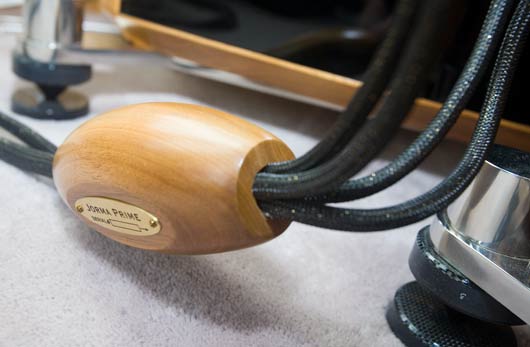
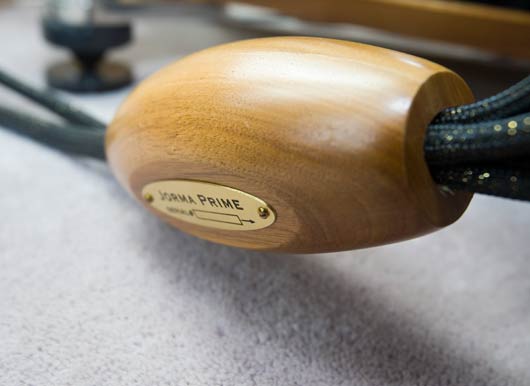
The new Jorma Design digital cable

Tuesday, March 13th, 2007 by Mike

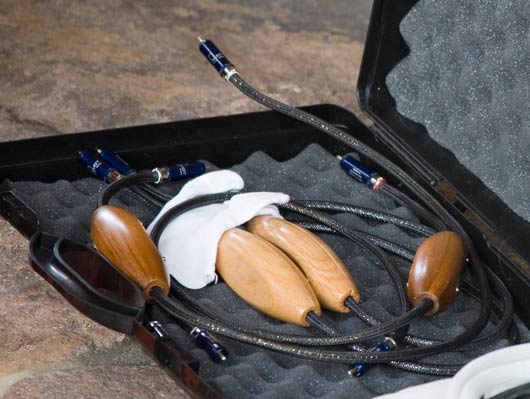
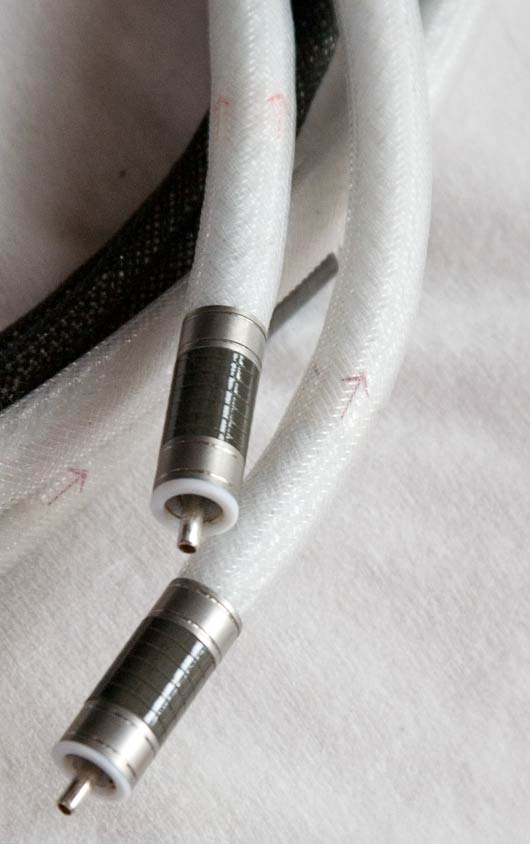
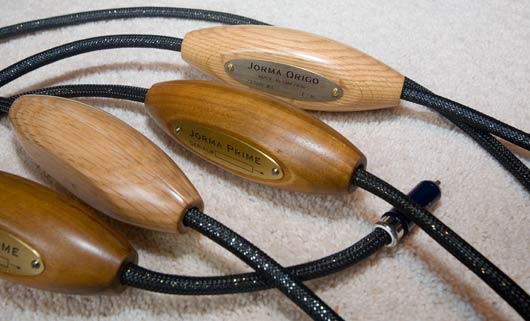
We got one of the new Jorma Design digital cables in for a few minutes before it went out on audition.

I got to take some photos and Neli got a chance to listen for a few minutes.


A nice looking cable.

Does anyone else like how interconnects, especially digital cables, are nice and thin and easy to work with?

Compared to power cords I mean.

But… for how long? How long until they are as thick as a brick? And weigh about as much?.

I took this photo mroe than 4 times… and this was the BEST. Not a banner photography day.

Neli describes the sound as very much like the Jorma No. 1 cable - nicely detailed, nearly as much as the Valhalla, but with a little more color in the midrange.

Blow-by-Blow: The Latest Marathon Audition

Tuesday, November 28th, 2006 by Mike

Thought this might be interesting …

As we mentioned previously, we setup a number of systems for the guy who is purchasing our Triolon speakers. This audition occured over a three day period.

The different sounds of the different setups are somewhat illustrative of our approach here to High-End Audio System Optmization [sorry, it looks so much more highfalutin when it is capitalized :-) ]. We started with a very good system, and slowly optimized it until it was, well, see below.

The first day I think we just played system 1 (below) and our Soundlab system, our Marten Coltrane system and our Marten Coltrane Supreme system. He had already heard Kharma speakers many times at shows, and our Audio Note system at this recent RMAF show.

He was very impressed by all the systems even though he had some (valid) concerns about the Soundlab system which was having some imaging problems on this new side of the room that we have recently put it on (we had the Adagios over there until a day earlier). Its always something that goes wrong… the walls went wrong in this case… Luckily everything else went very well.

System 1 [sorry, somehow we only got photos of about half the system setups]:

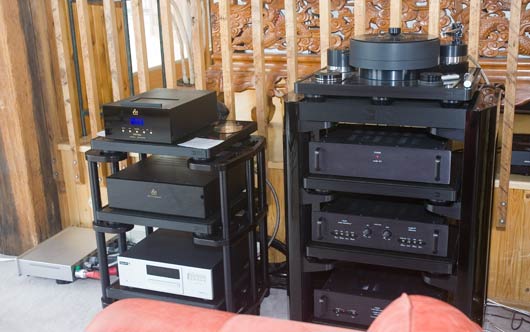
We started with the Audio Aero Prestige CD / SACD player with internal linestage running direct (no preamp) into the well-warmed up $140K Edge Electronics NL Reference ‘pyramid’ 800 watt solid-state amplifiers.We were using Nordost Valhalla interconnect and Valhalla speaker cable, Shunyata Anaconda power cords of all 4 kinds, with the Prestige sitting on a Fondato Silenzio platform and the amps sitting on Rix Rax ‘Outpost’ amp stands.

The Audio Aero adds a touch of warmth and drama and character to the tube-like big open sound of the Reference amps. The sound was big, juicy, with a very wide and very deep soundstage. All notes and dynamic swings were generated effortlessly. The downsides, if you can call it that, were that the imaging was fairly indistinct, the dynamics somewhat soft, from micro to mini to macro, and the overall resolution was good, but not great. This was as if the sound was painted with a big, gloriously colorful and fairly wet paint brush.

System 2:

A ‘minor’ change, we put the Prestige on the HRS M3 Isolation Base and Nimbuses. This is a reference system for us here on these speakers. The dynamics snapped into place and the imaging firmed up compared to the previous system setup. This system strikes a nice balance between naturalness and resolution, between a gargantuan soundstage and pin-point imaging. It is this balance that kind of keeps a listener off balance, never really believing that the system is going to continue to manage to paint such large pictures with such finness.

System 3:

System 3

Next the Edge NL Reference amps were replaced with Lamm ML1.1 90 watt push-pull amps sitting on HRS Isolation Bases with Nimbuses. We probably should have moved the big Ref amps out of the way, but they are a heavy 220 lbs, and we didn’t want to (aka plain forgot) move them then - and then later they were trapped as more and more equipment was brought up from downstairs. BTW, we do all the heavy lifting ourselves, even though every single one of our very courteous guests always offer to help - we are the hosts, they are the guests. And anyway, we need the workout… because guess who gets to carry all this stuff back downstairs? :-)

We do not run the Audio Aero directly into the Lamm very often - thinking it might be too ‘tubey’ of a sound. But it was not all that tubey at all. There was good resolution, still a nice large soundstage, good depth. It was, however, the slightest bit soft on the top and bottom. In many ways, it was very much like the Edge NL Reference amps, the Lamm ML1.1 being most like the ‘Refs of any of the demo amps here - and probably of most amps out there as well. A very good balance of resolution and naturalness and dynamics.

System 4:

As planned, we swapped in Emm Labs SE CDSD / DCC2 transport and DAC pair for the Audio Aero Prestige. The Emm labs (Meitner) was run direct into the amps using its internal linestage. Now this system is starting to do things that are hard to explain. The solid-state digital source is a natural balance to the push-pull tube amps - and it works. All the truth, the unexpurgated yet unenhanced details and resolution are provided to the Lamm ML1.1, and it is up to the amp to decide what to do with it. We trust this amp to do the right thing with that information stream - and our trust is rewarded. Now we have big, open, with enough resolution to tighten up the imaging and define the toplogoies of the soundstage, added micro-dynamics that communicates more of the subtle characteristics of the music.

System 5:

System 5

As we were talking about the sound of the Edge Electronics Signature One 400 watt monoblocks compared to the big ‘pyramids’, we just said, hey, you can hear for yourself. So the Edge amps were swapped in for the Lamm ML1.1. The amps were cold so we played a CD or two in the background as we waited the hour or so for these amps to get to 95% or so of their optimal sound [actually, a number of components were added to the system cold - and this got to be a pattern: Isert component into system. Listen casually. Wait. Listen carefully. Rinse and Repeat.]. Now, this is not a system that we play too often - the Edge Signature One amps are a very smooth and detailed sound - very much like the Meitner / Emmlabs CD / SACD player we had in the system. So the balance was likely to be, and was, a little on the very detailed but somewhat uninvolving side. The soundstage was smaller, the images more pinpoint but not as 3D-like, much more resolution and micro-dynamics, but less midi- and macro-dynamics.

At this point the Favorite was the Audio Aero Prestige CD / SACD player with internal linestasge running direct to the Edge NL Reference amps. Second was the Meitner CD / SACD transport / DAC pair running direct to the Lamm ML1.1 amps.

System 6:

System 6

Now we start bringing in the big boys, so to speak. We keep a straight face as we hook up the Lamm ML2.1 18 watt SET amps in place of the Edge Signature Ones. ‘They have to warm up’ we say (they were warm but cooled off during the Edge Sig One stopover). Hee hee hee. Bamm, the sound-stage width and depth expands to equal, if not better, that with the Edge NL Reference. Solidity, presense, dexterity, integrity, naturalness, purity - the midi-dynamics in the midrange are memorable. Note envelopes are as smooth and hypnotizingly fluid as ocean waves, as Pulitzer-prize winning as the notes coming from the Meitner.

We let this system stay up for awhile - wanting to establish this system as a milestone as we traverse further into the audition. It was now the favorite at this point. There is always this certainty that our visitors have that we do this to, I mean ‘with’ :-) , that, after this kind of Rush caused by hearing what was previously thought impossible, there is this deep subconscious questioning about why would anyone want anything better than this? Nothing can be significantly better than this, can it?

[Oops, somewhere in here we replaced the Valhalla interconnect that was running between the Meitner and the amps with Jorma Design ‘Prime’. This added another quantum step up in sound-stage definition and harmonic purity and resolution].

System 7:

The (very warm) 20 watt Audio Note Kegon SET amps are rushed upstairs to replace the Lamm ML2.1. This system, with the Meitner running direct to the Kegons, with INDRA interconnects instead of the Jorma Prime, was our primary reference system with these speakers. It is hard to describe all the things it does well, because we are SO familiar with it and we have described it so many times in the past. But, one of the most obvious differences now was the bass. It was VERY natural yet Impressive yet well-defined. These amps grip the speaker with an iron (make that Silver) fist at all frequencies, but it is most noticable in the bass, where other amps have the most difficulty.

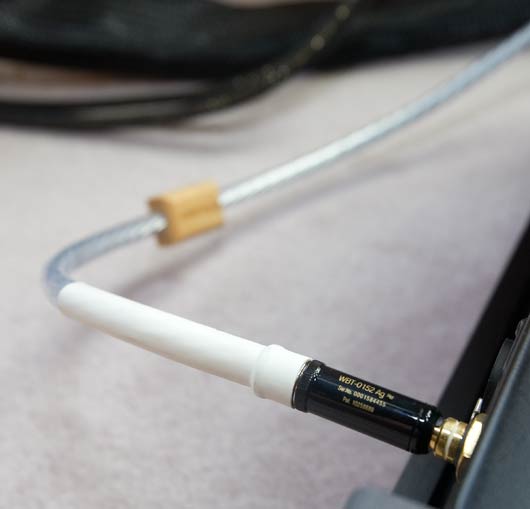
This system was starting to pick up some ground loop hum, and so we replaced the Jorma ‘Prime’ with INDRA interconnect, correctly predicting that the WBT connectors on the Prime were picking up some nasties. The INDRA reduces the resolution and clarity and imaging somewhat, but has a purity that, in my opinion, works very well with the extreme purity of the sound of the Meitner.

At this point, there is an understanding now why we rave about these amps all the time. But, to get this sound, let us not forget the other players: the Meitner, the HRS bases, the Shunyata power cords, the INDRA and Jorma Design Prime and the Valhalla speaker cable.

But we rush to set up the next systems. Time is running out, it is the last day, and we want to spend the most amount of time with the system we think is the Most Optimized of them all…and we have a few more iterations to go…

System 8:

We add the Audio Note M10 linestage which replaces the internal linestage of the Emm Labs DAC. NOW we really have controlled bass. Never heard these speakers do this before. But before we enjoy it we have to deal with our ground loop hum, which is back again.

Do to the occasional (we hope) people who are very confused about electrical things yet get hired to do electrical inspections here in Wonderful Boulder County - the grounding of our dedicated lines are messed up. Yes, we can fix them sometime (it won’t be easy) but until then… Until then, Mike and Neli get to have a nice family discussion about cheatering (that would be me) and why not to cheat (that would be Neli) in front of our guest, and after messing some with groundwire we finally cheated and lifted the ground on the entire system.

We’ve said it before, the M10 is like having another Kegon, or maybe more like a Kegon with 40 watts instead of 20, or perahps like ‘no need to Bi-amp it, M10 it’. Everything is much more controlled, accurate, dynamic, well-formed, solid….

System 9:

Oh, wait, now we want to add back in the Jorma Design ‘Prime’ interconnect [I swear, I started getting blisters on the tip of my Switch-turning-off-and-on finger :-) ]. It goes in and replaces the Valhalla. How can the Valhalla be called muddy? It can’t. But it was, in comparision!

Bamm, off everything goes again and another Prime goes in to replace the INDRA. Another increase in resolution and harmonic integrity - but not as much, leading us to put another checkmark in the box supporting the proposition that it is the first Prime that makes the most difference.

System 10:

System 10

Bamm, Neli tells me that they all want to replace the Valhalla speaker cable now with Jorma Prime and Jorma No. 1 speaker cable (this is a tri-wired system and we only have one bi-wire Jorma Prime at this time). OK. Fine. But it is getting dark quick, so flashlight in hand, Neli and I change the speaker cables to Jorma. Not quite fast enough, we have to move a lamp over to shed some light to tell which are the red and which are the black connectors… important things like that.

Before we headed out to load up on Indian food, to let the system warm up and settle in some, it was apparent (to me, anyway, but I think I was much more interested than they were in hearing this particular change, as I have been thinking a lot about the difference in the impact on a system’s sound of the Prime interconnect versus the speaker cable) - that the sound-stage and imaging RELAXED. It felt like there was an easier and much smoother transition as the musicans, or their sound-engineers, moved things around on the stage. That, before, the soundstage was blotchy, that images jerked from place to place and clung to certain spots. Now, the soundstage was no longer constipated.Now it flowed…

This increased sense of continuity was also somewhat apparent in the dynamics as well: whereas before it seemed like there were maybe, say, 100 different ways a note could go from soft to loud (and back again) now there were 1000.

There were other improvements as well - the resultant being that the system felt whole now, having everything be wired with 100% Jorma Prime (except for the Jorma No. 1 speaker cable on the bass towers) seemed to allow the Prime’s capabilities to shine through, all the way from source to speaker.

After Indian buffet dinner (the food was kind of bland,.. how can they make bland Indian food??? How embarrasing, since we picked the place. Seems like Mike and Neli need to catch up on where the good Indian food restaurants are again.. and add a few pounds in the process I bet :-) ) we played a few songs from each of about a dozen CDs. Played it fairly loud, since it was our last night (volume set at ‘7′ for those who grok Audio Note volume controls, driving a high-gain amp on 97dB speakers :-) ). It was kick ass.

Classical music was so much more realistically laid out, both dynamics and imaging - such separation and definition, not quite at Real, of course, but there was a lot of stuff now that we didn’t know that we were missing before this [we never had the Jorma Prime combined with the M10 here before].

Played some of Lady in Satin as well, the 3D nature of her voice and the way she moved - it was much more like being in a cabaret than sitting in a livingroom.

And…

We heard this same system for a few more days after our guest left and then performed the swapping out of the front end for the Audio Note digital to see what THAT would do [see previous post].

No, we did NOT try adding analog to system 10 - creating system 11. Have to save something for next time, right? :-)

By then the M10 will be broken in (it is only 5 weeks old at this point).

And it will be the Marten Design Coltrane Supreme loudspeakers that we will use to navigate even further out into the Audiophile Gulf Stream, ….

Audio Note digital versus Emm Labs digital

Saturday, November 25th, 2006 by Mike

We took a highly optimized system this week and compared the Meitner CDSD transport / DCC2 DAC, both Signature Editions

against the

Audio Note CDT3 transport and DAC 4.1x Balanced

The price of these two combos is approximately the same, about $22K.

This is the test system:

The test system
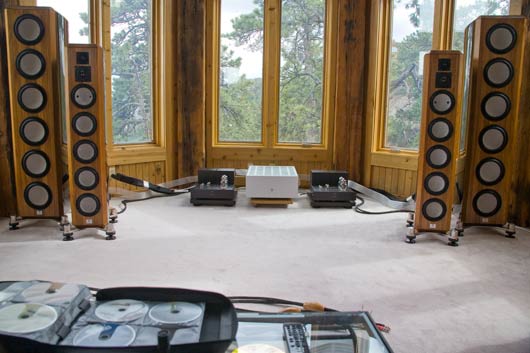
Acapella Triolon Excalibur, Audio Note Kegon 300B SET amplifiers, Audio Note M10 linestage, Jorma Design Prime single-ended interconnects and Jorma Design Prime bi-wire speaker cable on the midrange horns, Jorma Design No. 1 speaker cable on the bass towers / plasma tweeters. All platforms and power supplies on HRS M3 Isolation Bases. Power cords all Shunyata Anaconda, either Alpha or Vx or Helix alpha or Helix Vx.

Just for grins, I added it up and this is about a $350K system [without the Edge NL Reference amps].

Sounds like it too.

The Emm Labs-based system
The Emm Labs-based system.

The Audio Note-based system

In the Emm Labs corner the advantages were that they had been on two or three days - so they were wamred up and settled in.

The disadvantages during this test were that the M10 linestage is not yet broken-in, and the M10’s stiffness and inability to relax at its current age (about 5 weeks) plays against the weakness of any solid-state digital source: that is being a little too analytical.

In the Audio Note corner the advantages were that the rest of the components were Audio Note components, and this is one of the few product lines in the world where components from a single manufacturer actually enhance each-others performance.

The disadvantages of the Audio Note in this test were that they had only been on between one and two hours. Also the transport was by necessity nearly in front of one of the bass towers (the big, HEAVYYYY Edge Reference amps got trapped behind all the components early on during the recent marathon audition performaed on this system, which kind of pushed all the other components out into the room farther than is normally the case).

The Audio Note DAC 4.1x Balanced is a stock piece of equipment - no tubes were rolled to enhance performance.

OK. There really weren’t any surprises during this shootout.

I know, BOR-ing.

But I think it was still interesting because it was illustrative of the struggle that occurs in all systems: between organic sound and resolution, between Naturalness and Realness.

The Emm Labs-based system

This system with the Emm Labs, and with the assorted ontourage, was HIGHLY resolving, both in spaced and in time. After a number of experiments, I am willing to conjecture in public :-) that it is the Jorma Prime that added the ability to resolve things in space to such a high degree, and the M10 handled the resolution in Time.

VERY highly resolving - note envelopes started, stopped, rose, fell, pulsated, swelled, burped and groaned just like they should - EXACTLY like they should.

Notes were placed in 3D exactly where the engineer wanted them to be placed - and new insight was gained about how these guys, and hopefully gals, often play with the knobs on sound boards just a bit too casually, let’s say - often distracting the mind of the listener a little too much like people who use too many fonts on a single page [hey, we really TRY to keep it to two or three fonts around here. Really].

The bass was amazingly tight compared to what we are used to on these speakers (the addition of the M10 added the ability to milk everything from the Meitner in this respect).

[Just to be clear - this is a big sound, resolving on a relative basis and in proportion to all of the frequencies from say 28Hz to 50K Hz. It does NOT mean resolution in the sense of the pyrotechnic wonders that shove unwanted details of the leading edges of notes from 1K Hz to 3KHz eschewing true resolution in either space or time for a quick slamm-bamm-thank-you Impressiveness.]

Any weaknesses to this system, which was probably one of the crowning achievements in home audio at this time?

This is more of a psychological thing, and a system is not usually all one of the other, having to do with how much a person has to focus, and some might say even concentrate, on the sound before they are sucked in. Of course, a system has to be at least pretty darn good if it can suck a person in at all with any kind of reliability.

In your home, late at night, with the lights low and a glass (or bottle :-) ) of wine, if you do not get sucked in, then your system has Problems. Conversely, if you are at an audition at a high-end audio dealership, somewhat uncomfortable, hearing unfamilair music and trying NOT to forget that you have an appointment with a dentist in a few hours - then if you get sucked in - that system has to be Mighty Fine!

Anyway, the only weakness that this system had, in either conventional or unconventional sense, was that it took a little more relaxation and focus to get ’sucked in’ and absorbed by the music than one might hope. Once ‘Absorbed’ , it was a heck of a ride, often resulting in mouths hanging open in a kind of slow motion ‘ooooooh, THIS is what it was like to be there when this song was recorded’.

The Audio Note-based system

OK. Switching to the Audio Note digital.

Well, this took care of the Absorbtion Factor. Very natural sounding and engaging.

Perhaps even better solidity in the soundstage. Striking even.

But, as you all probably expect - there was less resolution - the leading and trailing edges of the notes were not as well defined - although the bass notes were noticably tighter after two hours of warm up playing a a few CDs.

OK, here is where I am going with this.

We, and I presume most of you, want something right SMACK inbetween these two sounds. We want the best of both worlds (hey, why not? :-) )

We want the sound to sound Real, or actually Realer than Real, since Real has problems and why bring THAT baggage into our system if we do not have to. And we want it to be so engaging, so absorbing - so much magnetism that it physically stops us in our tracks and we must struggle to find our way to the closest chair so we can not have to waste brain cycles with standing up - having to be reminded every once in a while to BREATHE [I am sure we have all been struck breathless by our systems - who says audiophiles don;t live on the edge?]

And, what I want to say here, is that I think BOTH of these digital sources, on this system, can walk this line between Ultimate Resolution and Ultimate Absorption (or Magnetism).

As the M10 breaks in the Meitner-based system will evolve to be more Absorptive - it is already like a bear trap, ready to spring upon the unwary listener if they give it a seconds notice.

And as the Audio Note-based system warms up, moving the transport away from in front of the bass towers :-( and perhaps even rolling a tube or two - the resolution will match that of the solid-state solution. Why do I beleive this? Because the Kegon and M10 both have the resolution of, if not more in many senses, of solid-state gear.

OK, so with some work they can sound alike? If that were true (and I predict it is true to a high degree, to the point where one must carefully define ‘alike’ to tell them apart) then how to choose between them if one must have one or the other for their system?

It is by knowing one’s preferences - that when one of these solutions is NOT optimized, is the sound still going to be acceptible? Can one live with a little less resolution or is it better to have a little less ‘Reach Out and Grab Ya’ (and this may very well be system dependent - especially if the rest of the system is not well-balanced in this respect).

Well, that was long. Hopefully it was helpful, or interesting, or…at least illuminating of the real dilemnas one faces when optimizing systems - we are always striving for that balance, that knife edge, where Everything Wonderful Happens At Once, during Each Note, Every Song, Every Album, Every Day.

System #3: Marten Coltrane, Lamm ML2.1, Jorma Prime, HRS MXR

Saturday, May 27th, 2006 by Mike

The System: Marten Coltrane speakers, Lamm ML2.1 amplifiers, Jorma Prime speaker cable, HRS MXR equipment rack. Also Lamm L2 preamplifier, Audio Note CDT-Two and DAC 4.1x Balanced. Nordost and Shunyata cabling.

We mentioned how amazing this was sounding in our review of the Jorma ‘Prime’ interconnects.

What does does amazing mean?

Here is what amazing means:

The Coltrane speakers are so freakin revealing… The Jorma Prime cables are slightly more forward than their No. 1 and even the Valhalla, and this new effect was already taking hold. Now, with HRS’s MXR rack [we set it up yesterday, much more on this later :-) ] in place of the Acoustic Dreams, the system sound is even more ‘present’.

We kind of take it for a given that the Coltrane speakers are a little laid back - given the highest quality, completely neutral components up front. But maybe not…

Witb these two new, admittedly over the top, additions to the system… the sound is much more of a engulfing, in the room type of experience.

Our good Canadian friend, Dave H., [you there Dave? Missed you in Monteal] used to talk about how he wanted the sound to come to him, to not have to focus on listening to what was being played, to have the sound ‘take control’ [my words] as it were.

The system was already subtley sinister in the way it would sneak up on a person and make one stop mid sentence, whether one wanted to or not, as the music Took Control.

But now, …

It is hard to move, much more hard to get up.

It is like ‘if I miss this next note, my life will have been worthless and empty’… ‘I must hear this next note!’

I think this house is going to be much more quiet now… because if we start playing any music, we aren’t going to get ANYTHING done.

[Though I am much more disclipined than Neli, and this system is on the same floor as her office. She, she is doomed. So if you can’t get her on the tele as easily as you could before today, you’ll know exactly why!]

And the new Audio Note CDT-Three transport just arrived. We are doomed! :-) :-) :-)

Jorma Design ‘Prime’ interconnects

Saturday, May 27th, 2006 by Mike

The shootout:

In one corner, weighing in at a slim $4K: the Nordost Valhalla interconnect

In another: the Stealth INDRA interconnect, at a nice $5700.

And the challenger: the Jorma Design Prime interconnect at a healthy $7K

First, the Valhalla.

The Valhalla is an amazingly competent interconnect. The sound is presented in a straight-forward, honest manner. Nothing artifical, no additives, musical without being overbearing.

Then, the Stealth INDRA.

The purity. The transparency. It was like this interconnect was made for the Emm Labs digital front end. Better separation, better soundstage depth, more harmonic color, more life than the Valhalla. Yummy.

Finally, the contender, the Jorma Prime.

Oh.

“Not bad. I think I actually like the Jorma better on this track than the INDRA!”

Track after track. It was the same observations over and over.

And when we switched back to the INDRA for a bit, it became very easy to understand much of the quality of the differences:

As the INDRA is to the Valhalla, so the Prime is to the INDRA.

More harmonic color. Not just that but more shades of harmonic color. Much more resolution, more bass, better separation, deeper soundstage. And some things I noticed right away, before the cables were even broken in: better integration of the music presentation into a single whole and just amazingly wonderful articulation of voices.

The human voice is so rich and full of subtle meanings - a richnes which requires the system to reproduce the most minute variations in harmonics, inter-vowel and consonant emphasis, and precise breath variations - all necessary to form and communicate the exact emotion of the singer.

It all becomes so… much… more… intimate. Like the singer is sharing something so very, very personal - do they really want us to know this about them? We have never even met!

To somewhat exaggerate:

If the Valhalla is a Black & White movie, and the INDRA is a color movie, on standard TVs, then the Prime is a technicolor HD movie on a giant HD TV.

We are really picky around here: many very expensive amplifiers, CD players, speakers… and cables, are nice in some way but have deleterious side-effects that detract from overall listening experience. Here, we strive to make every piece carry its own weight - to be as clean and perfect and wonderful as is technologically possible today.

The cables we like best are those without bloat, without artificial flavors, without preferences for this frequency (typically the bass) or that (typically the midrange), very capable of carrying the signal in its entirety from the sources to the speakers preserving those subtle, but so very critical Fundumental Music Elements like micro-dynamics, inner detail, presense, true-warmth - able to communicate the VAST amounts of information of a complex musical passage, crunched down into a split-second, without becoming sonic mud.

Well, now you have a better idea of what we mean when we say we like these Jorma Prime cables - both the speaker and the interconnect.

Personally, I am somewhat shocked. Really didn’t really epxect to like them so much, to be able to find some fault….

At the price, only incrementally more than some of the excellent competition, the interconnects ARE a real bargain.

The speaker cables are also really, really wonderful. The Coltane / Lamm ML2.1 system is just a-m-a-z-i-n-g right now. But even us here at Audio Federation experience price shock every so often. To deal with this personal, psychological block, I have convinced myself that the interconnects, at one third the cost, give the system some of the same wonderfull improvements as the speaker cables. And they do.

But I’d hate to hear what both of these cables in the same system would sound like.

No, really.

Wait. Not hate. Make that fear.

I keep telling Neli not to try it.

And if she tries it, I do not want to hear it. Or about it.

Why?

Count it up: we have 4(!) systems here.

Fair warning. Once you hear these, you will be spending lots and lots of time figuring out how to get them, and keep them, in your system. I know we are, ….dammit. :-)

Jorma Design ‘Prime’ Interconnects… the Prologue

Thursday, May 25th, 2006 by Mike

Finally performed the definitive shootout between the interconnects last night:

Nordost Valhalla vrs. Stealth INDRA vrs. Jorma Prime.

When we first got the Prime they were not broken in - a somewhat foward and compressed midrange, and in general the sound came through with a weird, non-flat frequency response. After waiting 3 or 4 days for them to relax, and only hearing minor improvements (exactly as if they were still breaking in), they got put on the Nordost Vidar cable burner for a week or so.

Then we had a marital dispute about the direction the cables were supposed to be used in: should the Bybee purifier go towards the receiving end or the source end? Mike, the Magnificent, (me! insert chest thumping here) thought that they should go towards the receiving end because that is how the Bybees in the speaker cables are oriented. Neli, the wife of Mike the magnificent, remembered Jorma telling her that they went the other way - and somehow during the tests of directionality somebody (not Mike the Magnificent) confused what was towards the receivnig end and what was away from it … well, let’s just say that this week it isn’t I who is the butt of all the jokes around here… :-)

‘Course, this post won’t earn me any points….

Well, it is only fair. last week it was me providing the humor… but I insist it could happen to anybody. You be the judge. The marriage you save could be mine….

In the Audio Aero Capitole player, I looked inside, saw there wasn’t a CD, and put on Ashkenazy’s Rachmanonov.

I pressed play, but different music started playing. Really different.

What did I do to fix this?

I looked inside and saw, yes, the Rachmananov CD was plainly visible. Check.

Then, well…

I pressed STOP, then pressed PLAY again, of course.

This should fix it right?

I mean, when your CD player starts playing something entirely different from what you put in it, this works for you, right?

OK, this was happening during an audition for a nice couple from Rhode Island. So there was an attentive audience for this show I was putting on…

Finally, the Neli of the house came over and took off the Rachmananov CD ….

… and then took off the completely black (exactly the same black as the inside of the top loading Capitole drawer by the way) De Mat that was…. on top of the CD that was underneath the Rachmanonov CD…!

Ha, ha. Very funny.

No I wasn’t trying to play two CDs at once. Yes, I do look inside the player before I just stick a CD in it. No, I wasn’t trying to invent another tweek by stacking CDs in order to improve the sound. No, it wasn’t even a demonstration to show that the player would still play with two CDs and a DE Mat inside of it.

*sigh*

[The De MAT is a black rubbery thing that covers the top of a CD in top loaders to improve the performance of the laser - and thereby the sound - and it works]

Oh, anyway, now everybody has forgotten all about my little ‘incident’ - well, they had until they read this post, anyway.

**************

Back to the Jorma Design Prime interconnect.

It turns out that Mike and Jorma were right and Neli was wrong.

Hee hee hee :-) ))))))

Next - what we heard at the shootout.

As a teaser, let’s just say that $7K for a one meter interconnect is looking like a helluva bargain.

I kid you not. The incremental cost for these cables above the other two brings a tremendous improvement in the listening experience.

Next - the details.

Jorma Design ‘Prime’ Speaker Cables

Sunday, May 7th, 2006 by Mike

She likes it!

Hey Mikey! She likes it!

Uh, yes, Neli likes the speaker cables. Mike likes them too.

After 10 days on the Nordost Vidar cable burner, the caveats I noticed when we first heard these cables, the tiniest bit of midrange leaness and compression, are… gone. As suspected, the cables just weren’t completely broken in yet.

The Jorma Prime cables break new ground in the resolution department. Nordost Valhalla cables are usually considered to have very high resolution. But, well, this is a whole new ballgame. Heck, it is a whole new season.

On the Marten Design Coltrane speakers driven by the Lamm ML2.1 amplifiers, which are very high resolution themselves, what with ceramic drivers and a diamond tweeter, these speaker cables just shine. Shine a light on the music, is what.

OTL-like dynamics. Combined with the wonderful pacing this is just plain fun, happy, wow! to listen to.

Super-subtle voice intonations - where lots of the previously unheard nuances are freed, nuances that communicate more of the emotion and substance and individuality and humanity of the voices and instruments.

Voices? Even on day one the voices were enough to just grab you and throw you down in the nearest seat - or, depending on your personality, make you stand up and drench yourself in it all.

Transparency…

You remember how, the first time you heard a high-end system, you thought “Oh, so that is what was on that CD (or LP) this whole time?!!!”

Deep dish harmonics. Harmonic intent that was previously locked behind a dirty display case is now presented to the listener on a silver.. and gold… platter.

Separation, presence, … resolution.

Reso-f***ing-lution.

These cables were paired with the Marten Design Coltrane Supremes in the Swedish Statement room at CES, with their 2″ diamond midrange and 3/4″ diamond tweeter - No wonder we started hallucinating.

New ballgame? This is a whole new universe to explore.

OK. Whew! So, well, the cables are doing their part. Yep. Let’s just put a nice big check mark in that box….

Next!

The metal facets in the Jorma Prime speaker cables twinkle like streams of magical musical electrons

Still burning in the Jorma cables….

Monday, May 1st, 2006 by Mike

Takes awhile… Should probably burn in the Valhalla speaker cables too. It’s been a few years… interesting to see if it makes a difference.

The Jorma Design Prime cables look cool on the Nordost Vidar burner…don’t you think?

Jorma Design cables on the Nordost Vidar burner.

Jorma Design cables on the Nordost Vidar burner.

Jorma Design cables on the Nordost Vidar burner.

Well, I think they look cool. Unfortunately, you can’t see the way the lights are twinkling like a little Christmas tree…

Jorma Design ‘Prime’ interconnect

Monday, April 24th, 2006 by Mike

Patience they say, is its own reward.

Well… this is a nice reward. :-)

Some photos…

Jorma Design's Prime RCA intrerconnect

Jorma Design's Prime RCA intrerconnect

Initial impressions?

Today the Prime replaced the Stealth INDRA interconnects in order to hear just what the interconnects can do - this is the way that we often audition interconnects. All interconnects up to this point have taken a back seat to the INDRA…

Until now.

A funny thing happens with audio gear. Like the Audio Note CDT-3, and now these cables (and, of course, the INDRA themselves), and to some degree all gear, what arrives as an inanimate, cold, dead, technological curiosity comes alive and gets this glow around it as one learns to appreciate more and more what the piece does - how it is enriching one’s life and those who hear it. It goes from being valuable in a monetary sense to valuable in a life-sustaining sense. It is food, that tastes goooooood.

OK. Initial impressions in comparion to the INDRA:

PROS: More authority, lots more separation, lots more presence, deeper soundstage, a little more bass, more suspense, more resolution.

Also… it has more beauty - the inherent beauty of the music comes through better. This is not richness of tone or dynamics or anything like that. Some of this has to do with the musical rightness of riffs playing off of and against and into another. Not too clear right now what else is happening - hopefully will get more insight as time goes on here.

CONS: None [Yeah. Right. This is Audio Federation. The picky people. There are always cons.] except the midrange being a tiny bit leaner than the INDRA, and similarly the midrange is experiencing a little more compression as well.

Funny, we were told to expect these two symptoms as part of the cable settling-in process [ Even funnier, we NEVER believe stuff like this that people tell us, about how something is going to sound. But sometimes, they are right. Too cloudy here - it is snowing - to see if there is a blue moon outside or not.] Well, experiencing them we are. These anomalies are also supposed to go away in a few hours to a day or so - and they are diminishing after only two hours…

TO BE CONTINUED…

Speaking of tomorrow, the plan is that the Jorma Prime speaker cables will replace the Jorma No .1 speaker cables and the system will be almost completly Jorma Prime.

‘Till then, then.

Jorma Design’s Prime cables to arrive…. tomorrow (hopefully)

Sunday, April 23rd, 2006 by Mike

Funny, no matter where I am in life, no matter how well things are working or how well things are going, …or not - there is always these times spent waiting for something to arrive in the mail.

There is the ‘Waiting around for the FedEX package during the 10:30am or so time frame when they usually deliver things so I can sign it’ Blues.

There is the ‘Trying to wake up in time to make the 9:30am ETA of one particular UPS guy in order to intercept him BEFORE he tosses the package up to the front door from what sounds like 10 feet away’ Blues

Then there is the ‘It didn’t come today, what a waste of my time, what a waste of a life sitting around waiting for this thing” crescendo followed by the ‘Going to do it all again, tomorrow, anyway, cause it will be so great when it gets here’ Country Western top 10 jingle.


Presented by
Audio Federation

Old Audio Federation Website

email: mike&neli@audiofederation.com
Copyright (c) Audio Federation, Inc.
303-546-6503

The names of all brands of equipment are copyright and/or trademark their respective companies

Entries (RSS) and Comments (RSS).